

Issue No. 1 – January 2026
The purpose of this review is to provide an analysis of the current situation on the Ukrainian currency market and forecast the hryvnia exchange rate against key currencies based on the latest data. We analyze current conditions, market dynamics, key influencing factors, and likely scenarios.
Analysis of the current situation on the currency market
International context
The beginning of 2026 brought bad news for Fed Chairman Jerome Powell as the US Department of Justice served him with a subpoena threatening criminal charges in connection with his testimony before the Senate Banking Committee in June 2025. This testimony partly concerned a multi-year project to renovate the Fed’s historic office buildings. Powell himself said that he considers such actions in the context of pressure on the Fed from Donald Trump. “The threat of criminal prosecution is a consequence of the Fed setting interest rates based on our best estimate of what will serve the public, not on the president’s preferences. The question is whether the Fed can continue to set interest rates based on data and economic conditions, or whether monetary policy will be guided by political pressure or intimidation,” Jerome Powell said in an official statement.
In December, the Fed cut interest rates by a quarter of a percentage point, the third consecutive rate cut in 2025. At the time, the main factor influencing the decision to cut rates was concern about the labor market. The Fed’s next interest rate vote will take place at a meeting on January 27-28. However, market participants do not expect any changes at the beginning of the year.
The Fed’s forecast calls for only one rate cut in 2026, but the market believes that there could be two rate cuts this year. The economic outlook, of course, complicates the Fed’s work. Inflation in the US is expected to remain high, and the labor market is expected to improve in 3-5 months.
Goldman Sachs Research notes that U.S. economic growth will accelerate to 2-2.5% in 2026 due to the reduced impact of tariffs, as well as tax cuts and easier financial conditions, unemployment will be just above 4.4%, and the Fed will cut rates in March and June. Thus, rates will be in the range of 3-3.25%. However, there are other forecasts, for example, JPMorgan expects the Fed to leave interest rates unchanged this year before raising them in the third quarter of 2027. In this case, rates will remain in the range of 3.5-3.75% in 2026.
As for the EUR/USD pair, while in December the dollar was weakening, in particular against the backdrop of the Fed’s rate cut, in mid-January the trajectory went in favor of a strong dollar, reaching 1.1635 EUR/USD, while at the end of December it was at 1.1772 EUR/USD. The dollar is currently maintaining its strong position thanks to strong US macroeconomic data and reduced concerns about the independence of the US Federal Reserve. The latest economic data from the US showed a greater-than-expected acceleration in producer prices and a good recovery in retail consumption in November. This allows the Fed to keep interest rates unchanged for now. Accordingly, this situation plays into the hands of the dollar, which has been steadily strengthening in mid-January.
Domestic Ukrainian context
The new year brought an acceleration of devaluation processes to the interbank foreign exchange market. While at the very beginning of January the official exchange rate was at 42.35 UAH/USD, on January 12, the exchange rate crossed the psychological mark of 43 UAH/USD and reached 43.07 UAH/USD. However, the dynamics did not stop there, and as of January 16, the official exchange rate was set at 43.39 UAH/USD.
The NBU has been actively supporting the market with interventions: in December, the NBU’s net sales of foreign currency on the interbank market reached a record $4.7 billion, and compared to November, the volume of the NBU’s foreign exchange interventions increased by $1.8 billion. The NBU itself explained this increase in foreign exchange interventions by the traditional seasonal factor of increased budget spending and business operations at the end of the year.
International reserves at the beginning of January 2026, according to preliminary data, amounted to $57,292.5 million. The NBU clarified that in December they increased by 4.6% compared to November due to receipts from international partners, which exceeded the NBU’s net sale of foreign currency and the country’s debt payments in foreign currency. In particular, the government’s foreign currency accounts at the NBU received USD 6.915 billion, of which the largest share was received from the EU under the Ukraine Facility (USD 2.69 billion) and USD 3.9 billion came through the World Bank’s accounts. In total, Ukraine’s international reserves increased by 30.8% in 2025, and the current amount provides financing for 5.9 months of future imports.
The NBU’s key policy rate remains unchanged at 15.5% per annum. However, it is likely to be cut in 2026. The NBU reported that in December 2025, inflation continued to slow down to 8% year-on-year. Month-on-month, prices rose by 0.2%. Thus, actual inflation in December 2025 was lower than the NBU’s forecast, which says that inflation is expected to slow further in 2026, in particular due to a gradual reduction in labor market imbalances, moderate external price pressures, and the NBU’s monetary policy measures. Thus, there remains a high probability that the NBU will decide to cut the key policy rate.
An important issue remains the receipt of international aid in 2026. Earlier, the government and the NBU pointed to the need for external financing at USD 45 billion, most of which is the Ukraine Facility program and funds under the ERA mechanism (a loan secured by the proceeds of frozen Russian assets). On January 14, the European Commission presented a package of legislative proposals that would allow Ukraine to receive the previously approved €90 billion loan in 2026 and 2027. According to the EU, approximately €60 billion will be used for military aid, and another €30 billion for general budget support. By the way, these 30 billion euros will be provided subject to the reforms to be implemented in Ukraine: the European Commission has already noted that in order to receive them, Ukraine needs to implement reforms to improve democratic processes, the rule of law and the fight against corruption.
US dollar exchange rate: dynamics and analysis
General characteristics of market behavior
During the first half of January, the dollar was strengthening on the Ukrainian foreign exchange market. Thus, while at the beginning of the month the interbank exchange rate was at UAH 42.3/USD, on January 15 it was already at UAH 43.55/USD.
Devaluation fluctuations were expected to be faster in the cash market, where the purchase rate in mid-January reached a corridor of UAH 43-43.2 per dollar, and the sale rate was in the range of UAH 43.6-43.7 per dollar. Meanwhile, the spread between the buying and selling rates at bank cash desks and exchange offices remained unchanged compared to December, at UAH 0.4-0.6 per dollar.
Key factors of influence
– International context. The dollar began to strengthen against the euro as investors grew more confident that the Fed would maintain its independence and implement its planned base rate cuts in 2026.
– International reserves are at a high level: as of early January 2026, they reached USD 57.29 billion.
– The NBU has started a phase of controlled devaluation: the interbank exchange rate is steadily moving towards a weaker hryvnia. This is likely to help the government receive more state budget revenues from international aid received by the country in foreign currency.
Forecast.
– Short-term (1-2 weeks): base range of UAH 43.4-43.9 per USD with possible fluctuations towards a weaker hryvnia.
– Medium-term (2-3 months): 43.40-44.80 UAH/USD. The dollar may gradually strengthen in the international market due to the stabilization of the situation in the US in terms of macroeconomic indicators and the Fed’s clear and understandable steps to change the base rate. In Ukraine, the hryvnia will be affected by factors such as a significant deterioration in the energy sector as a result of massive shelling, the state budget deficit, the high need to increase imports of energy equipment, and planned foreign aid inflows under previously approved programs and new projects.
– Longer-term (6+ months): The hryvnia will devalue against the dollar, the NBU will be forced to increase interventions from time to time, but the trend toward a weaker national currency will dominate. The benchmark for the first half of 2026 is UAH 43.4-44.9 per dollar.
Euro exchange rate: dynamics and analysis
General characteristics of market behavior
The euro strengthened on the Ukrainian market during the first half of January: the official euro exchange rate was UAH 49.42/€ at the end of December and reached UAH 50.43/€ in mid-January.
Key observations
– Exchange rate geometry: In mid-January, the selling rate for cash euros was at 50.9 UAH/€. The dynamics of the euro exchange rate was influenced by the general devaluation trend, which intensified in the first two weeks of January 2026.
– Supply and demand: Demand for euros remains strong, especially amid high demand from importers to purchase energy equipment from sellers in the European Union. In the cash market, demand for both dollars and euros remains stable.
Key influencing factors
– Global context: the euro is reacting with a slight decline against the dollar due to the stabilization of the macroeconomic situation in the US and no changes in the Fed’s monetary policy, which supports the dollar.
– Domestic market: the euro crossed the psychological mark of 50 hryvnia per euro, and demand for the euro remains high both on the interbank market and in the cash segment.
– Behavioral factor: households continue to hold their savings in foreign currency, with both the share of dollars and euros in savings increasing. In December 2025, net purchases of foreign currency by households reached USD 739 million.
Forecast.
– In the short term (1-2 weeks), the euro will be in the range of 50.5-51.5 UAH/€ with the possibility of moving closer to the upper limit.
– Medium-term (2-3 months): the postponement of the next stage of monetary policy easing in the US will keep the trend of a strong dollar in the international market, but Ukraine will see a strengthening of the euro as a result of the general devaluation trend and high demand for the currency from businesses and households. The exchange rate target is 51.5-53.8 UAH/€.
– Longer-term (6+ months): the euro may rise to the level of UAH 54.0-57.0 per EUR in the first half of 2026.
Recommendations: dollar or euro – buy, sell, or wait?
USD/UAH
The strengthening of the dollar, which the markets have been pricing in as a result of optimism about the Fed’s monetary policy and expectations for updated US economic data, may be followed by the next stage of the US currency’s weakening due to geopolitical risks, a deteriorating US labor market, and investor concerns about the Fed’s independence.
The upcoming change of the Fed chairman and the markets’ doubts that the new head of the US central bank will continue the policy of the current leadership are a particular risk. This means that the dollar is unlikely to strengthen to 1.1450 in the near future. Meanwhile, the dollar remains the main reserve currency, which means that buying the dollar is advisable both in the long and short-term investment strategy.
In Ukraine, a steady devaluation trend is expected in 2026, which means that dollar savings will be the basis for investors, especially for a long-term currency strategy. If exchange rate fluctuations accelerate toward a stronger dollar, investors will be able to exit some of their dollar savings with a profit.
EUR/UAH
The euro is showing a steady upward trend in the Ukrainian market. This allows investors to plan their exit from this currency, provided that the benchmarks set out in their individual investment strategy are achieved. In order to diversify part of your savings, you should also consider buying tranches of euro currency at times of exchange rate stability. It is advisable to keep about 30-40% of your savings in euros, depending on the currency plan you choose.
Overall strategy
In January 2026, expectations of the next round of Fed key policy rate cuts and US inflation data will contribute to a weaker US currency. Meanwhile, the EU economy has stabilized, with the ECB reporting that inflation was 2.0% in December, economic activity remained stable, and the unemployment rate in the EU is close to a historic low. Compared to previous forecasts, EU economic growth was revised upward to above 1% this year and to 1.4% in the following years. All of this points to a low probability of rate changes in the EU in the near future, which will also support the euro.
As expectations of further hryvnia depreciation prevail in Ukraine, this allows investors to plan both a medium- and long-term strategy for building foreign currency savings, taking into account the strong positions of the dollar and euro. The main rule is that if short-term speculative transactions are required, the euro is the right currency. For long-term and medium-term investments, it is worth considering the US dollar as the underlying asset, which provides both low-risk investments and the possibility of receiving a stable profit. It is important to analyze not only the trends of the domestic currency market, but also the behavior of the EUR/USD currency pair on the global markets. This will allow you to revise your strategy in a timely manner and increase the level of return on foreign exchange investments.
This material has been prepared by analysts of the international multiservice product FinTech platform KYT Group and reflects their expert, analytical professional judgment. The information presented in this review is for informational purposes only and cannot be considered as a recommendation for action.
The Company and its analysts make no representations and assume no liability for any consequences arising from the use of this information. All information is provided “as is” without any further warranty of completeness, obligation to be timely or to be updated or supplemented.
Users of this material should make their own risk assessment and informed decisions based on their own evaluation and analysis of the situation from various available sources that they consider to be sufficiently qualified. We recommend that you consult an independent financial advisor before making any investment decisions.
REFERENCE
KYT Group is an international multi-service marketplace FinTech product platform that provides financial companies with access to services for promoting their services, as well as advertising and consulting services.

This article presents key macroeconomic indicators of Ukraine and the global economy as of the end of August 2025. The analysis was prepared based on the latest data from the State Statistics Service of Ukraine (SSSU), the National Bank of Ukraine (NBU), the International Monetary Fund (IMF), the World Bank, as well as leading national statistical agencies (Eurostat, BEA, NBS, ONS, TurkStat, IBGE). Maksym Urakin, Director of Marketing and Development at Interfax Ukraine, PhD in Economics and founder of the Experts Club Information and Analytical Center, presented an overview of current macroeconomic trends.
Macroeconomic indicators of Ukraine
For Ukraine, the first eight months of 2025 were characterized by the logic of “managed stability”: the economy remained efficient and gradually adapted to military restrictions, but without a qualitative leap in investment. In its review, the NBU noted that in the first half of the year, the economy grew by about 1% quarterly (Q/Q), meaning that the recovery continued but remained moderate.
“In January-August 2025, the key signal is not ”high rates” but the ability of the economy to operate under constant risks. We see a gradual recovery in demand and service sectors, but the investment component is still weak: businesses often choose to repair and replace rather than expand. This means that growth is not yet translating into modernization. The strategic task is to transfer external support and financial stability into long-term projects: energy, logistics, processing, defense technologies,” explains Maksym Urakin.
The inflationary background in the summer of 2025 showed a gradual easing. According to the State Statistics Service, in August 2025, consumer prices decreased by 0.2% mom, and annual inflation (up to August 2024) was 13.2%. Core inflation was estimated at 11.4% yoy; the consumer price index for January-August (to December of the previous year) was +6.0%.
Monetary policy in this period remained tight but predictable: The NBU kept the key policy rate at 15.5%, emphasizing the importance of consolidating the disinflationary trend and controlling expectations. The discussion materials of the NBU Monetary Policy Committee explicitly state the logic behind the rate and the role of interest rate policy in reducing pressure on the foreign exchange market and reserves.
“Inflation in 2025 is not only a monetary story, but also a supply-side story: weather, harvests, logistics, energy restrictions, and the import component. That is why the 15.5% rate is more of a “confidence anchor” than a tool for accelerating growth. The NBU’s task is to prevent expectations from being inflated and people from fleeing to the currency, especially when the trade balance is weak. But at the same time, the government must do its part: stimulate production and competition, otherwise inflationary pressure will return in waves,” emphasizes Maxim Urakin.
Foreign trade remained one of the main channels of macro risks. According to the State Statistics Service, in January-April 2025, exports of goods amounted to $13.31 billion (93.1% compared to the same period in 2024), while imports amounted to $24.82 billion (112.6%). This reflected a persistent gap between the need for imports (energy, equipment, critical goods) and export opportunities.
International reserves were a critical compensator for trade tensions and military risks. According to the NBU, as of September 1, 2025, the reserves amounted to $46.03 billion, and in August they increased by 7.0%, primarily due to significant receipts from international partners and lower net sales of foreign currency by the NBU.
The debt burden remained high. Public reviews based on the data of the Ministry of Finance stated that as of August 31, 2025, public and publicly guaranteed debt reached about UAH 7.95 trillion (≈ $192.7 billion). Additionally, the specialized resource of the Verkhovna Rada estimated the public debt as of 08/31/2025 at UAH 7.6572 trillion.
Global economy
In 2025, the global economy was on a low but relatively steady growth trajectory, with different speeds across regions and sensitivity to trade risks and financial conditions.
In the World Economic Outlook update (July 2025), the IMF forecast global growth of 3.0% in 2025 and 3.1% in 2026, explaining the revision by better financial conditions and temporary “lead effects” in trade.
At the same time, the World Bank in its Global Economic Prospects (June 2025) estimated that the global economy is “consolidating” at a lower rate of about 2.7% in 2025-2026.
“Global growth in 2025 looks like a balance between resilience and vulnerability: financial conditions have become a little softer, but structural risks – protectionism, energy shocks, debt – have not disappeared. The US is supporting global demand, but remains sensitive to rates and the consumption cycle; Europe is adding slowly; China is keeping up the pace through industry and exports, but domestic demand is recovering unevenly. For Ukraine, this means that we should not rely on “strong external markets” alone. We need high value-added niches where we can be competitive even in a world of slow growth,” says Maksym Urakin.
The U.S. Bureau of Economic Analysis (BEA) reported that in the second quarter of 2025, U.S. real GDP grew by 3.0% at an annualized rate (advance estimate). Among the key factors, the BEA cited a decline in imports and an increase in consumer spending (partially offset by a decline in investment and exports).
Eurozone/EU. According to Eurostat’s preliminary flash estimate, in the second quarter of 2025, seasonally adjusted GDP increased by 0.1% qoq in the euro area and by 0.2% qoq in the EU. This reflected a very moderate recovery in economic activity compared to the previous quarter.
China. According to preliminary estimates released by the National Bureau of Statistics of China, the country’s GDP grew by 5.3% yoy in the first half of 2025, and by 5.2% yoy in the second quarter of 2025. Thus, China maintained its growth rate above 5% on an annualized basis.
India. According to the official press release (PIB), India’s real GDP in the first quarter of fiscal year 2025-26 (April-June 2025) was estimated at +7.8% yoy. The indicator confirmed India’s high dynamics against the backdrop of generally moderate global growth.
Turkey. TurkStat reported that Turkey’s GDP grew by 4.8% yoy in the second quarter of 2025 (according to the chained volume index). This meant an acceleration of annual growth compared to previous quarters, although the structure of demand and foreign trade factors remained important for assessing sustainability.
Conclusion.
For Ukraine, January-August 2025 was a period of relative macrofinancial manageability: inflation slowed to 13.2% yoy in August, reserves grew to $46.03 billion as of September 1, and monetary policy remained tight, keeping the key policy rate at 15.5%. At the same time, the trade imbalance and high debt burden continue to pose medium-term risks that can be mitigated not by “stabilization” but only by structural changes – investment, productivity, processing, and higher value-added exports.
“The end of August 2025 shows an important thing: financial stability in Ukraine is holding, but it does not yet guarantee an economic breakthrough. Reserves and international support are a time resource that must be converted into production and infrastructure, not just “plugging the gaps” with imports. If we do not increase our export capacity and domestic investment, external shocks will again become decisive. There is a window of opportunity, but it is measured in years, not months,” summarized Maksym Urakin.
https://interfax.com.ua/news/projects/1136991.html
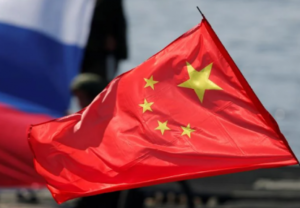
From January 1, 2026, China has completely stopped purchasing electricity from Russia, including the minimum contractual volumes. The reason is related to prices: the export cost of supplies from Russia in 2026 for the first time exceeded domestic electricity tariffs in China, making imports uneconomic. In China, the price remains virtually unchanged and is estimated at about 350 yuan per 1 MWh.
The contract for electricity supplies to China was concluded in 2012 and is valid until 2037.
Earlier, Inter RAO had already recorded a reduction in electricity exports to China in 2025 amid supply constraints in Russia’s Far East region, Reuters reported.
In 2025, Tekom Agro Group increased its land bank by 1,270,000 hectares, bringing its total area to more than 26,000 hectares, the company’s press service reported on Facebook.
Sergey Shtyrbulov, deputy head of the agricultural association for production, noted that in 2025, winter crops, in particular rapeseed, barley, wheat, and peas, occupied 80% of all areas, while 20% of the areas were allocated for sunflowers and lentils.
“We are already planning to sow lentils, sunflowers, and a new crop for us — flax. It will be sown in the Chernomorets division and partly in the north. In the spring, as soon as we conduct a survey of the meter-deep soil layer and find out the amount of precipitation, we will make a decision on crop rotation. If there is up to 100 mm of precipitation, we will most likely exclude sunflowers. However, this will allow us to expand the area under flax and lentils,” said Shtyrbulov.
According to him, the condition of winter crops in the agricultural association is currently assessed as satisfactory, and in some places better than satisfactory.
According to Shebulov, Tekom Agro Group began implementing Verti-till technology in 2025, which helped reduce cultivation costs by approximately $1 million. In fields where conventional tillage was used, yields were half those achieved with Verti-till.
Tekom Agro Group is a modern agricultural association operating in the Podolsk, Odessa, Belgorod-Dnestrovsky, and Razdelnyansky districts of the Odessa region. The management company, Telekom Agro Group LLC, was founded in 2021. The group unites four farms: Yasnye Zori LLC, Chernomorets LLC, Agrofirma Pivdenna LLC, and Liman LLC. It specializes in growing grain and oil crops. It owns two elevators with a total simultaneous storage capacity of about 100,000 tons.
The group is part of the sphere of influence of the shareholders of Pivdenny Bank. Its ultimate beneficiaries are Yuriy Rodin and Mark Becker.

NAEK Energoatom and IC Persha on behalf of the Nuclear Insurance Pool of Ukraine (NIPU) on January 13, 2026 concluded a contract of compulsory insurance of civil liability for nuclear damage that may be caused as a result of a nuclear incident.
According to the Prozoro e-sales system, the value of the contract is UAH 167.913 million, with a validity period from January 29, 2026 to January 28, 2027.
A similar contract was concluded on January 17, 2025.
PJSC Insurance Company Persha has been operating in the insurance market of Ukraine since 2001. The main specialization is automobile insurance. It is a member of the ITSBU, the League of Insurance Organizations of Ukraine, the National Insurer of International Road Transport Books (TIR).
JSPU was established in September 2003 to insure nuclear risks on terms of joint and several liability. Its members are 14 insurance companies of Ukraine.

Moderate snow at night and light snow is expected in the east and south-east of Ukraine on Friday, January 16, in the rest of the territory without precipitation.
According to Ukrhydrometcenter, the roads are icy in places. The wind is northeastern, in the west of the country southeastern, 7-12 m/s.
The temperature at night is 13-18°, in the northern and Vinnitsa regions in some places 20-23°, during the day 9-14° of frost. In Prykarpattya, south and south-east of the country at night 8-13°, during the day 4-9° of frost. In Transcarpathia, 1-6° of frost at night, about 0° during the day.
In Kiev on January 16, there is no precipitation. The roads are icy in places. The wind is northeasterly, 5-10 m/s. The temperature is 15-17° at night and 11-13° of frost during the day.
According to the Central Geophysical Observatory named after Boris Sreznevsky. Borys Sreznevsky, for all the time of meteorological observations in Kiev on January 16, the highest temperature during the day was recorded at 7.1° of heat in 1989, the lowest at night at 24.3° of frost in 1943.
On Saturday, January 17, in Ukraine, mostly without precipitation, only in the south-east of the country in some places light snow. The roads are icy in places. The wind is northeast (in the west of the country southeast), 5-10 m/s.
The temperature is 13-18° at night and 9-14° of frost during the day. In the south and southeast of the country at night 8-13°, during the day 4-9° of frost. In Transcarpathia at night 4-9° frost, during the day 0-5° frost.
In Kiev on January 17, there is no precipitation. The roads are icy in places. The wind is northeasterly, 5-10 m/s. The temperature is 15-17° at night and 11-13° of frost during the day.



