
The Cabinet of Ministers of Ukraine has canceled quotas for exports of coking coal of “K” grade for 2026, according to the government’s resolution No. 1795 of December 31 on the list of goods, export and import of which are subject to licensing and quotas.
According to the resolution, the quotas for exports of coking coal grade “K”, which were previously set at zero level, are absent in the document for 2026.
The resolution was published on the government website.

The GT Tested Reader Survey Awards are Global Traveler ‘s annual awards based on the results of an open reader survey (frequent, usually affluent travelers). For 2025, the survey was conducted from December 12, 2024 to August 31, 2025, more than 80 categories are declared ; the results are published in the December issue.
Below are the key “airline” categories (top 3):
1) Best Overall Airline in the World: 1) Emirates, 2) Singapore Airlines, 3) United Airlines.
2) Best Airline Alliance: 1) oneworld, 2) Star Alliance, 3) SkyTeam.
3) Best Aircraft Type: 1) Boeing 787, 2) Boeing 777, 3) Airbus A350.
4) Best Airline Website: 1) delta.com, 2) united.com, 3) aa.com.
5) Best Airline for Business Class: 1) Turkish Airlines, 2) Singapore Airlines, 3) United Airlines.
6) Best Air line for International First Class: 1) Etihad Airways, 2) Air France, 3) Cathay Pacific.
7) Best Air line for Domestic First Class: 1) Delta, 2) United, 3) American Airlines.
8) Best Airline Lounges: 1) Delta Sky Club, 2) American Airlines Admirals Club, 3) United Club.
9) Best Airline for Onboard Service: 1) Asiana, 2) Korean Air, 3) Cathay Pacific.
10) Best Airline for Flight Attendants: 1) Asiana, 2) Korean Air, 3) Cathay Pacific.
11) Best Flight Attendant Uniforms: 1) Condor, 2) Emirates, 3) Singapore Airlines.
12) Best Airline Cuisine: 1) Turkish Airlines, 2) Air France, 3) Korean Air.
13) Best First-Class Seat Design: 1) Cathay Pacific, 2) Korean Air, 3) Emirates.
14) Best Business-Class Seat Design: 1) Swiss, 2) United, 3) Korean Air.
15) Best Airline Cabin Cleanliness: 1) Air Canada, 2) United, 3) Cathay Pacific.
16) Best Airline App: 1) Delta, 2) United, 3) Alaska Airlines.
Regional/route categories (top 3):
1) Best Airline in North America: 1) Delta, 2) Air Canada, 3) United.
2) Best Airline to South America & Central America: 1) avianca, 2) LATAM, 3) Copa.
3) Best Airline in Mexico: 1) Aeromexico, 2) Volaris, 3) VivaAerobus.
4) Best Airline in the South Pacific: 1) Air Tahiti Nui, 2) Fiji Airways, 3) Qantas.
5) Best Airline in Europe: 1) TAP Air Portugal, 2) Lufthansa, 3) Air France.
6) Best Airline in Eastern Europe: 1) Air Serbia, 2) LOT, 3) Wizz Air.
7) Best Airline in Africa: 1) Royal Air Maroc, 2) Ethiopian, 3) Kenya Airways.
8) Best Airline in Australia and New Zealand: 1) Qantas, 2) Fiji, 3) Air Tahiti Nui.
9) Best Airline in the Middle East: 1) Etihad, 2) Emirates, 3) Gulf Air.
10) Best Airline in North Asia (excluding China): 1) Cathay Pacific, 2) China Airlines, 3) STARLUX.
11) Best Airline in Central/South Asia & India: 1) Air India, 2) Indigo, 3) SpiceJet.
12) Best Airline in China: 1) Air China, 2) Xiamen, 3) China Southern.
13) Best Airline to Japan: 1) ANA, 2) JAL, 3) United.
14) Best Trans-Atlantic Airline: 1) British Airways, 2) TAP, 3) Air France.
15) Best Trans-Pacific Airline: 1) Cathay Pacific, 2) Singapore Airlines, 3) Japan Airlines.
The Ukrainian state budget for 2025 allocates UAH 14.5 billion for science funding, while the draft (adopted) state budget for 2026 sets this figure at UAH 20.1 billion, according to materials from the Ukrainian Ministry of Finance.
In the Ministry of Finance’s presentation on the 2026 budget, 3.2 billion hryvnia is earmarked for supporting science on a performance basis, 1 billion hryvnia for creating scientific centers for defense developments, and 0.7 billion hryvnia for projects by young scientists.
At the same time, the latest available official summary statistics on internal expenditures for research and development (R&D) refer to 2024: they amounted to UAH 28.328 billion, which is 32.7% more than a year earlier; R&D intensity (share of GDP) increased to 0.37% from 0.30% in 2023.
According to the summary review, in 2024, 616 organizations were engaged in research and development, and the number of personnel employed in R&D was 63,800.
In terms of the structure of R&D funding in 2024, 30.6% came from the organizations’ own funds, 40.8% from the public sector (including 38.5% from the state budget), 11.6% from the business sector, and 15.9% from foreign sources.
By sector, the business sector accounted for 59.9% of domestic R&D expenditure, the public sector for 33.4%, and the higher education sector for 6.7%.
Ukrainian legislation sets a benchmark whereby the state provides budgetary funding for scientific and scientific-technical activities in the amount of at least 1.7% of GDP.
Compared to the EU, Ukraine’s R&D indicators remain low: according to Eurostat estimates, in 2024 the European Union spent €403.1 billion on R&D, and R&D intensity amounted to 2.2% of GDP (unchanged from the previous year).
The “domestic R&D expenditure” indicator reflects the total expenditure on research and development within the country from all sources. The “funding for science in the state budget” indicators are a narrower snapshot and are not equal to total domestic R&D expenditure.
https://expertsclub.eu/ukrayina-v-2026-r-planuye-201-mlrd-grn-na-nauku/
The Finnish Ministry of the Interior has issued a decree on increasing fees for processing immigration applications, including residence permits, which will apply to applications submitted from January 1, 2026.
According to the ministry, the increase will range from €50 to €250 and is due to the need to bring the fees closer to the actual costs incurred by the Migration Service (Migri) in processing cases.
In particular, the fee for electronic submission of a permanent residence permit application will increase from €240 to €380, and for paper submission from €350 to €600. For an initial residence permit for adults, electronic submission will cost €750 instead of €530, and paper submission €800 instead of €580.
Applying for international protection remains free of charge, but a fee of €53 will be introduced for processing applications for the extension of international protection status.
The ministry explained the increase in fees by the rise in the cost of processing applications against the backdrop of a decline in their number due to the economic situation, as well as changes in legislation that have increased the burden on Migri. The decree is valid until December 31, 2026.
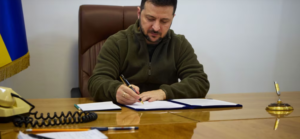
Ukrainian President Volodymyr Zelensky dismissed Ruslan Magomedov from his position as head of the National Securities and Stock Market Commission (NSSMC). The corresponding decree of the head of state No. 1018 of December 31 was published on his website.
Magomedov, who at the time was a freelance advisor to the head of the Office of the President (OP) and previously director of Astrum Capital, was appointed head of the NSSMC on February 23, 2021, replacing Timur Khromaev, whose term of office had expired along with three other members of the regulator.
In mid-December, Magomedov told Interfax-Ukraine that he would do everything possible to ensure that a law on personal investment accounts was passed before the end of his term of office on February 23, 2027, which, together with another idea to sell 7% of shares in state-owned companies and banks, would form the basis for a market reboot.
In October, Interfax-Ukraine reported on the resignation of NCSSM member Irakli Baramia and noted that the commission’s head had submitted a request for the dismissal of another member, Maxim Libanov, whose term of office had expired.
According to the publication Ekonomicheskaya Pravda, two other members of the NSSMC, Yuriy Boyko and Yaroslav Shlyakhov, submitted letters to President Volodymyr Zelenskyy in early December requesting their dismissal from their positions.
The adoption of a new law on the seventh member of the commission in 2024 has not yet affected its composition.
If all four members of the NSSMC are dismissed, it will lose its quorum. In addition, as one of the commission members told Interfax-Ukraine, a provision of the new law will come into force on January 1, 2026, according to which candidates will have to pass a selection committee before being nominated for appointment as a commission member, which may increase the time required for this personnel decision.
The NSSMC, as a collegial body, consists of a chairman and seven commission members (six members before the new law was adopted in February), who are appointed by the President of Ukraine for a term of six years and dismissed from office in accordance with his decrees.
During its assessment of the head and the NSSMC, which was conducted as part of the cooperation program with the IMF and whose results were published in early October, KPMG expressed the opinion that replacing the head and all members of the commission at the same time creates problems with continuity, institutional knowledge, and organizational memory.
“In order to ensure continuity in decision-making and consistency in policy, we recommend introducing rotational appointments for commission members. Without the introduction of rotational appointments, changes could lead to a loss of strategic vision and slow adaptation,” the consultant believes.
The report notes that consistent appointments will allow experienced commission members to guide new members, improving the stability of the organization and ongoing progress.
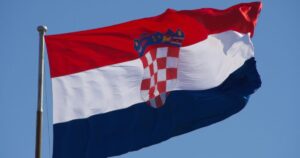
According to Serbian Economist, the structure of issuance of first residence permits in EU countries in 2024 differed markedly: in Croatia 95.3% of first residence permits were issued for work reasons, while in Ireland and France the most common reason was training, according to Eurostat.
According to Eurostat, the share of “working” first residence permits in 2024 was highest in Croatia (95.3%), as well as in Lithuania (81.8%) and Romania (77.2%).
At the same time, family reasons dominated in Luxembourg (52.2%) and Sweden (49.1%), while “other reasons”, including international protection, had the highest share in Greece (55.4%). In education, Ireland (48.0%) and France (32.8%) led the way.
https://t.me/relocationrs/2032



