

The majority of Ukrainians (62%) named the social network Telegram as their source of news and information, according to the results of a survey conducted by the international research company Ipsos on November 14-28, 2025, the results of which are available to the Interfax-Ukraine agency.
Specifically, 84% of Ukrainians aged 18-24 named Telegram as their source of news and information, 87% of those aged 25-34, 79% of those aged 35-44, and 74% of those aged 45-54. However, among those aged 55-64, 51% of respondents get their information from Telegram, and among those over 65, only 30%.
Less than half of those surveyed named all other sources.
In second place is television, from which 49% of respondents get their news and information, with the majority of them belonging to the two older age groups (54% aged 55-64 and 76% aged 65 and older). However, only 23% of young people aged 18-24 get information and news from television, compared to 32% of those aged 25-34, 36% of those aged 35-44, and 43% of those aged 45-54.
YouTube ranks third: 46% of respondents get news and information from this source, with almost equal representation across all age groups (from 41% among those over 65 to 53% among those aged 45-54).
This is followed by personal communication, which was mentioned by 38% of respondents, also relatively evenly across all age groups (from 33% among those over 65 to 45% among those aged 25-34).
The social network Facebook is in fifth place, cited by 34% of respondents (from 26% among those over 65 to 43% among those aged 45–54).
TikTok was named as a source of news and information by 23% of respondents, with more than 30% among those under 35 and only 16-17% among those over 54. The situation is similar with social network X, which was named as a source of news and information by 6% of respondents — 13% among those under 25 and only 3% among those over 65.
Radio was named as a source of news and information by 18% of respondents, but only 8% of them were under 25 and 25% were over 65. The situation is similar with the press: it remains a source of news and information for 11% of respondents, but only 7% of them were younger than 25 and 14% were older than 65.
40% of respondents said they would trust personal communication as a source of information about potential candidates if it were announced in Ukraine, 38% said they would trust the social network Telegram, 35% trusted YouTube, 28% trusted television, 26% trusted Facebook, 18% trusted radio, 17% trusted the press and TikTok, 10% trusted social network X, and 57% trusted other sources.
At the same time, 29% of respondents do not trust television as a source of information about candidates, 26% do not trust TikTok, 24% do not trust the press, 22% do not trust radio, 20% do not trust Facebook, and 18% do not trust social network X. 14% of respondents do not trust personal communication and social network Telegram, 13% do not trust YouTube, and 11% do not trust other sources.
During the study, 2,000 respondents aged 18 and older were surveyed in all government-controlled regions of Ukraine, including 1,500 through personal interviews (CAPI) and 500 by telephone (RDD CATI). Quotas were not applied during data collection in order to preserve the probabilistic nature of the sample. The sampling error does not exceed 2.2% with a 95% confidence level.

Colombia, with the support of Russia and China, has initiated a meeting of the UN Security Council, Reuters reported, citing information from diplomats.
The agency also quotes an excerpt from a letter sent to the UN Security Council by Venezuela’s ambassador to the UN, Samuel Moncada.
” This is a colonial war aimed at destroying our republican form of government, freely chosen by our people, and establishing a puppet government that will allow our natural resources, including the world’s largest oil reserves, to be plundered,” Moncada wrote in a letter to the UN Security Council on Saturday, noting that the US had violated the UN Charter.

Updated rules for producers of grapes and wine products have been in force in Ukraine since January 1, 2026, they are approved by the law “On grapes, wine and wine products” (#3928-ІХ), adopted by the Verkhovna Rada on August 22, 2024. The law introduces updated rules for producers of grapes and wine products, establishes modern requirements for the cultivation of grapes, production, labeling and circulation of wine, and brings the Ukrainian system closer to European standards.
One of the key elements of the document is the protection of geographical indications – classification according to the European model, according to which a clear division of wines by origin into wines with protected appellation of origin (PAO) and wines with protected geographical indication (PGI) is introduced. Clear rules have been established for the official recognition and protection of geographical indications, allowing producers to secure regional brands and guarantee consumers authentic quality.
An important tool for streamlining the industry will be the creation of the Viticulture and Wine Registry: the state is introducing a unified information system where all grape plots, grape production and viticulture products will be registered. This will guarantee full traceability of the product from the vine to the store shelf.
In addition, the said law provides for simplification of conditions for small winemakers, which will stimulate the development of the craft segment and gastrotourism.
At the same time, Ukraine introduces strict requirements to the label: the information that must be available to the consumer is clearly regulated, which prevents falsification of wines.
The law updates the terms and classification of wine products, establishes quality standards and labeling requirements. It defines the procedure for state control and general principles of development of the winegrowing and winemaking industry.
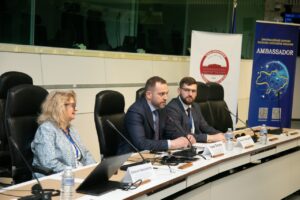
In the temporarily occupied territories of Ukraine, perceptions of the EU and the US are formed not through their own experience, but through the prism of Russian propaganda and information isolation. This was stated by sociologist, director of the Active Group research company Oleksandr Poznyi during his speech at the Forum on Countering Russian Propaganda and Disinformation, held on December 17-18, 2025 in Brussels.
In his speech, the expert relied on the results of sociological studies conducted in 2023-2025 and emphasized that residents of the temporarily occupied territories are virtually deprived of direct communication with Europe and the United States. In such circumstances, the perception of the West is formed mainly through narratives imposed by the occupation authorities. “For many people in the TOT, Europe and the United States are not partners or allies of Ukraine, but abstract, distant actors whose image is almost entirely shaped by the Russian media,” said Poznyi.
According to the sociologist, Russian propaganda systematically forms two dominant images of the West. The first one is aggressive and hostile, which allegedly “controls Ukraine”, “provokes war” and “uses Ukrainians in its own interests”. The second is cynical and indifferent, “tired of Ukraine” and ready to sacrifice its territories for the sake of stability. “These narratives contradict each other but coexist perfectly. They are not about logic, they are about emotion and fear,” explained Poznyi.
As a result, a part of the population has a distorted view of the role of the EU and the US, which has nothing to do with the real policy of supporting Ukraine, but directly affects public sentiment and expectations for the future. One of the key reasons for this perception is complete information isolation. Ukrainian and Western sources of information are blocked or criminalized, and any alternative viewpoints are viewed as “extremism” or “espionage.”
“People cannot verify information. They are forced to live inside an information bubble where the West is an image, not a reality,” the sociologist emphasized. According to him, even those TOT residents who support Ukraine internally often avoid talking about Europe or the United States, as these topics are considered “dangerous” and may arouse suspicion on the part of the occupation structures.
During the forum in Brussels, these observations were presented as a serious challenge for European policy. According to Poznyi, the perception of the EU and the US in the occupied territories will directly affect the processes of de-occupation and reintegration in the future. “If people have been hearing for years that Europe is an enemy or a traitor, these perceptions do not automatically disappear after de-occupation,” he emphasized.
The Forum on Countering Russian Propaganda and Disinformation, held on December 17-18, 2025 in Brussels at the European Parliament and the European Economic and Social Committee, was dedicated to strengthening Europe’s cognitive and information resilience in the face of hybrid threats.
The event brought together representatives of European institutions, think tanks, media and civil society from Ukraine and the EU. The event was aimed at outlining the scope and mechanisms of Russian propaganda, showing its destructive impact on public consciousness, and discussing ways to counter it.
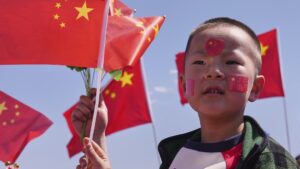
China has abolished a 30-year tax exemption on condoms and a range of contraceptives and started imposing a standard VAT of 13% on them from January 1, 2026, media reported. The decision is seen as part of a package of measures to stimulate the birth rate amid a continuing decline in the number of births and an aging population.
Earlier, Chinese authorities also announced the launch of a nationwide childcare subsidy program – the payment amounts to 3,600 yuan a year (about $500) for each child under the age of three.
In addition, the government encouraged universities to introduce “love education” courses – training focused on fostering positive attitudes toward marriage, family and having children.
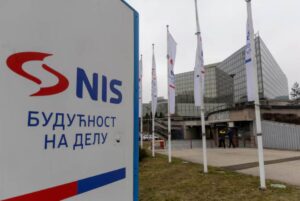
According to Serbian Economist, the Office of Foreign Assets Control of the US Department of the Treasury (OFAC) has issued a temporary license to Serbian oil company NIS, controlled by Russian shareholders, to continue operating until January 23, 2026, said Serbian Minister of Mining and Energy Dubravka Djedovic-Handanovic.
According to her, the decision means the resumption of operations at the Pančevo refinery after a 36-day pause. U.S. restrictions, which came into effect in the fall, had earlier blocked oil supplies via the refinery’s only crude import route – through Croatian pipeline operator JANAF.
NIS operates a refinery with a capacity of 4.8 million tons per year and the largest network of gas stations in Serbia (327 stations), providing about 80% of fuel consumption in the domestic market.
Earlier OFAC gave NIS a deadline of March 24 to negotiate the sale of the Russian owners’ stake; in the company’s capital structure Gazprom owns 11.3%, Gazprom Neft – 44.9%, the Serbian state owns 29.9%. Serbian President Aleksandar Vucic reported that Gazprom was in talks with Hungary’s MOL about a possible deal.
https://t.me/relocationrs/2042



