
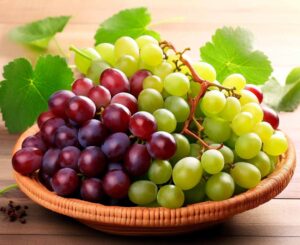
The cost of grapes in Ukraine in 2026 remained roughly at the same level as last season, despite a significant increase in the cost of fertilizers, plant protection products, fuel, and logistics, which is leading to a decline in the profitability of grape-growing operations.
Tetyana Shmaglyuchenko, head of the company “VIN’S,” discussed this in an interview with the agricultural publication SEEDS.
According to her, prices for most grape varieties have essentially remained at last year’s levels. Only a few large rosé varieties have become slightly more expensive. At the same time, production costs have increased significantly.
Producers cite rising costs of mineral fertilizers, vine protection products, and fuel as the main factors. Logistics have added to the burden, especially for farms in Bessarabia, where transportation costs have risen due to infrastructure damage and restrictions on traditional routes.
The situation is further complicated by a decline in the harvest. According to producers’ estimates, the gross grape harvest at some farms this season could be 20–30% lower than last year. Winter frosts and a cold spring have negatively affected yields.
The war is also directly affecting vineyards in southern Ukraine. Some vineyards have sustained damage as a result of hostilities, falling drone debris, and other war-related factors.
The combination of virtually unchanged selling prices, rising production costs, and reduced harvests is forcing producers to seek additional sources of income.
One such avenue is the further processing of grapes. Farms are investing in the production of fruit leather, raisins, and other products with higher added value, and are using infrared dryers and vacuum equipment to process fruit puree.
Another trend is cooperation with producers of other fruits. This allows for the production of combined products using local peaches, plums, and other raw materials.
Producers are also investing in energy self-sufficiency. In particular, solar power plants are used to power wells and irrigation systems, which helps to partially reduce dependence on external energy supplies.
At the same time, some farms are considering a shift from selling fresh grapes to winemaking. With grant support from the FAO, technical grape varieties are being planted that can later be used for wine production.
Thus, for Ukrainian viticulture in 2026, the key challenge will be not so much a lack of demand for products as the gap between the selling price and the cost of production. Under these conditions, processing allows farms to derive greater added value from their own raw materials while simultaneously maintaining production capacity and preserving employment for workers after the harvest season ends.
Viticulture remains one of the most labor-intensive sectors of horticulture in Ukraine. Most commercial grape production is concentrated in the southern regions of the country and in Zakarpattia, and a significant portion of the industry has been directly affected by the full-scale war.
Source: SEEDS.

Updated rules for producers of grapes and wine products have been in force in Ukraine since January 1, 2026, they are approved by the law “On grapes, wine and wine products” (#3928-ІХ), adopted by the Verkhovna Rada on August 22, 2024. The law introduces updated rules for producers of grapes and wine products, establishes modern requirements for the cultivation of grapes, production, labeling and circulation of wine, and brings the Ukrainian system closer to European standards.
One of the key elements of the document is the protection of geographical indications – classification according to the European model, according to which a clear division of wines by origin into wines with protected appellation of origin (PAO) and wines with protected geographical indication (PGI) is introduced. Clear rules have been established for the official recognition and protection of geographical indications, allowing producers to secure regional brands and guarantee consumers authentic quality.
An important tool for streamlining the industry will be the creation of the Viticulture and Wine Registry: the state is introducing a unified information system where all grape plots, grape production and viticulture products will be registered. This will guarantee full traceability of the product from the vine to the store shelf.
In addition, the said law provides for simplification of conditions for small winemakers, which will stimulate the development of the craft segment and gastrotourism.
At the same time, Ukraine introduces strict requirements to the label: the information that must be available to the consumer is clearly regulated, which prevents falsification of wines.
The law updates the terms and classification of wine products, establishes quality standards and labeling requirements. It defines the procedure for state control and general principles of development of the winegrowing and winemaking industry.
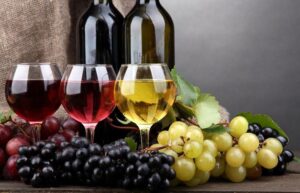
The Verkhovna Rada of Ukraine has adopted in the second reading a draft law on support for the development of viticulture and winemaking, said Acting Minister of Agrarian Policy and Food Taras Vysotsky.
“I am grateful to the people’s deputies for their unanimous support for the development of viticulture and winemaking! Bill 9139 – 311 votes in favor,” he wrote on Facebook.
The draft law “On grapes and viticulture products” (No. 9139), which the government registered in the Verkhovna Rada on March 22, is aimed at implementing the relevant EU regulations on viticulture and winemaking, oenological practices, production of flavored wine products, use and protection of geographical indications of wines.
“At the same time, the purpose of the draft law is to create a unified state information system, the Viticulture and Winemaking Register, which will include information on: grape producers; wine products; vineyards; mandatory declarations and other data on wine products provided for by this law, the entry of which is mandatory, which will ensure effective administration and state support for the viticulture and winemaking industry,” the explanatory note to the document says.
The document envisages the introduction of requirements for the production and circulation of wines, viticulture and winemaking products, and flavored wine products with geographical indications similar to current rules in the EU. In particular, it is not allowed to blend wine produced in Ukraine with imported wine, as well as wines produced outside Ukraine.
The draft law provides for the possibility of state support for viticulture and winemaking within the framework of the general laws “On State Support for Agriculture” and “On Peculiarities of Insurance of Agricultural Products with State Support” without any details, except for the principles of objectivity, equality and proportionality.
The document contains the principles for conducting inspections of wine production from the vineyard to the final product, defines the controlling institutions and their powers, and specifies sanctions, according to the explanatory note.

The Cabinet of Ministers has amended the procedure for providing grants for the establishment of horticulture, berry and viticulture, as well as the development of greenhouse farming, which are aimed at the recovery of the grape and wine industry, the Ministry of Agrarian Policy and Food reported.
“Viticulture is a key industry that is now in stagnation. Therefore, realizing these conditions, we have updated the grant procedure. The changes will help winemakers integrate into the grape vertical. They will be able to use the grants to plant their own vineyards. We have also eliminated the mandatory requirement to install irrigation systems and water intake for grapes,” – commented on the Government Resolution No. 871 adopted by the Acting Minister of Agrarian Policy and Food Taras Vysotskyi.
According to his information, the order of granting grants for the establishment of horticulture, berry growing and viticulture presents an expanded list of regions for growing stone fruit species. The total area for planting peach, apricot, sea buckthorn, raspberry, currant, gooseberry, blackberry, currant has been increased at the expense of reducing the total area of planting under pigeonpea and blueberry. The document also clarifies the period during which a garden grant recipient is required to create an appropriate number of seasonal jobs. In addition, the requirement to install an irrigation system and water intake for grapes has been eliminated.
The decree expands the range of potential recipients of grants for orchards and greenhouses. They can be agrarians who are located and carry out economic activities in the territories of active hostilities, where the state electronic information resources are functioning, produce (without adding alcohol) and / or sale of wine grapes, fruit and berry, honey drinks.
The decree shall come into force from the date of its publication.
berry growing, CABINET OF MINISTERS, GRANTS, HORTICULTURE, VITICULTURE

The Cabinet of Ministers has amended the procedure for granting grants for the creation and development of horticulture, berry growing, viticulture, and greenhouse development.
According to Taras Melnychuk, a representative of the Cabinet of Ministers in the Verkhovna Rada, on Telegram, the decision was made at a government meeting on Friday.
According to the report, the changes improve the mechanisms for supporting business entities operating in the relevant industries.
It is expected that the grant recipient will create jobs and employ full-time employees and pay them the mandatory minimum wage for such specialists.
In addition, the list of conditions for canceling decisions of the Ministry of Agrarian Policy has been expanded, in particular, in case the recipient unilaterally closes its bank account and in case of violation in the transfer of its entire share of co-financing within 30 days after the conclusion of the agreement.
The Cabinet of Ministers has clarified the number of employees required to provide grants for the establishment or development of greenhouse facilities and shortened the list of regions for almond planting.

Director General of the International Organization of Vine and Wine Industry (IOVI) Pau Roca thanked representatives of the Ukrainian wine industry for the work done to restore Ukraine’s membership in this international structure.
“In this difficult time that Ukraine is going through and in this difficult situation, we focus on the promotion of Ukrainian winemaking in the world. The fact that Ukraine joined our interstate organization is a very important step at this very period. This step will bring results in the near future”, – stressed the Head of IGOV at a press conference in the news agency Interfax Ukraine.

In turn, the Deputy Minister of Agrarian Policy and Food of Ukraine Markiyan Dmytrosevych also noted the importance of Ukraine’s membership in IGOV, as this organization currently unites 85% of the world’s specialists in the field of viticulture and winemaking, as well as represents the interests of 80% of consumers.
“The International Organization of Winegrowing and Winemaking is primarily a platform for the exchange of experiences in the promotion of wine products. Membership in IGOV and work in its committees will give Ukraine the opportunity to be aware of all the changes and directions of development of the industry, which, in turn, is important in the context of European integration of our country, “- said Dmitrasevich.
Speaking about the consequences of war for the sector, the Deputy Minister said that, according to the estimates of the World Bank and experts of the Institute of International Economics, the cost of destroyed, stolen, damaged property in the agricultural sector is $8 billion. With the rest of the indirect losses – lost profits, unfulfilled contracts – the total damage from military action reaches 40 billion UAH.
“If perennial plantations are destroyed, it will take years to recover. After the human losses such losses are the most painful for us and for the industry”, – he stressed.
In addition, M. Dmitrasevich recalled the possibility of attracting state grant program for the establishment of new vineyards.
The head of the public association “Ukrsadvinprom” Volodymyr Pechko noted that in 2021 in Ukraine officially there were about 266 industrial producers of grapes and wine, 125 winegrowing enterprises, 29 small producers of grapes and wine products.
“About the figures, to process each hectare involved 33 employees on a permanent basis, each enterprise employed an average of 250 people. Thus, the employment rate in viticulture and horticulture in Ukraine is one of the highest compared to other industries,” stressed the industry representative.
Pechko also thanked the Ministry of Agrarian Policy for implementing an industry support program and providing grants to winemakers in both 2021 and 2022.
“The state’s support of planting vineyards even in this difficult time will allow not only to preserve the industry in the future, but also to expand vineyard planting areas,” he said.
According to the moderator of the press conference and the deputy head of the public association “Ukrsadvinprom” Maxim Urakin, in the current realities it is extremely important to extend the status of winemaking to all regions of Ukraine.
“Granting the status of winemaking regions to all regions of Ukraine without exception is especially relevant in connection with the displacement of viticulture in the central and western regions of the country, where dozens of winemakers are already working effectively; the status of winemaking region will allow winemakers to claim assistance, technology, benefits,” – said Urakin.
According to the deputy head of “Ukrsadvinprom” on international relations Natalia Burlachenko, the main purpose of the renewal of membership in the IOVV is the popularization of the Ukrainian product.
“First of all, we want to show what heights and quality Ukraine has achieved, despite the realities in which we live. This is an important platform to sound to the world. It is an opportunity not only virtually but also offline to communicate with foreign colleagues and show that Ukrainian wine exists, exists and will become more competitive in the future,” she said.
Ricardo Nuñez, owner of the Vinos de La Luz wine company and investor in Ukrainian winemaking, stressed that Ukraine needs a state program for the development of winemaking to bring the industry to a new level of development after the war.
“In February 2022 the dynamic development of the wine industry in Ukraine came to a halt. Many Ukrainians, including those involved in winemaking, left their homes. But they will return with the knowledge and experience gained outside the country. They must be prepared for new opportunities”, the winemaker said.
Ricardo Nunez presented the novelty of the season – a red dry wine Big Wines Big Art, which was produced from the grapes of Odessa black vintage 2020 grown in the Rhenia district of the Odessa region. The first batch of 1,000 bottles was produced at the facility in the Kyiv region. A well-known artist Ivan Marchuk was involved in the work on the new Ukrainian wine, who provided his painting “Awakening” symbolizing the revival of Ukrainian winemaking after the war, said Ricardo Nuñez.
Speaking about the future recovery of the industry the winemaker reminded that development always begins with the emergence of many small producers who become the basis for the creation of large enterprises.
“I am the first investor in the winegrowing and winemaking industry in Ukraine during the war. I am working on wine production right now. My task is to teach Ukrainians to drink their own wine. Then the country will have a great and great industry,” he said.

Representatives of Ukrsadvinprom handed over the flag of the International Organization of Vine and Wine Making to the Ministry of Agrarian Policy of Ukraine.
The International Organization of Vine and Wine (IOVV) is the successor of the International Bureau of Vine and Wine, which existed from 1924 to 2001 and today unites 49 countries. It is this organization that develops the standards of world winemaking. IOVW consists of four committees – viticulture, enology, economics and law, safety and health. Ukraine will be represented in the international organization by a delegation, which consists of representatives of the Ministry of Agrarian Policy, the Institute of Viticulture and Winemaking named after Tarov. Ukraine will be represented by a delegation consisting of representatives of the Ministry of Agrarian Policy and the Winemaking Institute named after Tairov, members of “Ukrsadvynprom”.
The Vinos de La Luz Group has wineries in Old and New World wine-growing regions, in particular, in Spain, Italy, Argentina and the USA, where it produces wines under the Vinos de La Luz brand.
EXPERTS_CLUB, MARKIYAN_DMITRACEVICH, MINISTRY_OF_AGRICULTUR, NATALIA_BURLACHENKO, OIV, PAU_ROCA, RICARDO_NUNEZ, UKRSADVINPROM, VINOS_DE_LA_LUZ, VITICULTURE, WINE, WINE_OF_UKRAINE, WINEMAKING



