
The board of the state-owned Ukreximbank has decided to terminate the bank’s branches in Ivano-Frankivsk and Uzhgorod, while a representative office of the bank will be established on the basis of the branch in Ivano-Frankivsk.
According to the bank’s message in the information disclosure system of the National Commission on Securities and Stock Market (NCSSM), the decision was made on December 17, 2025, as part of the transformation of the regional network and to improve operational efficiency, the last working day of branches in Ivano-Frankivsk and Uzhgorod determined March 19, 2026.
It is noted that on the basis of the bank’s branch in Ivano-Frankivsk (10 Nezavisimosti Street) will be created a representative office of the bank in this city, the first working day of which is defined as March 20, 2026. The branch in Ivano-Frankivsk serves corporate, medium and retail clients, as well as municipalities and the municipal sector.

State enterprise “International Airport ”Boryspil” (Kiev) on December 22 announced a tender for personal insurance of drivers against accidents on transport, according to the system of electronic public procurement Prozorro.
The expected cost of purchasing services is UAH 120,968 thousand.
Security of the tender offer is not required.
The deadline for submission of bids is December 30.
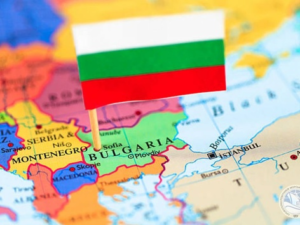
According to the Serbian Economist, Bulgaria has started accepting applications for a long-term stay permit on the basis of “digital nomad” – the relevant changes to the by-laws came into force on December 20, 2025.
As Bulgarian Telegraphic Agency reported, the introduction of the procedure for issuing such a permit is intended to create a clear procedure for foreigners who want to live in the country and work remotely without a relationship with a local employer, as well as to bring economic benefits by attracting specialists in innovation, high technology and creative industries.
Upon initial application or renewal of the permit, the applicant must, inter alia, prove an average annual income of at least 50 minimum monthly salaries for the previous calendar year and provide documents proving remote employment – an employment contract with the employer or contract(s) for remote services and recommendations from the customer(s), and the work or services must not be provided to persons and companies in Bulgaria.
Bulgarian legislation defines three categories of “digital nomads”: employees of an employer outside the EU/EEA/Switzerland; owners/shareholders (with a share of more than 25%) or management of companies registered outside the EU/EEA/Switzerland; and persons who have provided remote services for at least one year prior to the application, provided there is no employment on the Bulgarian market. The permit is valid for one year, renewable for another year; the procedure usually involves obtaining a D visa and subsequent regularization in Bulgaria.
https://t.me/relocationrs/1988
Elementum Energy, a subsidiary of VR Capital Group operating in the renewable energy sector, plans to launch the 60 MW Dunay wind farm in the south of the Odesa region by the end of 2026, according to Olga Rybachuk, managing director of Elementum Energy and member of the board of the Ukrainian Wind Energy Association.
“We have already started construction and activated the turbine contract with Vestas. They are already being manufactured, all permits are in place, and the site is being completed. We hope that the wind farm will be connected to the grid by the end of 2026,” Rybachuk said at the UWEA’s final press conference at the Interfax-Ukraine agency on December 19.
In addition, according to her, the company has already reached the final stage of development of a 200 MW wind farm project in western Ukraine.
“This project should be ready for construction to begin in the first quarter of next year. We are very actively considering starting its construction in the second quarter of 2026,” Rybachuk said.
At the same time, she drew attention to the need for legislative regulation of one of the issues related to connecting new generation facilities to Ukrenergo substations, namely, providing investors with the opportunity to build the necessary facilities for such connection themselves.
“The construction and reconstruction of Ukrenergo substations for connection is an extremely long process, taking 2-3 years, which no project can afford. If we can independently answer to NEC for organizing the construction process, conducting our own tenders, and selecting contractors, then this project will fit into the construction timeframe of 1.5-2 years. This is what the power system needs, and it is very suitable in terms of resources and economic effects,” explained the managing director of Elementum Energy.
She stressed that making the appropriate amendments to the legislation is a critical issue.
“We very much hope that by 2028, the 200 MW wind farm will be supplying energy to Ukraine’s power grid,” Rybachuk emphasized.
As for the turbine manufacturer, she said that the company will most likely choose between Vestas and Nordex.
“In addition, we are working with the World Bank Group, IFC, which is very interested in financing Elementum projects and supports us in developing projects for sale on the open market, without any form of state support. The investment in this project is large, more than EUR 300 million. I agree that it cannot be done without financial partners. And, fortunately for us, we have a very powerful financial partner,” said the top manager of Elementum Energy.
Rybachuk also noted that the company plans to implement a pilot project for a 10 MW energy storage facility (ESF) with a capacity of 20 MWh, which it wants to build near one of its wind farms to test the joint operation of generation and ESF.
“We plan to see our ESS in operation by mid-2026. When we started this project, we were counting on our own funds, but soon the World Bank joined with a grant,” she said.
The company’s chosen operational model of WPP+ESS does not provide ancillary services to the transmission system operator, but rather involves working in time-shifted energy transfer modes, dealing with imbalances and constraints.
“In principle, storage systems should become an integral part of all new wind and solar projects because they minimize the specific component of renewable sources—imbalances,” the top manager believes.
At the same time, Rybachuk emphasized that the transmission system operator and distribution system operators limit renewable energy producers to 30-40% of their installed capacity at certain times.
“I think we cannot afford this, we cannot lose megawatts to restrictions,” she said, noting that resolving issues related to the operation of the UZE will also be a priority for the UEA in 2026.
According to her, the UZE has already been delivered to the site, and its assembly and connection will begin later this year.
As reported, at the same press conference, the chairman of the board of the Ukrainian Wind Energy Association (WEA), Andriy Konechenkov, noted that since the beginning of 2025, 324 MW of new wind power capacity has been built in Ukraine, while in the previous two years – between 2022 and the first quarter of 2025 – 248 MW of new wind power capacity was commissioned.
The country also has 534 MW of total installed capacity of energy storage systems (BESS).
Elementum Energy is an international investor in Ukraine’s renewable energy sector. The company manages a portfolio of solar and wind power plants with a total capacity of 636 MW and continues to develop new projects in the field of wind energy and energy storage systems.
In early December 2024, Elementum Energy announced that it had acquired a 200 MW wind power project in western Ukraine and intends to prepare it for construction in late 2025.

Ukraine continues to be one of the largest suppliers of cheese to the Uzbekistan market, ranking among the top 10 exporters of this product. Dairy products traditionally occupy an important place in the diet of the Uzbekistan population, where fermented drinks such as kefir, ayran, and bifidok are particularly popular. At the same time, the most dynamically growing segments are ready-made baby food, drinkable yogurts, and butter, which indicates a gradual expansion of consumer preferences and demand for products with higher added value.
As Olga Gvozdeva, advisor to the director of the Office for Entrepreneurship and Export Development, noted, demographic and infrastructure factors are important for market development. “The average age of the population is 29, and the level of urbanization is only 51%, which creates certain logistical difficulties, especially for products that require a cold chain,” she said.
The growing demand for dairy products in a country that is home to 38% of Central Asia’s population makes Uzbekistan the largest potential consumer market for dairy products in the region.
There is a free trade agreement between Ukraine and Uzbekistan, which provides for a zero customs duty rate for products with a Ukrainian CT-1 certificate. Currently, 16 Ukrainian companies have official permission to export dairy products to Uzbekistan. Among them are:
Agroprosperis LLC
Molochny Aliance LLC
Yuriya-Plus LLC
Lvivmolprodukt LLC
Kyivmolprodukt LLC
Rogan Dairy Factory LLC
Prostokvashino LLC
Podillya LLC
Zarechnoye LLC
Starokostiantynivsky Milk Plant LLC
Shostka LLC
Volynmoloko LLC
Ivano-Frankivsk Milk Plant LLC
Bukovina LLC
Milko Dnipro LLC
Ternopil Milk Plant LLC
Uzbekistan is actively updating its regulatory system. In particular, in 2023, outdated technical regulations were abolished, and new sanitary standards and product safety assessment mechanisms were introduced. Particular attention is paid to compliance with Halal standards, in particular, the national certification system has been in operation since May 2023. The “Foydalilik belgysi” (Usefulness Mark) label was also introduced, which classifies products according to their nutritional value.
Thus, Ukraine has significant prospects for increasing exports of dairy products to Uzbekistan, which, given the growing demand and regulatory changes, is a lucrative opportunity for Ukrainian producers.

According to Serbian Economist, the Croatian parliament has approved a law paving the way for the construction of a radioactive waste management center at the Čerkezovac site on Trgovska Gora Mountain in Sisak-Moslavina County, less than a kilometer from the border with Bosnia and Herzegovina.
According to the law, the Čerkezovac site will become the central facility for storing low- and medium-level waste from the Slovenian-Croatian Krško Nuclear Power Plant, as well as so-called “institutional” radioactive waste from Croatian hospitals and industry. The site is located approximately 800 m in a straight line from the BiH border and about 1 km from the water intake of the Novi Grad community, which supplies drinking water to about 15,000 people.
The adopted act creates a regulatory framework for the design and construction of the facility and establishes Čerkizovac as a priority location for a waste management center. Geological surveys, seismic risk assessments, and measurements of the “zero” radiation background have already been carried out at the site, as reported by the Croatian side in documents sent to international organizations.
A surface storage facility is planned to operate until the 2090s, after which the waste will be transferred to a deep geological repository.
Strong reaction from Bosnia and Herzegovina
Zagreb’s decision has been strongly criticized by politicians and environmental activists in Bosnia and Herzegovina. The country’s authorities had previously set up interdepartmental expert and legal groups to follow up on the issue at international forums and insist that the facility poses a risk to the Una River, border communities, and drinking water supplies.
Political parties and authorities in BiH consider the law to be a violation of the principles of good neighborliness and are demanding that Croatia reconsider its decision or seek an alternative site, citing, among other things, the Espoo Convention on Environmental Impact Assessment in a Transboundary Context.
The Croatian side, in turn, states that the environmental impact assessment procedure will include the participation of the public and the competent authorities of BiH.
https://t.me/relocationrs/1977



