
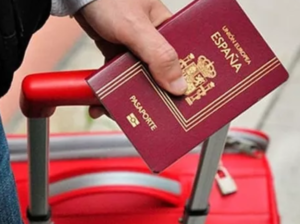
According to data from the Permanent Immigration Monitoring Center (OPI) under the Spanish Ministry of Social Policy and Migration, as of September 30, 2025, 7,426,481 foreign citizens had valid residence permits in the country. This is 4.5% more than a year earlier.
Of this number, 54% (about 4 million people) are citizens of EU, EFTA, and UK countries who have an EU citizen registration certificate or a TIE foreigner card under the UK’s withdrawal agreement from the EU. The most numerous nationalities in this group are Romanians, Italians, and British: they account for 51% of all European residents.
The Ukrainian community stands out as a separate block in the statistics. According to data based on official statistics from the Spanish Ministry of Social Policy and Migration, as of September 2025, more than 326,000 Ukrainian citizens have a valid residence permit in the country. A significant portion of this number are people who received protection under the EU Temporary Protection Directive, introduced after the full-scale invasion of Ukraine by the Russian Federation in February 2022.
The growth of the Ukrainian diaspora was particularly sharp in 2022–2023, but slowed significantly in 2024–2025: while the annual increase at the height of the war was measured in triple digits, by the fall of 2025 it had fallen to single digits.
After Brexit, the British remain one of the three largest European communities in Spain, alongside the Romanians and Italians. The official OPI report does not provide the exact number of British citizens in its public summary, but emphasizes that these three nationalities account for more than half of all residents from the EU/EFTA and the UK.
A characteristic detail is the age profile of the British diaspora. The average age of British residents is significantly higher than the average among foreigners and is around 57, reflecting Spain’s popularity as a country for retirees and a “second home” for British citizens.
Thus, by the end of 2025, Spain will remain one of the key EU countries in terms of the number of permanent foreign residents, and the structure of migration will gradually shift: European communities will continue to dominate, but citizens of Ukraine and Latin American countries will play an increasingly important role.
http://relocation.com.ua/more-than-326000-ukrainian-citizens-have-a-valid-residence-permit-in-spain/
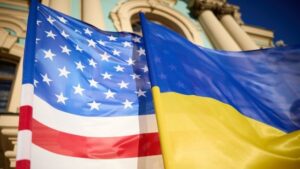
The US has proposed a meeting between the national security advisors (NSA) of Ukraine, the US, and Russia, Ukrainian President Volodymyr Zelenskyy said, expressing cautious optimism about the prospects for such a meeting.
“As for Umerov (Secretary of the National Security and Defense Council Rustem Umerov, who is in the US, where he held talks with American and European partners on ending the war), he called me and said that America is now proposing a trilateral meeting of the NSA – America, Ukraine, Russia,” Zelensky said in comments to reporters on Saturday.
The president noted that he is not sure that this meeting will bring anything new, but pointed out that a similar meeting in Turkey resulted in the return of captured military personnel and civilians, so it is worth holding such meetings.
“I believe that this is not everything we wanted, but it is very important. I am very glad that we had exchanges. Our people, our military personnel, especially prisoners, have returned home. And civilians too. And that is why such steps must be taken. And if there can now be a meeting that will unblock the exchanges, or if the result of the trilateral NSA meeting could be an agreement on a trilateral meeting of leaders, and I have said this many times, there are complex issues that must be resolved by the leaders of the states. Therefore, if the results are exchanges or some other agreements, I cannot be against it, we will then support the proposal of the United States of America. Let’s see how it goes,” Zelensky said.

According to Serbian Economist, the first international Nikola Tesla Film Festival, dedicated to the life and legacy of Serbian-American inventor Nikola Tesla, will be held on January 7, 2026, in Las Vegas (USA) at the Palms Casino Resort.
According to the festival organizers, the goal of the event is to use film to show Tesla’s lasting influence on modern civilization—from electric power to wireless communications—while strengthening the cultural bridge between Serbia and the US.
According to their data, 120 applications have already been submitted from around the world, including the USA, Canada, Japan, India, European countries, Ukraine, Latin America, and Africa.
The program will include feature films and documentaries that explore the themes of science, innovation, and “visions of the future.” In addition to screenings, there will be cash prizes and a special prize—a Tesla statuette—as well as a separate award for projects created using artificial intelligence technologies, which, according to the organizers, will set a precedent for the US festival landscape.
The festival remains open to international submissions, with participation free for students to encourage young filmmakers to explore scientific and technological themes and the legacy of Nikola Tesla.
https://t.me/relocationrs/1972

The Cabinet of Ministers has approved a proposal from the Ministry of Education and Science to implement a joint project with the United Nations Children’s Fund (UNICEF) to provide financial assistance to 1,500 educational institutions for the 2025/2026 academic year.
As reported by Taras Melnychuk, representative of the Cabinet of Ministers in the Verkhovna Rada, on Telegram, the relevant decision was made at a government meeting on Friday.
It is noted that the purpose of the assistance is to ensure that educational institutions are prepared for the winter period and to increase their energy sustainability in frontline and other vulnerable regions.
The amount of financial assistance is set at UAH 420,000 per institution, provided to the founder as a lump sum for each recipient institution, with the number of recipient institutions per founder not exceeding nine.
The decision defines the main criteria for selecting institutions: status as a general secondary or preschool educational institution; location in certain frontline and other vulnerable areas; belonging to territorial communities that do not have an insurmountable level of security risk; organization of full-time or blended learning; absence of accommodation functions for students; not classified as specialized military lyceums; compliance with additional criteria established by UNICEF.
As reported, 700 schools received UAH 290,000 from UNICEF to prepare for winter and modernize school canteens in the 2024/2025 academic year.
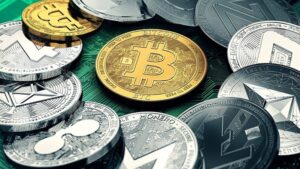
There are no official government statistics on the percentage of Ukrainian citizens who use cryptocurrencies as of December 2025. In practice, estimates from analytical companies and the results of sociological surveys are used, but the figures vary significantly due to different definitions of “use” (ownership, investment experience, real transactions, transfers).
The most frequently cited estimate for the entire country is data from Triple-A: “15.72% of Ukrainians own cryptocurrency,” which is equivalent to approximately 6.5 million people (estimate of the share of the total population).
Survey data gives higher values for certain population groups. For example, a Gradus Research study commissioned by WhiteBIT (April 2024) among residents of cities with a population of 100,000 or more (aged 18-60, 883 respondents, excluding temporarily occupied territories and areas of active hostilities) showed that 26% of respondents reported owning cryptocurrencies.
Another benchmark is an Ipsos study commissioned by WhiteBIT (April-May 2025) among “financially active” city dwellers aged 18-65 (650 respondents in cities with a population of 100,000 or more). The published results indicate that 25% already had experience investing in cryptocurrency, while another 23% stated their intention to start in the near future. At the same time, a note on the methodology indicates the composition of the sample, which included, in particular, respondents who do not reject investing in cryptocurrency and those who already keep part of their savings in cryptocurrency. This is important to consider when interpreting the results as an indicator of the “financially active” audience, rather than the entire population.
If we interpret “use” as strictly as possible — as personally conducting transactions — then the Gradus study gave a more “conservative” lower limit: 5.1% of respondents reported that they had personally conducted transactions with crypto assets and/or blockchain (the same material separately noted a much higher proportion of experience in the 18-24 age group).
Chainalysis indirectly confirms Ukraine’s high level of involvement: in the Global Crypto Adoption Index 2025, Ukraine ranked first in the rating adjusted for population (and eighth in the overall rating), with the calculation taking into account the assessment of transaction flows and web traffic of crypto services.
The spread of estimates in 2024-2025 (from approximately 15-16% “ownership” to about a quarter in selected urban and “financially active” samples) is explained by the fact that ownership/investment experience is usually broader than the proportion of people who regularly use crypto assets in real transactions.
In the public legal field of Ukraine, virtual assets are not considered a legal means of payment – the text of the law “On Virtual Assets” explicitly states that virtual assets are not a means of payment on the territory of Ukraine and cannot be exchanged for goods, works, and services.
Financial regulators have also emphasized that cryptocurrencies do not fall under the regime of money/electronic money/currency values as interpreted by Ukrainian legislation and have pointed out the risks of transactions with them.
https://www.fixygen.ua/news/20251219/priblizno-16-ukrayintsiv-volodiyut-kriptoaktivami.html
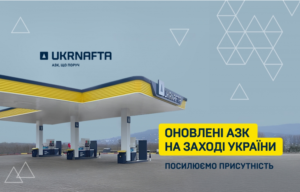
UKRNAFTA, the largest network in Ukraine, is completing the renovation of Shell filling stations.
In particular, gas stations have already opened in western Ukraine. UKRNAFTA invites you to refuel your cars with consistently high-quality Euro 5 fuel, get great deals with our loyalty program, and simply experience a new level of convenience.
Addresses of the upgraded complexes:
Volyn region:
• Lutsk, 98 Rivnenska St.
• Lyuboml, Kyiv–Kovel–Yagodin highway, 497 km + 300 m
Ivano-Frankivsk region:
• Cherniyiv village, 86 Nadvirna Street
Zakarpattia region:
• Mukachevo, 3 Masaryk Tomáš Street
• Baranyntsi village, 9-B Obizna Street
• Klyachanovo village, 1 Avtomobilistiv Street
• Solomonovo village, 7 Yevropeiska Street
Lviv region:
• Velyki Hrybovychi village, 6 Lvivska Street
• Derevach village, 55 Stryiska Street
• Kamianopil village, 1-B Stare Selo Street
• Murovane village, 1-Z Kyivska Street
• Pasiky-Zubrytski village, 56 Dorozhna Street
• Rakovets village, PSK on the M-06 Kyiv–Chop highway
• Sokilnyky village, roadside service complex, Western bypass
• Chyzhykiv village, 1-A Ostrovska Street
• Krakovets town, Lviv–Krakovets highway, 65 km + 980 m
Rivne region:
• Bugayivka village, Kyivska Street, 10
• Mykhailivka village, Kyivska Street, 2-A
Ternopil region:
• Ternopil city, Mykulynetska Street, 46-B
• Ternopil city, Stepan Budny Street, 36-A
Chernivtsi region:
• Chernivtsi, 66 Galytskyi Shliakh St.
• Chernivtsi, 116 D. Lukianovych St.
• Korovia village, 30-B Chereiteiska St.
You can also find the updated gas stations in the UKRNAFTA app and get some nice discounts.
Comfort on the road and the enjoyment of aromatic coffee and delicious hot dogs and burgers are what await you at UKRNAFTA, the gas station chain near you!
JSC Ukrnafta, Ukraine’s largest oil production company, is the operator of the largest national gas station chain, UKRNAFTA. In 2024, the company took over the management of Glusco’s assets. In 2025, it completed an agreement with Shell Overseas Investments BV to purchase the Shell network in Ukraine. In total, it operates 663 gas stations.
The company is implementing a comprehensive program to restore operations and upgrade the format of its network of gas stations. Since February 2023, it has been issuing its own fuel vouchers and NAFTAKarta cards, which are sold to legal entities and individuals through Ukrnafta-Postach LLC.
The largest shareholder of Ukrnafta is Naftogaz of Ukraine with a 50%+1 share.
In November 2022, the Supreme Commander-in-Chief of the Armed Forces of Ukraine decided to transfer to the state the corporate rights of the company that belonged to private owners, which is now managed by the Ministry of Defense.



