

Republican Senator Bernie Moreno (Ohio) has announced his intention to introduce the Exclusive Citizenship Act of 2025 to Congress, which effectively abolishes dual citizenship for US citizens. The bill stipulates that Americans will not be able to hold US citizenship and the citizenship of any other country at the same time.
According to specialized media reports, the bill contains two key provisions. First, any person who applies for foreign citizenship after the law comes into force will automatically be considered to have renounced their US citizenship. Second, current dual citizens will be given a one-year transition period during which they must either renounce their foreign passport or notify the authorities in writing of their renunciation of US citizenship. Failure to do so will result in the loss of US citizenship.
Enforcement of the law will be entrusted to the State Department and the Department of Homeland Security, which will be required to create systems for registering individuals who have lost their citizenship and mechanisms for monitoring compliance with the new rules. The initiative has already sparked debate in the media, particularly because it could affect well-known public figures who hold dual citizenship.
Experts note that the bill will face challenges from both a political and legal standpoint. The US Supreme Court, in a series of decisions, including Afroyim v. Rusk (1967) and Vance v. Terrazas (1980), has clearly established that a citizen cannot be deprived of citizenship without voluntarily renouncing it, and that the mere existence of dual citizenship cannot automatically be interpreted as grounds for its loss.
Given these precedents, as well as the political situation in Congress (resistance from Democrats and likely reservations from some Republicans), the chances of the bill being passed in its current form appear slim. Most likely, the initiative will become part of the domestic political debate on immigration and citizen loyalty.

In January-September 2025, Insurance Guarantees of Ukraine (IGU, Kyiv) collected UAH 1.3 million in gross premiums, which is 1.88% less than in the same period of 2024, according to data from the rating agency Expert-Rating confirming the insurer’s financial stability rating for the first nine months of 2025 at “uaAA” on the national scale.
The information notes that the company did not make any insurance payments during this period in 2025.
It is also noted that the equity capital of SSU PJSC for the period ending September 30, 2025, decreased by 10.23% to UAH 49.52 million, while gross liabilities increased by 36.39% to UAH 1.31 million.
The amount of cash and cash equivalents in the company’s accounts as of the reporting date decreased by 11.48% and amounted to UAH 45.46 million.
For the first nine months of this year, the company received UAH 2,570 in net profit, which is 4.7 times less than a year earlier.
SGU PJSC was registered in November 2005. It has licenses to carry out 15 types of insurance activities: four for compulsory insurance and 11 for voluntary insurance.

In Germany, about one million people who have been rejected for asylum remain in the country, the Epoch Times reported. In most cases, these people are living in Germany illegally, waiting for appeals to be decided or facing deportation difficulties. The country’s authorities recognize the problem and are actively seeking ways to address it, but the deportation process is hampered by political, legal and humanitarian aspects.
The denial of asylum affects several categories of migrants. Among them are:
1) economic migrants – people who are seeking better living conditions but have no grounds for asylum by international standards,
2) non-status migrants – those who have no legal basis for staying in Germany, including tourists and people with expired visas,
3) refused status reviewers – migrants whose applications have been rejected but who continue to stay in the country by filing new appeals.
4) Refused deportees – people who have been denied asylum but are evading deportation, often using legal loopholes or for humanitarian reasons.
These are mainly citizens of Afghanistan, Turkey and Kosovo who are often denied asylum because they do not meet the criteria for refugee status. These countries are seen as safe, with low levels of violence or political persecution.
Also included in the refusals are people who have not proven to belong to vulnerable categories such as refugees from violence, persecution or war.
The issue is hotly debated in German society, and the authorities are taking steps to improve migration policy, including efforts to speed up deportation processes and reform the asylum system. However, political and humanitarian considerations continue to be major obstacles to an effective resolution.
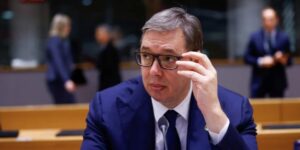
According to the Serbian Economist, Serbia has not received a special license from the U.S. OFAC to continue the work of the company NIS, which has fallen under U.S. sanctions. This was announced by Serbian President Aleksandar Vucic. He also said that Serbia has decided to completely shut down the Pančevo refinery.
Since November 25, the NIS refinery has been operating in a reduced circulation mode due to a shortage of oil. Vucic noted that NIS will decide when to complete the shutdown of the refinery.
Earlier it was reported that the Serbian parliament is preparing an amendment that would allow Serbia to become the owner of NIS. A possible sale of 56.15% of NIS shares to Hungarian partners is also being considered.
NIS, a subsidiary of Gazprom Neft, was included in the US SDN List in 2025.
https://t.me/relocationrs/1865

As part of the strategy to accelerate the development of the financial technology market and stimulate the use of modern IT solutions in the field of financial and banking services, Uzbekistan has adopted a resolution ‘On measures for the further development of the financial technology sector in Uzbekistan’.
According to the document, the main targets for 2026–2030 include:
The Central Bank has been appointed responsible for the development of the financial technology sector and has been granted a number of additional powers. Within its framework, the following will be created:
From 2026, participants in the innovation hub will be able to receive compensation of up to 50% of the costs of training and attracting mentors, but not more than $20,000 and $50,000, respectively.
The programme provides for the introduction of an open banking system for the secure exchange of data between banks and fintech companies, the creation of the position of Chief Data Officer in the Central and Commercial Banks, and the development of a National Financial Technology Development Strategy for 2026-2030.
Particular attention is paid to expanding the use of crypto assets: from 1 January 2026, a special legal regime will be introduced to regulate the circulation of stable tokens as a means of payment, the issuance of tokenised shares and bonds will be permitted, and separate platforms will be created on stock exchanges for their placement and circulation.
A new free certified course has been launched on the AgriAcademy educational platform: ‘Peas. Biological characteristics of the crop’, dedicated to one of Ukraine’s key legumes. The curriculum has been developed by specialists from the agro-industrial holding company Astarta.
What is the course about?
The new training module takes a detailed look at the biological characteristics of peas that determine their yield potential. Students will learn:
The course will be useful for both practicing agronomists and managers, students or farmers who want to improve their approach to pea cultivation technology.
Who created the course?
The lead expert is Volodymyr Kuryachiy, one of the most renowned agronomists in the Poltava region with over 40 years of experience in production. At the Astarta-Kyiv agricultural holding, he headed the crop production department of the Dovzhenko Agricultural Firm for over ten years and has been working as the chief agronomist of the Poltava region since 2019.
The following people also worked on the course:
Certificate and accessibility
All AgriAcademy courses, including this one, are free of charge.
Students receive:
The course is available at any time, allowing farmers to study at their convenience without taking time off from their daily work.
Why is this important?
The demand for legumes is growing both due to the development of export markets and the need to restore soil fertility. Peas remain one of the most effective crops in crop rotation, and a proper understanding of their biology directly affects yield stability even in difficult climatic conditions.
The new course from Astarta and AgriAcademy provides agricultural producers with practical, scientifically based knowledge that can be applied as early as next season.
Farmers can join via the link on the AgriAcademy platform and start learning immediately after registration.
Other training courses from Astarta specialists are also available on the platform:
Astarta is a vertically integrated agro-industrial holding in Ukraine, a public European company that conducts socially responsible business and produces food products with a focus on global markets. Its main activities are concentrated in crop production, the sugar industry, dairy farming, soybean processing, grain logistics, and bioenergy.
AgriAcademy is a free online learning platform created on the initiative of the EBRD as part of its food security support programme in Ukraine. Its goal is to strengthen the competitiveness and sustainable development of agriculture, which has suffered significant losses due to the war.
The creation and management of the platform (including the development of courses, educational tours, etc.) is supported and financed by the EBRD, as well as:



