

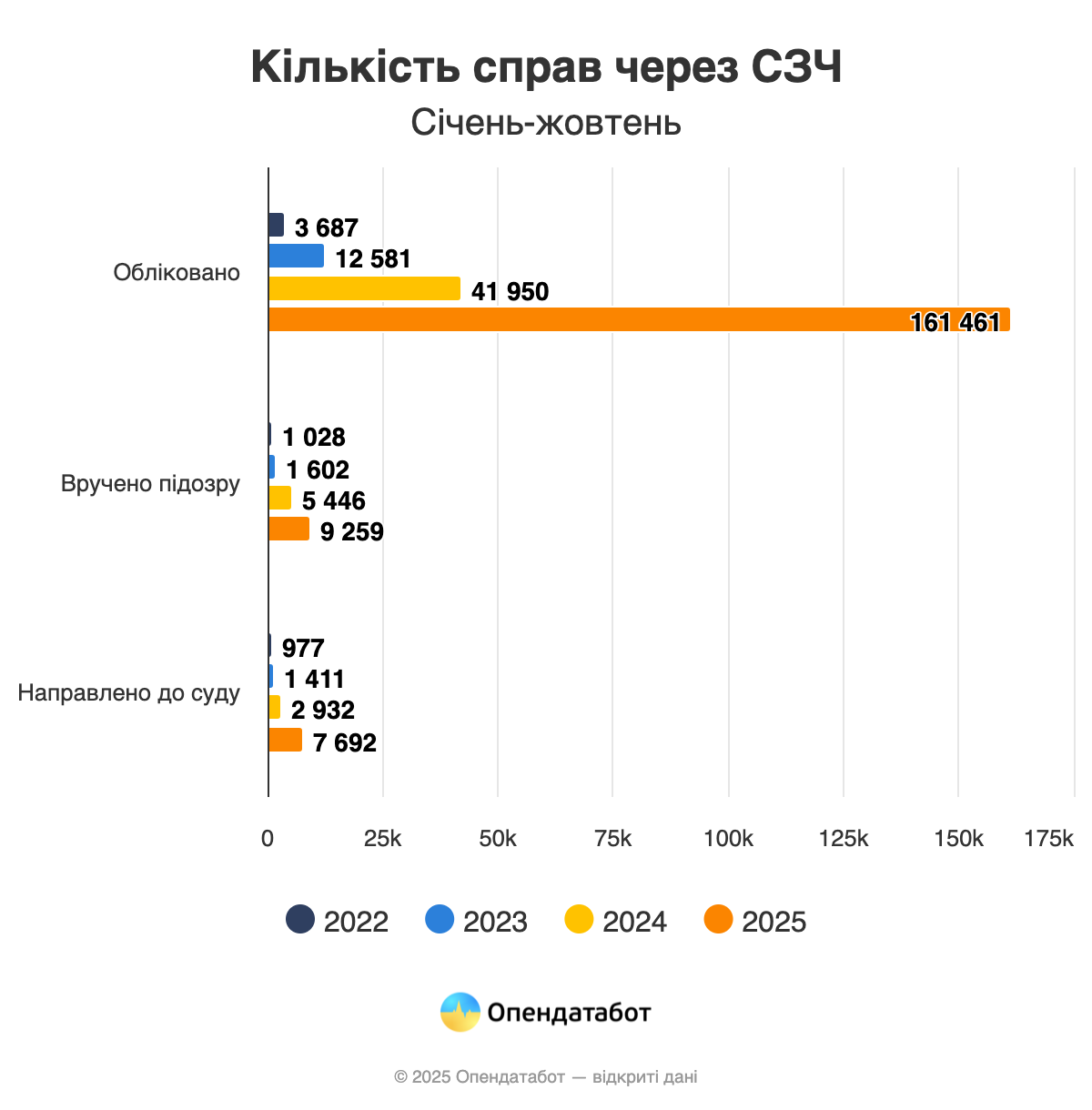
More than 161,000 criminal proceedings on unauthorized abandonment of a military unit (UAW) were opened in the first 10 months of 2025, according to the Prosecutor General’s Office of Ukraine. This is 4 times more than in the same period last year. Every month, law enforcement officers register almost 16,000 new cases of AWOL. So far, only 5% of cases have gone to court.
161,461 cases of unauthorized leaving of a military unit (Article 407 of the Criminal Code) were recorded in 10 months of 2025. This is 4 times more than in the same period last year.
The number of cases that took 12 months to accumulate three years ago is now recorded in less than two weeks. Every month, law enforcement officers register almost 16,000 new cases of “unauthorized absence,” while in 2024 there were about 5,000 per month, in 2023 – only 1,500, and in 2022 – only 6,000 for the entire year.
Despite the record number of proceedings, only 9,300 servicemen were served with suspicion notices, which is about 6% of all registered cases, and only 5% went to trial. For comparison, back in 2022, every fifth case went to trial.
It should be reminded that until August 30, 2025, a simplified mechanism for returning servicemen after the Joint Forces Operation without criminal liability was in place. Thus, soldiers who wished to continue their service could apply and return to the army in a reserve unit within 72 hours.
However, this option was available to soldiers who had completed their service before May 10. Those who did so after that date could return only to the unit they left, and reinstatement could take months.
It should be noted that unauthorized leaving of a military unit under martial law is punishable by imprisonment for a term of 5 to 10 years.
https://opendatabot.ua/analytics/awol-2025
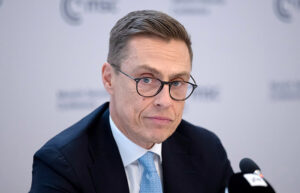
A peace agreement in Ukraine is unlikely to be reached before spring, and European allies must continue to support Kiev despite the corruption scandal, Finnish President Alexander Stubb said in an interview with the Associated Press.
“A peace agreement in Ukraine is unlikely to be reached before spring. European allies need to continue their support despite the corruption scandal that has engulfed Kiev,” he said.
Stubb is using his good relations with US President Donald Trump to defend Ukraine’s position: “I can explain to President Trump what Finland has gone through, how I see the situation on the battlefield, or how to deal with Russian President Vladimir Putin. And then, you know, if he accepts one of my ten ideas, that’s good,” he said.
He also recalled Finland’s historical experience: in the 1940s, after two wars with Russia, the country lost about 10% of its territory and remained militarily neutral. Finland’s neutral position was only revised after Russia’s full-scale invasion of Ukraine, when the country joined NATO.
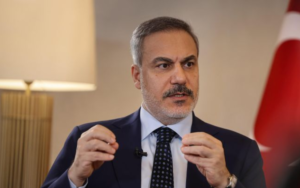
Peace talks between Russia and Ukraine may resume in Turkey, Turkish Foreign Minister Hakan Fidan said in an interview with broadcaster A Haber.
“Well, of course, we cannot go into details for reasons that you will understand, I mean, I think it (the talks – IF-U) could happen in Turkey, it could happen in other places. But this peace not only must happen, it will happen,” the minister said.
Fidan stressed that the war is now at its “darkest moment” and that both sides, according to him, are focused on destroying each other’s infrastructure. He noted that the use of drones and “kamikaze” drones makes it difficult to move around and conduct operations, and that the successes of the Ukrainian and Russian forces come at a high human cost.

According to Serbian Economist, the average annual salary of full-time employees in the EU in 2024 was €39,800, which is 5.2% higher than in 2023, according to Eurostat.
The highest average salaries were recorded in Luxembourg (€82,969), Denmark (€71,565), and Ireland (€61,051).
The lowest figures were in Bulgaria (€15,387), Greece (€17,954), and Hungary (€18,461).
The full list for EU countries in 2024 is as follows:
Luxembourg — €82,969;
Denmark — €71,565;
Ireland — 61,051;
Belgium — 59,632;
Austria — 58,600;
Germany — 53,791;
Finland — 49,428;
Sweden — 46,525;
France — 43,790;
Slovenia — 35,133;
Spain — 33,700;
Italy — 33,523;
Malta — 33,499;
Lithuania — 29,104;
Cyprus — 27,611;
Estonia — 26,546;
Portugal — 24,818;
Czech Republic — 23,998;
Croatia — 23,446;
Latvia — 22,262;
Poland — 21,246;
Romania — 21,108;
Slovakia — 20,287;
Hungary — 18,461;
Greece — 17,954;
Bulgaria — 15,387.
https://t.me/relocationrs/1760

The Ukrainian Hydrometeorological Center warns of difficult weather conditions on Monday, November 17.
“On November 17, in the Carpathians, during the day and in the western, Vinnytsia, and Zhytomyr regions, gusts of 15-20 m/s (hazard level I, yellow) are expected,” the warning states.
It is noted that weather conditions may complicate the work of energy, construction, and utility companies, as well as traffic.

China’s actual gold purchases this year may exceed officially declared volumes by several times and have already become one of the key drivers of record growth in precious metal prices, the Financial Times writes, citing analysts and market data.
According to official statistics from the People’s Bank of China, in 2025 the regulator purchased only about 25 tons of gold, with an increase in reserves of approximately 2 tons in some months. However, analysts at Société Générale, assessing trade flows of large bars and import data, believe that Beijing’s actual purchases could reach up to 250 tons per year, or more than a third of the total demand of global central banks. According to their estimates, actual purchases may exceed the officially disclosed figures by ten times or more.
Bruce Ikemizu, director of the Japan Precious Metals Market Association, said that market participants this year “practically do not believe official statistics, especially for China,” and estimates the country’s current gold reserves at nearly 5,000 tons — about twice the level reported publicly by the Chinese authorities.
According to the FT and experts, a significant portion of purchases are made opaquely — through the State Administration of Foreign Exchange (SAFE), the sovereign wealth fund China Investment Corporation, and other entities that are not required to publish detailed reports on gold reserves. This makes it difficult to assess the real scale of operations and increases market uncertainty.
Analysts note that the secretive accumulation of gold is linked to a strategy of de-dollarization. “China is buying gold as part of its strategy to reduce its dependence on the dollar,” the press quotes Jeff Currie, a strategist at Carlyle, as saying. Gold is seen as a hedge against currency and geopolitical risks, including against the backdrop of tensions with the US.
According to estimates by the World Gold Council, over the past decade, the share of gold in the international reserves of countries outside the US has grown from about 10% to 26%, making the metal the second most important reserve asset after the US dollar. Large-scale purchases by central banks have helped push the price of gold above $4,300 per troy ounce, according to the FT and industry publications.
China remains the world’s largest producer and consumer of gold, accounting for about 10% of global production, which allows Beijing to increase its reserves not only through imports but also through the domestic market.



