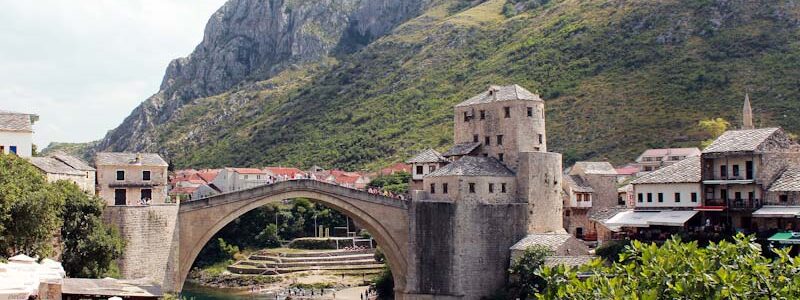
According to an overview article by the Serbian business publication Parametar, the campaign leading up to the general elections on October 4 is coming to a close in Bosnia and Herzegovina. The vote will determine not only the internal balance of power in one of Europe’s most complex countries in terms of its political structure, but also future relations between Banja Luka and Sarajevo, the position of the Republika Srpska, and the nature of Bosnia and Herzegovina’s interactions with Serbia, the EU, the U.S., and Russia.
There are 3,414,364 registered voters. They will elect three members of the Presidency of Bosnia and Herzegovina, the State Parliament, the Parliament of the Federation of Bosnia and Herzegovina, the National Assembly of the Republika Srpska, the president and vice presidents of the Republika Srpska, as well as the parliaments of the Federation’s ten cantons.
Current Prime Minister Savo Minic is running for the office of President of the Republika Srpska on behalf of the SNSD, while Branko Blanusa is the SDS’s lead candidate. Bogdan Jovanovic and independent candidate Marko Jorgic are also running.
Milorad Dodik’s name does not appear on the ballot, but he remains the leader of the SNSD and is actively participating in the party’s election campaign. RTS notes that Dodik’s political presence remains a key factor in the campaign in the Republika Srpska.
The race for the Serbian seat on the three-member Presidency of Bosnia and Herzegovina features incumbent Presidency member Želka Cvijanović of the SNSD, Marinko Božović of the SDS, and Nebojša Vukanović of the “List for Justice and Order.”
Another race of fundamental importance to the country’s political structure is the selection of the Croatian member of the Presidency. The HDZ BiH has nominated Dariana Filipović, the bloc of Croatian opposition parties supports Zdenko Lukić, and the Democratic Front supports Slaven Kovačević.
A dispute has been raging over this position for many years: Croatian parties are demanding a change to the election mechanism, arguing that the current system allows the more numerous Bosniak voters to influence who will represent the Croats. Opponents of changing the model cite the need to preserve the existing voting rights of Federation citizens.
Competing for the Bosniak seat are incumbent Presidium member Denis Bečirović, SDA leader Bakir Izetbegović, Semir Efendić, and Fahredin Radončić.
Another major experiment in these elections involves technology. For the first time on this scale, biometric voter identification and ballot scanning are being used. The Central Election Commission has purchased the necessary system for polling stations, and observers are closely monitoring how it handles the workload following years of disputes over election transparency.
As Parametar notes, Bosnia and Herzegovina effectively exists simultaneously on several political levels. Under the 1995 Dayton Agreement, the country consists of the Republika Srpska and the Federation of Bosnia and Herzegovina, while Brčko has special status. The Federation, in turn, is divided into ten cantons.
Above this structure are state-level institutions, notably the three-member Presidency. At the same time, the Republika Srpska and the Federation have their own parliaments, governments, and a wide range of powers.
There is also another level—international oversight.
BiH is sometimes referred to in the media as an international protectorate, but legally this is inaccurate. It is a sovereign state. Following the Dayton Accords, the position of High Representative of the international community was created; this official oversees the implementation of the peace agreement in the civilian sphere and is vested with exceptionally broad powers, known as the “Bonn Powers.” These powers allowed the High Representative to make decisions and remove politicians from office.
Therefore, the outcome on October 4 is of great significance far beyond the borders of Bosnia and Herzegovina. It will determine the balance of power between Banja Luka and Sarajevo, the composition of the country’s collective leadership, and the alignment of forces regarding further European integration; it will also serve as an indicator of how the Serb, Bosniak, and Croat political components of the complex Dayton system will interact following the elections.
Bosnia and Herzegovina, Dayton Agreement, ELECTIONS, Presidency, Republika Srpska