
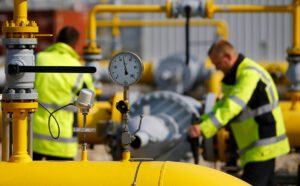
Stock indices of the largest Western European countries started the week with a negative mood amid a surge in natural gas prices after the shutdown of the Nord Stream 1 gas pipeline, MarketWatch writes.
The composite index of the largest enterprises in the Stoxx Europe 600 region decreased by 1.4% by 12:08 Moscow time and amounted to 410.07 points.
The German DAX indicator fell 2.7% from the market opening, the British FTSE 100 – 0.9%, the French CAC 40 – 2%. Italian FTSE MIB lost 2.4%, Spanish IBEX 35 lost 1.8%.
Among the leaders of the decline in quotations are shares of chemical companies and manufacturers of cars and spare parts for them, including the French Faurecia (-6.1%) and Valeo (-7.5%), as well as the German Faurecia (-4.7%).
The price of shares of the German electricity producer Uniper SE collapsed by more than 10%.
The Swiss UBS Group AG refused to buy the American Wealthfront for $1.4 billion. The companies said they made this decision together, but did not give reasons. UBS shares are down 1.7%.
ArcelorMittal SA, one of the world’s largest steel producers, announced its intention to close two plants in Germany due to a sharp increase in electricity prices, as well as to stop the operation of an enterprise in Spain. The cost of the company’s papers fell by 3.7% at auction in Amsterdam.
British developers Countryside Partnerships Plc and Vistry Group Plc have agreed to merge. Vistry will pay £0.6 and 0.255 new shares for the competitor. Based on closing quotes on Friday, the total payout will be £2.49. Overall, Vistry valued the competitor at around £1.25bn ($1.44bn).
Countryside’s shares jumped more than 6% in early trading, while Vistry’s shares fell 0.3%.
Business activity in the service sector in Germany fell in August for the second month in a row, according to the Purchasing Managers’ Index (PMI), calculated by S&P Global. The indicator fell to 47.7 points compared to 49.7 points a month earlier.
The value of the index below 50 points indicates a weakening of activity in the sector.
Consolidated PMI fell to 46.9 points from 48.1 points in July.
Meanwhile, in the Eurozone as a whole, PMI of the services sector decreased in August to 49.8 points against 51.2 points a month earlier. The index fell below the 50 mark for the first time since March 2021.
Consolidated PMI in the euro area fell to 48.9 points from 49.9 points in July.
Retail sales in the euro area in July increased by 0.3% compared to the previous month, the European Union’s statistics office said. Analysts were expecting a 0.4% rise on average, according to Trading Economics. According to the revised data, in June the indicator fell by 1%, and not by 1.2%, as previously announced.
National bank of Ukraine’s official rates as of 05/09/22
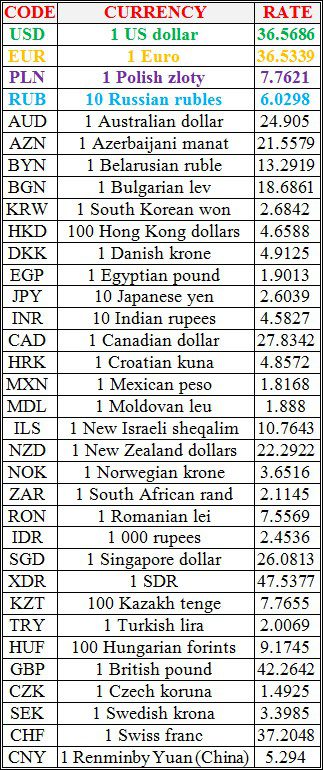
Source: National Bank of Ukraine
Central bank official rates of banking metals as of September 05
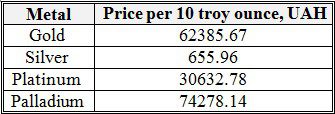
One troy ounce=31.10 grams
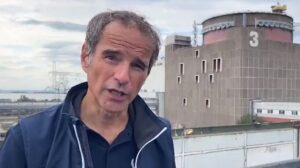
Four out of six employees of the International Atomic Energy Agency, who remained at the Zaporizhzhya nuclear power plant seized by Russian troops since September 1, have left it, Energoatom reported
“Today, four out of six representatives of the IAEA inspection team completed work at the Zaporozhye NPP and left its site,” the company said in a statement on Monday morning. According to him, two representatives will continue to work at the station on a permanent basis.
As reported, the head of the IAEA, Grossi, announced a permanent mission of the agency to the Zaporizhzhya NPP, consisting of two people from the beginning of this week.
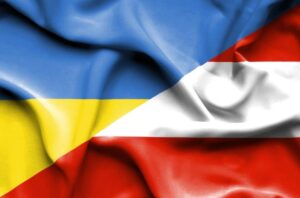
First Deputy Prime Minister of Ukraine and Minister of Economy Yulia Svyrydenko and Federal Minister of Labor and Economy of Austria Martin Kocher signed a framework agreement between the governments of the two countries on economic cooperation in the development of projects.
According to the press service of the Ministry of Economy of Ukraine on Sunday, the signing of the agreement took place on Sunday, September 4, in Krakow during Yulia Svyrydenko’s visit to Poland.
“We hope that the economic cooperation agreement signed today will allow us to launch a number of important projects, in particular, in the healthcare sector. Among the priorities are the construction and equipping of the Okhmatdyt National Children’s Specialized Hospital and a modern university clinic in Kyiv, as well as the creation of the National Rehabilitation Center in Lviv. The estimated cost of these projects will be more than EUR 500 million,” Svyrydenko said.
According to her, for the implementation of these projects, concessional long-term financing will be attracted under the guarantees of European export credit agencies. It is expected that the effective rate of attraction of funds will not exceed 3% per annum, and the borrowing period will be up to 14 years. Such concessional targeted financing of socially significant projects is a good alternative and addition to more expensive and short-term obligations, usually borrowed to replenish the working capital of the state budget.
According to the agreement on economic cooperation in the development of projects, the governments of Ukraine and Austria agreed to promote the development of modern social and educational infrastructure, in particular, a network of modern medical and vocational educational institutions, to promote the development of the medical insurance market in Ukraine, and to intensify bilateral economic relations in the field of investments, innovations and implementation of economic projects, especially in the field of medical technologies and healthcare institutions.
Svyrydenko also expressed her gratitude to the Austrian partners for financial and humanitarian assistance to Ukraine and for the initiative of Austria to take patronage in the restoration of Zaporizhia region.
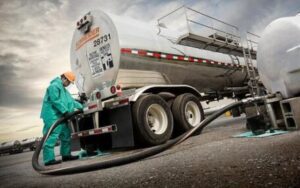
Ukraine increased fuel imports 12-fold over the six months of the war – from almost 60,000 tonnes in March to 710,000 tonnes in August, First Deputy Prime Minister and Minister of Economy of Ukraine Yulia Svyrydenko said.
“If in March we imported an average of 827 tonnes of gasoline and 1,400 tonnes of diesel fuel per day, then in August – 4,200 tonnes and 16,900 tonnes, respectively. We see a gradual accumulation of oil products on the market due to the constant growth of imports. That is why today there is no excessive demand for fuel, there are no queues at gas stations, and prices do not show a tendency to rapid growth,” Svyrydenko said, the words of which are quoted in the message of the Ministry of Economy on the website on Friday.
According to the Ministry of Economy, a total of 58,800 tonnes of gasoline, diesel fuel and liquefied gas were imported in March, 380,800 tonnes in May, and 709,500 tonnes in August.
“According to consumption forecasts in September-December, Ukraine needs 500,000-550,000 tonnes of fuel every month. We import large volumes, which allows us to fully meet the needs of the Armed Forces of Ukraine, as well as emergency and public services, farmers, and public transport,” the first deputy prime minister said.
According to her, the increase in imports was facilitated, in particular, by the abolition of excise duty on petroleum products, the reduction of VAT from 20% to 7%, the suspension of regulation of fuel prices, as well as a number of measures aimed at facilitating the import of fuel into Ukraine.
She also noted the westward reorientation of fuel imports that occurred after the Russian invasion.
“Today, we receive 95% of imported gasoline and 72% of diesel fuel from EU countries. The leaders in supply are Romania, Lithuania, Slovakia, Greece, Bulgaria and Poland. So, quite quickly, we were able to radically change the vector of oil product imports in such a way as to receive it in sufficient quantities to cover all our needs,” Svyrydenko emphasized.



