

At their annual remote general meeting on March 31, shareholders of Obriy PJSC (Poltava region) plan to allocate the profit of UAH 41.8 thousand received at the end of 2025 to the development of production and replenishment of working capital.
According to the draft decisions published in the information disclosure system of the National Securities and Stock Market Commission (NSSMC), no dividends are expected to be paid for the past year.
In addition to the distribution of profits, the shareholders will consider the write-off of 12 units of obsolete equipment (T-150K and MTZ tractors and a DON 1500 combine harvester) with a total book value of UAH 54,900.
Due to the expiration of the term of office, the meeting plans to re-elect the company’s board of directors in the same composition for a new three-year term. Antonina Antonets (chair of the board), Gleb Lukyanenko, and Sergey Antonets have been re-nominated to the board.
Obriy PJSC (Mykhailiky village, Myrhorod district, Poltava region) was founded in 1998. It specializes in leasing real estate and agricultural machinery, as well as dairy cattle breeding and grain processing.
The company is a key technical hub of the Antonets family’s organic cluster and works in synergy with Agroecology. The ultimate beneficiaries are Antonina Antonets (61.55%), Maria Antonets (24.17%), and director Serhiy Antonets (5.4%).

From now on, payments to IBAN from personal funds are free of charge in the virtual monobank, according to the project’s co-founder Oleg Gorokhovsky.
“We are now removing this fee. All IBAN payments from personal funds in mono are free of charge starting today,” Gorokhovsky wrote on Telegram on Monday.
According to him, IBAN payment rates at monobank have not changed since 2017. Previously, transfers to IBAN for amounts up to UAH 10,000 were free, and for amounts over UAH 10,000, a commission of 0.5% was charged from own funds.
As Gorokhovsky noted, the income from this commission exceeded UAH 200 million per year.
The branchless mobile bank monobank was founded in January 2017 by former PrivatBank top managers Gorokhovsky, Dmytro Dubilet, and Mykhailo Rogalsky. It operates under the license of Universal Bank, which is part of the TAS Group (Kyiv) and currently serves 10.42 million customers, according to its own data.
According to the National Bank, as of the beginning of 2026, Universal Bank had issued a total of 28.22 million cards, of which 10.50 million were used for transactions during the month.
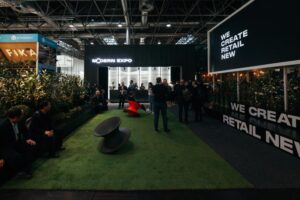
Modern Expo (Modern-Expo LLC, Lutsk), Ukraine’s largest manufacturer of retail equipment and solutions, rented 1,600 square meters for its pavilion at EuroShop 2026 in Düsseldorf, which is held every three years and positions itself as the world’s largest retail exhibition. rented 1,600 square meters for its pavilion and became the largest exhibitor among 1,800 participants, who in total occupy about 103,000 square meters of the exhibition.
“We participated in the exhibition for the first time 24 years ago. As our CEO (and owner – IF-U) Petro Pylypuk recalled, at that time we rented 16 square meters for our stand, and this year – 1,600 square meters,” said Dmytro Vysyn, director of business development at Modern Expo, to the Interfax-Ukraine agency.
According to him, since then, the company has expanded from a manufacturer and seller of retail equipment to a supplier of ready-made solutions in the modern retail ecosystem — from automated micro-markets to intelligent “last mile” logistics systems, including the creation of parcel locker systems.
Visin specified that Modern Expo offers ready-made solutions for creating small-format stores, which are now gaining popularity.
He added that with the help of a network of parcel lockers, the company also helps its clients develop online commerce, citing the example of Polish electronics retailer Media Expert, which started with six parcel lockers in addition to its offline stores, and now has hundreds, as well as Polish DIY retailer Castorama and Ukrainian retail chain Epicenter.
“And in all these projects, we also provided consulting, advising clients on how to build it all correctly,” explained the business development director.
The expert emphasized that this involves not just supplying equipment, but turnkey solutions and their continuous development. As an example, he cited a new option in the parcel locker, where couriers on electric mopeds can use its compartment to change and recharge their batteries.
Visin also noted that another relatively new feature is after-sales service—ongoing maintenance and support for the technological solutions provided.
“That is, we started with shelves and cash registers, then added refrigerators, and now we have complete solutions—self-checkout and digital signage. We plan to go public, we plan to resell some solutions – for kitchens, for example. That is, so that the customer can get a complete solution for their store from a single source. Plus expertise and after-sales service afterwards,” the development director summed up.
As the agency Interfax-Ukraine was told in the pavilion, it was completely designed and manufactured (except for the lighting) in-house and will be returned to Lutsk after the exhibition. Among the new solutions are more environmentally friendly and energy-efficient CO2 refrigeration equipment, which is becoming the standard in Western markets, self-service checkouts, modular concepts for mini-stores near homes with a coffee area, takeaway food, and refrigeration equipment, and post boxes for automated returns.
The company is represented at the exhibition in Düsseldorf by a team of 150 specialists — engineers, developers, analysts, and top managers.
In addition to Modern Expo, the exhibition features such Ukrainian companies as refrigeration equipment manufacturer UBC Group, retailer Fozzy Group, commercial equipment supplier PrJSC “AgroResource” (Rivne), system integrator DEPS Solutions (Kyiv), advertising agency “Partizan” (Lutsk), payment solutions company PayKit (Kharkiv), and commercial refrigeration equipment manufacturer VIK Hitline (Kharkiv).
UBC Group, which is participating in EuroShop for the second time this year, told Interfax-Ukraine that it has doubled the size of its pavilion.
According to information on the Modern Expo website, the company has implemented more than 1 million projects worldwide since 1997. It currently includes nine production units specializing in various types of equipment, with 75,000 square meters of production space in Lutsk and 12,500 square meters in Lublin (Poland). The company employs over 2,200 people, and its products are exported to more than 75 countries.
According to data from YouControl, in the first nine months of 2025, Modern Expo LLC increased its revenue by 27.2% compared to the same period in 2024, to UAH 5 billion 645.7 million, while net profit decreased by 7.9% to UAH 796.6 million.
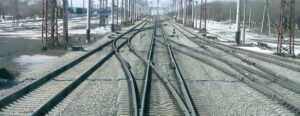
According to preliminary data, JSC Dnipro Arrow Plant (DnSZ, Dnipro) ended 2025 with a net profit of UAH 583.04 million, which is 8% more than in 2023.
According to information published in the disclosure system of the National Securities and Stock Market Commission (NSSMC) on the agenda of the general meeting of DnSZ shareholders on March 30, 74.2% of the net profit received, or UAH 432.75 million, is planned to be allocated to the payment of dividends at the rate of UAH 1,700 per share (with a par value of UAH 10.5).
The remaining profit in the amount of UAH 140.39 million is proposed to be left at the disposal of the company as undistributed profit.
As reported, based on the results of its activities in 2024, DnSZ paid shareholders UAH 420 million in dividends (from the net profit of UAH 540.4 million) at a rate of UAH 1,650 per share.
The agenda of the meeting includes, in particular, amendments to the company’s charter, the appointment of HLB Ukraine LLC as auditor for 2026 and 2027, and the granting of preliminary consent to significant transactions with a maximum total value of UAH 6 billion, in particular for the supply of products to Ukrzaliznytsia.
DnSZ manufactures various types of turnouts for mainline and industrial transport, as well as subways.
According to the National Securities and Stock Market Commission (NSSMC) for the fourth quarter of 2024, 20.154% of DnSZ JSC shares are owned by Jonen Capital Limited (Cyprus), 5% is owned by Dnipro City Council deputy Zagid Krasnov, his sons Ruslan and Artem own 10% and 11.228% of the shares, respectively, and another 18.3% is owned by Israeli citizen Victoria Korban (sister of businessman Gennady Korban – IF-U).
Other shareholders who own more than 5% of Dnipro Zavod shares include board chairman Serhiy Taranenko (almost 10%), Iryna Taranenko (8.658%), and CFO Valery Kryachko (7.3%).
In January-September 2025, the plant increased its net profit by 69.6% compared to the same period in 2024, to UAH 503.16 million, while net income decreased by 2.7%, to UAH 1.54 billion.

Kuwaiti authorities are preparing to launch a new residency visa for freelancers that will allow foreign specialists to work for themselves without the traditional employer sponsorship system (kafala). The plans were announced by First Deputy Prime Minister and Minister of Interior Sheikh Fahd Al-Yousef Al-Sabah, who noted that the initiative is aimed at combating illegal trade in residence permits and “visa brokers.”
According to media reports, the annual government fee for the new residency category will amount to KD 750–1,000 (in some publications, the equivalent is estimated at about $2.45–3.26 thousand), and the launch is expected within the next two months—roughly in March–April 2026.
As specified, in the first phase, the program may be limited to “simple”/low-risk professions, with preliminary requirements including registration of a confirmed residential address, provision of valid contact details and correct personal information. The full list of areas, application mechanics and final selection criteria are to be announced separately by the competent authorities.
Kuwaiti authorities expect that the new scheme will legalize independent employment, reduce the scale of grey practices in the labor market, and increase budget revenues through direct payment of fees to the state.




