

The National Bank of Ukraine (NBU) has fined iPay (UPR LLC), an online platform for money transfers and online payments, 16.51 million UAH for violating the laws governing the payment market, the regulator announced.
It is noted that the violations, identified as a result of off-site supervision, concerned, in particular, inadequate control over the quality and sufficiency of information accompanying payment transactions.
The company must pay the fine within five business days from the date it is notified of the decision by the NBU’s Committee on Supervision and Regulation of Banking Activities and Oversight of the Payment Infrastructure.
In addition, the regulator issued a written warning to iPay for violating requirements regarding the management and authorization system for financial payment service providers.
The company must rectify the identified violations and take measures to prevent their recurrence within no more than 30 calendar days from the date of receiving the decision.
The committee adopted the relevant decisions on September 2.
As previously reported, in September 2025, the NBU had already fined iPay 16.6 million UAH for violations in the area of financial monitoring, specifically deficiencies in risk assessment, internal controls, handling of customer data, and reporting. At the same time, the company received a written warning for errors in reporting and record-keeping.

According to Fixygen, U.S. banks—which until recently were warning about the threat stablecoins pose to the deposit system—are now exploring the possibility of issuing digital dollars themselves.
JPMorgan views a stablecoin as a complement to its existing JPM Coin tokenized bank deposit system, according to the Wall Street Journal.
At the same time, more than a dozen banks are discussing a shared infrastructure for issuing digital currencies. Bank of America and Wells Fargo are among the participants.
The reason is simple: if a portion of payments and corporate settlements shifts to USDT, USDC, and other blockchain-based instruments, traditional banks risk losing a portion of their deposits and fee-based business.
Therefore, they are trying to offer their own alternative.
In fact, three competing models are currently taking shape: private stablecoins such as USDT and USDC, bank-issued stablecoins and tokenized deposits, as well as future central bank digital currencies.
The winner of this race could capture a significant share of the new market for round-the-clock international payments and settlements involving tokenized assets.

According to Fixygen, stablecoins are gradually evolving from a primarily exchange-based instrument into a means of everyday payments.
In July, spending via stablecoin-linked payment cards exceeded $1 billion per month for the first time, according to Paymentscan data cited by Reuters.
RedotPay forecasts that by 2028, the volume of direct card payments in stablecoins could reach $50 billion per year.
The technology is spreading particularly rapidly in Latin America and Africa, where dollar-pegged stablecoins are used as a means of savings, international remittances, and access to the dollar payment system.
RedotPay already serves over 8 million users, and its clients’ annual transaction volume exceeds $14 billion, including account top-ups and card payments.
The main change is that users no longer need to view USDT or USDC as cryptocurrencies. They can hold digital dollars and make payments with a regular Visa or Mastercard, while the conversion takes place within the payment infrastructure.
However, the Bank for International Settlements (BIS) remains skeptical. On August 28, BIS Governor Pablo Hernández de Cos stated that stablecoins are not yet a sufficiently reliable global payment system due to risks related to financial stability, anti-money laundering (AML), and the fragmentation of the monetary system.

JSC NAEK “Energoatom” has fully fulfilled its special obligations to ensure the availability of electricity for residential consumers (PSO), aimed at making it more affordable, by covering 100% of the cost of the service for January–July 2026, totaling 141.448 billion UAH (including VAT), the company reported on Tuesday.
“The company continues to bear the key financial burden within the social tariff support system. Thanks to NAEK’s contributions, the state maintains the electricity tariff for millions of Ukrainian families at a level below the market rate,” Energoatom noted.
Currently, Energoatom has no outstanding debt to JSC “Guaranteed Buyer” for the PSO service.
In total, during the years of Russia’s full-scale war against Ukraine—from 2022 to 2025—Energoatom paid over 528.900 billion UAH (including VAT) for the PSO service.
As previously reported, in 2025, “Energoatom” paid 168.546 billion UAH for the PSO and transferred over 44.5 billion UAH to the state budget.
The Cabinet of Ministers of Ukraine, by Decree No. 399-r dated April 29, 2026, “On the Annual General Meeting of JSC NAEK ‘Energoatom,’” approved a net profit of 18,688,306,075 UAH, in accordance with the company’s consolidated financial statements for 2025. The government allocated 50% of the profit, amounting to 9,344,153,037.5 UAH, for the payment of dividends to the state budget.
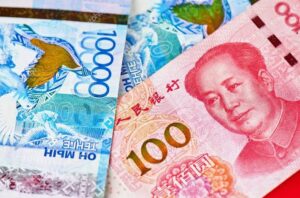
Financial regulators in Kazakhstan and China have reached an agreement to launch a pilot project on settlements in the digital tenge and digital yuan, the press service of the National Bank of Kazakhstan reported following a visit by its delegation to China.
“An important step was the agreement reached between the National Bank and the People’s Bank of China to launch a pilot project for settlements in digital tenge and digital yuan,” the statement said.
“We have agreed to integrate the digital tenge and the digital yuan in two complementary ways: through the mBridge multilateral platform (an international multi-currency platform for real-time cross-border payments and transfers using blockchain technology) and through direct bilateral integration via CBETS (Cross-Border e-CNY Transfer Services, the digital yuan platform for cross-border settlements),” explained Binur Zhalenov, Deputy Chairman of the National Bank of Kazakhstan, who participated in the negotiations, on his social media page.
During negotiations with Cross-Border Interbank Payment System (CIPS), the parties discussed further practical steps to implement the memorandum of understanding between the National Bank, the National Payment Corporation, and CIPS, as well as prospects for expanding the use of cross-border payment infrastructure, developing settlements in national currencies, and strengthening cooperation in the field of international payments.
As part of the implementation of the memorandum between the National Payment Corporation of Kazakhstan and UnionPay International (UPI)—the global division of China UnionPay responsible for the international development of UnionPay products and services—the integration of QR payments between the two countries will be completed by the end of the year, according to the National Bank of Kazakhstan.
The central banks also signed a new three-year currency swap agreement, with the option to extend it by mutual agreement of the parties.
During meetings with the China Banking Association and the leadership of China’s largest commercial banks, discussions focused on their participation in financing investment projects in Kazakhstan and issuing debt instruments.
CHINA, KAZAKHSTAN, PAYMENT, тенге, Юань

According to data from the Pension Fund of Ukraine as of July 1, 2026, approximately 2.4 million Ukrainian pensioners—or 24% of the total number—receive between 3,001 and 4,000 UAH per month.
The average payment within this group is 3,581.58 UAH. Another 335,800 people, or 3.4% of pensioners, receive no more than 3,000 UAH, while 1.72 million people receive between 4,000 and 5,000 UAH.
At the same time, approximately 3.21 million people—or nearly one-third of all pensioners—receive a pension of more than 7,000 UAH. Payments exceeding 20,000 UAH are made to 436,200 people, including 29,500 pensioners who receive more than 30,000 UAH per month.
The average pension nationwide is 7,272.68 UAH; however, it exceeds the amount received by most recipients due to significantly higher pensions for certain categories.



