

In January this year, Ukraine reduced ferroalloy exports in physical terms by 10.9 times compared to the same period last year, from 8,331 thousand tons to 765 tons.
According to statistics released by the State Customs Service (SCS) on Tuesday, 2,461 tons of ferroalloys were exported in December 2025.
In monetary terms, ferroalloy exports in January fell 8.1 times to $1.066 million from $8.655 million. The main exports were to Poland (55.91% in monetary terms), Romania (17.92%), and Uzbekistan (14.35%).
In addition, Ukraine imported 3,169 thousand tons of this product last month, a decrease of 40.2% compared to January 2025. In monetary terms, imports fell by 42.3% to $4.870 million. Imports were mainly from Norway (55.03%), India (22.85%), and Kazakhstan (5.48%).
As reported, the Pokrovsky Mining and Processing Plant (PGZK, formerly Ordzhonikidze Mining and Processing Plant) and the Marganetsky Mining and Processing Plant (MGZK, both in Dnipropetrovsk region), which are part of the Privat Group, stopped mining and processing raw manganese ore in late October – early November 2023, while NZF and ZZF stopped smelting ferroalloys. In the summer of 2024, ferroalloy plants resumed production at a minimum level.
Since January 19, 2026, due to problems with electricity supply and high prices for it, NZF has been idle, while ZZF has been operating at a minimum level.
It was also reported that in 2025, ferroalloy plants increased their exports of ferroalloys in physical terms by 21.4% compared to the previous year, to 93,841 thousand tons, and revenues increased by 19%, to $105.441 million. The main exports were to Poland (28.69% of shipments in monetary terms), Turkey (21.62%), and Algeria (21.48%).
In 2025, Ukraine imported 38,434 thousand tons of this product, a decrease of 53.3% compared to 2024. In monetary terms, imports fell by 47.5% to $73.839 million. Imports were mainly from Norway (16.11%), Kazakhstan (15.89%), and France (12.56%).
In 2024, Ukraine reduced its exports of ferroalloys in physical terms by 4.45 times compared to 2023, to 77,316 thousand tons from 344,173 thousand tons. in monetary terms, it decreased by 3.4 times – to $88.631 million from $297.595 million. At the same time, the main exports were to Poland (27.40% of supplies in monetary terms), Turkey (21.53%), and Italy (19.82%).
In addition, in 2024, Ukraine imported 82,259 thousand tons of this product compared to 14,203 thousand tons in 2023 (a 5.8-fold increase). In monetary terms, imports increased 3.3 times, from $42.927 million to $140.752 million. Imports were mainly from Poland (32.71%), Norway (19.55%), and Kazakhstan (13.9%).
The business of ZZF, NZF, Stakhanovskyi ZF (located at NKT), Pokrovskyi and Marganetskyi GZK was organized by PrivatBank prior to the nationalization of the financial institution. The Nikopol Ferroalloy Plant is controlled by the EastOne group, created in the fall of 2007 as a result of the restructuring of the Interpipe group, as well as the Privat group.

In January of this year, Ukraine increased imports of aluminum ore and concentrate (bauxite) in physical terms compared to the previous year — up to 97 tons from 31 tons.
According to statistics released by the State Customs Service (SCS) on Tuesday, bauxite imports in December amounted to 5,556 thousand tons.
In January 2026, bauxite imports in monetary terms increased to $83 thousand from $27 thousand.
Imports were made from China (100% of supplies in monetary terms).
Ukraine did not re-export bauxite in 2026, as in 2025.
As reported, in 2025, Ukraine increased imports of aluminum ore and concentrate in physical terms by 23.7% compared to the previous year, to 43.5 thousand tons, and in monetary terms by 15.8%, to $4.754 million. It was mainly carried out from Turkey (81.84% of supplies in monetary terms), China (15.97%), and Guyana (2.19%).
Ukraine did not re-export bauxite in 2025, as in 2024 and 2023.
In 2024, Ukraine increased its imports of bauxite in physical terms by 77.4% compared to 2023, to 35,173 thousand tons, and in monetary terms by 74%, to $4.107 million. Imports were mainly from Turkey (78.48% of supplies in monetary terms), China (19.48%), and Spain (1.9%).
In 2023, Ukraine imported 19,830 thousand tons of bauxite worth $2.360 million.
In 2022, Ukraine reduced imports of aluminum ores and concentrates (bauxite) in physical terms by 81.5% compared to the previous year, to 945,396 thousand tons. Bauxite imports in monetary terms decreased by 79.6% to $48.166 million. Imports were mainly from Guinea (58.90% of supplies in monetary terms), Brazil (27.19%), and Ghana (7.48%).
Bauxite is an aluminum ore used as a raw material for producing alumina, which is then used to produce aluminum. It is also used as a flux in ferrous metallurgy.
Bauxite is imported into Ukraine by, among others, the Mykolaiv Alumina Plant (MAP), which is currently idle.

A one-day strike is planned at Lufthansa on February 12, 2026, which is expected to lead to widespread flight cancellations and delays across the group’s entire route network.
The Vereinigung Cockpit (VC) pilots’ union has announced a 24-hour protest from 00:01 to 23:59 local time. The strike will affect flights departing from German airports and operated by the main airline Lufthansa, as well as Lufthansa Cargo. The reason is a dispute over the terms of corporate pension plans for approximately 4,800 pilots.
At the same time, the UFO flight attendants’ union announced its own action, which, according to Reuters, concerns the regional carrier Lufthansa CityLine and is related to a labor dispute over restructuring and negotiations on a social package.
In a service message to its partners, Lufthansa indicated that it expects “extensive cancellations” and recommends that passengers check their flight status in advance. It also notes that flights operated by a number of the group’s airlines and partners – Austrian Airlines, Brussels Airlines, Eurowings, SWISS, Air Dolomiti, Discover Airlines, Edelweiss, and Lufthansa City Airlines — should not be affected, and normal schedules are expected to resume on February 13.
Lufthansa also reminds passengers that if a domestic flight within Germany or a flight between Germany and Basel is canceled, tickets can be exchanged for Deutsche Bahn train tickets.

AgriAcademy is now accepting registrations for a new free practice-oriented course, “The Application of Artificial Intelligence Technologies in Agricultural Production,” designed for representatives of small and medium-sized agricultural businesses, agricultural enterprise managers, agricultural consultants, and technology specialists.
The course was created by a team from the non-governmental organization “Club of Experts,” which participated in an open competition for proposals to develop online training courses held by the Food and Agriculture Organization of the United Nations (FAO) in partnership with the Ministry of Agrarian Policy and Food of Ukraine and the Ministry of Education and Science of Ukraine in 2025 with the aim of overcoming the shortage of professional knowledge and skills in the agricultural sector, food and processing industries, with a focus on representatives of small and medium-sized businesses (SMEs) in Ukraine.
The agricultural sector is entering a phase where competitiveness is determined not only by production technologies, but also by the quality of data processing. While a few years ago AI was perceived as an experimental technology, today it is becoming a basic tool for managing yields, resources, risks, and market strategies. The new course helps to move from a theoretical understanding of AI to practical implementation with measurable economic results.
What participants will gain
Upon completion of the course, participants will be able to:
understand how AI models work in the agricultural sector;
assess the economic feasibility of implementing AI;
build simple prototypes of yield forecasting models;
work with multi-source data (sensors, satellites, weather, production logs);
develop a roadmap for the digital transformation of the enterprise;
avoid common mistakes in implementing expensive but ineffective digital solutions.
Course program: from basic principles to management decisions
Introduction. AI as a new infrastructure for agricultural production
The transition from intuitive management to data-driven approaches. How to start with a pilot and quickly assess the effect.
Module 1. Artificial intelligence opportunities for agribusiness
machine learning and generative AI in the agricultural sector;
working with agricultural data and sensor infrastructure;
automation of analytics and management processes;
forming the data architecture of an enterprise.
Practice: analysis of the possibilities of implementing IoT and Big Data in your own business.
Module 2. Resource optimization and productivity improvement
Yield forecasting and climate risk management;
Use of satellite and field data;
Optimization of water, energy, and bioenergy processes;
Building AI forecasting models.
Practice: Creating a prototype yield forecasting model based on multisensor data.
Module 3. Implementing AI in business management
AI in animal husbandry, logistics, sales, and finance;
KPI automation and digital project management;
scaling and adapting international experience;
evaluating the ROI of digital solutions.
Practical exercise: developing an AI implementation plan for your own enterprise.
Key learning outcome
The course provides a systematic overview of the use of artificial intelligence, from data collection to management decisions. Agriacademy participants will learn not only to test technologies, but also to build economically sound digital solutions for real agribusinesses.
Course authors and instructors
Experts at the intersection of IT, science, business, and management are involved in teaching:
Artem Goncharenko – IT entrepreneur, president of the International Transfer Technology Association, expert in technological development and digital monitoring systems.
Andriy Stanko – Doctor of Computer Science, expert in IoT, Smart City, monitoring systems, and sustainable development.
Oleksandr Morozov-Leonov – AI specialist, researcher in the field of computing technologies.
Maksym Urakin – PhD in Economics, founder of the NGO “Club of Experts,” expert in analytics and economic processes.
Who is this course for
owners and managers of agricultural enterprises;
agricultural managers and technologists;
specialists in the digitalization of the agricultural sector;
agricultural market consultants and analysts;
representatives of agricultural SMEs planning digital transformation.
How to join
Registration is now open on the AgriAcademy platform!
The course will be a practical tool for those who want to move from reactive management to a predictive, information-oriented agribusiness model.
The course is free and open to all registered users of the AgriAcademy platform.
Participants can study the materials online at their convenience, without time restrictions, and after successfully completing the final test, they will receive a certificate.
AgriAcademy is a free online learning platform created on the initiative of the EBRD as part of its food security support program in Ukraine. Its goal is to strengthen the competitiveness and sustainable development of agriculture, which has suffered significant losses due to the war.
The creation and management of the platform (including the development of courses, training tours, etc.) is carried out with the support and funding of the EBRD, as well as:
The EBRD’s Multilateral Donor Account for Stabilization and Sustainable Growth in Ukraine (donors: Denmark, Finland, France, Germany, Italy, Japan, the Netherlands, Norway, Poland, Sweden, Switzerland, the United Kingdom, the United States, and the European Union as the largest donor);
The Republic of Ireland through the EBRD Small Business Promotion Fund (other donors to the fund: Italy, Japan, South Korea, Luxembourg, Norway, Sweden, Switzerland, Taipei China, and the United States);
The Food and Agriculture Organization of the United Nations (FAO).
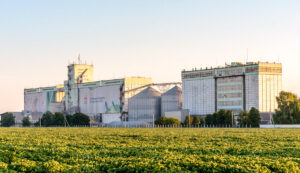
According to Fixygen, PJSC Myronivsky Plant of Cereals and Feedstuffs (MZVKK) will hold an extraordinary general meeting of shareholders on February 17, 2026, according to the issuer’s announcement.
The meeting will be held in the form of electronic voting. Registration of shareholders to participate in the meeting is scheduled for February 17 from 9:00 a.m. to 4:00 p.m., with the meeting to be held at 4:00 p.m. The date for compiling the list of shareholders eligible to participate is February 12, 2026.
The agenda includes issues regarding the appointment of an auditor for the mandatory audit of the 2025 financial statements and the granting of powers to conclude and sign an audit agreement. The draft decisions specify the appointment of Crow Erfolg Ukraine LLC and the authorization to sign the agreement to the chairman of the board of directors, Oleksandr Zhukotansky, with the right of subdelegation.
PJSC Myronivsky Plant for the Production of Cereals and Mixed Feed (EDRPOU 00951770) was registered on June 13, 1996, with a registered capital of UAH 40 million. The main activity in the registry data is the production of ready-made feed for farm animals.
CEREALS, compound feed, Myronivsky plant, shareholders' meeting
According to Fixygen, PJSC Myronivsky Plant of Cereals and Feedstuffs (MZVKK) will hold an extraordinary general meeting of shareholders on February 17, 2026, according to the issuer’s announcement.
The meeting will be held in the form of electronic voting. Registration of shareholders to participate in the meeting is scheduled for February 17 from 9:00 a.m. to 4:00 p.m., with the meeting to be held at 4:00 p.m. The date for compiling the list of shareholders eligible to participate is February 12, 2026.
The agenda includes issues regarding the appointment of an auditor for the mandatory audit of the 2025 financial statements and the granting of powers to conclude and sign an audit agreement. The draft decisions specify the appointment of Crow Erfolg Ukraine LLC and the authorization to sign the agreement to the chairman of the board of directors, Oleksandr Zhukotansky, with the right of subdelegation.
PJSC Myronivsky Plant for the Production of Cereals and Mixed Feed (EDRPOU 00951770) was registered on June 13, 1996, with a registered capital of UAH 40 million. The main activity in the registry data is the production of ready-made feed for farm animals.
CEREALS, compound feed, Myronivsky plant, shareholders' meeting



