
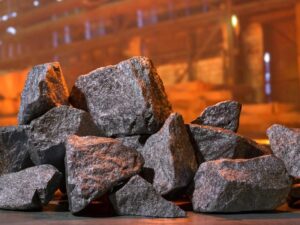
In January–August of this year, Ukraine’s ferroalloy exports decreased by 67.5% in volume terms compared with the same period last year—to 23,964 thousand metric tons from 73,774 thousand metric tons.
According to statistics released by the State Customs Service (SCS), 4,675 thousand metric tons of ferroalloys were exported in August, 4,077 thousand metric tons in July, 6,432 thousand metric tons in June, 4,851 thousand metric tons in May, in April—2,755 thousand metric tons, in March—337 metric tons, in February—72 metric tons, and in January—765 metric tons.
In monetary terms, ferroalloy exports for January–August fell by 65.2% to $28,778 million.
In addition, over the first eight months of the year, Ukraine imported 18,337 thousand metric tons of these products—a 32.8% decrease compared to January–August 2025. In monetary terms, imports fell by 33.2% to $34.613 million.
As previously reported, the Pokrovsk Mining and Processing Plant (PGZK, formerly the Ordzhonikidze Mining and Processing Plant) and the Marganetsk Mining and Processing Plant (MGZK, both located in Dnipropetrovsk Oblast), which are part of the “Privat” Group, ceased the extraction and processing of raw manganese ore in late October–early November 2023, while the NZF and ZZF plants halted the smelting of ferroalloys. In the summer of 2024, the ferroalloy plants resumed production at a minimal level.
Since January 19, 2026, due to problems with electricity supply and high electricity prices, NZF has been idle, while ZZF has been operating at a minimal level.
In 2025, ferroalloy plants increased their exports of ferroalloys by 21.4% in volume terms compared to 2024—to 93,841 thousand metric tons—while revenue rose by 19% to $105.441 million. The main export destinations were Poland (28.69% of shipments in monetary terms), Turkey (21.62%), and Algeria (21.48%).
In 2025, Ukraine imported 38,434 thousand metric tons of this product—a decrease of 53.3% compared to 2024. In monetary terms, imports fell by 47.5% to $73.839 million. Imports came primarily from Norway (16.11%), Kazakhstan (15.89%), and France (12.56%).
Prior to the nationalization of the financial institution, PrivatBank managed the business operations of the ZZF, NZF, Stakhanov Steel Plant (located at NKT), and the Pokrovsk and Marganets Mining and Processing Plants. The Nikopol Ferroalloy Plant is controlled by the EastOne Group, formed in the fall of 2007 as a result of the restructuring of the Interpipe Group, as well as by the Privat Group.
In January–July 2026, Ukraine imported approximately 10.9 thousand metric tons of manganese ore, whereas there were no imports of this product during the same period last year.
According to data from the State Customs Service, virtually the entire volume of shipments came from Ghana—10,896 metric tons worth $1.677 million. An additional 5 metric tons, worth $3,000, were imported from China.
Thus, Ghana accounted for 99.82% of the value of Ukraine’s manganese ore imports in January–July.
The resumption of imports coincides with the recovery of foreign trade in manganese ore overall. Over the seven-month period, Ukraine exported 24,647 metric tons of such products worth $4.227 million.
The average estimated price of exported ore was approximately $171 per metric ton, while that of ore imported from Ghana was approximately $154 per metric ton. These figures are estimates based on customs value and physical shipment volumes and do not reflect differences in the quality and characteristics of the raw material.
Manganese ore imports into Ukraine have fluctuated significantly in recent years. In 2024, the country imported 84,293 thousand metric tons worth $18.302 million.
In 2025, imports fell to 37,006 thousand metric tons, valued at $5.546 million. Notably, the entire volume was shipped from Ghana in November alone, while imports were virtually nonexistent from January through October.
The resumption of shipments as early as the first half of 2026 may indicate growing demand for raw materials in the ferroalloy industry amid a gradual recovery in production.
The main consumers of manganese ore in Ukraine are enterprises in the ferroalloy industry. The Nikopol and Zaporizhzhia Ferroalloy Plants halted smelting after Ukrainian mining companies ceased extraction of raw manganese ore in the fall of 2023; however, ferroalloy production was partially resumed in the summer of 2024.
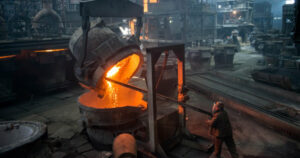
PJSC “Zaporizhzhia Ferroalloy Plant” (ZZF) reported a 17.2% decrease in net profit for January–June of this year compared to the same period last year, down to 103.958 million UAH.
According to the company’s interim report, published in the disclosure system of the National Securities and Stock Market Commission, the plant increased its net revenue by 9.1% during the reporting period, to 816.929 million UAH.
Retained earnings as of the end of June of this year amounted to 1 billion 900.380 million UAH.
The management report notes that operating the furnaces in a balancing mode between periods with the highest electricity costs is a strategy the company developed in the first quarter, which helped reduce production losses in the second quarter as well. Constant monitoring and analysis of the electricity market, along with collaboration between the production and finance departments, made it possible to develop and implement measures that optimized production schedules to avoid significant production losses and minimize losses as much as possible: April – estimated reduction in losses of 4.9 million UAH (excluding VAT), including a reduction of 3.6 million UAH due to electricity prices; estimated metal losses due to high electricity prices – 95.3 metric tons; May – estimated reduction in losses of 12.4 million UAH (excluding VAT), including a reduction of 4.18 million UAH due to electricity prices; estimated reduction in metal losses due to high electricity prices – 168.2 metric tons; June – estimated reduction in losses of 3.04 million UAH (excluding VAT), including a reduction attributable to electricity prices of 5.2 million UAH; estimated metal losses due to high electricity prices – 130.8 metric tons.
Regarding electricity costs—during the war, prices for electricity and its transmission more than doubled, solely due to increases in ceiling prices and tariffs for transmission and distribution services. Estimated losses for the second quarter of 2026 amounted to 6.1 million UAH (including VAT), including: – due to an increase in the tariff for electricity transmission services via the NEC “Ukrenergo” (+4% compared to the rate in effect in the first quarter of 2026, or 29.23 UAH/MW (excluding VAT)), additional expenses for the second quarter of 2026 were estimated at 0.88 million UAH (including VAT) – due to an increase in the distribution tariff of JSC “Zaporizhzhiaoblenergo” (+7.1% compared to the rate in effect in the first quarter of 2026, or 20.80 UAH/MW for the first voltage class; +3.7% compared to the rate in effect in the first quarter of 2026, or 102.38 UAH/MW for the second voltage class), additional expenses for the second quarter of 2026 were estimated at 0.42 million UAH (including VAT)—due to an increase in the RDN price caps effective April 30, 2026 (up to 15,000 UAH/MW (excluding VAT) during all hours), the estimated additional expenses for the second quarter of 2026 amounted to – 4.8 million UAH (including VAT).
In addition, due to the inability to promptly sell the purchased electricity, the company incurred additional losses resulting from imbalances—losses caused by ill-considered price caps in the balancing market. If the company does not draw the purchased volume of electricity, the remaining amount is directed to the imbalance market, where the purchase price for the company may be 0.01 UAH per 1 MW. In other words, we buy for 3,000–15,000 UAH but sell for 0.01 UAH. Conversely, if the company purchases more than it needs, the price for the excess is marked up by 5% to as much as 100–8,000%. This alone caused the company to lose 0.2–0.4 million UAH per month, and for the second quarter of 2026, estimated losses totaled 0.58 million UAH, including VAT. New technologies for the production and use of raw materials are being developed.
In June, two pilot-scale production campaigns were conducted: – production of MnS17P10 using the company’s own raw materials from ferromanganese production. The feasibility of production meeting the specified quality characteristics was demonstrated; – production of FMn78 using Grade 1b ore as an alternative to Grade 1 ore with a higher manganese content as the primary element. The results confirmed the feasibility of producing metal with specific quality characteristics.
Measures to optimize staffing levels, which were gradually implemented at the enterprise amid mobilization and to ensure minimal operations, led to a significant reduction in personnel.
“Currently, only the best professionals remain—those who have been working for many years and know and understand ferroalloy production. And this staff has remained, for now, to operate 3 furnaces (out of the 31 available),” the report states.
The actual number of employees as of June 24 of this year is 1,037. At the same time, to maintain the company’s image as one that implements new technological and technical solutions amid a complex economic and political situation, it became necessary to respond promptly to changes in the company’s operating conditions: – a constant search for potential markets for its core and other commercial products; – increasing the competitiveness of its products and, as a result, setting a primary objective; – finding ways to reduce costs in the production of both core and other products.
Based on the results of operations for the second quarter of 2026, the company reports the following key figures: The volume of commercial ferroalloy production amounted to 6,000 metric tons, with 7,800 metric tons sold for a total of 503.6 million UAH, including VAT. During the second quarter of 2026, taxes totaling 18 million UAH were paid to the state and local budgets, including to the state budget: customs duties—4.6 million UAH, military levy – 2.7 million UAH, and environmental tax – 0.2 million UAH; and to the local budget: personal income tax – 9.7 million UAH, and environmental tax – 0.2 million UAH.
In addition, a unified social contribution of 11.6 million UAH was paid. The main achievements of the second quarter include maintaining production operations despite low product prices and the steady rise in electricity and transportation costs. Plans are in place to continue operations within established targets, taking into account best practices across all areas of the company. New methods of motivating and rewarding staff are being developed.
The report notes that to reduce dependence on external factors affecting electricity supply—based on experience with the consequences of power grid failures — the company built and commissioned its own 0.8 MW/h solar power plant in December 2024 to meet its own needs. Since the project’s implementation, 980.6 MW of electricity has been generated. This has reduced electricity procurement costs by 4.51 million UAH and represented a significant step forward in developing the company’s modern, decentralized power supply.
Total sales for the reporting period amounted to 14,554 thousand metric tons of ferroalloys, worth 815.845 million UAH. Exports totaled 3,604 thousand metric tons of ferroalloys (23% of total ferroalloy sales for the first half of 2026).
As previously reported, based on its performance in January–March 2026, ZZF saw its net loss increase 2.4-fold compared to the same period last year—from 34.731 million UAH to 84.689 million UAH, while net revenue increased by 26.3%—to 377.006 million UAH from 298.557 million UAH.
Based on its 2025 results, ZZF reduced its net loss by 98.5% compared to 2024—to 27.962 million UAH from 1 billion 862.784 million UAH. At the same time, the plant increased its net revenue by 55.7%—to 1,522.567 million UAH from 977.660 million UAH.
In 2024, ZZF doubled its net loss compared to the previous year—to 1,862,784 million UAH. At the same time, net revenue decreased by 34.7%, to 977,660 million UAH.
PJSC “Zaporizhzhia Ferroalloy Plant” is one of Ukraine’s two main producers of these products.
According to the National Securities and Stock Market Commission’s data for the fourth quarter of 2025, Matrimax Limited and Soltex Limited each own 22.4486% of the company’s shares, Tapesta Limited owns 18.8903%, Walltron Limited (all based in Cyprus) holds 18.642%, and Halefield Holdings Limited (Belize) holds 7.7508%.
The authorized capital of ZZF PJSC is 227.955 million UAH, and the par value of one share is 0.1 UAH.
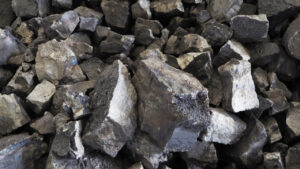
In January–June of this year, Ukraine’s ferroalloy exports decreased by 80.5% in volume terms compared to the same period last year—to 15,212 thousand metric tons from 54,771 thousand metric tons.
According to statistics released by the State Customs Service (SCS), 6,432 thousand metric tons of ferroalloys were exported in June, 4,851 thousand metric tons in May, 2,755 thousand metric tons in April, 337 metric tons in March, 72 metric tons in February, and 765 metric tons in January.
In monetary terms, ferroalloy exports for January–June fell by 70.2% to $18.220 million. The main export destinations were Poland (56.82% in monetary terms), Turkey (13.80%), and Romania (9.39%).
In addition, during the first six months of the year, Ukraine imported 13,097 thousand metric tons of these products—a 36.8% decrease compared to January–June 2025. In monetary terms, imports fell by 36.9% to $25.553 million. Imports came primarily from Kazakhstan (23.21%), India (13.61%), and France (11.52%).
As previously reported, the Pokrovsk Mining and Processing Plant (PGZK, formerly the Ordzhonikidze Mining and Processing Plant) and the Marganetsk Mining and Processing Plant (MGZK, both located in Dnipropetrovsk Oblast), which are part of the Privat Group, ceased the extraction and processing of raw manganese ore in late October–early November 2023, while the
NZF and ZZF plants halted ferroalloy smelting. In the summer of 2024, the ferroalloy plants resumed production at a minimal level.
Since January 19, 2026, due to problems with electricity supply and high electricity prices, NZF has been idle, while ZZF is operating at a minimal level.
In 2025, ferroalloy plants increased their exports of ferroalloys by 21.4% in volume terms compared to 2024—to 93,841 thousand metric tons—while revenue rose by 19% to $105.441 million. The main export destinations were Poland (28.69% of shipments in monetary terms), Turkey (21.62%), and Algeria (21.48%).
In 2025, Ukraine imported 38,434 thousand metric tons of this product—a 53.3% decrease compared to 2024. In monetary terms, imports fell by 47.5% to $73.839 million. Imports came primarily from Norway (16.11%), Kazakhstan (15.89%), and France (12.56%).
Prior to the nationalization of the financial institution, PrivatBank managed the operations of ZZF, NZF, the Stakhanov Ferroalloy Plant (located at NKT), and the Pokrovsk and Marganetsk Mining and Processing Plants. The Nikopol Ferroalloy Plant is controlled by the EastOne Group, formed in the fall of 2007 as a result of the restructuring of the Interpipe Group, as well as by the Privat Group.
EXPORT, FERROALLOY, IMPORT, POLAND, ДМС

In January this year, Ukraine reduced ferroalloy exports in physical terms by 10.9 times compared to the same period last year, from 8,331 thousand tons to 765 tons.
According to statistics released by the State Customs Service (SCS) on Tuesday, 2,461 tons of ferroalloys were exported in December 2025.
In monetary terms, ferroalloy exports in January fell 8.1 times to $1.066 million from $8.655 million. The main exports were to Poland (55.91% in monetary terms), Romania (17.92%), and Uzbekistan (14.35%).
In addition, Ukraine imported 3,169 thousand tons of this product last month, a decrease of 40.2% compared to January 2025. In monetary terms, imports fell by 42.3% to $4.870 million. Imports were mainly from Norway (55.03%), India (22.85%), and Kazakhstan (5.48%).
As reported, the Pokrovsky Mining and Processing Plant (PGZK, formerly Ordzhonikidze Mining and Processing Plant) and the Marganetsky Mining and Processing Plant (MGZK, both in Dnipropetrovsk region), which are part of the Privat Group, stopped mining and processing raw manganese ore in late October – early November 2023, while NZF and ZZF stopped smelting ferroalloys. In the summer of 2024, ferroalloy plants resumed production at a minimum level.
Since January 19, 2026, due to problems with electricity supply and high prices for it, NZF has been idle, while ZZF has been operating at a minimum level.
It was also reported that in 2025, ferroalloy plants increased their exports of ferroalloys in physical terms by 21.4% compared to the previous year, to 93,841 thousand tons, and revenues increased by 19%, to $105.441 million. The main exports were to Poland (28.69% of shipments in monetary terms), Turkey (21.62%), and Algeria (21.48%).
In 2025, Ukraine imported 38,434 thousand tons of this product, a decrease of 53.3% compared to 2024. In monetary terms, imports fell by 47.5% to $73.839 million. Imports were mainly from Norway (16.11%), Kazakhstan (15.89%), and France (12.56%).
In 2024, Ukraine reduced its exports of ferroalloys in physical terms by 4.45 times compared to 2023, to 77,316 thousand tons from 344,173 thousand tons. in monetary terms, it decreased by 3.4 times – to $88.631 million from $297.595 million. At the same time, the main exports were to Poland (27.40% of supplies in monetary terms), Turkey (21.53%), and Italy (19.82%).
In addition, in 2024, Ukraine imported 82,259 thousand tons of this product compared to 14,203 thousand tons in 2023 (a 5.8-fold increase). In monetary terms, imports increased 3.3 times, from $42.927 million to $140.752 million. Imports were mainly from Poland (32.71%), Norway (19.55%), and Kazakhstan (13.9%).
The business of ZZF, NZF, Stakhanovskyi ZF (located at NKT), Pokrovskyi and Marganetskyi GZK was organized by PrivatBank prior to the nationalization of the financial institution. The Nikopol Ferroalloy Plant is controlled by the EastOne group, created in the fall of 2007 as a result of the restructuring of the Interpipe group, as well as the Privat group.
In January-November of this year, Ukraine increased ferroalloy exports in physical terms by 26.1% compared to the same period last year, to 91,380 thousand tons.
According to statistics released by the State Customs Service (SCS) on Friday, in monetary terms, ferroalloy exports increased by 22.2% to $102.586 million.
The main exports were to Poland (27.31% of shipments in monetary terms), Algeria (22.08%), and Turkey (22.22%).
In addition, Ukraine imported 33,370 thousand tons of this product in the first 11 months of 2025, a decrease of 57.9% compared to the same period in 2024. In monetary terms, imports fell by 51.4% to $65.560 million. Imports were mainly from Norway (18.15%), Kazakhstan (15.18%), and China (11.10%).
As reported, the Pokrovsky Mining and Processing Plant (PGZK, formerly Ordzhonikidze Mining and Processing Plant) and the Marganetsky Mining and Processing Plant (MGZK, both in Dnipropetrovsk region), which are part of the Privat Group, stopped mining and processing raw manganese ore in late October-early November 2023, while NZF and ZZF stopped smelting ferroalloys. In the summer of 2024, ferroalloy plants resumed production.
PGZK and MGZK did not produce any products in 2024, while in 2023, PGZK produced 160.31 thousand tons of manganese concentrate, and MGZK was idle.
In 2024, Ukraine reduced its exports of ferroalloys in physical terms by 4.45 times compared to 2023, to 77,316 thousand tons from 344,173 thousand tons. and in monetary terms, it decreased by 3.4 times, to $88.631 million from $297.595 million. At the same time, the main exports were to Poland (27.40% of supplies in monetary terms), Turkey (21.53%), and Italy (19.82%).
In addition, Ukraine imported 82,259 tons of this product last year, compared to 14,203 tons in 2023 (a 5.8-fold increase). In monetary terms, imports increased 3.3 times, from $42.927 million to $140.752 million. Imports were mainly from Poland (32.71%), Norway (19.55%), and Kazakhstan (13.9%).
The business of ZZF, NZF, Stakhanov ZF (located at NKT), Pokrovsky and Marganetsky GZK was organized by PrivatBank prior to the nationalization of the financial institution. The Nikopol Ferroalloy Plant is controlled by the EastOne group, created in the fall of 2007 as a result of the restructuring of the Interpipe group, as well as the Privat group.



