

The Ministry of Economy and Environment of Ukraine has decided to provide a total of 56 million hryvnias in state support to the “ART PACK INDUSTRIAL” industrial park in the Khmelnytskyi region and the “KRONOSPAN RIVNE” industrial park in the Rivne region, the ministry announced on August 21.
The “ART PACK INDUSTRIAL” industrial park will receive 9.699 million UAH to construct access roads to the park’s territory. An additional 46.305 million UAH will be allocated to “KRONOSPAN RIVNE” for the development of energy infrastructure.
“Government incentives are a practical tool that enables the creation of industrial infrastructure, attracts investment, and fosters the development of the manufacturing sector,” said Vitaliy Kindrativ, Deputy Minister of Economy and Environment of Ukraine. According to him, this support will allow the industrial parks in the Khmelnytskyi and Rivne regions to launch new production facilities more quickly.
Following the new decision, four industrial parks have already received state support since the beginning of 2026 to implement four projects totaling approximately 152 million hryvnias. In late May, “SMART TECH INDUSTRY” in the Poltava region and “Sparrow Park Lviv” became the first recipients this year, receiving over 96.5 million hryvnias. Of this amount, 5.5 million UAH was allocated for the construction of gas and water supply networks in the Poltava industrial park, and another 91 million UAH was allocated for the restoration of infrastructure in the Lviv industrial park that was damaged by a rocket strike.
Government funding for industrial parks is provided on a co-financing basis. Typically, the state covers up to 50% of the project cost, while for de-occupied and frontline territories, as well as for the restoration of infrastructure damaged by hostilities, the share of state support can reach 80%. The maximum amount of funding is up to 150 million hryvnias per industrial park.
Recipients of the funds are required to commission at least 5,000 square meters of industrial real estate within three years and attract at least two participants—industrial enterprises—to the park. The Ministry of Economy has extended the deadline for submitting applications for state incentives in 2026 until August 31.
The “ART PACK INDUSTRIAL” industrial park was included in the state register on December 17, 2025. It is located within the Khmelnytskyi city community, covers 10.22 hectares, and was established for a term of 50 years. The park’s primary focus is stated as the production of paper and paper products. In April 2026, “ART PAK SERVICE” LLC became the managing company.
“KRONOSPAN RIVNE” operates in the village of Horodok in the Rivne District and occupies approximately 85 hectares. The park was entered into the registry in July 2021. Its main areas of focus are the woodworking and furniture industries, as well as warehousing. The initial concept calls for the creation of approximately 1,100 jobs.
For “KRONOSPAN RIVNE,” the current funding is not the first instance of state support. In 2025, the park received an additional 55.3 million UAH for the construction of infrastructure for a cogeneration plant. According to the Rivne Regional State Administration, Kronospan has invested over 560 million euros in production in the region over the past few years, and the industrial park is viewed as a core platform for the development of a furniture cluster.
According to the Ministry of Economy, there are currently 123 registered industrial parks in Ukraine. As of the end of 2025, 37 industrial enterprises had been built or were under construction on their territories, and the total volume of attracted investments exceeded 45 billion UAH.
The 2026 state budget allocates 1 billion UAH for the development of industrial infrastructure in industrial parks as part of the “Made in Ukraine” policy to support Ukrainian manufacturers.
government support, INDUSTRIAL PARK, INDUSTRY, INFRASTRUCTURE, INVESTMENT
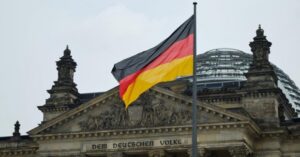
According to Experts.news, Chancellor Friedrich Merz’s government has presented a package of 34 reforms designed to restore competitiveness to Europe’s largest economy following several years of weak growth, high energy costs, a slowdown in industrial development, and pressure on the export model.
According to Reuters, key measures cover pensions, taxes, the labor market, industrial policy, energy, infrastructure, housing, trade protection, and reducing bureaucracy. The government expects to pass the main elements of the package in parliament by the end of 2026.
One of the central components is tax relief for households amounting to approximately 10 billion euros per year. For a working family with two children, the benefit could exceed 600 euros thanks to increased tax deductions and a flatter tax rate for middle-income earners. This is planned to be partially financed by raising the top income tax rate from 45% to 47% for the highest earners—those earning 280,000 euros or more per year.
They also aim to make the labor market more flexible. Measures include eliminating the option to report sick by phone, requiring a doctor’s note from the first day of illness, extending the duration of fixed-term contracts to 48 months for new employees by 2030, and introducing more flexible severance pay mechanisms for high-earning employees.
The industrial sector is focused on supporting the automotive industry, chemicals, pharmaceuticals, mechanical engineering, clean technologies, batteries, semiconductors, and artificial intelligence. There are also plans to expand the Deutschlandfonds investment mechanism, accelerate the connection of industrial facilities to power grids, and cut the implementation time for grid projects by roughly half.
For Germany, this is an attempt to address several systemic problems at once. In its May forecast, the European Commission noted that after two years of recession and growth of only 0.2% in 2025, the German economy may grow by only 0.6% in 2026 and 0.9% in 2027. Among the reasons cited for this weakness were high energy costs, weak exports, competition from China, tariff risks, and a delay in the recovery of investment.
The package could give Germany new momentum, but it will not be a quick fix. According to economists’ estimates cited by Reuters, provided the reform is fully and swiftly implemented, the long-term economic growth rate could be raised from approximately 0.4% to 0.7% per year. This is an improvement, but not a return to the old model of strong industrial growth.
The main impact on the German economy could manifest through three channels: a reduction in administrative costs for businesses, an increase in domestic demand driven by tax breaks, and accelerated investment in infrastructure, energy, and technology sectors. But the weak spot remains the same—Germany depends on exports and global industrial supply chains, which are currently under pressure from geopolitics, tariffs, and competition from China.
The consequences will vary for Germany’s major trading partners. In 2025, China once again became Germany’s largest trading partner, with a trade volume of 251.8 billion euros. The United States ranked second with 240.5 billion euros, and the Netherlands ranked third with 209.1 billion euros. At the same time, the U.S. remained the main market for German exports, although shipments of automobiles, trailers, and semi-trailers to the U.S. fell by 17.8%.
For China, Germany’s reforms mean intensified competition in industry, particularly in the electric vehicle, battery, mechanical engineering, and clean tech sectors. Berlin has separately stated its intention to strengthen the EU’s anti-dumping and anti-subsidy measures and to consider technology transfer requirements in strategic sectors for non-European investments. This could make German-Chinese economic relations more strained.
For the U.S., the effect is twofold. On the one hand, a stronger Germany means greater demand for American technology, energy, financial services, and industrial equipment. On the other hand, Germany will seek to preserve its own industrial base and reduce its dependence on foreign suppliers in strategic sectors, particularly in semiconductors, batteries, and artificial intelligence infrastructure.
For the Netherlands and other EU countries, the reform package is likely to be positive. If German industry and consumption begin to recover, European logistics hubs, component suppliers, machine-building companies, chemical manufacturers, and countries integrated into German production chains will benefit.
The main risks of the reforms are political and time-related. Some of the measures may face resistance from labor unions, the medical community, and regional authorities, and the economic impact will not be immediate. Reuters notes that businesses and economists generally welcomed the package as necessary but emphasized that everything will depend on the speed and quality of its implementation.
Ultimately, the Merz package can be seen as an attempt to reshape the German growth model: less bureaucracy, more investment, greater labor market flexibility, and stronger protection for strategic industries. But Germany will not be able to return to its former role as Europe’s economic engine through this single reform package alone. To do so, it will have to simultaneously address the challenges of high energy costs, demographic shifts, technological lag, weak domestic demand, and dependence on foreign markets.
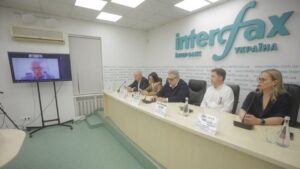
Ukraine’s major industrial associations and groups oppose Ukrzaliznytsia’s significant and unjustified increase in freight rates, which would deal yet another blow to Ukraine’s economy.
Business representatives expressed this position at a press conference titled “A Tariff Blow to the Ukrainian Economy: Leading Industries Oppose Ukrzaliznytsia’s Unfair Increase in Freight Rates” at the Interfax-Ukraine news agency on Tuesday.
Oleksandr Kalenkov, president of the “Ukrmetallurgprom” Association, noted that while the draft order on raising tariffs has not yet been made public, the issue is being actively discussed. He emphasized that “Ukrzaliznytsia” is a state monopoly and that corruption is present in its operations. The company must operate transparently, and its activities should be overseen by an independent body—the National Commission for State Regulation in the Transport Sector—the creation of which has been under discussion in Ukraine for 17 years.
“We hope that the decision to raise tariffs will be made objectively. Moreover, freight transportation has always been profitable. Specifically, Ukrzaliznytsia’s operating profit in 2024 amounted to 20 billion hryvnias; profitability remained steady in 2025, and we also expect Ukrzaliznytsia to operate profitably this year. However, the volume of freight is decreasing: from 315 million metric tons in 2021 to 160 million metric tons in 2025,” said Kalenkov.
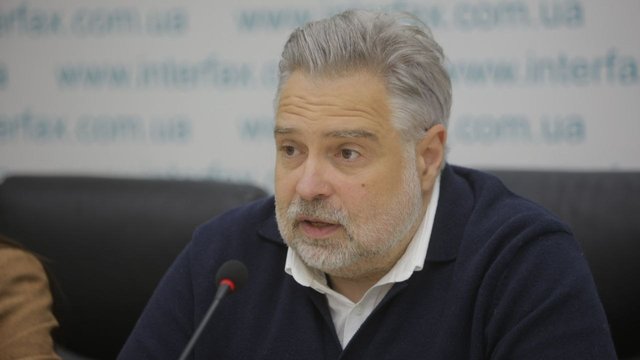
He added that the business community is trying to engage in a constructive dialogue with the company. In particular, there is the issue of subsidizing passenger transportation, but passenger transportation cannot be subsidized at the expense of private businesses; it must be funded through the budget. However, the business community can invest its own funds to provide support.
“Ukrzaliznytsia has opportunities to improve efficiency through its operational activities. Furthermore, it has the ability to secure external financing, whereas the private sector currently lacks such opportunities. So let’s resolve these issues together, rather than making decisions behind closed doors,” urged the head of Ukrmetallurgprom.
Kalenkov added that following the press conference, a joint appeal to the government would be drafted.
“We are prepared to accept a fare increase of up to 10%. And Ukrzaliznytsia itself must improve its efficiency. We need a normal, open discussion about the transportation situation,” he concluded.
Pavlo Kachur, head of the Association of Cement Producers of Ukraine (Ukrcement), noted that the transportation situation is becoming critical, and this threatens not only a specific industry but the Ukrainian economy as a whole.
“We support raising tariffs, but we advocate for an objective increase. Balanced rates must be adopted. No one has any interest in the collapse of any industry!” Kachur emphasized.
The head of “Ukrcement” proposed a set of solutions, including allowing private rail operators to participate in freight transportation, since, according to his data, up to 50 trains are unable to find locomotives for transport. Kachur also highlighted the need to raise salaries for train drivers and “Ukrzaliznytsia” employees, as well as the need to address the issue of passenger transportation, particularly commuter services.
He also spoke in favor of adopting anti-crisis measures and the need for “Ukrzaliznytsia” to publicly disclose its plans regarding where the funds generated by the tariff increases will be allocated.
“We support Ukrzaliznytsia presenting a program to modernize its rolling stock. We support the adoption of performance indicators for freight delivery so that the railway can report on this,” Kachur explained.
Serhiy Kudryavtsev, Executive Director of the Ukrainian Association of Ferroalloy Producers (UkrFA), supported the proposal regarding fares and resolving the issue of cross-subsidization. At the same time, for enterprises in the ferroalloy industry located in areas of active hostilities, the cost of freight delivery is a critical issue.
“The cost of transporting manganese to Nikopol has increased fivefold. And this is a matter of survival for our companies,” said Kudryavtsev.
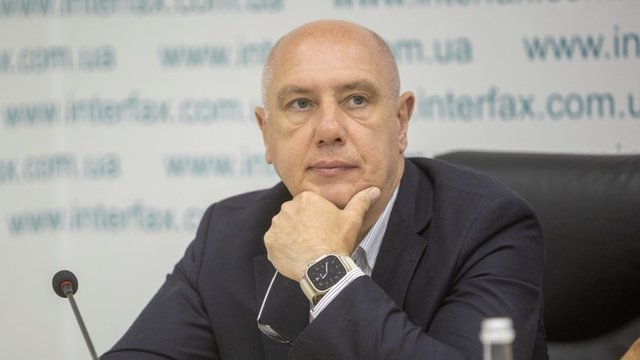
Vladimir Gusak, CEO of the Federation of Transport Employers of Ukraine, expressed surprise at Ukrzaliznytsia’s plans to raise tariffs.
“This is yet another attempt by Ukrzaliznytsia to raise freight tariffs: by 30% starting in August 2026 and by another 15% starting in January 2027. That is, by nearly 50%. This shows a complete lack of understanding of the realities,” Gusak said, adding that the main problem is the chronic losses in passenger transportation. At the same time, the volume of freight transportation is declining: now, with every fare increase, companies are forced to either reduce shipments or switch to other modes of transport just to stay afloat.
“In the current situation, we believe a moratorium on railway fare increases should be implemented until the war ends,” Gusak emphasized.
Konstantin Saliy, president of the All-Ukrainian Union of Building Materials Manufacturers, noted that in developed countries, fare increases are approved only after consultations, and this issue always receives close attention.
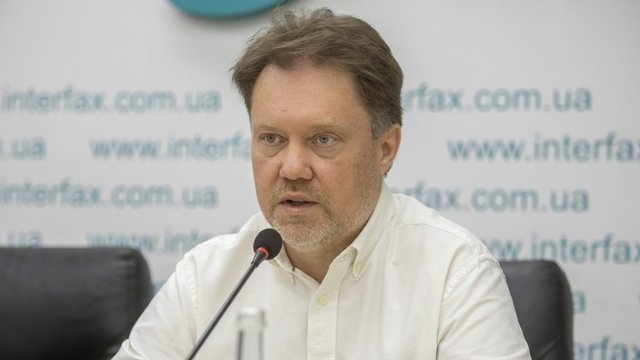
“A 2–3% price increase in the EU causes significant public discontent. Here, however, it’s 30% right off the bat. And this will trigger a chain reaction of price increases—we’ll feel it first, and then consumers will,” Saliy predicted, adding that “Ukrzaliznytsia” could secure funding through land taxes, the development of retail trade at train stations, and other areas, rather than by raising fares. The company should streamline its administrative staff and optimize its expenses. And shifting its problems onto Ukrainians and Ukrainian businesses is the wrong approach, Saliy concluded.
Oksana Nechay, a logistics specialist for rail transport at the Kovalska Industrial and Construction Group, noted that every increase in production costs is practically catastrophic for their company.
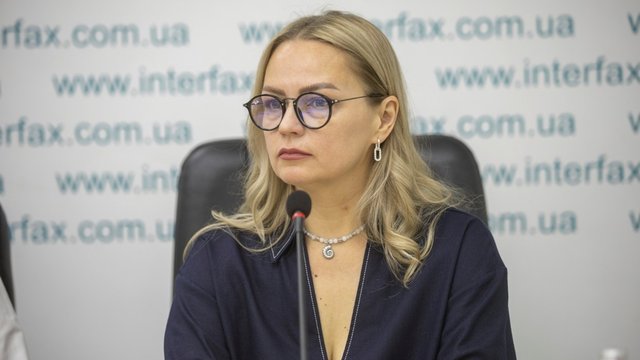
“It will lead to a loss of customers, and we operate in the domestic market. And this will result in a drop in tax revenues. The next increase could also take a toll on part of the industry. Both we and Ukrzaliznytsia stand to lose. We are not opposed to an increase, but it must be justified, because we are interdependent,” Nechay said.
Ksenia Orynchak, Executive Director of the National Association of the Mining Industry of Ukraine (NADPU), reported on a “casual meeting” of mining industry representatives last week, as well as an appeal to the Prime Minister, the Ministry of Development, and the State Regulatory Service to prevent an increase in railway tariffs.
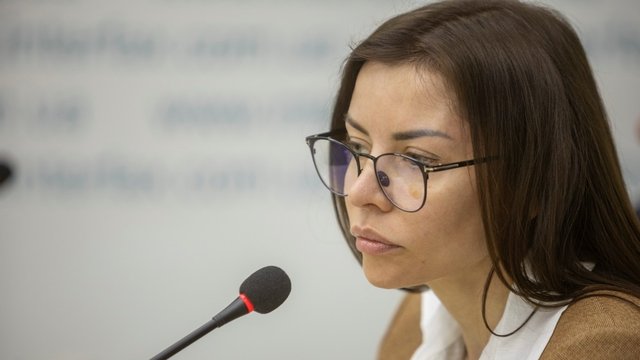
“We outlined the negative consequences. Meanwhile, the EU is currently focusing on environmental issues. But Ukraine is moving in the opposite direction, shifting from rail to road transport due to Ukrzaliznytsia’s stance,” Orynchak noted, proposing that a joint appeal following the press conference highlight the need to pursue an environmentally friendly approach in line with the SVA.
Source: https://interfax.com.ua/news/press-conference/1177028.html
BUSINESS, freight rates, INDUSTRY, KUDRYAVTSEV, Nechay, Saliy, TRANSPORTATION, UKRZALIZNYTSIA, КАЛЕНКОВ, Оринчак

The labor shortage in Ukraine has reached a historic high—69% of companies cited it as the main obstacle to doing business during the war, according to the Institute for Economic Research and Policy Consulting (IER), based on the results of its 49th monthly survey, which the IER conducted among 469 industrial enterprises.
“For several months now, the ‘labor shortage’ obstacle has been breaking records. This obstacle has remained in first place for over a year and a half, reaching a high of 69% in May. Businesses are concerned about the shortage of workers,” said IER Senior Research Fellow Yevhen Angel.
In May, there was a slight decrease in the difficulty of finding qualified workers—the share of enterprises that found it harder to recruit such workers fell from 62.3% to 60.6%. It is more difficult to find unskilled workers—for 38.4% of respondents in May, compared to 34.3% in April.
Only 2.4% of businesses plan to increase employment over the next three months, while 5.1% plan to place employees on mandatory leave.
“Rising prices for raw materials, supplies, and goods” remains the second-biggest obstacle—the figure fell slightly from 56% to 49%.
The share of those concerned about “unsafe working conditions” has decreased slightly: this issue has become an obstacle for 44% of businesses, down from 46% in April, allowing it to hold third place for the fourth consecutive month.
The pattern of “unsafe working conditions” as an obstacle remains consistent across enterprise size. Medium and large enterprises are more likely to cite this problem—48% and 47%, respectively, in May—as they are more likely to be targeted by enemy attacks.
“From a regional perspective, this obstacle is particularly acute in frontline and central regions—over 80% of respondents in the Kyiv, Vinnytsia, Odesa, Zhytomyr, Zaporizhzhia, and Dnipropetrovsk regions cited it. In the west of the country, this obstacle is less relevant. The only exception is Rivne Oblast,” Angel said.
However, there have been noticeable changes regarding two other obstacles. The obstacle “decreased demand for products/services” rose from 26% to 38%. In addition, logistical difficulties have intensified, as evidenced by the increase in the obstacle “difficulties in transporting raw materials or finished goods across Ukraine” from 24% to 30%.
No significant changes were recorded for other obstacles. “Corruption” and “unlawful demands or pressure from law enforcement or regulatory agencies” remain “in the shadow” of the main obstacles—only 7% and 3% of respondents, respectively, mentioned them in May.
“The relevance of the obstacle ‘power outages’ remains at a relatively low level—20% in May—when compared to the winter attacks on our energy infrastructure,” Angel said.
It is noted that 31% of businesses temporarily suspended operations due to power outages in April, but mostly for short periods of time. At the same time, 41% of businesses operated continuously despite the outages. Already, 28% of businesses experienced no power outages, up from 20% the previous month.
Average working time losses amounted to 4% in April. The greatest losses of working time were observed in micro and small enterprises (57%); by industry, in the chemical industry (6%); and by region, in Kyiv (13%) and Sumy (9%) regions.
Assessments of the government’s economic policy remain neutral. “A large share of enterprises provide neutral assessments; specifically, 64% of respondents did so in May. The share of positive assessments remains low at 6%. At the same time, the share of negative assessments stands at 25%, and this gap between positive and negative assessments has persisted since the summer of 2023,” Angel summarized.
Up to 500 Ukrainian industrial enterprises located in 21 of Ukraine’s 27 regions participate in the IED’s New Monthly Enterprises Survey (#NRES). The survey has been conducted monthly since May 2022.
The volume of capital investments in Ukraine in the first quarter of 2026 rose by 5.1% compared to the first quarter of 2025, reaching 130.1 billion UAH, according to the State Statistics Service.
The agency specifies that 41.2% of the total value of capital investments was accounted for by industry (or 53.6 billion UAH), and 12.7% (or 16.5 billion UAH) by agriculture, forestry, and fisheries.
The vast majority of investments were concentrated in tangible assets—93.3% of the total volume. In particular, the largest amounts were invested in machinery, equipment, and tools (38.2%), engineering structures (19.2%), non-residential buildings (10.9%), and vehicles (10.5%).
According to the State Statistics Service, the main source of funding for capital investments in January–March of this year remains the own funds of enterprises and organizations—78.6%.
As previously reported, capital investments in Ukraine in 2025 increased by 20.3% compared to 2024, reaching 893.6 billion UAH.
CAPITAL INVESTMENTS, ECONOMY, ENTERPRISES, INDUSTRY, State Statistics Service
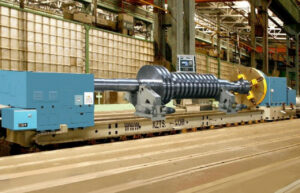
JSC “Kramatorsk Heavy Machine-Tool Plant” (KZVV, Perechin, Zakarpattia Oblast), nearly 97.7% of whose shares are owned by former People’s Deputy (2016–2023) Maksym Yefimov, ended January-March of this year with a net profit of UAH 106 million, which is 6.7 times less than the corresponding figure for January-March of last year.
According to the company’s financial statements in the disclosure system of the National Securities and Stock Market Commission (NSSMC), its net revenue, however, increased by 47.7%—to nearly 16 billion UAH.
KZVV reported UAH 202.5 million in gross profit (4.3 times less), while operating profit fell by 9.5 times to UAH 85.2 million.
Retained earnings as of March 31, 2026, amounted to UAH 1.87 billion (UAH 2.12 billion at the beginning of the year).
Compared to the beginning of 2026, the plant reduced its current liabilities by 15.5% to 33.9 billion UAH, while long-term liabilities, having decreased slightly, amounted to 122.1 million UAH.
The main specialization of KZVV, which was relocated from Kramatorsk to Perechin in the summer of 2022, is universal special-purpose machine tools designed for the energy, metallurgical, oil and gas industries, machine building, and rail transport, as well as machine tools for single-unit and small-batch production. The plant also manufactures special-purpose products.
In particular, the company “Friendly Wind Technologies” produces wind power equipment at the plant’s facilities, and in August 2023, the “Friendly Wind Technologies” industrial park was registered in Perechyn.
As reported, in 2025, KZVV increased its net profit by 2.3 times compared to 2024—to UAH 1.41 billion—as net revenue grew by more than 2.6 times—to UAH 50.4 billion.



