Ukraine in 2022 sold industrial products (goods, services) worth 2.814 trillion UAH, which is 21.5% less than in 2021 (3.584 trillion UAH), including outside the country – on 564.097 billion UAH, the State Statistics Service said on Friday.
According to her data, in December 2022 compared to December 2021, the turnover of products sold in the extractive and processing industries decreased by 38.1%. Sales of the extractive industry in December-2022 compared to December-2021 decreased by 40.2%, processing industry – by 37.7%.
Sales in the extractive industry in December-2022 compared to November-2022 increased by 7.8%, in the processing industry – by 5.0%.
In total sales of industrial products in 2022 the largest share came from processing industry (53.6%), supply of electricity, gas, steam and air conditioning (31.1%), mining and quarrying (14.1%), metallurgical production (8.6%).
As reported, Ukraine in 2021 sold industrial products (goods, services) in the amount of 3.584 trillion UAH.
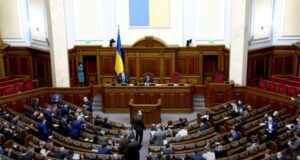
The Parliamentary Committee on Finance, Tax and Customs Policy on Tuesday recommended that draft laws No. 8298 and No. 8299, which exempt the import of equipment and components for own production from VAT and duties until the end of martial law (MP), be passed as a basis, the committee head Daniil Hetmantsev said in a telegram.
“The Ministry of Finance did not support almost the entire law … During the committee noted that without the agreement of the IMF this bill will not be adopted. Negotiations with the IMF on this law have not yet been held,” the deputy head of the committee Yaroslav Zheleznyak indicated in Telegram.
As specified Getmantsev, the bills also include preferential rent for iron ore and water for the period of the EaP, as well as single tax benefits for the taxpayers of Group 4.
In addition, it is planned to extend the life of the registered EDR, which had such a term expired during the EaP, as well as the abolition of taxation for electronic stamps and digital postage stamp and services for the demonstration and demonstration of films with Ukrainian dubbing.
“My prediction is that we will never accept it as a whole in this volume, precisely because of the IMF position,” Zheleznyak said.
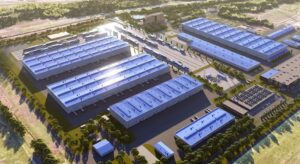
Ukrainian industry is one of the sectors of the economy most affected by the war. Since February 24, many large enterprises, primarily in the east and south of the country, have lost their production capacities, and the staff was forced to evacuate. At the same time, individual production facilities were transferred to the western regions, where they are being restored on the basis of more modern industrial facilities, such as industrial parks that appeared shortly before the war.
The Open4business portal spoke about the future of Ukrainian industry and the prospects for the restoration of production with Igor Stakovychenko, an expert in the field of economics.
According to the expert, the production of goods with high added value should become a priority for the development of the economy for decades to come.
“Before the aggression, our industry worked mainly according to standards that were not particularly modernized in 30 years of independence. This is the so-called canonical model, when you have raw materials, workshops, shipping, logistics, and so on. And there must also be stable consumers who will always buy products. Many plants with such a system failed the market test and closed down. Mostly giants remained, who more or less adapted. After the war, it will definitely not be possible to rebuild production in the same form, a fundamentally new model is needed, ”Igor Stakovichenko is sure.
The expert noted that in the modern world, the modernization of production involves the introduction of new management methods, as well as the creation of more adaptive sites, such as industrial zones or parks.
“If you have a workshop for the production of one specific part, which is itself part of a complex and long chain for creating the final product, then the situation above is rather precarious in modern conditions since you depend on many factors: suppliers, market situation, current conjuncture. If you have, for example, a 3D printer that can produce any shape to order for a specific client, then the situation is more stable for you, since you can quickly reorient yourself when the market changes. In the modern world, the industry is striving for greater universalization,” explained Igor Stakovichenko.
According to him, the restoration of the industry should begin now and be based, firstly, on the creation of industrial parks in safe regions, and secondly, on the modernization of existing industries for new models. As an example, Stakovichenko cites the development of this concept in Poland or the Czech Republic, where industrial zones already provide up to 50% of GDP.
“The government is now acting in the right direction, providing tax incentives to such industrial zones, this will lay the foundation for the rapid restoration of the country’s industrial potential in the post-war period,” Stakovichenko summed up.
ECONOMY, IGOR STAKOVICHENKO, INDUSTRY, MARKETS, PRODUCTION, STAKOVICHENKO
Prices in the Ukrainian industry in March 2021 increased by 1.6%, while in February – by 7.8%, in January – by 5.2%, the State Statistics Service reported on Monday.
At the end of March 2021, prices in industry increased 26.3% year-over-year, at the end of February – 26.6%, at the end of January 2021 – 17.6%.
In the first quarter of 2021 (compared to the same period in 2020), the growth in prices of industrial producers amounted to 23.5%.
The State Statistics Service said that within Ukraine, prices of industrial producers in March compared with February 2021 increased 0.6%, for deliveries outside the country – 4.7%.
In the mining industry and quarrying in March of this year, compared with the previous month, the price of production grew by 2.3%, the rise in prices in the extraction of metal ores was 5.8%, coal – 1.8%, while in extraction of crude oil and natural gas the products fell by 2% in price.
Prices increased in the production of coke and refined petroleum products by 14.2%, chemicals and chemical products – by 9.9%, in metallurgy – by 4.6%, in the production of intermediate consumption goods – by 4.2%, non-durable goods – by 3.7%, in the processing industry – by 3.8%.
A decrease in prices was recorded in the supply of electricity, gas, steam – by 5.5%, energy production – by 2.9%.
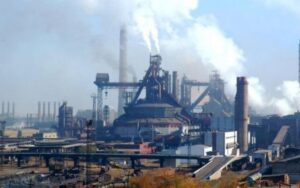
Industrial production in Ukraine in March 2021 increased by 2.1% compared to March 2020, which was the first month of the introduction of quarantine due to COVID-19, and the growth adjusted for the effect of calendar days was 2.4%, the State Statistics Service has said.
The department indicated that the growth of industrial production in March 2021 amounted to 10.9% against the previous month, and on a seasonally adjusted basis – 1.8%.
In the supply of electricity, gas, steam and conditioned air in March 2021 from March 2020, an increase was 7.3%, in processing industry – 2.5%, while the reduction in production in extracting industry was 1.5%.
The State Statistics Service clarified that in the first quarter of 2021 in relation to the same period a year earlier, industrial production in Ukraine decreased by 2%, in particular in mining industry – by 2.8%, processing – by 3.3%, although the supply of electricity, gas and steam gains 4.1% due to substantially colder weather.
As reported, industrial production in Ukraine in 2020 fell by 5.2% after falling by 0.5% a year earlier. At the same time, in December last year, for the first time since May 2019, its growth was recorded compared to the same period last year – by 4.8%.
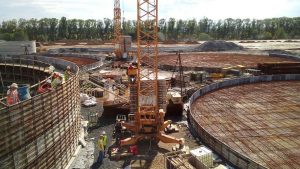
Myronivsky Hliboproduct (MHP), one of the largest agricultural holdings in Ukraine, is working on a carbon dioxide plant project, deputy chairman of the board Oleksandr Dombrovsky has said when signing a memorandum of partnership between the agricultural holding and Organic Ukraine.
“This is an innovative project, I can’t tell you much. We are now doing a very professional feasibility study, considering various options. Today it is too early to say that we are ready for this project. We are working on it,” he said.
Dombrovsky clarified that the plant is being designed both for the needs of MHP itself, and for the domestic market and export. According to him, today about 70% of carbonic acid in the domestic market is imported, mainly from Poland and Hungary.
He also said that MHP, which has already built two of the world’s largest biogas complexes for processing poultry manure, has another ready-made similar project and a permit for its construction.
“But we are thinking to start or not to start. And if to start, then when, given that the “green” industry in Ukraine has not been paid money at all for six months,” Dombrovsky explained.
He stressed that investments in biogas are significantly higher than in solar energy, and range from EUR3 million to EUR3.5 million per 1 MWh of capacity.
The expert noted that the agricultural holding is also working on other innovative projects, in particular, on “green” hydrogen.
BIOGAS, CARBONIC ACID, GREEN POWER, INDUSTRY, INVESTMENT, MHP