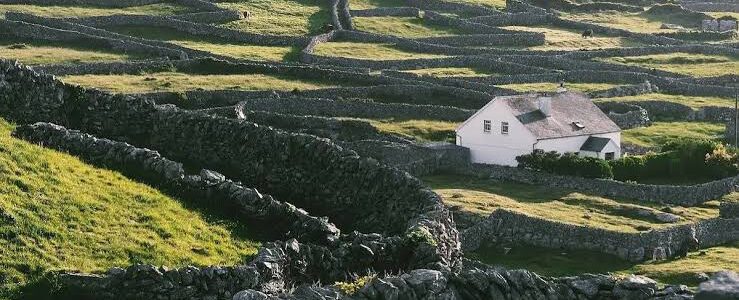
According to Relocation, the Irish government is extending the Vacant Property Refurbishment Grant program—which provides financial support for the restoration of vacant and derelict homes—through 2026. The program offers up to €50,000 to cover the cost of renovating residential properties and up to €70,000 for properties in a state of disrepair.
According to the official website of Ireland’s Department of Housing, Local Government, and Heritage, the program covers cities, small towns, and rural areas.
The main goal of the initiative is to return residential properties that have been unoccupied for a long time to use and to increase the supply of affordable housing.
To qualify for a grant, the building must have been constructed before 2008 and have remained vacant for at least two years.
The applicant must confirm ownership of the property or provide documentation proving that they are in the process of acquiring it.
The renovated housing may be used as a primary residence or rented out in accordance with the program’s terms.
The standard grant is up to €50,000. If the property is officially recognized as derelict and unfit for use, the applicant may be eligible for an additional €20,000.
However, the amount of compensation depends on verified expenses, the type of work, and the assessment by local authorities. The stated maximum amount does not guarantee automatic approval of the full funding amount.
In 2026, Ireland also expanded support for the conversion of former commercial and public buildings into residential properties.
For projects involving the creation of multiple apartments in such properties, the maximum grant can range from €90,000 to €110,000, depending on the technical condition and the number of new residential units.
A separate program, the Vacant Above the Shop Grant, is aimed at converting vacant spaces above operating stores and other commercial properties into apartments.
Under this initiative, total financial support can reach €140,000, including assistance with project preparation and professional consulting, provided that the relevant criteria are met.
Unlike Italian municipalities, Ireland does not sell homes for a nominal price. Its model provides funding for the renovation of property that has already been purchased or a property the applicant plans to buy.
At the same time, participation in the program is not limited exclusively to Irish citizens, though it requires meeting established criteria. Grants are provided to individuals, while registered companies and developers are not eligible for the standard Vacant Property Refurbishment Grant program.
For foreign buyers, the legality of long-term residence in Ireland remains a separate issue. Purchasing real estate and receiving a grant do not replace the necessary immigration permits.
The government program has been in effect since July 2022 and is gradually expanding. It is implemented by local authorities with the support of the Irish government.