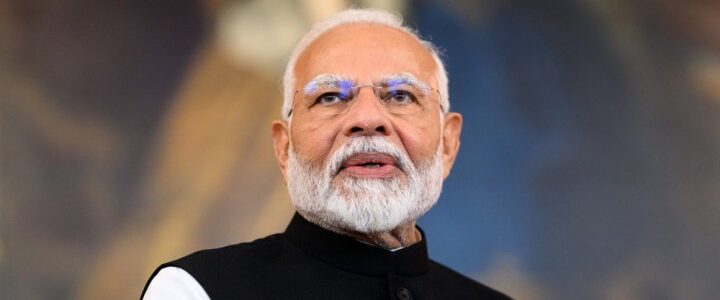
Indian Prime Minister Narendra Modi called on the international community to shape a “human-centric” future for artificial intelligence and presented the MANAV framework for global AI governance at the AI Impact Summit 2026 in New Delhi.
According to Modi, AI has the potential to accelerate change to a scale that was previously measured in decades, so it is crucial to adopt an approach where technology serves people, not the other way around, and where the well-being of society is at the center.
Within the framework proposed by India, MANAV (meaning “human”), the prime minister outlined five pillars: moral and ethical principles, accountable governance, respect for national sovereignty over data, accessibility and inclusiveness, and the legality and verifiability of AI systems.
Modi separately emphasized the need to counter deepfakes and disinformation, proposing the introduction of common standards for labeling digital content, including watermarks and source verification, and stressed the importance of protecting children when interacting with AI.
As examples of the practical application of AI in India, he cited the digital assistant for farmers, Sarlaben, which, according to him, provides advice on livestock health and dairy farm productivity, as well as initiatives for multilingual consultations for farmers, including Bharat-VISTAAR.
The Prime Minister also said that as part of the India AI Mission, India is rolling out computing infrastructure and a national repository of data and models to make access to capabilities cheaper for startups and accelerate the development of the AI ecosystem.
Full version of Modi’s address

Related: