
Ukrainians’ attitudes toward India are characterized by a predominance of neutral assessments and a relatively low level of clearly defined positive or negative views. According to the results of a sociological survey conducted in March 2026 by the research company Active Group in collaboration with the Experts Club information and analytical center, 55.5% of respondents described their attitude as neutral, making India one of the countries with the least defined emotional perception among Ukrainians.
The share of positive assessments stands at 17.9%, which is slightly higher than the 16.0% recorded in August 2025. At the same time, negative attitudes have decreased from 26.3% to 23.5%, indicating a certain softening of critical assessments.
In the detailed breakdown of responses, 4.2% of respondents chose the “completely positive” option regarding India, while another 13.8% selected “mostly positive.” In contrast, 19.6% of respondents indicated a “mostly negative” attitude, and 4.0% — “completely negative.” Another 3.0% of respondents were undecided.
The high proportion of neutral assessments indicates India’s limited presence in the Ukrainian information and public sphere. For a significant portion of respondents, this country is not the subject of constant attention or active engagement, which makes it difficult to form a clear position. At the same time, the noticeable decline in negative assessments may indicate a gradual reduction in critical perceptions.
The dynamics of change between August 2025 and March 2026 are relatively moderate. The increase in positive assessments and the simultaneous decrease in negative ones signal a certain balancing of attitudes, but do not alter the overall picture: India remains a country that Ukrainians perceive more neutrally than emotionally.
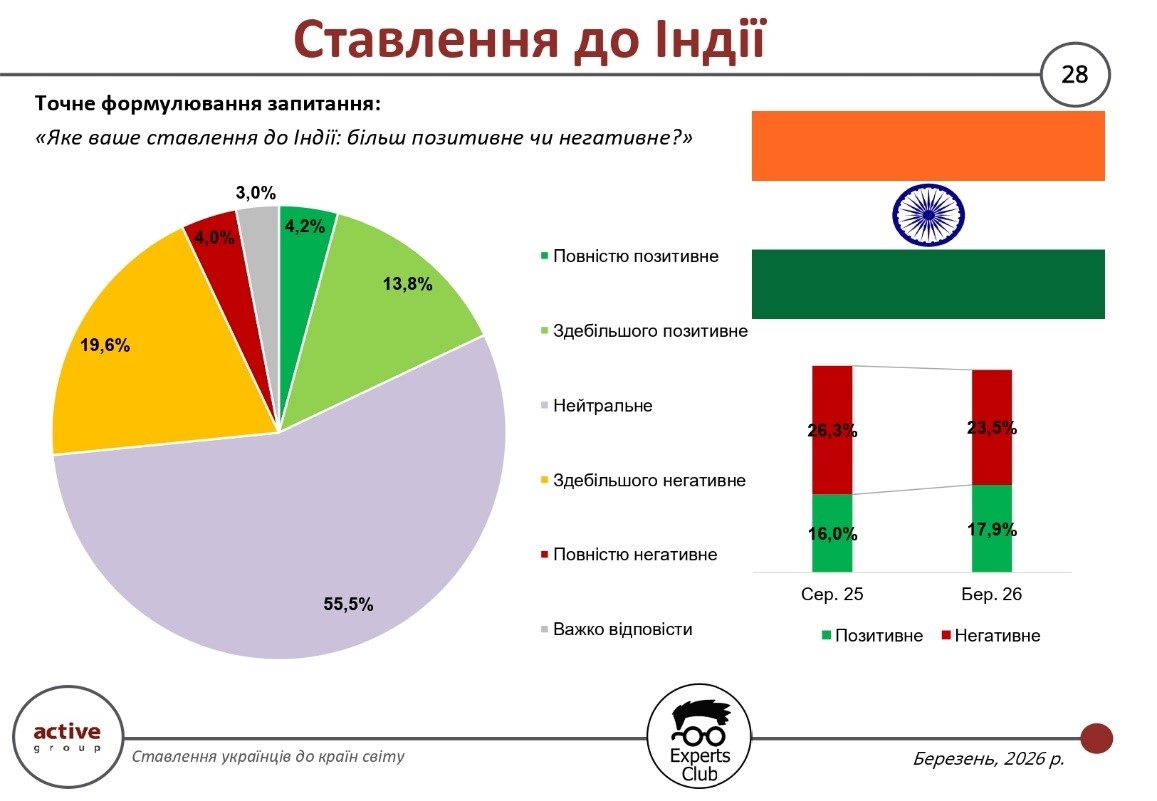
It is also important to note that the ratio of positive to negative assessments remains close, albeit with a slight preponderance of the negative. This means that in the absence of active informational or economic interaction, public opinion forms slowly and lacks a clearly defined direction.
“Attitudes toward India are a telling example of how a neutral perception forms in cases of limited interaction. When a country lacks a constant presence in the information sphere or practical cooperation projects, public opinion remains vague. “That is why, to strengthen a positive perception, it is important to develop economic and humanitarian ties that create a sense of genuine partnership,” noted Maksym Urakin, founder of the Experts Club information and analytical center.
Thus, the survey results indicate that India does not yet belong to the group of countries with a clearly established positive image in Ukraine. At the same time, current trends open up opportunities for a gradual improvement in perception, provided there is more active interaction between the countries.
According to a study conducted by the Experts Club information and analytical center based on data from the State Customs Service, India ranks fifteenth in terms of total trade in goods with Ukraine, amounting to $2.62 billion. At the same time, imports of Indian goods are more than double exports from Ukraine, resulting in a negative bilateral trade balance.
The study was presented at the Interfax-Ukraine press center; the video can be viewed on the agency’s YouTube channel. The full version of the study can be found at this link on the Experts Club analytical center’s website.
ACTIVE GROUP, EXPERTS CLUB, INDIA, Pozniy, SOCIOLOGY, SURVEY, UKRAINE, URAKIN

In India, amid a severe shortage of liquefied petroleum gas, demand is growing for traditional fuels, including firewood and dried cow dung.
The crisis was triggered by disruptions in LPG shipments through the Strait of Hormuz amid the war in the Middle East. Reuters and other outlets report that India, where about 65% of cooking fuel relies on imports, is facing one of the most serious gas crises in recent decades, and authorities have already restricted industrial consumption to prioritize supplying households.
Amid the shortage, Indian media are reporting that some households and small businesses are returning to cheaper and more accessible fuel sources. In particular, the Times of India writes about the shift to coal, firewood, and kerosene in Jamshedpur, while Bloomberg notes a rise in biofuel sales.
According to the Times of India, commercial consumers in several Indian cities have faced a sharp rise in LPG prices, and supplies have either been cut or partially diverted to the black market. This has already led to higher costs for restaurants, bakeries, and small retailers, and some businesses have been forced to seek alternatives to gas.
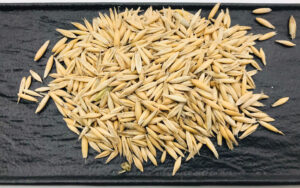
Oat exports from Ukraine in January-February 2026 decreased by 98% compared to the same period in 2025, according to the information and analytical agency APK-Inform, citing its own monitoring data.
According to the report, 506 tons of oats were shipped to foreign markets in January, while in February, exports fell to 215 tons. The main buyers of Ukrainian oats in December 2025 were Turkey and India, whose shares in the structure of shipments were 90.3% and 4%, respectively.
“The decline in exports is due to the suspension of purchases by leading importing countries — Turkey and India. At the same time, demand prices for oats in 2026 are mainly fixed in the previously formed range — 8,900-10,500 UAH/ton CPT port,” analysts said.
APK-Inform noted that despite minimal export volumes, the domestic market maintains stable price indicators in ports. This allows producers to hold grain in anticipation of a recovery in demand from major trading partners.
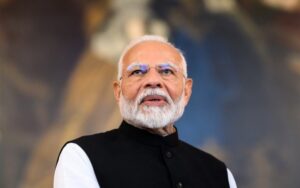
Indian Prime Minister Narendra Modi called on the international community to shape a “human-centric” future for artificial intelligence and presented the MANAV framework for global AI governance at the AI Impact Summit 2026 in New Delhi.
According to Modi, AI has the potential to accelerate change to a scale that was previously measured in decades, so it is crucial to adopt an approach where technology serves people, not the other way around, and where the well-being of society is at the center.
Within the framework proposed by India, MANAV (meaning “human”), the prime minister outlined five pillars: moral and ethical principles, accountable governance, respect for national sovereignty over data, accessibility and inclusiveness, and the legality and verifiability of AI systems.
Modi separately emphasized the need to counter deepfakes and disinformation, proposing the introduction of common standards for labeling digital content, including watermarks and source verification, and stressed the importance of protecting children when interacting with AI.
As examples of the practical application of AI in India, he cited the digital assistant for farmers, Sarlaben, which, according to him, provides advice on livestock health and dairy farm productivity, as well as initiatives for multilingual consultations for farmers, including Bharat-VISTAAR.
The Prime Minister also said that as part of the India AI Mission, India is rolling out computing infrastructure and a national repository of data and models to make access to capabilities cheaper for startups and accelerate the development of the AI ecosystem.

Indian oil refineries have begun to avoid new purchases of Russian oil for delivery in March-April amid talks between New Delhi and Washington on a trade agreement, which the parties hope to finalize by March, Reuters reports, citing traders and industry sources.
According to the agency, Indian Oil, Bharat Petroleum, and Reliance Industries are not accepting offers for Russian oil with shipments in March and April, although some refineries still have previously agreed deliveries for March. Reuters notes that most other refiners have also stopped new purchases from Russia.
At the same time, as Reuters emphasized earlier, Indian refineries have not received official instructions to stop importing Russian oil and, in the event of a policy change, would require a transition period to complete deals that are already in progress.
The context is the move by the US and India towards an interim trade agreement and the expectation of finalization in March. Against this backdrop, according to Reuters, the US has eased tariff pressure on India, and the American side has publicly linked this to New Delhi’s commitment to reduce purchases of Russian oil.
INDIA, OIL, refineries, RUSSIA
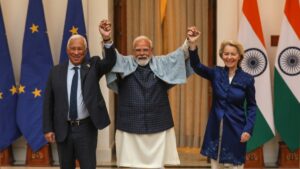
India and the European Union announced the conclusion of negotiations on a free trade agreement (FTA) following the summit in New Delhi.
According to the European Commission, trade liberalization will cover 99.3% for the EU and 96.6% for India (taking into account the partial liberalization of a number of items), with the EU eliminating tariffs on more than 90% of tariff lines and India on 86%.
The Indian side stated that the agreement provides access to the EU market for more than 99% of Indian exports in value terms, noting that the document will undergo legal review and final approval procedures.
According to EU profile materials, European agri-food exports will see a reduction in current high tariffs, including on alcoholic beverages—up to 30% for most wines, 40% for spirits, and 50% for beer. A number of Indian and industry sources also indicate that for certain categories, including passenger cars, tariffs may be reduced from 110% to 10% within an annual quota of up to 250,000 cars, and for premium wines – up to 20%.
EU-India trade in goods in 2024 amounted to around EUR 120 billion, with India being the EU’s ninth largest trading partner; for India, the EU is the largest trading partner in goods. The Indian Ministry of Commerce and Industry estimated bilateral trade in goods with the EU in the 2024-2025 financial year at $136.54 billion.
Source: https://expertsclub.eu/indiya-ta-yes-zavershyly-peregovory-shhodo-ugody-pro-zvt/
EU, FTA, INDIA, NEGOTIATIONS



