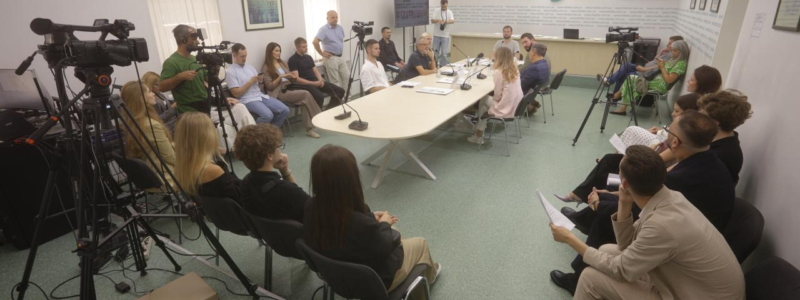
The DMNTR media group, together with general partner A Development, held a roundtable discussion titled “Building the Future: Development in Wartime” at the press center of the Interfax-Ukraine news agency, during which representatives of the development and architectural sectors discussed the personnel shortage, rising construction costs, new safety requirements, problems with permitting procedures and approaches to Ukraine’s post-war reconstruction. One of the central topics of the event was the announcement of the urban festival SEPTEMBER FEST 2026, which will take place in Kyiv on September 18.
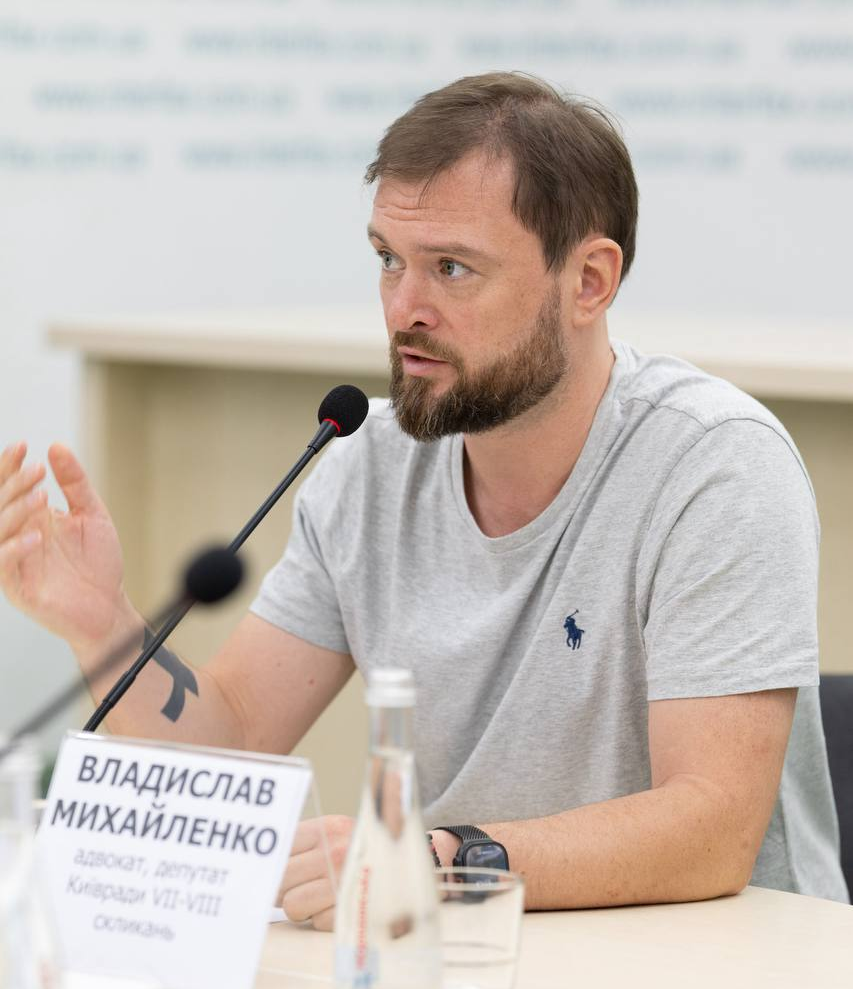
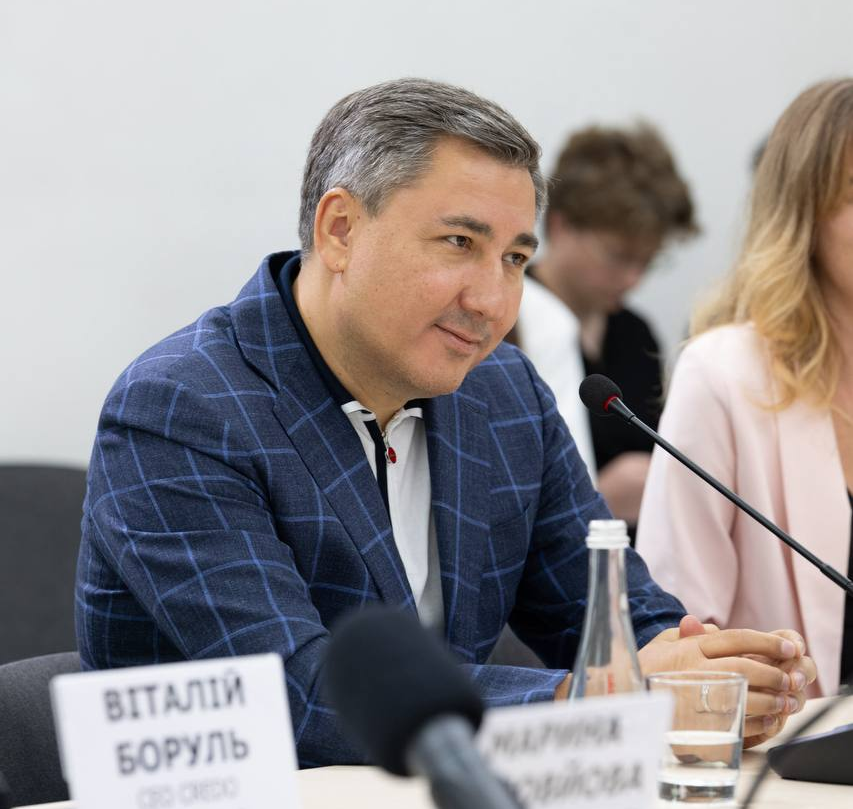
The discussion was attended by A Development founder and CEO Oleksii Baranov, CREDO Development CEO Vitalii Borul, architect and founder of A. Pashenko architects Andrii Pashenko, and A Development chief project architect Yuliia Poliukhovych. The meeting was moderated by lawyer and Kyiv City Council deputy of the VII–VIII convocations Vlad Mykhailenko.
The participants identified the shortage of specialists in construction and architecture as one of the most acute issues. According to Baranov, the personnel shortage became particularly noticeable in the spring of 2026.
“There is a very serious shortage of construction workers. We all felt this problem in the spring of this year. As a company owner, I am looking for people to complete the construction of projects,” the founder of A Development said.
Yuliia Poliukhovych noted that a similar situation had developed among architects: teams are shrinking, while the complexity of the work is increasing because of the need to constantly adapt projects to new construction standards, primarily safety requirements.
“While three or four architects previously worked on a project, now it may be just one,” she noted.
Another challenge has been the significant increase in the cost of construction work. According to Baranov’s estimate, whereas before the full-scale war the cost of work was approximately equal to the cost of materials, in some cases labor now costs two to three times more than the materials themselves. Housing sales are additionally affected by Russian attacks on cities, while war-risk insurance remains expensive for developers.
CREDO Development CEO Vitalii Borul drew attention to the substantial increase in costs caused by new safety requirements. According to him, modern underground shelters with evacuation exits significantly increase the cost of residential projects. He believes that the state should consider mechanisms to compensate developers for part of these expenses, as this concerns the systemic provision of public safety.
The speed of regulatory procedures was a separate topic. Participants noted that delays in adopting secondary legislation and urban-planning decisions can block project implementation for years, even after changes have been made to the primary legislation.
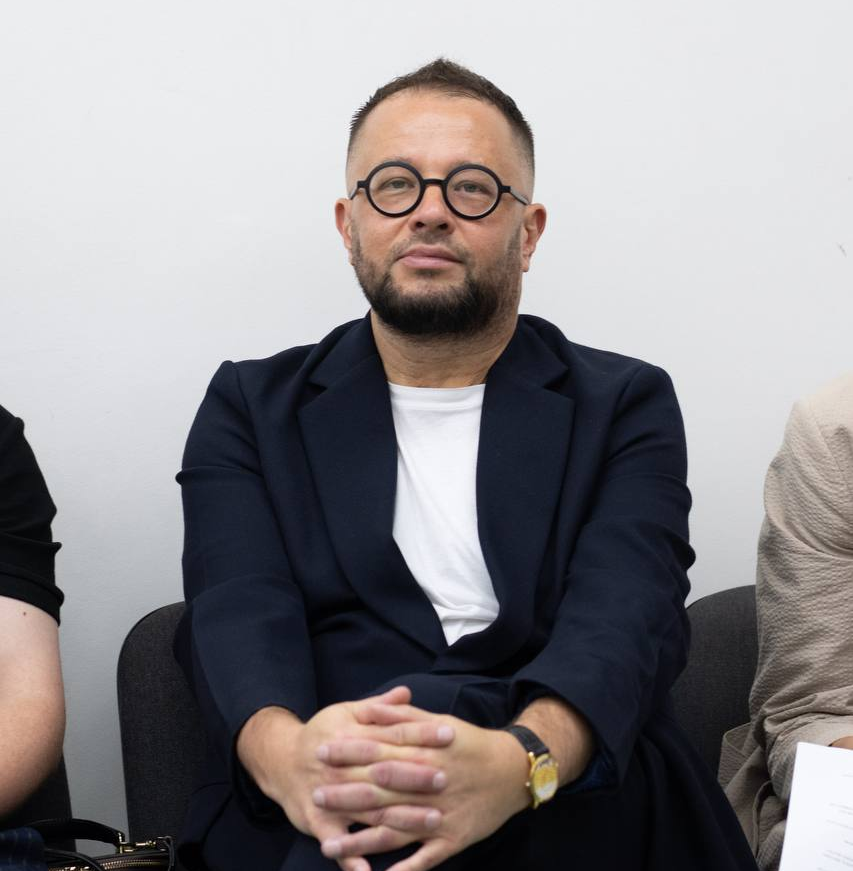
Baranov emphasized that a transparent mechanism for working in Kyiv’s historic center is particularly important.
“It is necessary to create an approach that makes the process transparent and fast while ensuring that what is built will remain relevant years from now,” he said.
Architect Andrii Pashenko separately addressed the future of Ukraine’s reconstruction. In his opinion, a significant part of the social infrastructure after the war will be built using prefab technologies and reusable designs, which will accelerate construction and standardize its quality.
A. Pashenko architects has already developed standardized solutions for kindergartens, schools and administrative service centers under the European Investment Bank’s Ukraine Recovery Programme.
“The revival of Ukraine is not only about projects in the central part of Kyiv. It also concerns Kharkiv, Chernihiv and places where reconstruction will be in demand,” Pashenko emphasized.
The roundtable participants agreed that the war has already changed the very logic of development: safety, building autonomy, energy efficiency, the accessibility of shelters and the quality of public spaces are becoming basic components of a project rather than additional options. At the same time, the industry needs to address personnel and financing issues and simplify the procedures for interaction between businesses, the state and local communities.
The professional discussion will continue at SEPTEMBER FEST 2026, which the DMNTR media group will hold on September 18 at A-STATION in Kyiv, near the Arsenalna metro station. A Development is the general partner of the event.
According to the organizers, the festival is expected to bring together more than 150 speakers and over 5,000 guests. The main topics will include urban development, architecture and development during the war, reconstruction and the revitalization of territories, personnel shortages, the digitalization of construction, BIM technologies, energy independence, the investment attractiveness of regions, design and the quality of the urban environment.
The announced participants in the professional program include Ukrainian developers, investors, architects and government representatives, as well as international experts, including Zaha Hadid Architects design director Christos Passas, British industrial designer Ross Lovegrove and German designer Konstantin Grcic.
The festival will be held in an open-air format with several parallel thematic venues, exhibition zones, professional networking and an evening program.
Registration for SEPTEMBER FEST is available on the event’s official website:
Organizer — DMNTR media group. General partner — A Development.
Interfax-Ukraine and Open4Business are the official media partners of SEPTEMBER FEST 2026.
ARCHITECTURE, DEVELOPMENT, RECONSTRUCTION, SEPTEMBERFEST

Related: