

Ribas Hotels Group will take over management of a project by the investment and development company Arha Group—the Pótay cottage community currently under construction in the village of Yablunytsia (Ivano-Frankivsk Oblast), the company’s press service told the Interfax-Ukraine news agency.
The 3-hectare project involves the construction of 64 detached homes and 18 hotel rooms, as well as a restaurant, a spa, an all-season infinity pool, and other recreational facilities. Pótay is located at an altitude of about 970 meters above sea level, with views of Hoverla and Petros. The complex will combine the privacy of a private cottage with the service and infrastructure of a full-fledged hotel.
“We see that it’s no longer enough for guests to simply choose a destination. They choose a vacation experience: privacy, natural surroundings, the opportunity to spend time with loved ones, and at the same time enjoy hotel-level service. The Pótay concept is shaped precisely at the intersection of these needs,” noted Artur Lupashko, founder of Ribas Hotels Group, whose remarks are quoted in the press release
The grounds will also feature a sauna, lounge and children’s areas, fire pits, spaces for fitness and meditation, and a contemporary art gallery created in collaboration between Arha Group founder Ihor Ilchyshen and People’s Artist of Ukraine Volodymyr Kozuk.
One of Ribas Hotels Group’s tasks within the framework of this collaboration will be to develop the complex’s operational model, service standards, and guest experience, the company noted.
Ribas believes that the cottage complex format is becoming a more prominent part of tourist demand. For example, this summer, hotel occupancy rates in the Carpathian region averaged 67% on weekdays and 72% on weekends. The company has also observed a shift in demand toward locations and formats adjacent to major tourist centers, where guests can enjoy greater privacy and closer contact with nature.
Ribas Hotels Group—founded in 2014 in Odessa—is an international full-cycle hotel management company and hospitality ecosystem. Ribas Hotels Group’s portfolio includes over 50 projects currently under construction, in the launch phase, or under management in Ukraine, Poland, Turkey, and Bali. The company develops city and resort hotels under the Ribas Hotels, Ribas Rooms, WOL home + hotel, and Mandra Moments brands.
Arha Group is an investment and development company. It is implementing residential and commercial real estate projects with a total area of over 15,000 square meters: the AMA Family Resort in Bukovel, the WOL aparthotel in Vinnytsia, the Pótay cottage community in the Carpathians, and the Koreni club community near Vinnytsia.
CARPATHIANS, DEVELOPMENT, HOTEL, REAL ESTATE, RIBAS HOTELS GROUP

The Kyiv and Lviv regions together accounted for over 1.1 million square meters of new residential construction reported in Ukraine from January through June 2026.
According to the State Statistics Service, 599,300 square meters were reported in the Kyiv region and 501,500 square meters in the Lviv region.
Another 437,900 square meters were accounted for by Kyiv, 328,700 square meters by the Odesa region, and 248,400 square meters by the Ivano-Frankivsk region.
The concentration is particularly noticeable in terms of the number of future apartments. In the Kyiv region, approximately 9.1 thousand apartments were announced; in the Lviv region, 7.2 thousand; and in the Ivano-Frankivsk region, 5.8 thousand
Together, these three regions alone accounted for over 22 thousand apartments—that is, a significant portion of the total new supply of multifamily housing announced nationwide in the first half of the year.
The regional breakdown reflects an ongoing redistribution of development activity. Kyiv and the Kyiv region remain the largest metropolitan market, while the Lviv and Ivano-Frankivsk regions maintain a significant volume of construction in the western part of the country.
At the same time, the trend is uneven: in the Kyiv region, the volume remained virtually unchanged from last year’s level, while in Kyiv it decreased by 10.7%, and in the Ivano-Frankivsk region—by 20.5%.
Source: State Statistics Service of Ukraine.

On September 30, Kyiv will host the professional gathering “METRONOM. Kyiv,” dedicated to collaboration between developers and architects and the creation of added value in real estate projects. The event is organized by the DMNTR media group.
The meeting will take place from 4:00 PM to 10:00 PM at 2 Knyaziv Ostrozkykh Street, near the “Arsenalska” metro station.
“METRONOM. Kyiv” is designed for a professional audience of up to 200 participants, including investors, developers, architects, manufacturers of building materials, and representatives of the real estate market.
The business program will be centered around three practical case studies. Teams of developers and architects will present real-world projects entering the market and demonstrate how collaboration between the client and the architect is structured, which decisions influence a property’s value, and how the architectural concept is integrated into the development model.
Among the event’s headliners are representatives from A Development, AVG Group, and A. Pashenko Architects: Oleksiy Baranov, Yulia Polyukhovich, Andriy Pashenko, and Andriy Voitko.
The second case study will be presented by SAGA Development and BGV Development—Andriy Vavrysh, Anna Viken, Yevhen Binyavskyi, and Serhiy Zalevskyi.
The third case study will feature representatives from “Creator-Bud” and AIMM—Igor Guda, Maxim Myatko, Dmytro Struk, Yulia Dementyeva, and Lyudmila Chumak.
Registration for participants will begin at 4:00 p.m. The business session, featuring presentations of the three case studies, will run from 5:00 p.m. to 7:30 p.m. Following that, from 7:30 p.m. to 10:00 p.m., there will be an informal program featuring jazz, a buffet, and networking.
The organizers are offering three participation options. A standard ticket costs 2,500 UAH and includes participation in the business session, a cocktail reception, and networking.
A premium ticket, priced at 5,000 UAH, includes priority registration, seats in the premium section, an extended evening program featuring a buffet, a cigar ceremony, and a whiskey tasting, as well as a separate networking session.
Online participation costs 1,500 UAH and includes access to the live stream of the event’s business program from 5:00 PM to 7:30 PM.
Seating is limited. Participation in the event and access to the online stream are available only after prior registration and payment.
Registration: DMNTR Media Group, tel. 077 777 25 47, 044 461 91 28.
Registration and ticket purchase form.
Open4business – information partner
ARCHITECTURE, DEVELOPMENT, DMNTR, KYIV, REAL ESTATE, МЕТРОНОМ
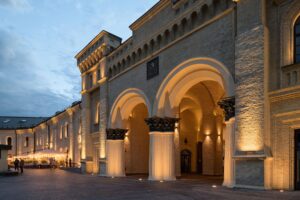
The SEPTEMBER FEST 2026 urban festival, previously scheduled for September 18 at the A-STATION venue in Kyiv, has been rescheduled for November 5, 2026. The event will take place at the “Parkovy” Exhibition and Convention Center in conjunction with the UBC Congress in the format of SEPTEMBER FEST + UBC, according to the DMNTR media group, which is organizing the festival.
The decision to reschedule was made following the introduction of new restrictions in Kyiv on mass gatherings due to the deteriorating security situation.
On September 7, the Kyiv Defense Council voted to temporarily ban entertainment and sports events in open areas, as well as in buildings and structures lacking shelters capable of accommodating the expected number of participants. The new rules take effect at 12:00 a.m. on September 10, the Kyiv City State Administration announced on September 9.
“In light of the decision by the Kyiv Defense Council and the announcement by Mayor Vitali Klitschko, starting September 10, entertainment and mass events in open areas and in premises without appropriate shelters are temporarily prohibited in the capital. Therefore, we are postponing the September Fest urban festival to November 5 and will hold it jointly with the UBC Congress at the “Parkovy” Exhibition and Convention Center—in the format of SEPTEMBER FEST + UBC,” the organizers announced.
According to DMNTR, the festival’s announced program, speakers, and concert lineup remain unchanged.
SEPTEMBER FEST 2026 was previously planned as an open-air event. The festival is positioned as a professional platform for representatives of the development sector, architecture, city governments, investment companies, and related industries. Over 150 speakers were announced for the professional program.
Key topics of the event include the development of Ukrainian cities, architecture and real estate development during the war, post-war reconstruction and revitalization of territories, investments in real estate and infrastructure, the labor shortage in construction, the digitalization of the industry and BIM technologies, energy independence, the design of public spaces, and the creation of a modern urban environment.
Previously announced international participants in the professional program include Christos Passas, Design Director at Zaha Hadid Architects; British industrial designer Ross Lovegrove; and German designer Konstantin Grcic. The Ukrainian portion of the program will feature developers, architects, investors, mayors, and chief city architects, as well as representatives of government agencies and industry organizations.
The organizers expect that combining SEPTEMBER FEST with the UBC Congress will allow them to preserve the professional and cultural components of the festival in a new, safer format and bring together representatives of the development, architectural, investment, and urban communities under one roof.
The general sponsors of SEPTEMBER FEST + UBC are A Development and “Creator-Bud.” The organizer is the DMNTR media group.
The new date is November 5, 2026.
Venue: “Parkovy” Exhibition and Convention Center, Kyiv.
Additional information from the organizer: 077 777 25 47.
“Interfax-Ukraine” and Open4Business are the official media partners of SEPTEMBER FEST 2026.
Official announcement from the Kyiv City State Administration regarding restrictions on mass events dated September 9, 2026: Kyiv City State Administration
ARCHITECTURE, DEVELOPMENT, DMNTR, FESTIVAL, KYIV, SEPTEMBERFEST
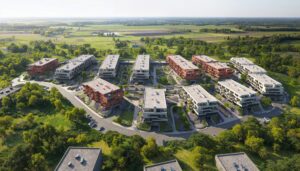
Construction work at the Greenville Prostir residential complex (Lviv Oblast, Lysynychi village, 2 Osvitna St.) has resumed following the resolution of a legal dispute regarding the terms of use of the land plot.
According to the developer’s press office, the dispute centered on the amount of rent for the land plot in Lysynychi. As part of the settlement, the Greenville Group and the Lviv City Council agreed on a new rent amount and a mechanism for compensating the community budget for the difference arising from the previous period of land use.
“As the project’s developer, we took responsibility for finding a solution. It was important for us not to prolong the legal dispute but to find a model that takes into account the interests of the city, the community, and our investors. Today, this issue has been resolved, and we are resuming work on Greenville Prostir,” said project manager Oleg Kozub.
On August 11, the Lviv Regional Commercial Court approved the agreement reached by the parties and closed the case. With the court restrictions lifted, the company was able to resume construction work on the site.
The company’s next step is to restore construction work to full speed and present investors with an updated project timeline.
According to the LUN new-construction portal, the Greenville group of companies, founded in 2007, is carrying out projects in Lviv and Kyiv; since 2010, 45 buildings have been commissioned, and six buildings are currently under construction.
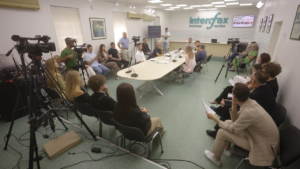
The DMNTR media group, together with general partner A Development, held a roundtable discussion titled “Building the Future: Development in Wartime” at the press center of the Interfax-Ukraine news agency, during which representatives of the development and architectural sectors discussed the personnel shortage, rising construction costs, new safety requirements, problems with permitting procedures and approaches to Ukraine’s post-war reconstruction. One of the central topics of the event was the announcement of the urban festival SEPTEMBER FEST 2026, which will take place in Kyiv on September 18.
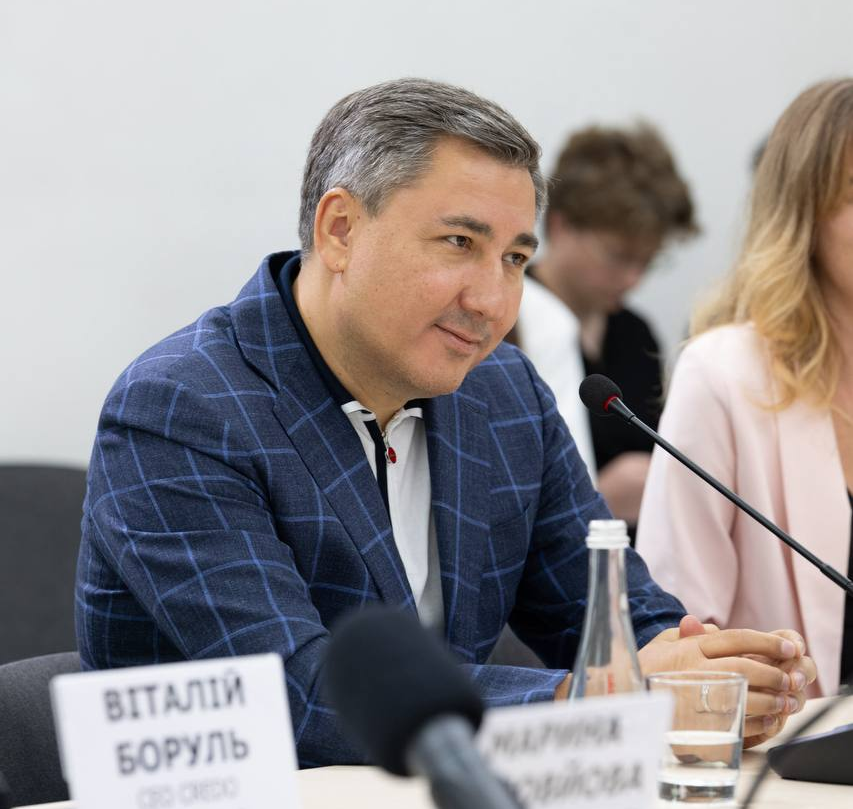
The discussion was attended by A Development founder and CEO Oleksii Baranov, CREDO Development CEO Vitalii Borul, architect and founder of A. Pashenko architects Andrii Pashenko, and A Development chief project architect Yuliia Poliukhovych. The meeting was moderated by lawyer and Kyiv City Council deputy of the VII–VIII convocations Vlad Mykhailenko.
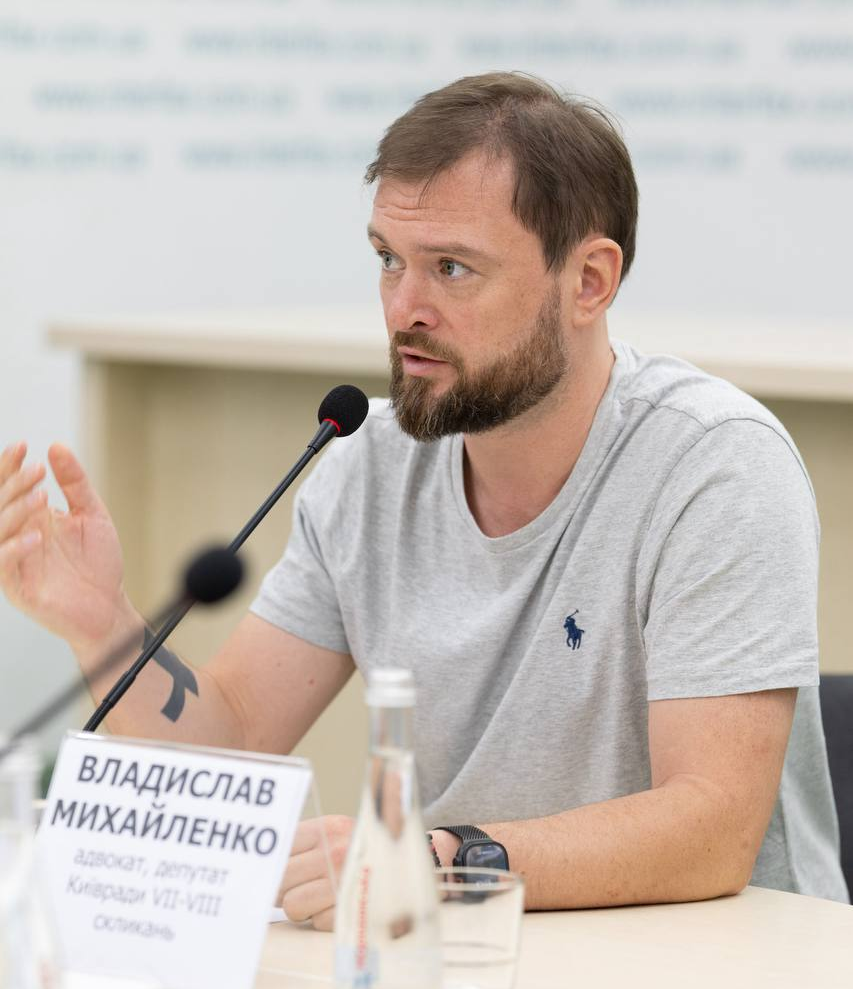
The participants identified the shortage of specialists in construction and architecture as one of the most acute issues. According to Baranov, the personnel shortage became particularly noticeable in the spring of 2026.
“There is a very serious shortage of construction workers. We all felt this problem in the spring of this year. As a company owner, I am looking for people to complete the construction of projects,” the founder of A Development said.
Yuliia Poliukhovych noted that a similar situation had developed among architects: teams are shrinking, while the complexity of the work is increasing because of the need to constantly adapt projects to new construction standards, primarily safety requirements.
“While three or four architects previously worked on a project, now it may be just one,” she noted.
Another challenge has been the significant increase in the cost of construction work. According to Baranov’s estimate, whereas before the full-scale war the cost of work was approximately equal to the cost of materials, in some cases labor now costs two to three times more than the materials themselves. Housing sales are additionally affected by Russian attacks on cities, while war-risk insurance remains expensive for developers.
CREDO Development CEO Vitalii Borul drew attention to the substantial increase in costs caused by new safety requirements. According to him, modern underground shelters with evacuation exits significantly increase the cost of residential projects. He believes that the state should consider mechanisms to compensate developers for part of these expenses, as this concerns the systemic provision of public safety.
The speed of regulatory procedures was a separate topic. Participants noted that delays in adopting secondary legislation and urban-planning decisions can block project implementation for years, even after changes have been made to the primary legislation.
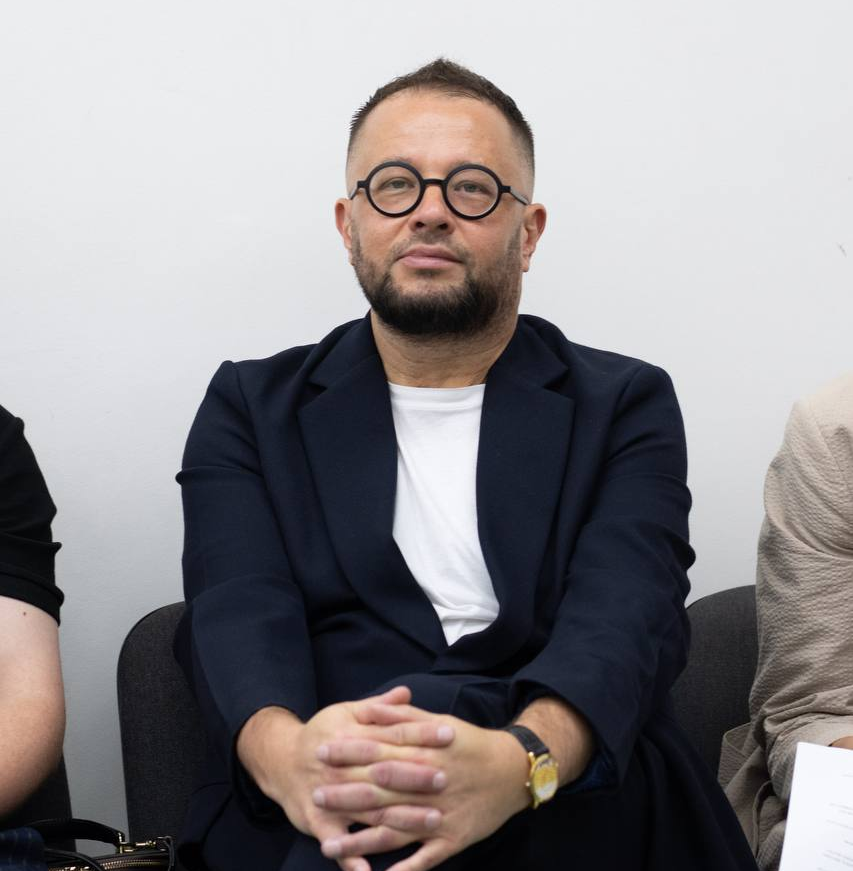
Baranov emphasized that a transparent mechanism for working in Kyiv’s historic center is particularly important.
“It is necessary to create an approach that makes the process transparent and fast while ensuring that what is built will remain relevant years from now,” he said.
Architect Andrii Pashenko separately addressed the future of Ukraine’s reconstruction. In his opinion, a significant part of the social infrastructure after the war will be built using prefab technologies and reusable designs, which will accelerate construction and standardize its quality.
A. Pashenko architects has already developed standardized solutions for kindergartens, schools and administrative service centers under the European Investment Bank’s Ukraine Recovery Programme.
“The revival of Ukraine is not only about projects in the central part of Kyiv. It also concerns Kharkiv, Chernihiv and places where reconstruction will be in demand,” Pashenko emphasized.
The roundtable participants agreed that the war has already changed the very logic of development: safety, building autonomy, energy efficiency, the accessibility of shelters and the quality of public spaces are becoming basic components of a project rather than additional options. At the same time, the industry needs to address personnel and financing issues and simplify the procedures for interaction between businesses, the state and local communities.
The professional discussion will continue at SEPTEMBER FEST 2026, which the DMNTR media group will hold on September 18 at A-STATION in Kyiv, near the Arsenalna metro station. A Development is the general partner of the event.
According to the organizers, the festival is expected to bring together more than 150 speakers and over 5,000 guests. The main topics will include urban development, architecture and development during the war, reconstruction and the revitalization of territories, personnel shortages, the digitalization of construction, BIM technologies, energy independence, the investment attractiveness of regions, design and the quality of the urban environment.
The announced participants in the professional program include Ukrainian developers, investors, architects and government representatives, as well as international experts, including Zaha Hadid Architects design director Christos Passas, British industrial designer Ross Lovegrove and German designer Konstantin Grcic.
The festival will be held in an open-air format with several parallel thematic venues, exhibition zones, professional networking and an evening program.
Registration for SEPTEMBER FEST is available on the event’s official website:
Organizer — DMNTR media group. General partner — A Development.
Interfax-Ukraine and Open4Business are the official media partners of SEPTEMBER FEST 2026.



