

The Ukrainian fintech market is entering a phase in which the automation of compliance, financial monitoring, and sanctions control is no longer a support function but rather a core component of a business’s financial resilience infrastructure.
This is discussed in a column by the CEO of AML.point, Oksana Gubina, an advisor on RegTech projects at AI FINTECH, for the Interfax-Ukraine news agency, prepared in the context of the Fintech Catalog UA 2026 presentation.
According to the catalog, there are over 300 fintech companies operating in Ukraine. A significant portion of them have already achieved operational self-sufficiency, nearly half are expanding their presence in international markets, and the majority continue to grow using their own resources.
The Fintech Catalog UA 2026 was prepared by the Ukrainian Association of Fintech and Innovative Companies with the support of the National Bank of Ukraine, IFC, SECO, and Sense Bank. The study was conducted in April–May 2026 among fintech companies, banks, and Ukrainian branches of international fintech companies, with 150 respondents participating.
According to Gubina, the Ukrainian fintech sector is developing in an environment where issues of transparency, risk management, and regulatory compliance are no longer secondary. Tighter sanctions controls, financial monitoring, and requirements for transparency regarding the origin of funds and ownership structure have made compliance one of the key elements of corporate resilience.
“Financial companies are increasingly viewing compliance not as external coercion by regulators, but as a tool for building trust, reputation, and long-term competitiveness. That is why investments in RegTech are increasingly seen not as expenses, but as investments in the company’s future stability,” she noted.
RegTech solutions are gradually shifting from the category of ancillary services to that of critical business infrastructure. For banks, financial companies, payment services, credit institutions, and other market participants, the automation of KYC, AML, and sanctions control is already a matter of operational speed, the quality of risk management, and the ability to meet regulatory requirements in near real time.
At the same time, the automation of financial monitoring is not limited to installing software. It requires the integration of various information systems, high-quality data, the establishment of reliable information processing workflows, change control, the preservation of decision histories, and a balance between customer convenience and compliance with regulatory requirements.
One of the emerging market trends is the convergence of ERP and RegTech. ERP systems are responsible for managing a company’s resources and operational processes, while RegTech handles regulatory compliance, financial monitoring, and risk control. However, both areas are increasingly working with large datasets, integrating into operational processes, and helping management make informed decisions.
In practice, this approach allows for the automation of counterparty risk assessments, KYC checks, sanctions screening, transaction monitoring, and the preparation of regulatory reports without placing an excessive burden on staff.
At the same time, according to Gubina, technology does not replace a compliance culture. Automation is effective only when a company has clear internal policies, high-quality data, accountable personnel, and a willingness to systematically manage risks. RegTech does not eliminate the role of the compliance officer but transforms it—shifting the focus from manual verification to managing processes, data, and risk models.
The further development of Ukrainian fintech will be largely driven by integration solutions in the areas of compliance, financial monitoring, and risk management. As requirements for business transparency, sanctions control, and regulatory reporting tighten, the role of RegTech will only grow.
For Ukrainian financial companies, automated compliance is gradually becoming not just an added advantage, but a basic standard for doing business. In the next stage of market development, companies that can combine technological capabilities, transparency, high-quality data, and systematic risk management will gain a competitive advantage.
Sources: Oksana Gubina’s column for “Interfax-Ukraine”, Fintech Catalog UA 2026, Ukrainian Association of Fintech and Innovative Companies.

The Business Expectations Index (BEI) for enterprises rose to 105.8% in January–March 2026, compared to 102.1% in October–December 2025, breaking a three-quarter downward trend, according to the National Bank of Ukraine (NBU) based on the results of a survey of company executives.
“In Q1 2026, businesses expected a revival in business activity over the next 12 months. Respondents forecast growth in the volume of goods and services produced and strengthened their positive assessments of their own companies’ development. Inflation expectations remained unchanged, while exchange rate expectations strengthened slightly,” the regulator noted in a press release.
The NBU notes that military operations and their consequences remain the dominant factor (83%) limiting enterprises’ ability to increase production volumes. The shortage of skilled workers continues to have a significant impact. More than any other factor, the influence of excessively high energy prices was expected to intensify.
According to the published data, businesses have significantly improved their assessments of production volumes in Ukraine over the next 12 months: the balance of responses stood at 0.6% compared to -1.8% in Q4 2025. Optimistic sentiment was demonstrated by enterprises in the energy and water supply, agriculture, manufacturing, transportation, and communications sectors. Negative sentiment was demonstrated by enterprises in the trade sector, small businesses, as well as those engaged solely in import/export operations.
According to the survey results, business inflation expectations stabilized: projected annual inflation stood at 11.1%, unchanged from the previous quarter. At the same time, exchange rate expectations strengthened slightly—to 45.00 UAH/$1 (in Q4 2025—44.27 UAH/$1). Respondents also provided a forecast for the EUR exchange rate in 12 months for the first time, with an average value of 54.00 UAH/EUR.
The assessment of the current financial and economic condition of enterprises remains subdued, though the balance of responses improved slightly to -4.7% (-5.8% in Q4 2025). Expectations regarding changes in the financial condition of their own companies next year rose to 2.0% (in Q4 2025 – 0.8%). It is noted that transport and communications enterprises, as well as those in other sectors, have optimistic expectations, while representatives of construction and trade expect the future financial and economic condition of their own enterprises to remain at the current level.
Respondents are more confident in expecting growth in product sales volumes: the balance of responses rose to 14.5% (from 9.6% a quarter earlier), and for sales in foreign markets—from 11.7% in Q4 2025 to 15.8% in Q1 2026. Expectations regarding investment spending on machinery and equipment improved—from 7% to 12.8%—while expectations regarding construction work turned positive for the first time in a year—1.6% (Q4 2025 recorded -2.9%).
Companies attracting foreign investment maintained their expectations regarding growth in foreign investment volumes next year: the balance of responses was 11.6% (15.5% in Q4 2025). Expectations were highest among energy and water supply companies. The share of respondents planning to attract foreign investment in the next 12 months stood at 20.9%, compared to 21.5% in the previous survey.
In the labor market, the trend toward a softening of negative assessments regarding the number of employees continues: the balance of responses was -1.8%, compared to -3.8% in Q4 2025. Energy and water supply companies expected to increase their workforce. In contrast, respondents from agriculture, the extractive and processing industries, trade, and other sectors had negative expectations, with agriculture showing the most negative outlook.
Respondents raised their assessments of the need for borrowed funds in the near future: the balance of responses stood at 34.7% compared to 31.7% in Q4 2025. The share of respondents planning to take out bank loans remained virtually unchanged: 35.6% compared to 35.7% in Q4 2025. Those planning to take out loans traditionally prefer loans in the national currency—83.5% (80.9% in Q4 2025). Excessively high interest rates and the availability of other sources of financing remain the most significant obstacles to new loans—44% and 43.4%, respectively. Additionally, the influence of the factor “significant fluctuations in the hryvnia exchange rate against foreign currencies” has increased by 4.3 percentage points, to 17.8%.
The NBU notes that respondents slightly softened their assessments regarding the strictness of conditions for accessing bank loans: the balance of responses was 11.4% (11.6% in Q4 2025). 6.6% of respondents planned to raise funds abroad, compared to 7.1% in the previous quarter.
The quarterly survey was conducted from January 29 to February 27, 2026, among executives of 664 enterprises from 21 regions of Ukraine. An index value above 100 indicates a predominance of positive economic sentiment.
Among those surveyed, 21.1% were trading companies, 19.1% were in the manufacturing industry, 14.5% in agriculture, 13.9% in transportation and communications, 5.9% were in the extractive industry, 4.8% in energy and water supply, and 3.2% in construction. In terms of size, 30.4% of respondents were large enterprises, 37.7% were medium-sized, and 31.9% were small.
Ukrainian companies in 2025 have noticeably stepped up the implementation of artificial intelligence solutions, but the growth is limited by the lack of specialized specialists and access to infrastructure with NVIDIA GPUs, which have become the “de facto standard” for AI projects. Volodymyr Bjelov, Country Director of GigaCloud in Ukraine, writes about this in his column for Interfax-Ukraine.
According to him, the demand for AI is becoming a key driver of cloud services, but at the same time the requirements for security and business continuity are growing, which shifts the focus from pilots to industrial implementations.
GigaCloud is a Ukrainian cloud provider (part of GigaGroup), founded in 2016. The company provides IaaS/PaaS services, virtual data centers, redundancy and continuity solutions (DR/BCP) and GPU clouds. The infrastructure is hosted in data centers in Ukraine and the EU (Kiev, Lviv, Warsaw) with TIER III/IV compliance; the provider has VMware Cloud Service Provider (Premier) statuses and is registered in CSA STAR Registry, portfolio – over 1.5 thousand customers.
https://interfax.com.ua/news/blog/1096980.html
AI-projects, NVIDIA GPUs, UKRAINIAN BUSINESS, Volodymyr Bjelov

How Ukrainian business migrates during the great war
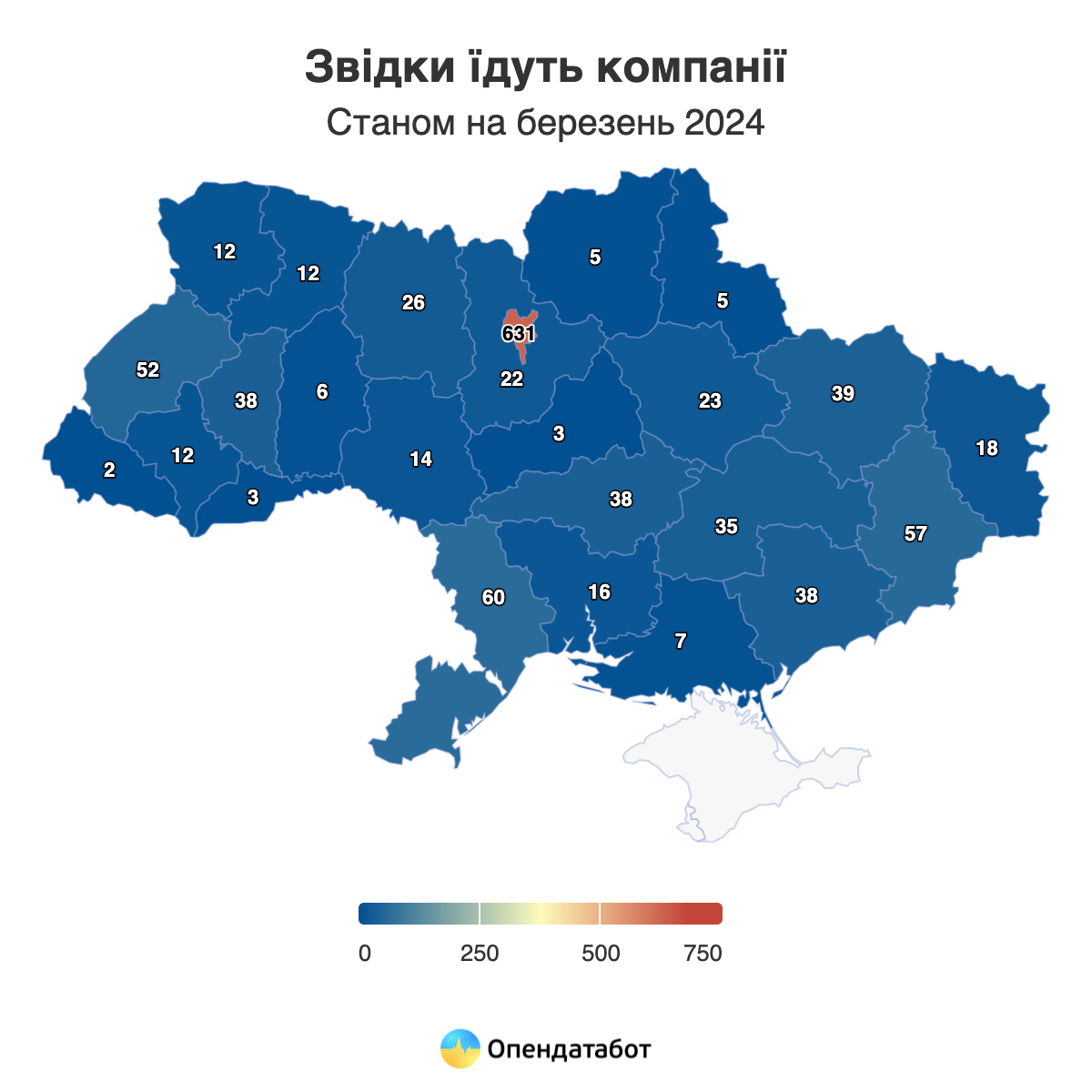
Almost 19 thousand companies have relocated since the beginning of 2022, according to the Unified State Register. Kyiv and Zakarpattia regions were the most popular destinations for business. Among all companies, wholesalers relocate most often.
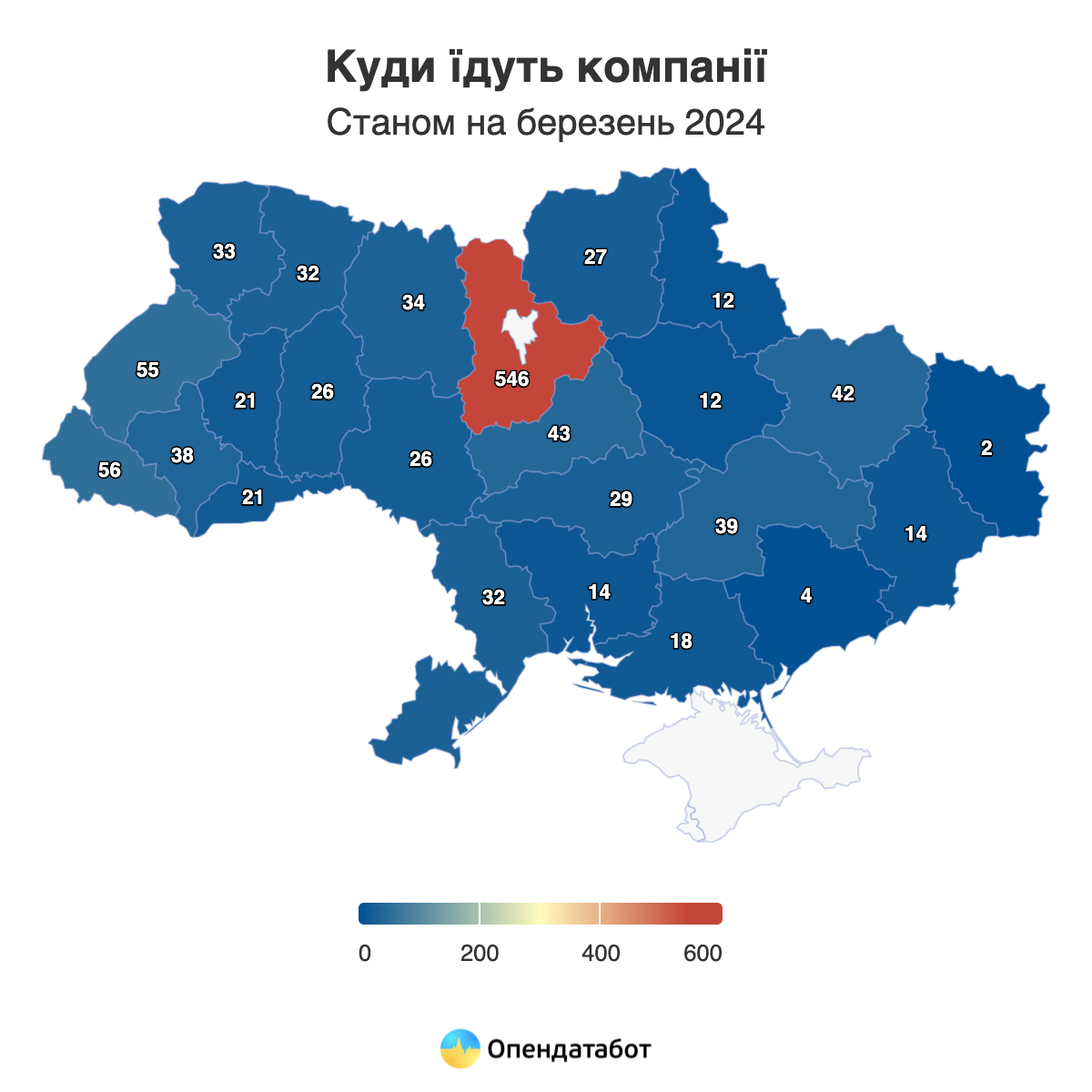
Of the total number of companies that have changed their location since the start of the full-scale war, just over 1,000 have moved from the city to the region. Half of them – more than 600 companies – moved from Kyiv, and another 60, or 5.1%, from Odesa region.
Kyiv region is the most popular choice for relocation – 546 relocations. This is almost every second business relocation since the start of the full-scale war. The most popular route was from Kyiv to Kyiv region: 359 relocations. In fact, 30% of all cases when businesses relocate to the region are on this route.
Other routes were less popular. For example, the routes from Lviv to Kyiv region and from Kyiv to Zakarpattia are in second and third place, with 2.7% and 2.6% respectively (30-32 companies).
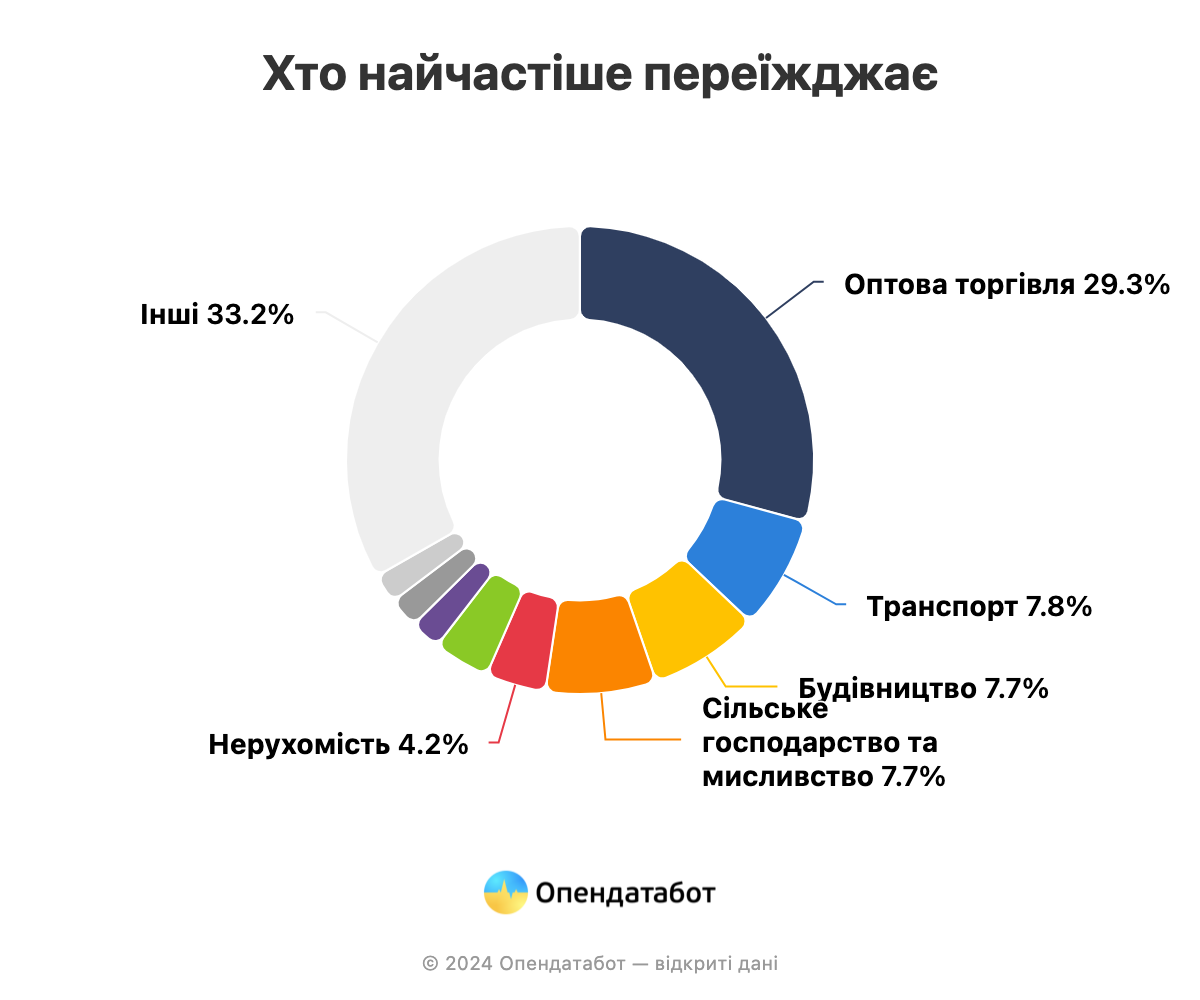
The leaders in relocations were companies engaged in wholesale trade – 344 relocations (29.3%) and the transportation industry – 92 relocations (7.8%)
Ukroliya LLC with a turnover of over UAH 4 billion became the largest company to change its location. The company moved from Kyiv to Poltava region. Kyiv-Atlantic Ukraine LLC, with a turnover of over UAH 2 billion, also left Kyiv region, but to Cherkasy region.
Kercher LLC with a turnover of more than UAH 1 billion closes the list of top business migrants, as the company changed its place of registration to Kyiv region.
“We started preparing for the move 7 years ago – we bought land and started construction in the Kyiv region in 2020, which was interrupted by the Russian attack and partial occupation of the region. Within 4 months after the liberation of Kyiv region, the company resumed construction, so at the end of 2023, our team moved into a new space. In general, the location of the company outside the city, in the regions, is part of the philosophy of the Kercher brand throughout Europe,” comments Nadiya Kreposna, marketing manager at Kercher.

Despite problems with finding workers, rising prices of raw materials and physical threats, Ukrainian businesses are optimistic about the future, 44% of surveyed enterprises are ready to invest in their development or recovery, these are the results of the February New Monthly Enterprises Survey (#NRES) of the Institute for Economic and Policy Research (IEP).
“Businesses are quite optimistic about investment given that a full-scale war is ongoing. For example, 42% of businesses believe that now is more or less a favorable time to invest in equipment. For comparison, at the beginning of 2015, when the ATO was in an active phase, the share of such enterprises amounted to only 14%”, – commented the results of the study, Eugene Angel, a senior researcher at the IEI.
The IEI also pointed out that business is gradually coming out of the state of complete uncertainty and begins to make plans for the future: in February 2024, only about 15% of business owners and managers could not give an answer about their business plans for the next six months, while a year ago there were about 40% of them.
At the same time, the level of uncertainty in the perspective of two years is still quite high – about 50% of respondents.
“A significant decrease in the number of those who find it difficult to make plans for the next six months indicates that optimism is returning to Ukrainian businesses. Moreover, the share of enterprises operating at 100% capacity is gradually increasing: in February 2023 there were 6% of such enterprises, now there are already 15%. But, of course, it is difficult for businessmen to make plans for the long term (2 years) in the conditions of war”, – said Oksana Kuzyakiv, Executive Director of IEI.
According to the published data, for the second month in a row the Business Activity Recovery Index (BAI) decreased – by almost 10 p.p. – From 0.43 to 0.34. As for its components, the share of enterprises that reported that their business activity was better than in the previous year decreased from 56.0% in January to 44.8% in February, nothing changed for 44.0% (30.9% in January), the share of those for whom the situation was worse than a year ago remained without significant changes for several months in a row (13.1% in January and 11.2% in February).
According to the survey, the main obstacles to investment are economic uncertainty, political instability and insufficient corporate profits.
As for the obstacles to doing business, February 2024 saw some changes in the list of obstacles: the assessment of rising prices for raw materials and commodities rose from 46% to 49%, and labor shortages rose from 41% to 46%, which respectively moved them to the 1st and 2nd places.
At the same time, the obstacle “not safe to work” dropped from 1st to 3rd place, although its value decreased slightly from 46% to 45%.
Estimates of power outages dropped from 26% to 24%, which is only the 7th most important obstacle, while corruption and pressure from law enforcement agencies ranked even lower in the survey.
In February, compared to January, the share of enterprises operating at full capacity slightly increased – from 13% to 15%, while the share of non-operating enterprises remains unchanged for half a year and amounts to 2% of respondents.
The survey emphasizes that the share of positive assessments of the government’s policy to support business is 8% and has remained unchanged for more than half a year, while 55% (58% in January) assess it neutrally, and 18% negatively (16% a month earlier).
IEI specialists also recorded a slight decrease in problems with finding labor: qualified workers are difficult to find for 31% of surveyed entrepreneurs (32.4% in January), and unskilled workers – for 26.5% of respondents (27.4% a month earlier).
The monthly IEI survey in February involved 542 Ukrainian enterprises located in 21 out of 27 regions of Ukraine. The field stage of the 22nd wave of the survey lasted from February 19 to February 29, 2024.
DEVELOPMENT, INVESTMENT, New Monthly Enterprises Survey, NRES, RECOVERY, UKRAINIAN BUSINESS
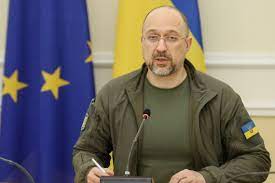
Ukrainian and foreign business, ready to invest more than EUR12 mln, will receive tax benefits, regulatory relief and support at the level of project implementation, Prime Minister Denys Shmygal said.
“Actually one of the key tasks in the economic sphere for this year is to increase foreign investment in Ukraine. For this purpose we are working with partners. For this purpose insurance of military risks has been launched. We constantly improve conditions for investment projects. Today we will adopt a decree improving the mechanism of state support for large investment projects,” Shmygal said at a government meeting on Friday.
According to him, Ukrainian and foreign business, which is ready to invest more than EUR12 million and create new jobs, will receive maximum support and special conditions, in particular, tax benefits, regulatory relief, and support at the level of project implementation.
“Today’s decree concerns a new approach to the preparation of a feasibility study of an investment project. We remove and simplify a number of provisions, including the necessity of economic analysis, the revision of the social assessment of projects, as well as we weaken the requirements of financial solvency of the applicant,” Prime Minister said.
Shmygal emphasized that all these decisions have a single goal – to launch more investment projects, which will create more jobs and strengthen communities and the economy.
FOREIGN BUSINESS, tax benefits, UKRAINIAN BUSINESS, Денис Шмигаль



