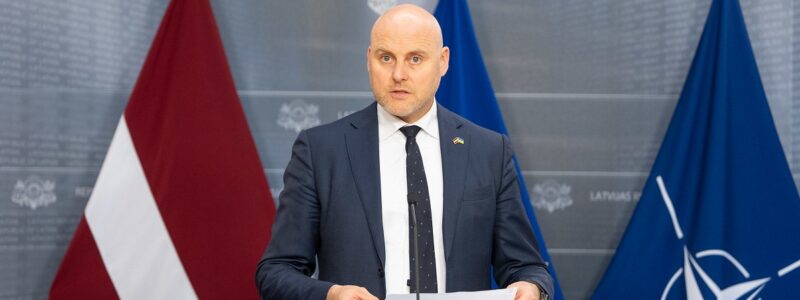
Latvian Prime Minister Andris Kulbergs has called for a complete halt to the issuance of tourist visas to Russian citizens at the European Union level. In his view, such restrictions are necessary to counter the hybrid threats faced by European states.
As reported by the Financial Times on October 18, 2026, Kulbergs, in an interview with the publication, called on all EU countries to tighten visa policies toward Russian citizens, emphasizing the need for a unified approach to security issues.
According to the Latvian prime minister, the country faces hybrid threats from Russia on a daily basis, including attempts to cross the border illegally, the use of migration flows to destabilize the situation, as well as risks of sabotage and intelligence activities.
Kulbergs noted that in 2026, Latvia expects to face the greatest migratory pressure on its borders in the past five years. He believes that restricting Russian tourist travel to Europe should be one of the preventive security measures.
The Latvian prime minister paid particular attention to France, Italy, and Spain, which remain the EU countries that issue the most Schengen visas to Russian citizens.
According to the European Commission, these three countries account for over 70% of the visas issued to Russians in 2025. In total, Russian citizens received over 600,000 Schengen visas last year.
The issue of further tightening visa restrictions was discussed during the European Council meeting in Brussels on October 15–16. German Chancellor Friedrich Merz stated that the EU has the capacity to impose additional restrictions on private and business travel by Russian citizens.
According to the Financial Times, France is also considering significantly tightening visa restrictions, particularly regarding former Russian military personnel. Italy has shown a willingness to discuss additional measures, although these countries had previously not supported a complete ban on tourist visas.
At the same time, no pan-European decision to suspend the issuance of tourist visas to Russians has been adopted yet. The issuance of short-term Schengen visas remains the responsibility of the national authorities of EU member states, which review applications in accordance with the Common Visa Code.
Following the start of Russia’s full-scale invasion of Ukraine, the European Union has already imposed a series of restrictions. In particular, on September 12, 2022, the agreement on a simplified visa regime between the EU and Russia was suspended.
This has led to higher visa processing fees, stricter documentation requirements, and longer processing times for applications.
In November 2025, the European Commission further restricted the issuance of multiple-entry Schengen visas to Russian citizens residing in and applying from Russia, while maintaining certain exceptions.
In July 2026, the EU also adopted a legal framework to restrict the issuance of short-term visas to Russian military personnel and former combatants who participated in hostilities against Ukraine. The relevant provisions allow for exceptions on humanitarian grounds and other grounds specified by law.
According to European Commission estimates, the number of Schengen visas issued annually to Russian citizens has fallen from approximately 4 million before the start of the full-scale war to 618,000 in 2025.
Latvia’s proposal calls for further tightening of these restrictions and the effective cessation of Russian tourist travel to Schengen countries on the basis of new tourist visas.
Andris Kulbergs has led the Latvian government since May 28, 2026. Previously, he served as a member of the Saeima and worked on parliamentary committees on economic affairs, entrepreneurship, energy, and regional policy. Latvia is a member of the European Union and NATO and shares a border with Russia and Belarus.
Source: Financial Times, interview dated October 18, 2026