
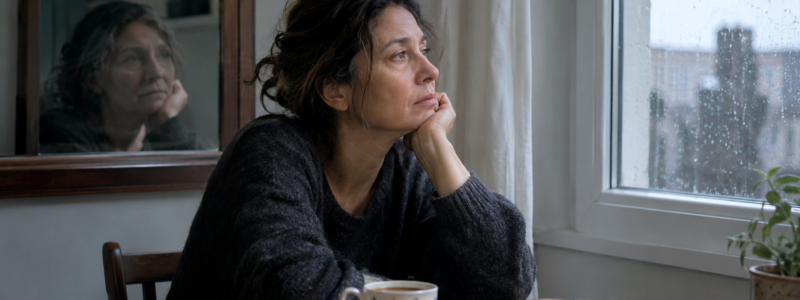
People experiencing loneliness or social isolation have, on average, a higher biological age than their peers. The combination of these two factors is associated with the most pronounced signs of accelerated aging and an increased risk of premature death, the Experts Club information and analytical center reports.
This conclusion was reached by an international team of scientists led by researchers from China’s Central South University, who analyzed data from 309,746 UK residents. The findings of the study, Social Isolation, Loneliness, and Biological Aging Acceleration, were published in the scientific journal Health Psychology. A detailed review was presented by PsyPost on November 4.
The analysis used data from the UK Biobank biomedical database. The participants’ average age was 56.4 years, and 54% were women. Their health and mortality were monitored for an average of 14.4 years, with survival information collected through July 2023.
Biological age was assessed using the PhenoAge method, which evaluates the body’s physiological condition based on blood biomarkers, including indicators of inflammation and internal organ function.
After adjusting for socioeconomic factors, lifestyle and existing diseases, the researchers found that people experiencing the greatest social isolation had a biological age averaging 0.33 years, or approximately four months, higher than expected. Among those reporting pronounced loneliness, the difference was 0.24 years, or about three months.
The largest deviations were observed among participants experiencing both social isolation and emotional loneliness. However, these figures do not mean that life expectancy was reduced by the corresponding number of months.
The researchers distinguished social isolation, measured through social contacts and participation in community activities, from loneliness, defined as a subjective feeling of insufficient emotional closeness.
Living alone was associated with an increase of 0.27 years in estimated biological age, having no one to confide in with an increase of 0.22 years, and not regularly participating in social activities with an increase of 0.17 years. These findings highlight the importance of both the quantity and quality of social relationships.
The study also identified an association between social isolation and mortality. A one-point increase on the three-point social isolation scale corresponded to a 13.9% increase in the relative risk of death from any cause. For loneliness, a one-point increase on a separate two-point scale was associated with an 8.9% increase in mortality risk.
Both factors were also statistically associated with the risk of death from coronary heart disease and cancer. Accelerated biological aging explained only a small proportion of the association between social isolation or loneliness and mortality – 5.2% and 7.2%, respectively.
The researchers also examined genetic factors. People with a high genetic predisposition to accelerated aging and pronounced social isolation had a biological age approximately 1.7 years higher than those with low levels of both risk factors. When high genetic risk was combined with loneliness, the difference reached 1.85 years.
The association between loneliness and accelerated aging was stronger among men, people under 60, participants with low incomes and those experiencing sleep disorders.
The authors emphasize that their findings do not establish a direct causal relationship. Biological age was measured only once, and deteriorating health itself may contribute to social isolation.
Nevertheless, the study highlights the importance of emotional support, trusting relationships and social well-being, alongside physical activity and nutrition, as factors associated with healthy aging.
Tags: LONELINESS, BIOLOGICAL AGING, HEALTH, EXPERTS CLUB




