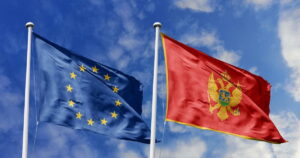
According to Experts.news, Montenegro and Iceland may eventually become members of the European Union at the same time—the possibility of combining the two countries’ accession into a single package is being discussed in Brussels by representatives of the European Commission and European diplomats, Politico reports.
This option is being considered against the backdrop of Montenegro’s rapid progress in membership negotiations and Iceland’s possible return to the European integration process, which was put on hold more than a decade ago. The EU has not yet made a final decision on the countries’ joint accession.
A key event will be the referendum in Iceland on August 29, 2026, in which citizens will have to decide whether the country should resume negotiations on EU accession. The Icelandic parliament approved the referendum in May. If a majority supports resuming negotiations, the outcome will subsequently have to be put to a second referendum—this time directly on the country’s membership in the European Union.
European Commissioner for Enlargement Marta Kos called Iceland a “special case,” as the country is already deeply integrated with the European Union through the European Economic Area and the Schengen Area.
In her assessment, if the referendum yields a positive result, negotiations with Reykjavík could potentially last only one or two years. Kos also stated that the EU is ready to seek special solutions for the issues most sensitive to Iceland, primarily fisheries and agriculture.
This theoretically allows Iceland to catch up with Montenegro and enter the final stretch of negotiations at roughly the same time as Podgorica.
Montenegro is currently the candidate that has advanced the furthest in the EU accession process.
All 33 negotiation chapters have already been opened, and following the EU–Montenegro Intergovernmental Conference on July 14, 18 chapters were provisionally closed. The most recent chapters to be closed were those on competition policy and the Customs Union.
Thus, Podgorica has completed more than half of the process of closing negotiation chapters and expects to conclude negotiations by the end of 2026.
The government of Prime Minister Milojko Spajić has officially set a goal of becoming the 28th EU member state in 2028. The European Union has already begun preparatory work on Montenegro’s accession treaty, and on June 30, the European Commission presented a financial package outlining the budgetary implications of the country’s future membership.
One of Politico’s sources at the European Commission stated that there is a significant likelihood of a joint package being formed for the two countries.
The economic rationale for this option lies in the substantial differences between the two countries.
Iceland is a wealthy economy and, upon accession, would likely become a net contributor to the EU budget. Montenegro, by contrast, due to its relatively low per capita income, would be a recipient of European funding.
According to European diplomats, combining the two countries into a single package could therefore simplify the political coordination of enlargement for current EU members.
Montenegro’s Minister for European Affairs, Maida Gorčević, told Politico that Podgorica is open to the possibility of linking its accession to that of Iceland.
Iceland’s Minister of Foreign Affairs, Torgurdur Katrín Gunnarsdóttir, also called joint accession “absolutely” possible.
However, each country will have to fulfill the membership criteria independently. Merely combining them into a single treaty or political package does not eliminate the need to complete negotiations and secure the consent of all current EU member states.
Despite the high level of economic integration, Iceland’s possible return to the negotiations does not guarantee their smooth conclusion.
For Iceland, control over fishery resources carries significantly greater economic and political weight than it does for most EU member states. The country’s foreign minister has stated that retaining control over fisheries will be one of the fundamental conditions of any future agreements with Brussels.
However, Iceland already applies a significant portion of EU legislation thanks to its membership in the European Economic Area. That is why the process could potentially proceed much faster than for most current candidates.
Montenegro applied for EU membership in 2008, was granted candidate status in 2010, and membership negotiations officially began on June 29, 2012. Currently, all 33 negotiation chapters have been opened, of which 18 have been provisionally closed. Following an acceleration of reforms in 2024–2026, the country became the leading candidate for the next EU enlargement.
Iceland took a completely different path. Following the global financial crisis, it applied to the EU in July 2009, and negotiations began in 2010. By the time negotiations were suspended, 27 negotiation chapters had been opened, 11 of which had been provisionally closed.
After a new government took office in 2013, negotiations were frozen, and in March 2015, Reykjavík asked the European Union to no longer consider Iceland a candidate country. At the same time, the country maintained the closest possible integration with the EU through the European Economic Area and the Schengen Area.
In 2026, the issue of membership returned to the political agenda. Parliament scheduled a referendum for August 29 on whether to resume negotiations.
The format of several countries joining the EU simultaneously is not new. Spain and Portugal joined the Community at the same time in 1986; ten countries joined the EU as part of the 2004 enlargement; and Bulgaria and Romania joined simultaneously in 2007.
If Iceland votes to resume negotiations and is able to quickly resolve contentious issues with Brussels, 2028 becomes, for the first time, a theoretically possible date for the simultaneous accession of Montenegro and Iceland. For now, however, this is a political scenario rather than an approved EU enlargement timeline.
enlargement, EU, ICELAND, MEMBERSHIP, MONTENEGRO
Related: