

In a referendum, Icelanders rejected the proposal to resume negotiations on the country’s accession to the European Union. 52.8% voted against, 47.2% voted in favor, and voter turnout was a very high 82.5%.
The vote was not directly about joining the EU, but only about resuming negotiations. Iceland submitted its application back in 2009, began negotiations, but effectively halted them in 2013.
Had the current vote been favorable, another referendum would have been required after the terms of accession were agreed upon.
One of the main reasons for Icelandic Euroskepticism is fishing. For the island’s economy, the issue of transferring part of the control over fishery resources to the EU’s common policy is particularly sensitive.
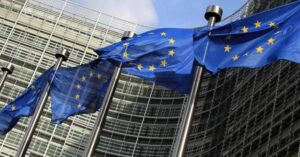
According to Experts.news, Montenegro and Iceland may eventually become members of the European Union at the same time—the possibility of combining the two countries’ accession into a single package is being discussed in Brussels by representatives of the European Commission and European diplomats, Politico reports.
This option is being considered against the backdrop of Montenegro’s rapid progress in membership negotiations and Iceland’s possible return to the European integration process, which was put on hold more than a decade ago. The EU has not yet made a final decision on the countries’ joint accession.
A key event will be the referendum in Iceland on August 29, 2026, in which citizens will have to decide whether the country should resume negotiations on EU accession. The Icelandic parliament approved the referendum in May. If a majority supports resuming negotiations, the outcome will subsequently have to be put to a second referendum—this time directly on the country’s membership in the European Union.
European Commissioner for Enlargement Marta Kos called Iceland a “special case,” as the country is already deeply integrated with the European Union through the European Economic Area and the Schengen Area.
In her assessment, if the referendum yields a positive result, negotiations with Reykjavík could potentially last only one or two years. Kos also stated that the EU is ready to seek special solutions for the issues most sensitive to Iceland, primarily fisheries and agriculture.
This theoretically allows Iceland to catch up with Montenegro and enter the final stretch of negotiations at roughly the same time as Podgorica.
Montenegro is currently the candidate that has advanced the furthest in the EU accession process.
All 33 negotiation chapters have already been opened, and following the EU–Montenegro Intergovernmental Conference on July 14, 18 chapters were provisionally closed. The most recent chapters to be closed were those on competition policy and the Customs Union.
Thus, Podgorica has completed more than half of the process of closing negotiation chapters and expects to conclude negotiations by the end of 2026.
The government of Prime Minister Milojko Spajić has officially set a goal of becoming the 28th EU member state in 2028. The European Union has already begun preparatory work on Montenegro’s accession treaty, and on June 30, the European Commission presented a financial package outlining the budgetary implications of the country’s future membership.
One of Politico’s sources at the European Commission stated that there is a significant likelihood of a joint package being formed for the two countries.
The economic rationale for this option lies in the substantial differences between the two countries.
Iceland is a wealthy economy and, upon accession, would likely become a net contributor to the EU budget. Montenegro, by contrast, due to its relatively low per capita income, would be a recipient of European funding.
According to European diplomats, combining the two countries into a single package could therefore simplify the political coordination of enlargement for current EU members.
Montenegro’s Minister for European Affairs, Maida Gorčević, told Politico that Podgorica is open to the possibility of linking its accession to that of Iceland.
Iceland’s Minister of Foreign Affairs, Torgurdur Katrín Gunnarsdóttir, also called joint accession “absolutely” possible.
However, each country will have to fulfill the membership criteria independently. Merely combining them into a single treaty or political package does not eliminate the need to complete negotiations and secure the consent of all current EU member states.
Despite the high level of economic integration, Iceland’s possible return to the negotiations does not guarantee their smooth conclusion.
For Iceland, control over fishery resources carries significantly greater economic and political weight than it does for most EU member states. The country’s foreign minister has stated that retaining control over fisheries will be one of the fundamental conditions of any future agreements with Brussels.
However, Iceland already applies a significant portion of EU legislation thanks to its membership in the European Economic Area. That is why the process could potentially proceed much faster than for most current candidates.
Montenegro applied for EU membership in 2008, was granted candidate status in 2010, and membership negotiations officially began on June 29, 2012. Currently, all 33 negotiation chapters have been opened, of which 18 have been provisionally closed. Following an acceleration of reforms in 2024–2026, the country became the leading candidate for the next EU enlargement.
Iceland took a completely different path. Following the global financial crisis, it applied to the EU in July 2009, and negotiations began in 2010. By the time negotiations were suspended, 27 negotiation chapters had been opened, 11 of which had been provisionally closed.
After a new government took office in 2013, negotiations were frozen, and in March 2015, Reykjavík asked the European Union to no longer consider Iceland a candidate country. At the same time, the country maintained the closest possible integration with the EU through the European Economic Area and the Schengen Area.
In 2026, the issue of membership returned to the political agenda. Parliament scheduled a referendum for August 29 on whether to resume negotiations.
The format of several countries joining the EU simultaneously is not new. Spain and Portugal joined the Community at the same time in 1986; ten countries joined the EU as part of the 2004 enlargement; and Bulgaria and Romania joined simultaneously in 2007.
If Iceland votes to resume negotiations and is able to quickly resolve contentious issues with Brussels, 2028 becomes, for the first time, a theoretically possible date for the simultaneous accession of Montenegro and Iceland. For now, however, this is a political scenario rather than an approved EU enlargement timeline.
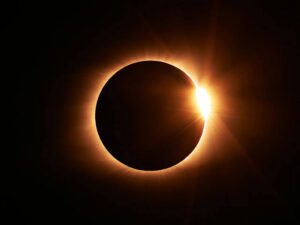
The total solar eclipse on August 12, 2026, became one of the biggest tourism events of the year for Spain and Iceland, causing a sharp increase in short-term rental bookings in cities located within the totality zone.
According to a study by the analytics platform AirDNA, published on July 29, 2026, demand for short-term rentals in Zaragoza, Spain, for dates around the eclipse rose by 123% compared to the same period last year. In Logroño, the increase reached 109%; in Burgos, 65%; in Valladolid, 64%; and in León, 63%. In Kópavogur, Iceland, the figure rose by 48%, and in Reykjavík, by 44%.
The path of totality will pass through Greenland, western Iceland, northern Spain, and a small section of northeastern Portugal. In most other European countries, the eclipse will be partial. Spain will be one of the prime viewing locations, as the total eclipse phase will cross the country from west to east and continue over the Balearic Islands.
The strongest impact on rental prices is expected in Iceland. The western and southern regions of the country, which fall within the path of totality, account for about 60.6% of the national supply of short-term rentals.
At the same time, the country’s entire market consists of only about 8,300 available properties. Given the limited supply, even a short-term influx of tourists could significantly increase the average cost of accommodation nationwide.
AirDNA expects that Iceland will see the most significant increase in the average daily rental rate. Additional demand is being driven not only by foreign tourists but also by residents, as a total solar eclipse has not been observed in Iceland for over half a century.
Interest is also extending to related events. A week before the eclipse, more than 90% of tickets for a four-day themed festival in Iceland had already sold out.
In Spain, approximately 86,300 short-term rental properties fall within the path of totality, representing 22.6% of the country’s total supply, which AirDNA estimates at roughly 382,400 listings.
Thus, in the Spanish eclipse zone alone, there are more than 16 times as many properties available as in Iceland’s entire short-term rental market. This allows Spain to accommodate significantly more tourists and keeps price increases in check, despite high demand.
Among the destinations expected to be in highest demand are Bilbao, León, Burgos, Zaragoza, Valencia, and Palma de Mallorca. Madrid and Barcelona are outside the path of totality, although a partial eclipse will be visible there as well.
Spain also has a more extensive network of air connections and a significantly larger supply of hotels and rental properties. Therefore, analysts consider it a more suitable option for travelers who book their trip immediately before the event.
However, the cost of specific accommodations can change rapidly. Property owners and management companies use dynamic pricing, automatically raising rates as demand increases and the number of available options decreases.
To assess the potential impact, AirDNA used data on the total solar eclipse in North America in April 2024. At that time, the occupancy rate for short-term rental properties in the total eclipse zone reached 88%, and the average daily rate increased by 18.4%. These figures are not a direct forecast for Europe, but they demonstrate the impact of a rare astronomical event on local rental markets.
The official primary source of data on the short-term rental market is the AirDNA study dated July 29, 2026. The eclipse path has been confirmed by the European Space Agency and NASA.
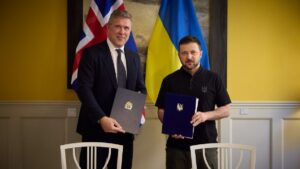
President of Ukraine Volodymyr Zelenskyy and Prime Minister of Iceland Bjarni Benediktsson signed an agreement on security cooperation and long-term support in Stockholm, the press service of the Ukrainian president reports.
“Iceland has committed itself to providing comprehensive and long-term economic, humanitarian and defense support to Ukraine, as well as to facilitate its future membership in the EU and NATO. During 2024-2028, Iceland will annually allocate at least 4 billion ISK (about $30 million). Support for Ukraine will continue throughout the term of the agreement. Iceland is ready to finance, purchase and supply defense materials and equipment. In addition, it is ready to cooperate with Ukraine in the development of its defense industry,” the statement said.
It is noted that the uniqueness of the agreement lies in the fact that Iceland undertakes to continue to transport military supplies and equipment from NATO allies to Ukraine by chartered cargo aircraft. In addition, Iceland will pay special attention to supporting and equipping Ukrainian women in the Armed Forces of Ukraine.
Separate sections of the agreement relate to support for the Ukrainian peace formula, sanctions against Russia, compensation for damages, and bringing the aggressor to justice. The agreement also provides for the strengthening of social and civilian infrastructure, particularly in the areas of education and energy security.
Iceland also pledges to strengthen its diplomatic mission in Kyiv to deepen cooperation with government agencies, parliament, civil society, and the private sector in Ukraine.
The text of the agreement is published on the website of the President of Ukraine.
Ukraine and Iceland signed an agreement to implement the G7 Vilnius Declaration, which was adopted on July 12, 2023.
In total, Ukraine has signed 14 bilateral security agreements: with the United Kingdom, Germany, France, Denmark, Canada, Italy, the Netherlands, Finland, Latvia, Spain, Belgium, Portugal, Sweden, and Iceland.
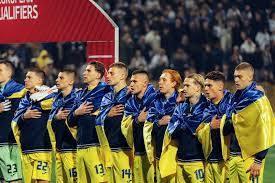
Ukrainian President Volodymyr Zelensky has congratulated the Ukrainian national soccer team on its 2-1 victory against Iceland and qualification for the Euro 2024 Championship.
“Thank you, guys! Thank you, national team! For the most important emotions for the whole country. For the super important victory and exit to the Euro,” Zelensky wrote in Telegram on Wednesday night.
He noted that with this victory the Ukrainian national team “once again proved: when Ukrainians have a hard time, but they do not give up and continue to fight, then Ukrainians are sure to win.”
“In times when they want to destroy us every day, we prove every day: Ukrainians are and will be! Ukraine is and will be! Thank you for the victory!” – summarized the President.
The Ukraine-Iceland game was held in Wroclaw, Poland.
At the beginning of the game Ukraine had an advantage in possession of the ball, but the first half hour of the game ended with a goal by Iceland.
Ukraine restored parity in the 54th minute. Viktor Tsygankov struck the bottom corner of the goal – 1:1. The second goal was scored by Mykhailo Mudryk in the 84th minute.
The other two last two tickets to the final part of Euro 2024 were won by Georgia and Poland in penalty shootouts on Tuesday.
Ukraine will play its first match at the tournament in Munich on June 17 against Romania. The opponents in Group E will also be Slovakia and Belgium, with whom the Ukrainian team will play on June 21 and 26 in Düsseldorf and Stuttgart, respectively.
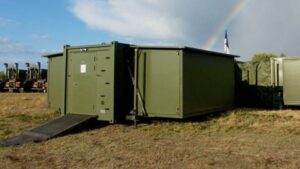
The Icelandic Parliament has supported the proposal to transfer a field hospital for the Ukrainian military, Prime Minister of Iceland Katrin Jacobsdottir said.
“All parties in the Icelandic parliament have united in a proposal for Iceland to hand over a field hospital to Ukraine,” she tweeted Monday.
“We remain committed to supporting the Ukrainian people: this gesture is a symbol of our continued solidarity,” summarized Katrin Jacobsdottir.



