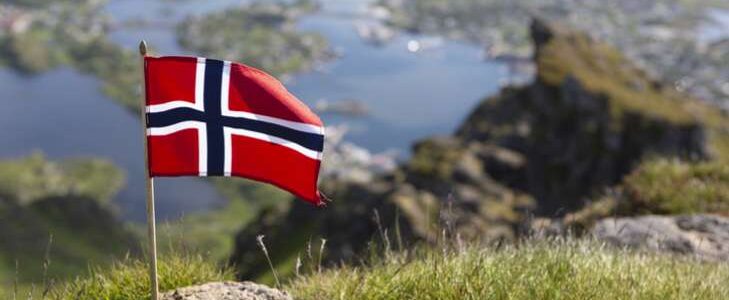
The Norwegian government has proposed tightening the conditions for obtaining citizenship by changing the requirements regarding length of residence in the country and knowledge of the Norwegian language for certain categories of applicants.
Under the government’s initiative, applicants will be required to have lived in the country continuously for eight years to obtain a Norwegian passport. Currently, most applicants must have resided in Norway for a total of eight years over the past 11 years, provided they hold a permanent residence permit. The new model is intended to simplify the calculation of residency periods and reduce the number of different requirements for specific groups of applicants.
Norway’s Minister of Labor and Social Integration, Kjersti Stenseng, stated that obtaining citizenship should be viewed as a privilege, and that the current rules are too complex, particularly regarding residency requirements.
Separately, the government proposes to increase the residency requirement for stateless persons from three to seven years. For applicants in this category who were born in Norway or arrived in the country before the age of 18, the plan is to set a residency requirement of five years.
The changes will also affect foreigners who are married to, in a registered partnership with, or in a de facto relationship with a Norwegian citizen. For them, the period required to obtain citizenship is proposed to be increased from a minimum of five years of residence and marriage to six years of continuous residence in the country.
In addition, the government wants to raise the Norwegian language proficiency requirements for stateless persons aged 18 to 67—from level A2 to B1. Residence on the Svalbard archipelago will no longer be considered grounds for applying for Norwegian citizenship.
The government explains the changes as necessary to make the rules more consistent and understandable, as well as to speed up the processing of applications. At the same time, the stricter requirements effectively make the path to a Norwegian passport longer for a number of categories of foreign nationals.
In total, as of early 2026, there were 987,120 immigrants in Norway, accounting for 17.5% of the country’s population. Another 238,507 people were born in Norway to immigrant families, accounting for 4.2% of the population. Collectively, people of immigrant origin make up more than one-fifth of the country’s population.
The largest group of immigrants in Norway remains those from Poland—111,740 thousand people. Next are Ukraine—85,461 thousand, Lithuania—43,065 thousand, Syria—42,040 thousand, Sweden—37,732 thousand, Germany—28,145 thousand, Somalia—27,769 thousand, Eritrea—25,819 thousand, the Philippines—25,673 thousand, and Pakistan—24,821 thousand people.
The structure of immigration to Norway reflects a combination of several waves: labor migration from EU countries and Eastern Europe, refugee migration from Syria, Somalia, Eritrea, and Ukraine, as well as long-standing diaspora communities from Pakistan, Iraq, Turkey, and other countries. Ukrainian migration is characterized by rapid growth over a short period and a high proportion of women and children among those who arrived after 2022.
Norway remains one of the countries with the most powerful passports in the world. According to the Henley Passport Index, the Norwegian passport is among the most prestigious and grants visa-free or simplified entry to over 180 countries. Since 2020, Norway has allowed dual citizenship.