

Some 735 million people in the world will face hunger in 2022, an increase of 122 million from 2019 figures, according to a UN report.
“It is estimated that 691 million to 783 million people in the world will face hunger in 2022. Taking the average of 735 million, it is clear that 122 million more people suffered from hunger in 2022 than in 2019,” the State of Food Security and Nutrition in the World 2023 report said.
In addition, the number of people experiencing severe food insecurity in 2022 was about 900 million – 180 million more than in 2019.
At the same time, 2022 saw a slowdown in economic recovery from the COVID-19 coronavirus pandemic and rising food and energy prices, which in turn undermines the incomes of those most at risk of hunger.
At the same time, some regions of the world have made progress in combating hunger, such as Asia and Latin America. However, in Western Asia, the Caribbean and Africa, hunger continued to increase from 2021 to 2022. The number of people suffering from hunger in Africa has increased by 11 million since 2021 and by more than 57 million since the start of the pandemic.
Nearly 600 million people are projected to be chronically undernourished in 2030. It is noted that this is about 119 million more than the scenario if there had been no pandemic and a full-scale war launched by Russia against Ukraine. The most significant increase in hunger is also expected in Africa.

Southern European countries are suffering from the “Cerberus” heat wave, in the coming days in some regions temperatures may rise to 45 degrees Celsius and higher, Western media reported.
The Associated Press agency reports that according to the Spanish meteorological service, in the coming days in the southeastern regions of the Iberian Peninsula, temperatures may rise to 45 degrees Celsius. At the same time, high temperatures are already being recorded there: already at 6:00 Wednesday more than 100 weather stations recorded temperatures of at least 35 degrees Celsius.
In other areas of the peninsula, a slight drop in temperature is expected.
At the same time, temperatures have already exceeded or will exceed the 40 degrees Celsius mark in France, Greece, Croatia and Turkey in the coming days. The BBC reports that the situation is toughest in Italy, where the heatwave could reach 48.8 degrees Celsius, a weather record for Europe set in the country in 2021. At the moment, the highest level of meteorological danger has been introduced in 10 Italian cities, including Florence and Rome. On Tuesday, a 44-year-old man died in the north of the country due to high temperatures. Several tourists suffered heat strokes.
Sky News reports that temperatures could rise to 40-45 degrees in some parts of Greece, while the average for this time of year usually stays at 32, and the Czech city of Prague is expected to reach 34 degrees on Saturday – 10 above the July average of 24. In northern Africa, the heat may reach 50 degrees: in Tunisia, 49 degrees Celsius has already been recorded.
The cause of the high temperatures is the “Cerberus” heat wave, which was given that name by the Italian Meteorological Society. CNN notes that “Cerberus” may replace the new atmospheric front “Charon” on Friday, which could cause temperatures in Italy to rise even higher next week.
In many countries, authorities are urging citizens to take precautions while outdoors, traveling unnecessarily is not recommended.

The volume of industrial production in the UK in May decreased by 0.6% compared to the previous month, according to the British National Statistics Office (ONS).
The indicator declined for the second month in a row and showed the worst dynamics since August last year.
Analysts polled by Trading Economics expected a decline of 0.4%.
In annualized terms, industrial production fell by 2.3%, matching the forecast, after declining by a revised 1.6% a month earlier.
The country’s manufacturing output in May fell 0.2% from April, electricity and gas production fell 2%, while the mining sector rose 0.3%.
For more information on key macroeconomic indicators in Ukraine and the world, see the link on the YouTube channel Club of Experts at the link:

Oil prices of benchmark grades are moderately rising on Thursday morning after rising at the end of the previous session, caused by the fall of the dollar.
The price of September futures for Brent on London’s ICE Futures exchange at 8:18 a.m. Q2 is $80.3 per barrel, up 19 cents (0.24%) from the previous session’s close. On Wednesday, these contracts rose by $0.71 (0.9%) – to $80.11 per barrel, having updated the maximum since the end of April.
Quotes of futures for WTI crude oil for August at the electronic trading of the New York Mercantile Exchange (NYMEX) by the specified time rose by 14 cents (0.18%) and amounted to $75.89 per barrel. At the end of the previous session they rose by $0.92 (1.2%) – to $75.75 per barrel.
On the eve it became known that the growth rate of consumer prices in the U.S. slowed to 3% in June from 4% in May, having updated the minimum since March 2021. Analysts on average expected a decline to 3.1%.
Oil traders are keeping an eye on easing inflationary pressures as this may result in the Federal Reserve (Fed) having no need to raise interest rates further, meaning “the current positive conditions in the economy may persist for some time,” said Colin Cieszynski, senior strategist at SIA Wealth Management.
“This has helped raise demand expectations, while supply from Saudi Arabia and Russia remains subdued,” he added.
The prospect of an imminent end to the U.S. monetary tightening cycle collapsed the dollar, which supported commodity prices. The ICE index, which shows the dollar’s performance against six major currencies, plunged 1.2% the day before, hitting its lowest level in more than a year.
The U.S. Department of Energy report, which indicated a sharp increase in oil reserves in the country last week – by almost 6 million barrels instead of the expected increase by 483 thousand barrels.
Gasoline inventories remained virtually unchanged, while distillate stocks rose by 4.815 million barrels. Experts surveyed by Trading Economics on average forecasted a decrease of 727 thousand barrels and 262 thousand barrels, respectively.
Stocks at the terminal in Cushing, where oil traded on Nymex is stored, decreased by 1.605 million barrels over the week.

The Falcon 9 rocket will launch into orbit on Friday with another batch of 54 mini-satellites to replenish the orbital constellation of the Starlink system’s global Internet coverage network, developer SpaceX said.
The launch will take place from Launch Complex 40 at the U.S. Space Force base at Cape Canaveral in Florida on Sunday at 00:40 U.S. East Coast time (7:40 a.m. QST).
This is Starlink’s 94th internet satellite launch since May 2019 and its 25th since the beginning of this year. SpaceX has already put into orbit more than 4.7 thousand such satellites. Some of them failed or went out of orbit. More than 4.4 thousand devices remain in orbit in working condition.
The first reusable stage of the launch vehicle, which is being used for the 16th time, will have to make a controlled vertical landing on the offshore drone platform A Shortfall of Gravitas, located in the Atlantic.
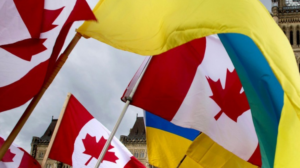
Canadian Prime Minister Justin Trudeau announced CAD541 million ($410 million) in new funding and projects to support Ukraine and strengthen transatlantic security at the NATO summit in Vilnius.
“The new funding for Ukraine builds on more than $8 billion in multifaceted assistance Canada has committed since the beginning of 2022, and builds on the Prime Minister’s announcement this week in Latvia to renew and expand Operation Reassurance, which is part of NATO’s defense and deterrence measures in Eastern Europe, and doubles Canada’s current presence in the country,” the Canadian head of government said in a statement on its website on Wednesday.
According to the prime minister, that Canada intends to provide Ukraine with additional drones with cameras, and will also provide training to the Ukrainian military as part of Operation Unifier in Canada.
In addition, the Prime Minister announced an additional CAD48.8 million ($37 million) to the Comprehensive Assistance Package for Ukraine, on top of the CAD34.6 million announced in April 2023, which will support NATO’s practical non-lethal assistance to Ukraine through the donation of materials including fuel, bridge equipment, radios and first aid supplies.
“Canada, along with Belgium, Denmark, Luxembourg, the Netherlands, Norway, Poland, Portugal, Romania, Sweden and the United Kingdom, signed a statement to form a joint coalition to train the Ukrainian Air Force to operate and maintain F-16 fighter jets. By signing the statement, Canada commits to contribute to a multinational effort to train Ukrainian pilots, technicians and support personnel to operate and maintain F-16 fighter jets,” the statement reads.
Trudeau also announced an additional CAD2.7 million ($2.05) in cybersecurity assistance to Ukraine.



