
According to Experts Club, China ranked last among Ukraine’s 50 largest trading partners in terms of the balance of positive and negative attitudes among Ukrainians—in August 2026, the figure stood at minus 25.4 percentage points. The next lowest results were recorded for India and Hungary—minus 14.3 and minus 12.7 percentage points, respectively. This is evidenced by the results of the third wave of the study “Ukrainians’ Attitudes Toward Countries Around the World,” conducted by Active Group in collaboration with Experts Club, reports the Experts Club Information and Analytical Center.
The balance was defined as the difference between the shares of positive and negative assessments. Regarding China, 18.2% of respondents expressed a positive attitude, 43.6% a negative one, and another 33.9% a neutral one. Thus, China received the lowest score among all countries surveyed, despite the fact that in the first half of 2026, China was Ukraine’s largest trading partner with a trade volume of approximately $14.68 billion.
The top ten countries with the lowest scores also included Lebanon—minus 9.2 percentage points—and Poland—minus 2.3 percentage points. Serbia, Algeria, Libya, Vietnam, and Tunisia remained in the positive range, however, their scores were among the lowest among the countries surveyed: Serbia at plus 2.3 percentage points, Algeria at plus 2.2, Libya at plus 1.0, Vietnam at plus 9.4, and Tunisia at plus 11.0 percentage points.
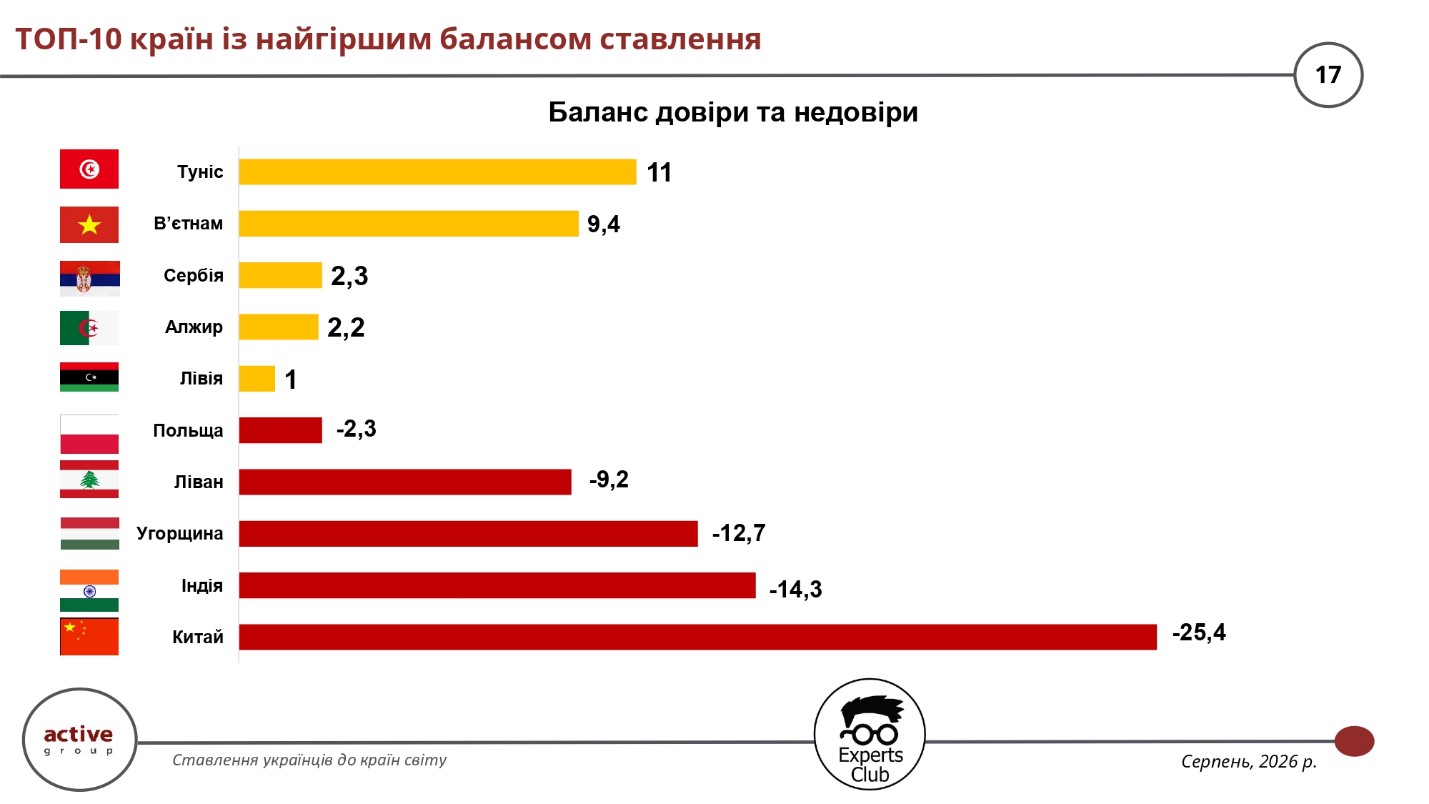
The shift in attitudes toward Poland was particularly noticeable. In March 2026, the balance of positive and negative assessments stood at +41.7 percentage points, whereas in August it fell to –2.3 percentage points. A positive attitude toward Poland was expressed by 34.6% of respondents, a negative one by 37%, and a neutral one by 25.4%. At the same time, Poland remains one of Ukraine’s largest trading partners and the largest market for Ukrainian goods exports among individual countries in the first half of 2026.
Maksym Urakin, founder of the Experts Club Information and Analytical Center, deputy director of the Interfax-Ukraine news agency, and candidate of economic sciences, noted that the results of the sociological survey should be analyzed in conjunction with actual trade figures.
“Second, we must be open to questions and inquiries from the media and the public. We also need to make use of our sociological research,” Urakin noted. In his view, systematic communication and the demonstration of concrete results of cooperation can help governments better explain the nature of bilateral relations to Ukrainian society.
Oleksandr Pozniy, director of the research company Active Group, highlighted the need to combine public awareness with the practical development of economic ties.
“We need to do more than just raise general awareness. We must expand cooperation with countries where we can achieve a positive trade balance,” Pozniy noted. He emphasized the role of business associations, economic institutions, and diplomatic missions in developing bilateral ties, especially with markets where Ukraine can increase its exports.
Overall, the survey results show that the scale of trade and economic ties does not always correspond to public attitudes toward the respective country. China stands out as the most striking example: it has the highest trade volume among individual partners, yet is simultaneously associated with the lowest ratings among Ukrainians.
The survey was conducted in August 2026 using self-administered online questionnaires in the SunFlowerSociology panel among 800 Ukrainian citizens aged 18 and older. The sample is representative by age, gender, and region; the maximum theoretical margin of error for indicators at the 50% confidence level is ±3.5 percentage points. This is the third wave of the study, following surveys conducted in August 2025 and March 2026.
ACTIVE GROUP, CHINA, EXPERTS CLUB, FOREIGN TRADE, HUNGARY, INDIA, international relations, POLAND, SOCIOLOGY, UKRAINE
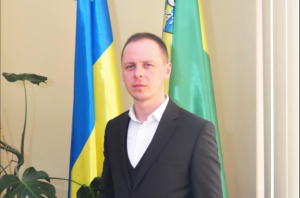
Oleksandr Sytaylo, mayor of Malyn in Zhytomyr Oblast, won the “Mayor of the Year (Small Towns)” award as part of the 30th anniversary nationwide “Person of the Year 2025” program.
Oleksandr Sytaylo was born on August 17, 1986, in the village of Ustynivka, Malyn District, Zhytomyr Oblast. In 2008, he graduated from the National University of State Tax Service of Ukraine with a degree in Finance.
He began his professional career in the banking sector, where he rose through the ranks from economist to deputy branch manager. He later worked in the private sector, notably at Lux.Net LLC, where he held positions ranging from economist to head of the sales department.
From 2017 to 2020, Sytaylo headed the “Ekoressurs” municipal enterprise of the Malyn City Council, overseeing municipal utilities.
He has been active in local government and civic and political life for over 15 years. He served as a member of the Malyn District and City Councils, and in 2020 was elected mayor of Malyn.
After the start of the full-scale invasion, the city government’s main priorities became ensuring the stable operation of the community’s life-support systems, restoring damaged housing and social infrastructure, and supporting the local economy.
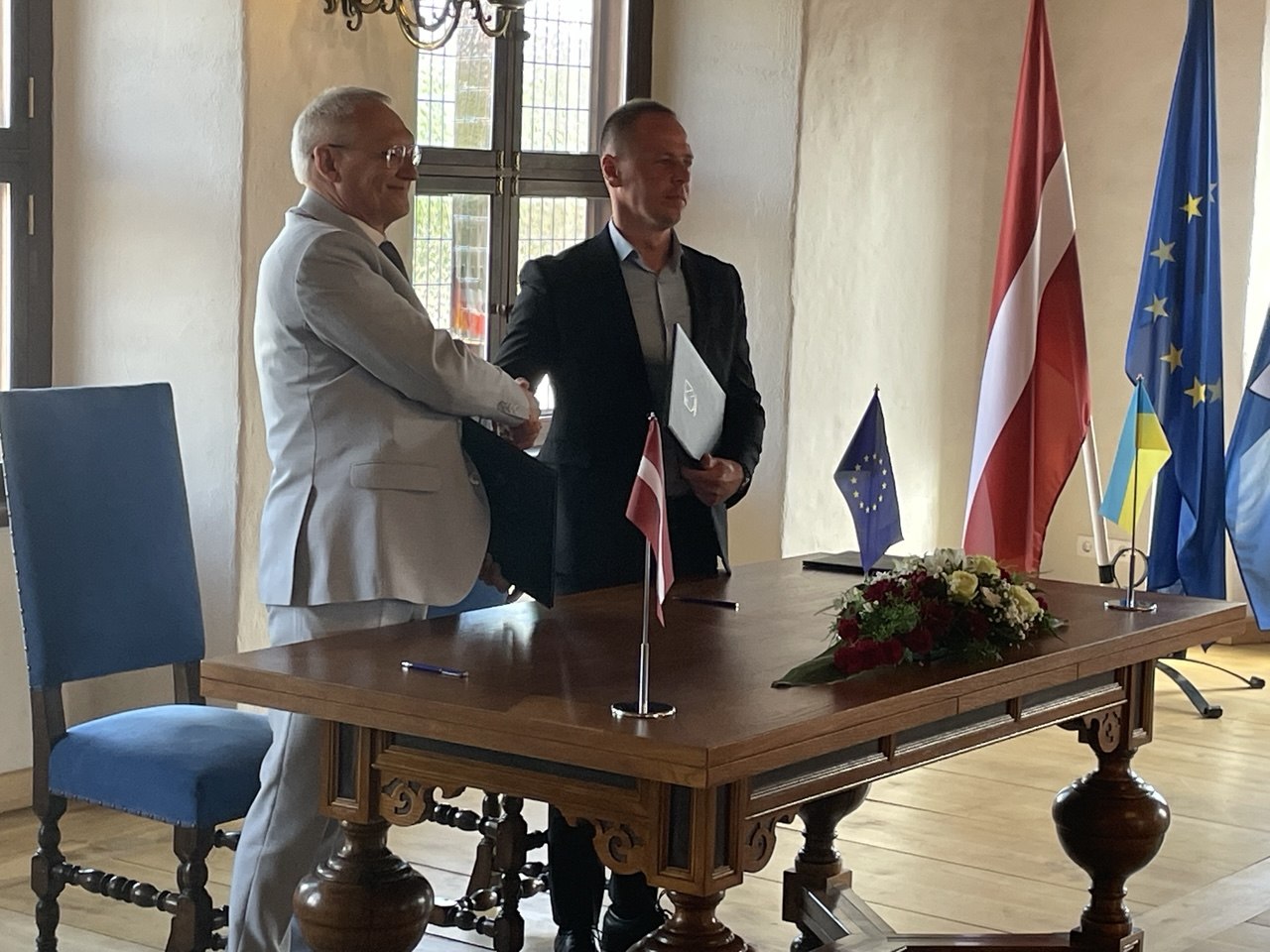
A separate focus of the community’s work is attracting investment, developing local businesses, and fostering international cooperation. The Malyn community maintains partnerships with the cities of Bauska in Latvia and Billerbeck in Germany. This cooperation, in particular, helps attract humanitarian and technical aid for the community’s recovery.
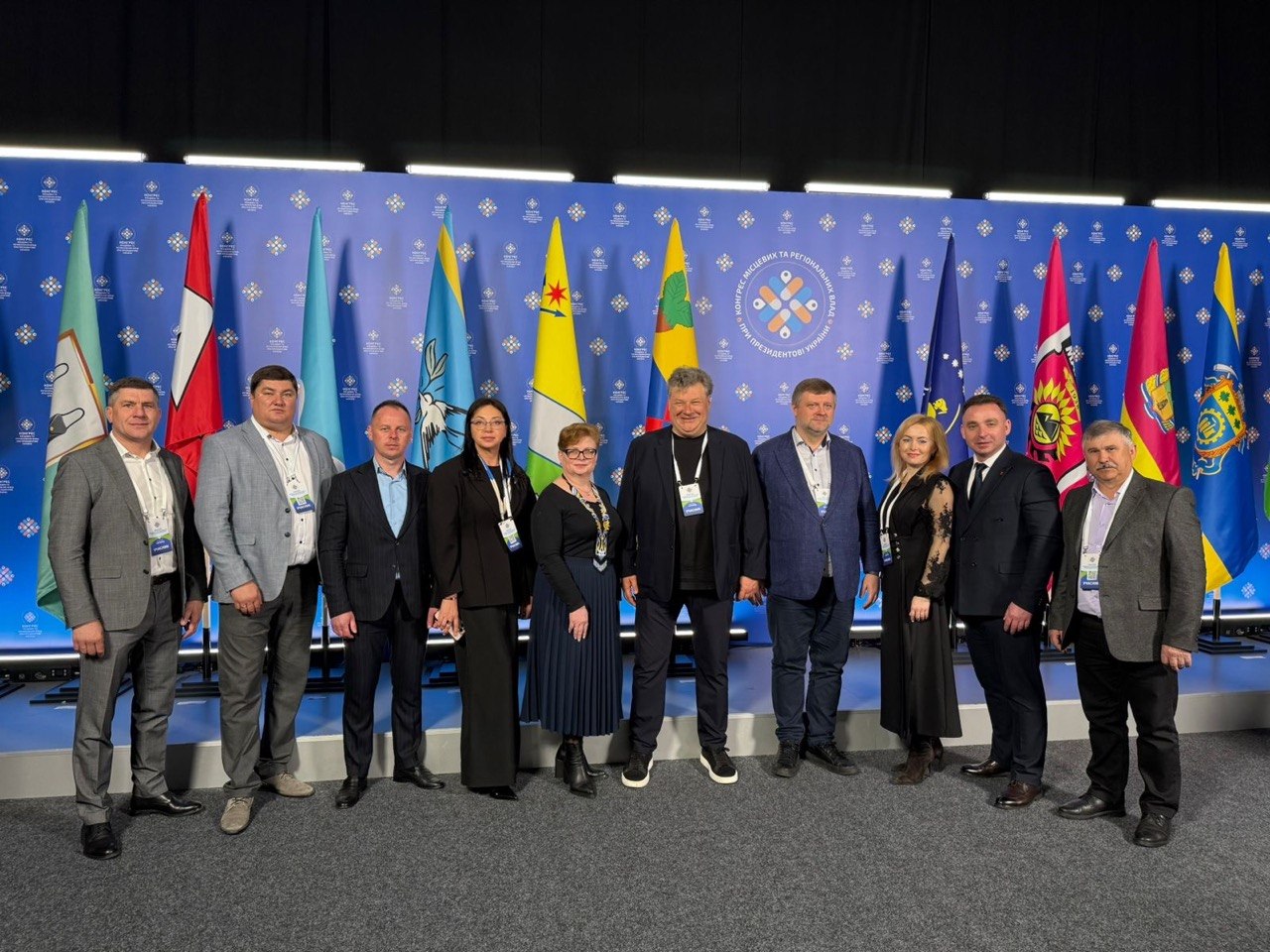
As part of the “Person of the Year 2025” program, the organizers recognized Oleksandr Sytaylo’s work in the areas of local self-government, community recovery, infrastructure development, and international cooperation.
The 30th anniversary nationwide “Person of the Year” program traditionally honors representatives from government, business, science, culture, medicine, sports, and other fields.
Open4Business is an information partner of the nationwide “Person of the Year” program.
local self-government, MALYN, Oleksandr Sytaylo, PERSON OF THE YEAR, UKRAINE
Canada ranked first among countries with the highest net positive sentiment among Ukrainians—in August 2026, this figure stood at 73.8 percentage points. The top ten also included mainly countries from Northern and Western Europe, according to the results of the third wave of the study “Ukrainians’ Attitudes Toward Countries Around the World,” conducted by Active Group in collaboration with Experts Club, reports the Experts Club Information and Analytical Center.
Sweden took second place in terms of the balance of trust and distrust with a score of 70.6 percentage points, while the Netherlands came in third with 69.7 percentage points. Finland and Norway each scored 69.3 points, France scored 69.1 points, Italy scored 67.1 points, and Lithuania scored 65.9 points. Rounding out the top ten are Switzerland and the United Kingdom, which both scored 65.6 percentage points.
The sentiment score is calculated as the difference between the proportion of positive and negative ratings. Specifically, 76.3% of respondents view Canada positively, 2.5% negatively, and 19.2% neutrally. Thus, Canada’s high score is due not only to a significant proportion of favorable ratings but also to a minimal level of negative sentiment.
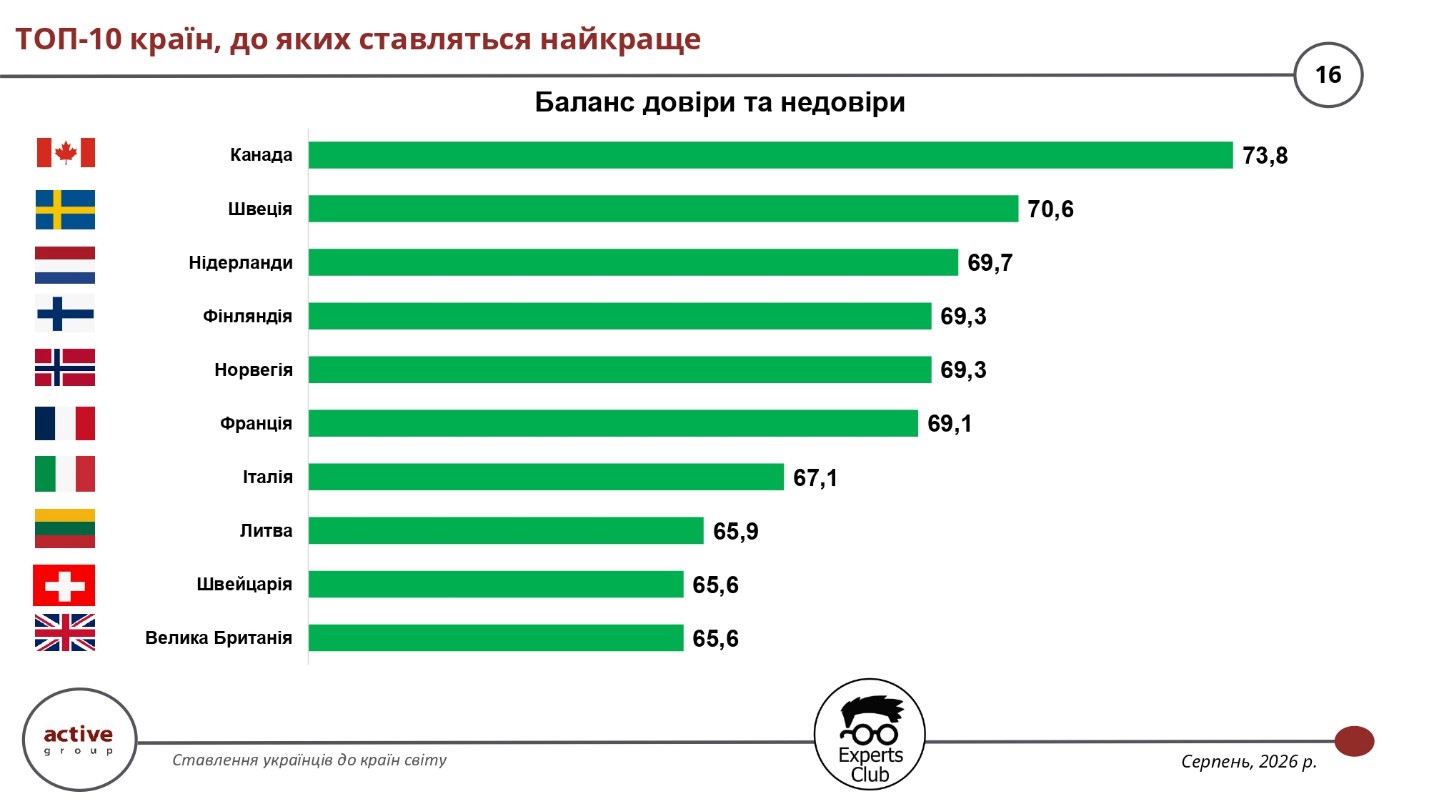
The survey results show that the top ten countries with the most favorable balance of attitudes consist almost entirely of countries in Northern and Western Europe, along with Canada. At the same time, the level of public favor does not always directly correspond to the scale of Ukraine’s trade and economic ties with a specific country. For example, China was Ukraine’s largest trading partner in the first half of 2026, yet it received the lowest balance of positive and negative assessments—minus 25.4 percentage points.
Maksym Urakin, founder of Experts Club, deputy director of the Interfax-Ukraine news agency, and candidate of economic sciences, emphasized that studies of public perception should be considered alongside actual foreign trade indicators.
“That is why it is very important for us to analyze our main partners. We must be open to questions and inquiries from the media and the public,” Urakin noted. According to him, the results of sociological surveys can be used to assess international relations and their further development.
Alexander Pozniy, Director of Active Group, drew attention to the need to combine the creation of a positive image of countries with the practical development of bilateral economic ties.
“We should focus on developing more than just general awareness. We need to expand cooperation with countries where we can achieve a positive balance,” Pozniy noted. According to him, both government agencies and business associations should be involved in this process.
The survey was conducted in August 2026 using self-administered online questionnaires via the SunFlowerSociology panel. A total of 800 Ukrainian citizens aged 18 and older were surveyed. According to the organizers, the sample is representative in terms of age, gender, and region; the maximum theoretical statistical margin of error at a 95% confidence level is 3.5%. This is the third wave of the survey, following surveys conducted in August 2025 and March 2026.
ACTIVE GROUP, CANADA, EXPERTS CLUB, FINLAND, international relations, NORWAY, SOCIOLOGY, SWEDEN, THE NETHERLANDS, UKRAINE, URAKIN
According to Fixygen, as of October 9, the cryptocurrency market is tentatively ending the week on a down note after a relatively strong start to the month. The main factors putting pressure on the market were rising U.S. Treasury yields, a strengthening dollar, high oil prices, and lingering concerns about the future policy of the U.S. Federal Reserve.
Bitcoin traded above $86,000 at the start of the week but fell to approximately $80,400 on October 8. By the morning of October 9, the largest cryptocurrency had partially recovered to around $82,500. Thus, compared to the levels at the start of the week, the decline amounts to about 4–5%.
Ethereum came under even greater pressure. On October 5, ETH was trading around $2,710, and on October 9, around $2,500. The decline since the start of the week approached 8%. The drop was particularly pronounced on October 7–8, when Ethereum lost about 8% over two days.
Outflows from U.S. spot Ethereum ETFs served as an additional negative factor. As of October 7, funds had been withdrawn from these ETFs for seven consecutive trading sessions. Over the past five sessions, the net outflow totaled approximately $506 million, with investors withdrawing another $161 million on October 7.
At the same time, institutional investors’ long-term interest in cryptocurrencies remains strong. Bitcoin remains significantly above the lows of the first half of 2026, and traditional financial firms continue to launch new exchange-traded products related to digital assets.
A key development this week was the continued development of a new regulatory framework for the U.S. cryptocurrency market. On October 5, the U.S. Commodity Futures Trading Commission (CFTC) proposed a federal regulatory regime for cryptocurrency platforms offering leveraged trading to retail clients.
The proposal calls for the creation of a separate category of regulated platforms—crypto asset markets. These platforms may be required to provide proof of reserves, implement mechanisms to prevent market manipulation, and register under the federal framework. This is effectively an attempt by the regulator to partially fill the legal vacuum after Congress failed to advance the sweeping Clarity Act.
At the same time, cryptocurrency infrastructure continues to penetrate mainstream payment services. Samsung announced on October 7 that, in the last week of the month, it will integrate support for USDC directly into Samsung Wallet for users of compatible Galaxy devices in the U.S.
The feature will potentially be available on approximately 82 million compatible devices. Users will be able to send USDC to crypto wallets, as well as transfer funds to bank accounts in more than 60 countries with conversion to local currency. Samsung is exploring the possibility of further expanding the use of stablecoins, including for paying for goods and services.
Thus, the main highlight of the week was the divergence between short-term market dynamics and the development of the crypto industry itself. Prices for Bitcoin, Ethereum, and many altcoins fell amid a decline in global risk appetite; however, at the same time, the market’s institutionalization, regulatory development, and the integration of stablecoins into mainstream financial services continued.
Next week, market participants will focus on U.S. inflation data and expectations regarding the Fed’s future decisions. Rising U.S. Treasury yields remain one of the main risks for Bitcoin and other high-risk assets.
Source: Reuters, Samsung Electronics, LSEG, U.S. ETF data.

Initial registrations of new and used buses (including minibuses) in Ukraine in September 2026 rose by 39% compared to the same month in 2025—to 324 units, according to a report by Ukravtoprom on its Telegram channel.
Compared to August of this year, the bus market grew by 21.8% (58 units).
According to the association, new vehicles accounted for 64% of registrations in September, compared to 58% last year.
Last month, among new buses, the most frequently registered were domestic models: Ataman—38 units (nearly three times more than in August 2026), ZAZ—37 units (12% fewer), and Etalon—20 units (38% fewer).
Among used buses, the top three were Mercedes-Benz—59 units, Volkswagen—15 units, and Iveco—7 units.
In total, from January through September 2026, Ukraine’s bus fleet grew by 1,716 buses (+4% compared to the same period in 2025), including 731 new buses (-9%) and 985 used buses (+15%).
Meanwhile, the information and analytical group Auto-Consulting also reported a record number of new buses delivered to customers in September—the highest in the last 10 years.
“Another point is that most of these buses are school models purchased by local communities using partial funding from the state budget. This made it possible to deliver nearly 200 new buses in September alone, which is 64% more than last year,” according to a statement on the group’s website.
Over the first nine months, the new bus market grew by 2.6%.
Experts believe that this year’s anomaly in bus deliveries in September is linked to the financing of these purchases, which is why the bulk of deliveries occurred not at the start of the school year, but specifically during the first month of classes.
In fact, government purchases of school buses from four Ukrainian manufacturers accounted for 80% of the market.
As previously reported, the state budget allocated a subsidy of 2 billion UAH this year for the implementation of the “School Bus” program.
According to “Ukravtoprom,” Ukraine’s bus fleet grew by 2,040 buses in 2025 (+8% compared to the same period in 2025). Of these: 939 were new (+0.4%); 1,101 were used (+16%).
European Union countries and the United Kingdom remain the top foreign economic priority for Ukrainians: in August 2026, 69.9% of respondents noted the need to prioritize the development of trade and economic relations with these countries. This is evidenced by the results of the third wave of the study “Ukrainians’ Attitudes Toward Countries Around the World,” conducted by Active Group in collaboration with the Experts Club Information and Analytical Center, according to the Experts Club Information and Analytical Center.
At the same time, support for the European direction has declined compared to previous waves of the study. In August 2025, 82.8% of respondents cited EU countries and the United Kingdom; in March 2026, 81.1%; and in August, 69.9%. Thus, over the course of a year, the figure decreased by 12.9 percentage points.
The trend regarding the United States is even more pronounced. In August 2025, 58.8% of respondents supported prioritizing the development of trade and economic relations with the United States; in March 2026, this figure was 59.2%, while in August it stood at 11.9%.
In August 2026, 8.4% of respondents named China as a priority, compared to 35.4% in March and 26.7% in August of the previous year. At the same time, China remains one of Ukraine’s most important trading partners, highlighting the discrepancy between the actual structure of foreign trade and public perceptions of the desired directions for its development.
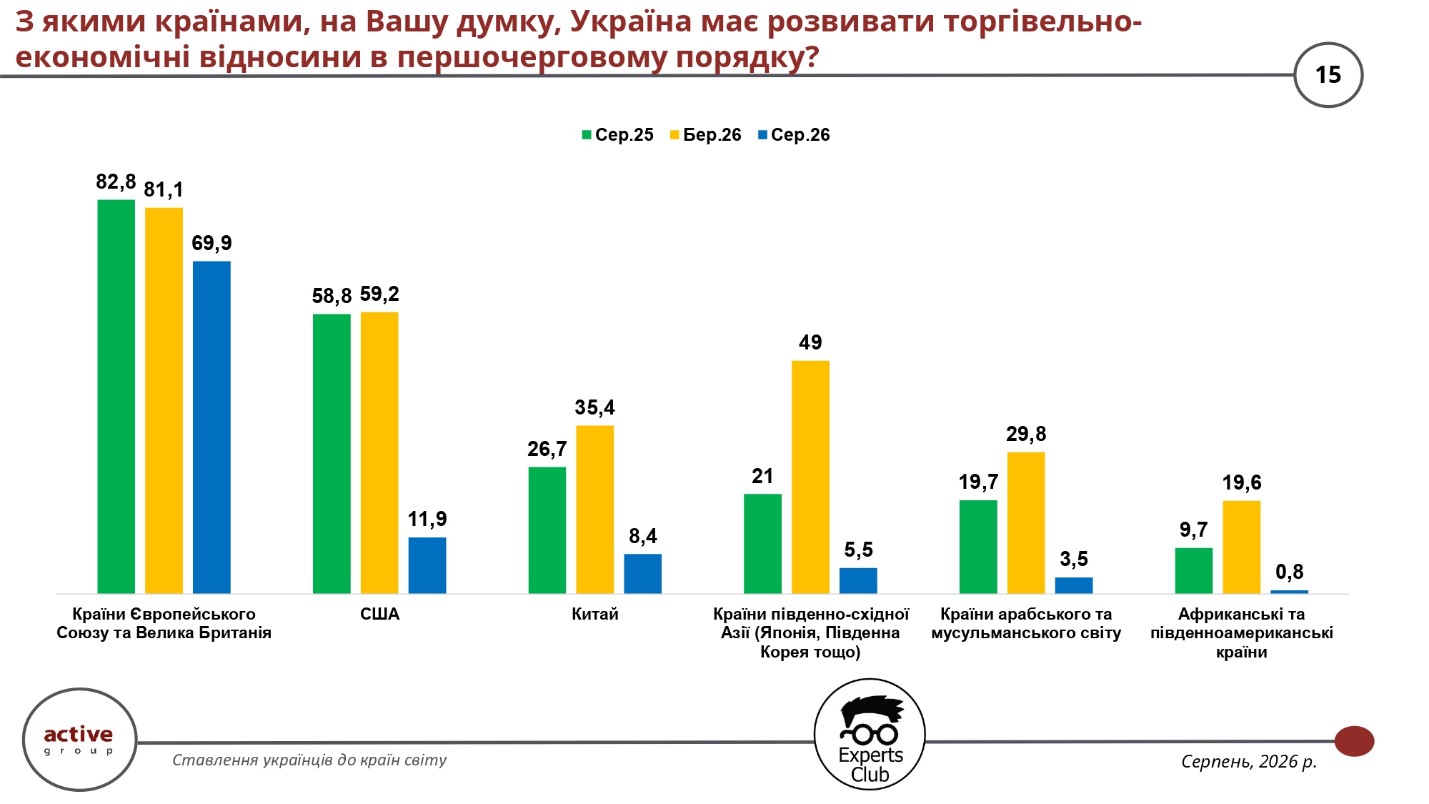
Another 5.5% of those surveyed in August advocated for prioritizing the deepening of economic relations with countries in Southeast Asia—Japan, South Korea, and other nations in the region. In March, this figure stood at 49%, and a year earlier—at 21%. Countries in the Arab and Muslim world were cited by 3.5% of respondents, compared to 29.8% in March, while African and South American countries were cited by 0.8%, compared to 19.6%.
Maksym Urakin, founder of the Experts Club information and analytical center, emphasized the need for more active communication between international partners and Ukrainian society.
“We need to regularly showcase concrete achievements and specific actions. Openness toward the media and the public helps strengthen relations, particularly trade relations,” Urakin noted.
According to him, sociological surveys can serve as a practical tool for government agencies, diplomatic missions, and the business community in determining the direction of bilateral relations.
Oleksandr Pozniy, director of the research firm Active Group, also highlighted the need to strengthen the economic component of international cooperation.
“We need to do more than just raise general awareness. Businesses and government agencies need to work more actively on developing bilateral relations,” Pozniy noted.
The survey was conducted in August 2026 using self-administered online questionnaires via the SunFlowerSociology panel. A total of 800 Ukrainian citizens aged 18 and older were surveyed. The sample is representative by age, gender, and region; the stated maximum theoretical margin of error is ±3.5 percentage points. Previous waves of the survey were conducted in August 2025 and March 2026.
ACTIVE GROUP, CHINA, EUROPEAN UNION, EXPERTS CLUB, FOREIGN TRADE, international relations, SOCIOLOGY, UKRAINE, UNITED KINGDOM, UNITED STATES



