

Azerbaijan has sent Ukraine another shipment of humanitarian aid in the form of energy equipment needed to restore and maintain the power grid during the heating season, according to the Embassy of Ukraine in the Republic of Azerbaijan.
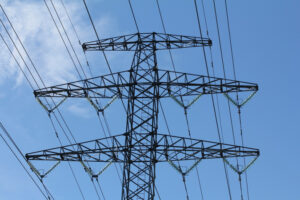
The shipment includes high-capacity transformers, 186 km of electrical cables, and other equipment for restoring the energy infrastructure.
In total, the cargo will be delivered to Ukraine by ten heavy-duty trucks.
Yuriy Gusev, Ukraine’s Ambassador to Azerbaijan, thanked Azerbaijani President Ilham Aliyev, the country’s government, and the Azerbaijani people for their support of Ukraine.
“This aid is a practical demonstration of solidarity and the Ukrainian-Azerbaijani strategic partnership, as well as a significant contribution to strengthening the resilience of our power grid amid ongoing full-scale Russian aggression,” Gusev stated.
According to him, the equipment is particularly important for Ukraine in the run-up to and during the heating season.
Azerbaijan has previously sent humanitarian aid to Ukraine on multiple occasions, including equipment to restore energy infrastructure damaged as a result of hostilities.
AZERBAIJAN, ENERGY, HEATING SEASON, HUMANITARIAN AID, UKRAINE

Rental rates for logistics space in Ukraine have doubled since August, following a series of attacks on warehouses and facilities belonging to Ukrainian businesses, said Polina Kosharna, co-owner and chair of thvisory board of Suziria Group, during the Forbes Ukraine Business Breakfast program “Business Under the Red Scenario.”
“While at the beginning of August it was possible to find warehouses for $3–5 per square meter, now you won’t find anything under $8—the standard price is $10. The peak we saw in the Kyiv region was EUR12 per square meter, and that warehouse was snapped up within a day. In other words, while we were thinking it over and negotiating, we were told the warehouse was already gone,” Kosharna said.
According to her forecast, the peak in inquiries and rental rates is expected over the next 6–9 months; however, there are currently no Class A properties under active development, while Class B warehouses are being built more actively.
“The average size that I think will be in demand is between 1,000 and 3,000 square meters. It’s entirely feasible to build a Class B shell in 6–9 months. And we’re already seeing that people are starting to do this. So we’re not the only ones adapting. That’s why I’m confident that starting in mid-2027, there will be significantly more supply,” Kosharna noted.
As previously reported, the Suziria Group warehouse in the Kyiv region was damaged as a result of a Russian attack on the night of September 19. It was noted that the facility comprised 10,000 square meters of modern logistics infrastructure, including 2,000 square meters of additional capacity that the company had added and fully equipped this year.
According to a WINHUB study, as of early September, Ukraine’s warehouse infrastructure had shrunk by 50%: of the 4.2 million square meters that existed at the start of 2022, the enemy destroyed 2.1 million square meters (Classes A/B). New construction between 2022 and 2026 (800,000 square meters) only partially offset these losses. The situation is even more acute in the Kyiv region, where more warehouses were lost in the first eight months of 2026 than during the entire 2022–2025 period; in total, 68% of the stock (1.5 million square meters) was lost.
Suziria Group is a Ukrainian family-owned group of companies that has been developing the pet products market for over 30 years. It comprises Suziria Brands, Suziria Distribution, and the MasterZoo chain of pet stores. The group operates throughout Ukraine and beyond, exporting its own products under the brands Savory, Half&Half, Special One, Pet Fashion, Buddy Boo, Priroda, and Puramur. As of 2026, Suziria is represented in 13 countries worldwide, to which it exports five of its own brands: Savory, Priroda, Special One, ProVet, and Buddy Boo. The CATCH! brand also plans to enter the international market, for which separate packaging has been created, adapted to export requirements.
Source: https://www.youtube.com/live/3DZvwWg6168
Electricity imports in September 2026 fell by 58.6% compared to August—to 76.1 thousand MWh, the lowest figure since November 2023, while exports rose by 24.4% to 473,700 MWh, marking the highest monthly volume since September 2025.
“As a result, Ukraine has been a net exporter for the third consecutive month, with sales exceeding purchases by a factor of 6.2,” the DIXI Group analytical center reported on Thursday, citing data from Energy Map.
As the center noted, weather remained the main factor driving foreign trade dynamics. September was noticeably cooler than August: the need for air conditioning had subsided, and the heating season had not yet begun, so demand remained moderate. At the same time, shorter daylight hours and cloud cover reduced output from residential and industrial solar power plants.
The price situation remained favorable for exports. In September, the average BASE baseload electricity price index on Ukraine’s day-ahead market (DAM) stood at EUR116.2/MWh—29–50% lower than in neighboring markets: in Poland – EUR149.8/MWh, Slovakia – EUR163.8/MWh, and Romania – EUR174.4/MWh.
However, as explained by DIXI Group, the SWAM carbon adjustment mechanism—which will take effect on January 1, 2026—remains a constraining factor for electricity exports to EU countries, as it increases the price of Ukrainian electricity on the European market, negatively impacting its price competitiveness and exporters’ margins.
According to Energy Map, Hungary accounted for the largest share of exports in September—232,500 MWh, or 49.1%. Moldova accounted for 152,500 MWh (32.2%), Romania for 81,600 MWh (17.2%), Slovakia for 5,300 MWh (1.1%), and Poland for 1,800 MWh (0.4%).
Compared to August 2026, exports to Romania, Hungary, and Moldova increased by 14–36%, while exports to Poland and Slovakia decreased by 39% and 75%, respectively.
On a year-over-year basis, total exports decreased by 25.4% compared to September 2025 (635.1 thousand MWh).
Hungary remained the main source of imports, accounting for 38.8 thousand MWh (50.9%). Poland accounted for 17.0 thousand MWh (22.4%), Romania for 14.8 thousand MWh (19.4%), Slovakia for 5.4 thousand MWh (7.1%), and Moldova for 0.1 thousand MWh (0.2%).
Compared to August 2026, imports decreased by 37–87% across all countries. Trade with Slovakia took place only during the first five days of the month; starting September 6, volumes from this source were zero.
For comparison: in September 2025, electricity imports totaled 139.7 thousand MWh, which is 83.5% more than in September 2026, according to DIXI Group.

Senator Flávio Bolsonaro, the Liberal Party candidate and son of former President Jair Bolsonaro, finished first in Brazil’s presidential election on October 4, 2026, receiving 47.03% of valid votes. Incumbent President Luiz Inácio Lula da Silva secured 45.16%. A runoff election will take place on October 25, according to the Experts Club information and analytical center.
Bolsonaro received 56.10 million votes, compared with Lula’s 53.88 million, leaving a gap of approximately 2.22 million votes. Writer Augusto Cury finished third with 2.89%, followed by Renan Santos with 2.24% and Ronaldo Caiado with 2.18%. Approximately 119.3 million valid votes were cast.
The first-round results surprised most polling organizations, which had predicted either a narrow Lula lead or a statistical tie. Meanwhile, more than 33.4 million Brazilians, or 21.1% of registered voters, abstained from voting. This represented the highest first-round presidential election abstention rate since 1998.
Alexander Pozniy, director of the research company Active Group, said the results demonstrated the continuing political strength of Bolsonarism following Jair Bolsonaro’s departure.
“The first round showed that Bolsonarism in Brazil has not only survived Jair Bolsonaro’s departure but has also proved capable of transferring political capital to the next generation. Lula’s problem is that he has already mobilized a significant part of his traditional electorate, while Flávio Bolsonaro now has an opportunity to consolidate the votes of most candidates from the right-wing and center-right camps,” Pozniy said.
Bolsonaro’s position strengthened after Romeu Zema, Ronaldo Caiado and several right-wing parties announced their support. Meanwhile, nearly 9 million votes cast for eliminated candidates remain an important potential source of support in the runoff.
The parliamentary elections provided Bolsonaro with another advantage. The Liberal Party won 121 seats in the Chamber of Deputies and increased its representation in the Senate to 28 seats. Together with its allies, a potential Bolsonaro bloc could control approximately 259 seats in the lower house and 48 in the Senate.
“A gap of two million votes with more than 33 million people not turning out to vote means that the second round cannot be considered a foregone conclusion. But the candidates’ starting positions are not equal. Bolsonaro has already secured the support of several right-wing candidates and parties, while Lula will have to simultaneously mobilize his own base, attract moderate voters and reduce abstention,” Pozniy emphasized.
The geopolitical consequences of the election are also significant. Lula advocates Brazil’s strategic autonomy and maintaining balanced relations with the United States, China and BRICS. Bolsonaro favors closer political cooperation with US President Donald Trump’s administration while preserving economic ties with China.
For Ukraine, a change in Brazil’s administration could potentially lead to adjustments in the country’s diplomatic position on the Russia-Ukraine war. However, an automatic reversal of Brazilian foreign policy should not be assumed.
According to Experts Club, the runoff outcome will depend primarily on mobilizing voters who missed the first round, redistributing votes cast for eliminated candidates, public expectations regarding the economy and the cost of living, and Lula’s ability to overcome the political momentum Bolsonaro gained after October 4.
The second round is scheduled for October 25, 2026.

According to Fixygen, Greece plans to introduce a 10% tax on capital gains from cryptocurrency transactions, Reuters reports.
The corresponding bill was submitted for public comment on October 8. The bill is expected to be submitted to parliament for consideration in November.
Earlier, in June, the possibility of setting the tax rate at 15% was discussed. The new version of the bill provides for a tax exemption on income from cryptocurrency transactions amounting to less than 500 euros per year.
Currently, Greece lacks a comprehensive legal framework for taxing cryptocurrency transactions. At the same time, there is no unified system for taxing income from crypto assets within the European Union.
According to Reuters, capital gains tax rates on cryptocurrency transactions in European countries range from approximately 8% to 30%.
Greek authorities have previously noted that they cannot accurately assess the size of the domestic cryptocurrency market, as a significant portion of investors use foreign platforms.
Consequently, the government does not yet have precise estimates of potential additional budget revenues following the introduction of the new tax.
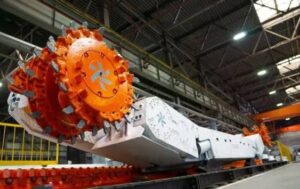
DTEK Energo’s machine builders manufactured and repaired 1.2 million units of mining equipment from January through September of this year, including 10 new tunnel boring machines and longwall shearers, as well as four electric motors, according to a press release from DTEK Energo.
During this period, they also produced 1.5 million spare parts and components.
As previously reported, over the first nine months of last year, DTEK Energo’s machine-building plants manufactured and repaired 2,500 units of mining equipment (including six new mining combines and one mine fan) and 1.8 million spare parts and components.
“Preparing for winter is a joint effort by the entire energy team. Miners, power engineers, maintenance workers, and machine builders are working as a single unit today, because the energy sector’s readiness for the most challenging period of the year depends on the coordinated efforts of everyone. Machine builders not only manufacture and repair equipment but also test new technical solutions and verify their effectiveness under real production conditions,” DTEK Energo CEO Oleksandr Fomenko is quoted as saying in the press release.
DTEK Energo ensures a closed-loop cycle of coal-fired power generation. By the end of 2025, DTEK Energo had invested 6.7 billion hryvnias in supporting Ukrainian coal mining, and over the previous three years (2022–2024)—more than 18 billion hryvnias. The funds were allocated for the development and repair of mine workings, equipping mining faces, and maintaining the mines’ production capacity.
Its machinery manufacturing assets include Korum DrMZ, which was relocated to Dnipro in 2022; the Kharkiv-based “Svitlo Shakhtarya” plant; and the Pershotravensk Repair and Mechanical Plant.
DTEK ENERGO, EQUIPMENT, machinery manufacturing, Mine, UKRAINE



