

According to the European Union’s statistical office, in 2025, European Union countries imported 2.9 million metric tons of coffee worth a total of EUR 18.7 billion from non-EU countries.
In terms of volume, imports have increased only slightly over the past ten years (from 2.7 million metric tons in 2015), but in terms of value, they have risen significantly (from EUR8.6 billion), the report states.
Last year, the main coffee suppliers were Brazil (1.005 million metric tons, or 34% of the total volume) and Vietnam (587,500 metric tons, or 20%). EU countries also purchased coffee from Uganda (262,400 metric tons, 9%), Colombia (162,900 metric tons, 6%), and Honduras (136,500 metric tons, 5%).
Germany accounted for about one-third of imports, purchasing 1.01 million metric tons of coffee (34% of the total volume). Next were Italy (608,000 metric tons, 21%), Spain (281,600 metric tons, 10%), Belgium (269,200 metric tons, 9%), and the Netherlands (216,600 metric tons, 7%).
In 2025, the European Union produced over 2.2 million metric tons of coffee (including coffee substitutes and decaffeinated beverages). This is 12% more than in 2015 (2 million metric tons).
The leading producers were Germany (561,200 metric tons, or 25% of the total volume) and Italy (514,200 metric tons, 23%). They were followed, at a considerable distance, by Spain (211,900 metric tons, 10%), France (146,800 metric tons, 7%), Poland (134,800 metric tons, 6%), Sweden (79,400 metric tons, 4%), and Finland (39,000 metric tons, 2%). Collectively, these seven countries accounted for 77% of production.
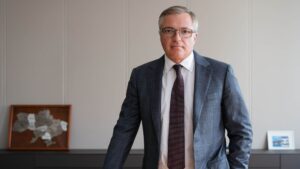
The mining and steel company Metinvest continues to hope for support from its global partners amid the war, but recently, the European Union and the European Commission have taken numerous measures that cast doubt on whether it is worth investing in the Ukrainian steel industry at all.
The company’s CEO, Yuriy Ryzhenkov, expressed this view in an interview with the Financial Times.
As an example, he cited the quotas imposed on Ukrainian steel in the EU, even though Ukraine’s agreements with the EU—in particular the Association Agreement and other agreements signed in recent years—effectively provided for free access to the European market. Despite the fact that Ukraine has exported significantly less steel to the EU over the past few years than before, the corresponding Ukrainian quotas have been reduced by more than 50%.
“In my view, this is a very strange move. If you want to support the country, it’s better to allow its industry to operate and pay taxes. These funds will strengthen the country’s defense capabilities and economy. This is more effective than grants or preferential loans. I hope our officials, together with their European colleagues, will be able to review this situation and rectify it,” said Ryzhenkov.
According to him, a much better approach would be to consider how the Ukrainian economy—particularly the metallurgical sector—can become part of the broader European market and the European economy, thereby making it stronger rather than weaker. “I also believe that it is very important right now for people in Brussels to understand the conditions under which we are working. We are forced to operate amid constant disruptions in logistics and staff shortages. Many people have left the country. More than 8,500 of our employees have been drafted into the army. We have an unstable energy supply and very high energy costs,” the CEO noted.
He emphasized that it is, to some extent, unfair and incorrect to treat the Ukrainian steel industry on par with that of other countries supplying products to the EU. The situation in Ukraine requires a special approach, greater understanding, and, perhaps, certain tools that will allow us to survive now and return to investment and growth in the future.
When asked whether the company had assessed the total amount of losses, the CEO noted that a comprehensive assessment has not yet been conducted. “As I’ve already said, we are currently clearing debris and assessing damage to infrastructure and production facilities. And this is not the first time since the Russian invasion that our facilities have come under attack, so we will be able to provide a more accurate assessment once the war is over. Only then will it be possible to discuss the cost of recovery from the damage.”
Ryzhenkov noted that all of the company’s international projects are linked to Ukrainian production and Ukrainian resources, and there is hope that this will continue to be the case. “Currently, our rolling mills in Europe and the United Kingdom are operating autonomously. At the same time, we already have plans in place and are taking steps to restore vertical integration with Ukrainian enterprises and return to our previous model. In short, we remain very active. We consider Europe, as well as the Mediterranean and Black Sea regions, to be our main markets. We want to continue to be present in these markets and remain open to new opportunities,” Ryzhenkov concluded.
Metinvest is a vertically integrated group consisting of mining and metallurgical enterprises. Its enterprises are located in Ukraine—in the Donetsk, Luhansk, Zaporizhzhia, and Dnipropetrovsk regions—as well as in European countries. The holding’s main shareholders are the SCM Group (71.24%) and Smart Holding (23.76%). Metinvest Holding LLC is the management company of the Metinvest Group.
Source: https://metinvestholding.com

India has proposed a three-part ceasefire plan to Ukraine and Russia that calls for an end to attacks on energy and other infrastructure, the assurance of uninterrupted exports of grain and energy resources through the Black Sea, and a halt to attacks on commercial vessels.
This was reported on October 7 by the Hindustan Times, citing sources familiar with the proposal. The full text of the Indian initiative has not yet been made public.
According to the publication, the first point calls for a halt to attacks on energy facilities and other critical infrastructure.
The second concerns ensuring the unimpeded passage of grain and energy resources through Black Sea ports.
The third calls for a halt to attacks on commercial shipping in the Black Sea.
According to the Hindustan Times, the proposal was presented to Ukrainian leaders during a visit by Indian Foreign Minister Subramanyam Jaishankar to Kyiv on September 3. He discussed the initiative in separate meetings with Ukrainian President Volodymyr Zelenskyy and Foreign Minister Andriy Sybiga.
The Indian initiative combines elements of several other proposals for a partial ceasefire. According to the publication, Egypt and Turkey proposed focusing on the safety of commercial shipping and grain exports through the Black Sea, while the U.S. proposal primarily concerned a halt to attacks on energy infrastructure.
On October 2, Sybiga confirmed that Ukraine had received ceasefire proposals from India, Turkey, Egypt, and the U.S., and described the Indian proposal as the most comprehensive. He noted that Kyiv is ready to consider various formats of a ceasefire, including an energy and Black Sea ceasefire, provided it also extends to port infrastructure.
On October 4, Indian Foreign Minister Jaishankar also publicly confirmed that New Delhi had shifted in recent months from general calls for peace to direct consultations with Moscow and Kyiv. According to him, the Indian side is discussing the safety of shipping in the Black Sea, the export of grain and energy resources, as well as the possibility of a mutual renunciation of certain types of attacks.
One of the motivations behind the Indian initiative is New Delhi’s interest in the stability of energy supplies and the security of maritime transport. According to the Hindustan Times, nearly 30% of Russian energy supplies to India pass through Black Sea ports. In recent weeks, attacks on commercial vessels have led to supply disruptions and rising freight costs.
In addition, five Indian sailors have been killed in attacks on merchant ships in the region over the past few weeks, prompting Indian authorities to repeatedly call for an end to attacks on civilian shipping.
Russia and Ukraine have not yet officially announced their direct responses to all three points of the Indian plan. The Hindustan Times reports on ongoing contacts between the parties, though details of these talks have not been disclosed.
The Ukrainian Foreign Ministry previously stated that Kyiv is ready for a complete and unconditional ceasefire, as well as for separate agreements to halt attacks on energy and food infrastructure.
Insurance companies “Arsenal Insurance” and VUSO (VUSO Insurance Company, both based in Kyiv) paid out 97.5 million UAH for business centers in Kyiv damaged as a result of a missile strike, according to a statement on the Arsenal Insurance website.
It is also noted that two business centers belonging to the same chain, which were insured against military risks by both companies, sustained significant damage on May 14, 2026, during a massive rocket attack on Kyiv. As a result of shock waves and flying debris, the facades and structural elements of the buildings, glazing, window and door units, roofs, utility systems, interior finishes, as well as other movable and immovable property on the premises of the business centers were damaged. No one was injured as a result of the attack.
Arsenal Insurance and VUSO shared the insurance risk equally.
Taking this payment into account, the companies have now reimbursed the client a total of 240 million UAH for damage to the network’s facilities resulting from the shelling of Kyiv in 2025–2026.
“Arsenal Insurance” is a non-life insurance company with 100% Ukrainian capital. It has been operating since 2005. It holds a license allowing it to operate in all 18 classes of non-life insurance. It is the market leader in terms of premiums written in the comprehensive auto insurance (CASCO) market for January–June 2026.
VUSO Insurance Company was founded in 2001. It is a member of the Motor Transport Insurance Bureau of Ukraine (MTIBU) and the Ukrainian Insurance Federation (UIF), as well as a member of the Nuclear Insurance Pool. According to the National Bank of Ukraine (NBU), the company ranked sixth in terms of premiums written among Ukrainian property and casualty insurers for the first half of 2026.

According to Serbian Economist, the Kosovo Parliament has elected economist and academic Justina Široka Pula as the new president. Eighty-one members of the 120-seat parliament voted for her candidacy, allowing the procedure to be completed in the first round and avoiding early parliamentary elections.
The vote took place late in the evening on October 6, effectively in the final minutes before the constitutional deadline. Had a president not been elected, parliament would have been dissolved, and Kosovo would have had to hold new early elections.
Shiroka Pula emerged as a compromise candidate supported by Prime Minister Albin Kurti’s ruling “Self-Determination” movement and the opposition Democratic Party of Kosovo. Prior to her election, she headed the Kosovo Academy of Sciences and Arts and had previously served as Minister of Economy.
Immediately before the presidential vote, parliament also approved legislative changes limiting the powers of the Special Chambers for Kosovo in The Hague, which hear cases involving war crimes committed by former leaders of the Kosovo Liberation Army. This issue was part of a political compromise between the major parties.
The President of Kosovo has primarily ceremonial powers but plays a prominent role in foreign policy and serves as commander-in-chief. Shira Pula became the third woman to hold this office, following Atifete Jahjagi and Vjosa Osmani.
Serbia does not recognize Kosovo’s independence, which was declared in 2008, and continues to regard Kosovo and Metohija as its autonomous province. Kosovo’s independence is also not recognized by a number of major powers, including Russia and China, which are permanent members of the UN Security Council. It is also not recognized by India, Brazil, and a number of European countries, including Spain. Ukraine has not established diplomatic relations with Kosovo and does not recognize its independence.
https://t.me/relocationrs/3825
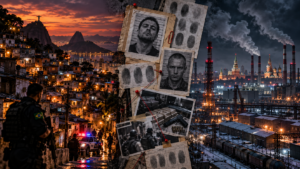
Brazil, India and Mexico recorded the world’s highest estimated numbers of deaths from interpersonal violence in 2023, while Russia ranked first in an expanded European sample both in absolute terms and per 100,000 population, reports the Experts Club information and analytical center, citing the University of Washington Institute for Health Metrics and Evaluation (IHME) Global Burden of Disease 2023 study.
According to IHME estimates, around 435,700 people worldwide died from interpersonal violence in 2023, equivalent to roughly 1,200 deaths per day. The global rate was about 5.4 deaths per 100,000 population. However, the figures are modeled mortality estimates and should not automatically be equated with intentional homicides officially recorded by police.
Brazil had the highest estimated absolute number at 52,229 deaths. It was followed by India with 44,288, Mexico with 36,445, the United States with 24,528 and South Africa with 23,066. Nigeria recorded an estimated 18,188 deaths, Russia 16,760, Colombia 15,959, Ethiopia 11,634 and Venezuela 11,583. Brazil, India and Mexico together accounted for approximately 30.5% of the global estimate, while Brazil alone represented about 12%.
The ranking changes considerably when deaths are measured per 100,000 people. Among sovereign states, El Salvador had the highest IHME estimate at 56.3 per 100,000, followed by Haiti at 49.5, Lesotho at 47.1, Venezuela at 45.1 and Eswatini at 43.8. Brazil ranked 18th with 24.6 deaths per 100,000.
Experts Club stressed that IHME estimates for some countries differ substantially from UNODC figures and national police statistics. The data should therefore be interpreted as modeled estimates of mortality from interpersonal violence rather than a straightforward ranking of officially registered crime.
In the expanded European sample used by Experts Club, which also includes Türkiye, Armenia, Azerbaijan and Georgia, Russia ranked first with 11.3 deaths per 100,000 population and an estimated 16,760 deaths. Ukraine ranked second at 7.4 per 100,000 and approximately 2,894 deaths. Ukraine’s figure does not include deaths caused by the war, as GBD classifies interpersonal violence separately from conflict and terrorism.



