
JSC “Ukrzaliznytsia,” in collaboration with the European Bank for Reconstruction and Development (EBRD), has approved amendments to the loan agreement for the “UZ Energy” project, which will allow EUR130 million from the previously approved EUR180 million loan to be allocated to support the company’s liquidity, specifically for infrastructure restoration and ensuring the transportation of passengers and cargo.
“Funds previously earmarked for the distributed generation project can now also be used for critical repairs, infrastructure restoration, and ensuring the transportation of people and cargo,” wrote Mykola Kalashnyk, Ukraine’s Minister of Recovery, Infrastructure, and Transport, on his Telegram channel on Wednesday following a meeting with EBRD President Odile Renaud-Basso.
According to him, the ministry is working to ensure that “Ukrzaliznytsia” gains access to the relevant funds as early as the first weeks of October.
Among other things, the project to build a 200-MW gas-fired power plant is continuing thanks to grant support from the EU and the United Kingdom, while “Ukrzaliznytsia” is carrying out the construction work on its own.
The minister also noted that the meeting included discussions on additional funding for the modernization of the locomotive fleet.
According to the ministry, since the start of Russia’s full-scale invasion, 550 locomotives have been damaged, with more than 335 of them damaged this year.
“Securing resources to replace and restore them is one of our top priorities,” Kalashnik emphasized.
Separately, the Ministry of Infrastructure discussed the development of international highway corridors and investments in roads—specifically, projects the ministry is implementing jointly with the Recovery Agency.
Other topics for discussion included the development of distributed thermal power generation, backup power supplies, and the protection of critical infrastructure.
Issues related to port concessions were also addressed, particularly the preparation of relevant projects; in this context, the ministry is counting on the EBRD’s expertise in drafting these projects and attracting international operators and investors.
“I would like to thank Odile Renaud-Basso and the EBRD team for their support of Ukraine and their willingness to tailor financing to our urgent needs,” added Ukraine’s Minister of Recovery, Infrastructure, and Transport.

The Central Bank of Russia became the largest gold seller among the world’s central banks in August 2026, reducing its official gold reserves by approximately 6.2 tonnes, according to an Experts Club analysis based on data from the World Gold Council (WGC).
Among the notable gold sellers in August, the WGC highlights:
Russia – about 6.2 tonnes
Jordan – about 3.1 tonnes
Russia continued reducing its gold reserves after selling approximately 6 tonnes in July. In total, in January-August 2026, Russia’s official gold reserves decreased by approximately 56 tonnes.
Following the August sale, the amount of gold in Russia’s reserves stood at about 2,271 tonnes.
Jordan sold about 3.1 tonnes of gold in August. However, unlike Russia, the country remains a net buyer after the first eight months of the year: since the beginning of 2026, its gold reserves have increased by approximately 2 tonnes to 75 tonnes. Gold accounts for about 37% of Jordan’s international reserves.
At the same time, Turkey remains the largest gold seller for January-August, despite switching to purchases in August.
According to the WGC, Turkey has reduced its gold reserves by approximately 82 tonnes since the beginning of the year. The bulk of the sales occurred in the first quarter of 2026. In August, the trend changed, with the Turkish central bank purchasing about 2.9 tonnes of gold.
Russia ranks second among the largest sellers since the beginning of the year, with about 56 tonnes.
Thus, August showed a significant predominance of buyers over sellers: the world’s central banks collectively purchased 39 tonnes of gold on a net basis, compared with 23 tonnes in July.
The World Gold Council notes that the data cover officially reported changes in the reserves of central banks and other official institutions and may differ from the broader estimate of global central bank demand, which takes into account unreported purchases.
Central banks, EXPERTS CLUB, GOLD, gold reserves, JORDAN, RUSSIA, TURKEY, WORLD GOLD COUNCIL
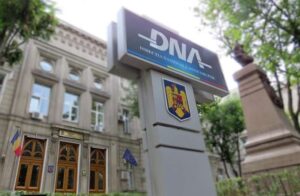
On October 5, Romania’s National Anti-Corruption Directorate (DNA) carried out a large-scale operation as part of an investigation into possible corruption among border police and customs officials on the Romanian-Ukrainian border.
According to “Golos Karpat”, law enforcement officials conducted 96 searches across six Romanian counties—Satu Mare, Bihor, Sălaj, Maramureș, Cluj, and Mureș.
The investigation focuses on border police and customs service officers who worked, in particular, at the Halmeu border crossing, which provides road access between Romania and Ukraine. On the Ukrainian side, it corresponds to the “Dyakovo” border crossing in Zakarpattia Oblast.
According to the DNA, the investigation concerns possible corruption offenses committed in 2025–2026. Investigators are looking into reports that certain border guards and customs officials may have received money in connection with the performance of their official duties.
Searches were conducted both in private homes and on the premises of two government agencies. The operation involved personnel from the Anti-Corruption Directorate, the police, and the gendarmerie. Investigative activities took place, in particular, directly on the territory of the Halmeu border crossing and at a border police unit.
Romanian media, citing sources familiar with the investigation, reported that the alleged corruption scheme may have involved receiving money in exchange for failing to properly inspect vehicles and cargo crossing the border. This could have involved both freight transport and the movement of people.
However, at the time the DNA’s official statement was released, these details had not been fully confirmed. The Anti-Corruption Directorate also did not specify the exact number of suspects or the possible amounts of illicit gains.
The investigation is of particular significance for the Zakarpattia Oblast, as investigative actions were also conducted in Maramureș County, which directly borders Ukraine.
The leadership of the Sighetu Marmației Territorial Border Police Inspectorate stated its readiness to cooperate with the investigation and emphasized that, should the violations be confirmed, measures provided for by law will be applied to the employees.
The Halmeu checkpoint is one of the road crossings on the Romanian-Ukrainian border and is used for passenger and freight traffic between the two countries.

Exports of Ukrainian IT services in January–August 2026 increased by 4% compared to the same period last year—to $4.46 billion, according to data from the National Bank of Ukraine analyzed by Experts Club.
In terms of foreign exchange revenue, the sector has effectively returned to the levels seen in the corresponding period of 2023, though it has not yet reached the peak figures of 2022.
In January–August 2022, the volume of IT exports was approximately 9% higher than the current figure.
Thus, the trend of recent years can be divided into two periods: after a record-breaking 2022, Ukrainian IT exports began to decline, and in 2026, they are once again showing growth.
The importance of IT for the entire Ukrainian services sector remains particularly significant. In the first eight months of 2026, Ukraine exported services worth $10.9 billion, which is approximately 6% higher than the figure for the same period last year.
IT accounted for 41% of this total—that is, more than $4 out of every $10 Ukraine earned from service exports.
The sector’s share of total foreign trade also remains significant. Total exports of goods and services for January–August amounted to $35.8 billion, of which $4.46 billion came from IT companies and specialists.
As a result, the IT sector accounts for about 12% of the country’s total exports—roughly one in every eight dollars of export revenue.
If current growth rates continue, the sector could end 2026 with its best performance in several years; however, growth rates will need to accelerate to return to the record levels seen in 2022.
Data source: National Bank of Ukraine.
Starting October 16, 2026, Ukraine will temporarily suspend the acceptance of applications for government grants to establish and develop orchards, berry farms, vineyards, and greenhouse operations.
According to EastFruit, agricultural producers planning to take advantage of government support this year may submit an application through October 15.
The acceptance of applications is scheduled to resume in the first quarter of 2027. Funding to continue the program has been allocated in next year’s state budget.
According to data provided by EastFruit, 61 decisions have already been made in 2026 to award such grants totaling 300 million UAH.
Specifically, 40 decisions totaling 170 million UAH relate to the establishment and development of orchards, berry farms, and vineyards. Another 21 decisions totaling 130 million UAH were approved for the development of greenhouse farming.
To date, 34 grants for projects in the fields of fruit growing, berry farming, and viticulture have been fully funded, totaling 137 million UAH. Another 19 grants totaling 123 million UAH have been funded for the development of greenhouse operations.
The state-supported projects call for the creation of 428.4 hectares of new perennial plantings and 31.5 hectares of modular greenhouses.
Their implementation is also expected to create 282 permanent and 5,518 seasonal jobs.
Farmers who do not manage to submit their applications by October 15 (inclusive) will be able to apply for a grant once the application period reopens in 2027.
The 2026 state support program for horticulture and greenhouse farming provides grants of up to 7 million UAH per project, but not exceeding 70% of the project’s cost. For enterprises in de-occupied and frontline territories, the share of state funding may reach 80%. Applications are submitted through the “Diya” portal.
agricultural sector, GRANT, greenhouse, HORTICULTURE, UKRAINE
Ukraine earned $4.46 billion from IT services exports in January–August 2026, with the technology sector accounting for about 12% of the country’s total exports of goods and services, according to data from the National Bank of Ukraine analyzed by the Experts Club research and analysis center.
Thus, approximately one in every eight dollars of Ukraine’s export revenue comes from IT services.
Ukraine’s total exports of goods and services for the first eight months of 2026 amounted to $35.8 billion and remained virtually unchanged compared to the same period last year.
The bulk of foreign exchange earnings continues to come from goods exports—$24.9 billion, or about 70% of the total. Exports of services totaled $10.9 billion, of which $4.46 billion came from IT.
Thus, with services accounting for about 30% of the country’s total exports, the IT sector alone accounts for approximately 12% of Ukraine’s total export revenue.
As noted by analysts at Experts Club, these figures demonstrate the special role of IT in Ukraine’s foreign trade. Unlike goods exports, technology services are virtually independent of maritime logistics, border capacity, and the physical transportation of products.
Furthermore, IT remains the largest component of Ukraine’s service exports. Computer services account for about 41% of the service sector’s total export revenue.
From January through August, Ukraine’s service exports reached $10.9 billion, an increase of approximately 6% compared to the same period in 2025. IT exports grew by 4% to $4.46 billion.
Despite this recovery, the IT sector has not yet returned to its 2022 all-time high. IT service exports for the first eight months of 2026 remain approximately 9% below the figure for the corresponding period in 2022.
Thus, Ukrainian IT exports are simultaneously demonstrating a recovery from the decline of previous years and maintaining an exceptionally significant role in generating the country’s foreign exchange revenue.
Data source: National Bank of Ukraine. Calculations of the export structure are based on NBU data published by Opendatabot.



