
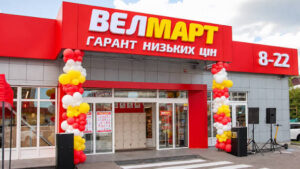
The “Velmart” discount hypermarket chain has restructured its supply chains and increased the share of direct shipments from manufacturers to stores to 53%, its press service reported.
“As of September, deliveries to the chain cover more than 11,000 SKUs, supplied by over 570 partner suppliers. In September, the share of direct deliveries from manufacturers in the total value of goods received rose to about 53%, while in August this figure stood at 12%,” the chain’s press release states.
According to the report, local producers supply goods to their own regions without shipping them to a distribution center. This approach reduces the burden on interregional transportation routes and allows for faster delivery of goods to stores.
In addition, “Velmart” prioritizes the supply of everyday consumer goods: dairy products, deli items, meat, baked goods, groceries, vegetables, fruits, sugar, salt, and flour. If Ukrainian-produced goods are out of stock, the chain seeks alternatives manufactured in Poland or Romania.
The “Velmart” chain is part of the multi-brand holding company Retail Group. It has 34 stores in 18 cities across Ukraine. It develops 10 private-label brands and operates seven full-cycle production facilities: meat and fish products (chilled and smoked), prepared foods, baked goods, and confectionery.
The company is also expanding the Graan Café chain of modern food courts within “Velmart” supermarkets and its “Pukhnastye Sprawy” line of pet products.
According to data from the YouControl analytics system, based on 2025 results, Foodcom LLC, which operates the “Velmart” chain, increased its net revenue by 18.7% to 23.6 billion UAH and its net profit by a factor of 3.2 to 378.6 million UAH.
Retail Group JSC is listed as the owner of Foodcom LLC, with Roman Lunin as the ultimate beneficiary.
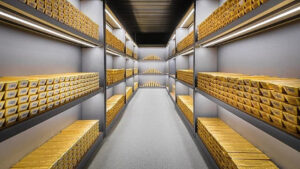
In August 2026, central banks around the world increased their official gold reserves by a total of 39 metric tons in net terms, with the People’s Bank of China emerging as the largest buyer, according to an analysis by Experts Club based on data from the World Gold Council (WGC) published on October 6.
According to the WGC, the main buyers of gold in August were:
China — 20.2 metric tons
Poland — 7.8 metric tons
Uzbekistan — 7.8 metric tons
Kazakhstan — 7.4 metric tons
Turkey — 2.9 metric tons
Czech Republic — 1.7 metric tons
Bolivia—about 1 metric ton
Ghana—about 1 metric ton
China continued to purchase gold for the 22nd consecutive month. In August, the People’s Bank of China increased its gold reserves by approximately 20.2 metric tons—the largest monthly increase since October 2023.
From January through August, China purchased about 80 metric tons of gold. The country’s official gold reserves reached approximately 2,387 metric tons, accounting for about 9% of China’s total international reserves.
Despite China’s lead in August alone, Poland remains the largest buyer of gold since the beginning of 2026. The National Bank of Poland purchased about 7.8 metric tons in August and 98 metric tons since the start of the year. Poland’s gold reserves have grown to approximately 648 metric tons, approaching its stated target of 700 metric tons.
Uzbekistan increased its reserves by approximately 7.8 metric tons. Since the beginning of the year, the country has purchased about 50 metric tons of gold, bringing its total gold reserves to approximately 439 metric tons. Gold accounts for about 90% of Uzbekistan’s reserves.
Kazakhstan purchased about 7.4 metric tons of gold in August, bringing its total purchases since the beginning of the year to approximately 36 metric tons. The country’s gold reserves reached about 377 metric tons, or 79% of its international reserves.
Turkey returned to net purchases after three months of sales, acquiring about 2.9 metric tons. However, since the beginning of 2026, the country has remained a major net seller—the total reduction in reserves amounts to about 82 metric tons, with the bulk of sales occurring in the first quarter.
The Czech National Bank purchased about 1.7 metric tons, thereby extending its streak of net gold purchases to 42 consecutive months. Since the start of the year, the Czech Republic has added about 14 metric tons, increasing its reserves to 86 metric tons.
Overall, from January through August 2026, central banks worldwide reported net purchases of approximately 170 metric tons of gold.
The World Gold Council notes that the composition of the largest buyers remains relatively stable. This indicates that central banks are purchasing gold primarily as part of their long-term reserve management policies, while monthly fluctuations are linked to the timing of program implementation, market conditions, and individual countries’ liquidity needs.
For comparison: in July, central banks worldwide purchased 23 metric tons of gold on a net basis. Thus, in August, the volume of net purchases increased by approximately 70% month-over-month.
Official source: World Gold Council, Central Bank Gold Statistics, published on October 6, 2026.
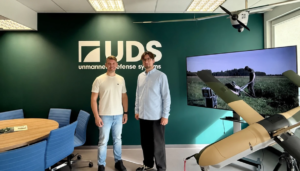
Unmanned Defense Systems (UDS), a Lithuanian defense technology company, announced on Tuesday that it has begun operations in Ukraine through a newly established Ukrainian-Lithuanian joint venture, UDS Ukraine.
“Ukraine has significantly accelerated the pace at which defense technologies must evolve. By maintaining a permanent presence in Ukraine, we aim to bring our technologies, engineering expertise, and systematic approach closer to the people who need them,” said UDS co-founder and CEO Vytianas Bužas in the press release.
According to him, the company aims to become a long-term partner of Ukraine and to contribute to strengthening Ukraine’s defense capabilities.
“For companies operating in the defense sector, a presence in Ukraine is no longer a choice but a necessity. It is here that technologies can be tested, refined, and developed in accordance with the real needs of the battlefield,” Inga Stanite-Tolochkene, Ambassador Extraordinary and Plenipotentiary of the Republic of Lithuania, clarified in the press release.
It is expected that, as part of the newly established joint venture UDS Ukraine, the Ukrainian team will work with the Armed Forces and partners in the defense sector, where it will oversee the deployment of systems within military units, train operators, and maintain cooperation with military units.
It is noted that, among other things, UDS’s presence in Ukraine will provide the Ukrainian military with access to the company’s expertise and will also shorten the path from needs arising during combat operations to technical solutions that can be implemented in practice.
Stepan Veselovsky, who led the Lviv IT Cluster until January 2026, will head UDS Ukraine as CEO and join the company as a co-owner, as he announced on Facebook.
“For me, this is more than just a new professional milestone. It is an opportunity to apply UDS’s expertise in creating complex technological systems where it is most needed—to strengthen Ukraine’s defense capabilities,” Veselovsky emphasized.
According to his remarks cited in the company’s press release, UDS specialists have experience in developing technological systems, ranging from unmanned platforms to space technologies. It is noted that the company intends to apply this level of expertise in Ukraine as well.
UDS is a Lithuanian company that develops scalable, integrated unmanned solutions based on combat-proven products and a unified software platform. These include Forecaster—a UAV platform for intelligence, surveillance, target acquisition, and reconnaissance (ISTAR)—Avenger 5—a long-range strike UAV for high-precision strikes—and others.
Source: https://www.facebook.com/share/p/18SiezPzLG

More than two-thirds of Ukrainians planning to buy an apartment pay attention to the availability of a backup power supply and independent heating, according to the results of a survey by “OLX Real Estate.”
According to the study, 68% of potential buyers consider a backup power supply in case of power outages to be important, compared to 49% in 2025. Thus, over the course of a year, the share of buyers paying attention to a home’s energy independence has risen by 19 percentage points. The availability of autonomous heating is also important to 68% of respondents.
“Energy sustainability has effectively become on par with many ‘traditional’ characteristics of an apartment or house,” notes the OLX report.
At the same time, the main criterion when buying an apartment remains its cost—82% of respondents cited price as important. In second place is the total area of the home—79%.
The number of rooms and the city neighborhood are considered by 77% of potential buyers each. A good floor plan or renovation, as well as the property’s stage of completion, are important to 76% of respondents; infrastructure and the building’s exterior are important to 73%; and the floor level is important to 72%.
At the same time, the war has significantly changed Ukrainians’ security requirements for real estate. 67% of potential buyers consider the distance from strategic facilities, and the presence of a shelter directly in the building is important to 60%.
At the same time, traditional advantages of a property’s location are less important. Proximity to the metro was cited as important by 46% of respondents, and a location near the city center by 45%.
The main reason for purchasing real estate remains the desire to improve current living conditions—47% of respondents cited this as their motivation. Another 42% want to acquire their own private space, 23% plan to move into a more spacious home, 20% view the purchase as a way to improve their standard of living, and 11% want to change the neighborhood where they live.
The investment component remains significant, though it takes a back seat to purchasing a home for personal use. Twenty-eight percent of potential buyers view real estate as an investment. Specifically, 19% expect to generate income in the future by renting out the property or reselling it.
Thus, the survey results indicate a shift in Ukrainian buyers’ priorities: alongside price, square footage, and location, a property’s ability to function during power outages and its level of security are becoming increasingly important.
According to OLX, attitudes toward backup power have changed particularly noticeably: while in 2025 approximately one in two potential buyers considered this factor, by 2026 the figure had risen to more than two-thirds.
Source: “OLX Real Estate” study.
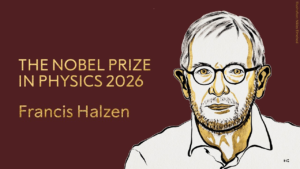
The 2026 Nobel Prize in Physics has been awarded to Belgian-American physicist Francis Halzen for his decisive contribution to the creation of the IceCube neutrino observatory and the discovery of high-energy neutrinos of astrophysical origin, the Royal Swedish Academy of Sciences said on Tuesday.
“For decisive contributions to the IceCube Neutrino Observatory and the discovery of high-energy neutrinos of astrophysical origin,” the official wording of the Nobel Committee states.
Halzen’s work effectively opened a new way of studying the Universe. Unlike conventional telescopes that detect electromagnetic radiation, IceCube makes it possible to observe cosmic processes using neutrinos — extremely light, electrically neutral elementary particles that interact with matter only very rarely.
Neutrinos can pass through planets, stars and other objects practically without interacting with them. They also have no electric charge, so magnetic fields do not change the direction of their motion. Thanks to this, high-energy neutrinos can carry information to Earth directly from the sources of the most powerful processes in the Universe and help scientists determine where ultra-high-energy cosmic rays originate.
Halzen proposed using the transparent ice of Antarctica to detect such particles. This concept eventually led to the creation of the IceCube observatory at the South Pole.
IceCube is a gigantic detector with a volume of about 1 cubic km. More than 5,000 light-sensitive sensors are placed deep within the Antarctic ice. When a neutrino, on rare occasions, interacts with an atomic nucleus, the resulting secondary particles produce characteristic radiation that is detected by the sensors. From the direction and characteristics of such a signal, scientists can obtain information about the neutrino that arrived from space.
Halzen proposed the idea of using Antarctic ice to search for cosmic neutrinos as early as 1988. Construction of IceCube was completed in 2011, and already in 2013 the observatory reported the first detection of high-energy neutrinos that had arrived from beyond the Solar System.
In 2017, IceCube detected a high-energy neutrino that was successfully linked to the active nucleus of a distant galaxy. In 2022, the observatory obtained evidence of high-energy neutrino radiation from an active galaxy about 47 million light-years from Earth, and in 2023 — from our Milky Way galaxy.
Such observations have become an important part of so-called multi-messenger astronomy, in which the same cosmic process is studied simultaneously through electromagnetic radiation, neutrinos, cosmic rays and gravitational waves.
The Royal Swedish Academy of Sciences notes that IceCube data make it possible to investigate the conditions under which high-energy neutrinos arise and, in the future, may lead to the discovery of previously unknown cosmic phenomena.
Halzen was born in 1944 in Tienen, Belgium. He is a professor of physics at the University of Wisconsin–Madison and the principal investigator of the IceCube project. He has worked at the university since 1972.
The amount of the Nobel Prize in Physics in 2026 is 12 million Swedish kronor, or about $1.2 million. Since Halzen became the sole laureate in this category, he will receive the entire prize amount.
The Nobel Prize in Physics is awarded by the Royal Swedish Academy of Sciences for the most significant discoveries and achievements in the field of physics. The prize was established in accordance with the will of Swedish inventor and entrepreneur Alfred Nobel. The first Nobel Prizes were awarded in 1901.
According to Nobel’s will, the awards are presented for achievements in physics, chemistry, physiology or medicine, literature, and for activities aimed at promoting peace. The Prize in Economic Sciences in Memory of Alfred Nobel was established later by Sweden’s central bank.
The laureates receive a medal, a diploma and a monetary award. The Nobel Prize award ceremony traditionally takes place on December 10, the anniversary of Alfred Nobel’s death. The prizes in physics, chemistry, medicine, literature and economics are awarded in Stockholm, while the Nobel Peace Prize is awarded in Oslo.
ASTROPHYSICS, FRANCIS HALZEN, ICECUBE, NEUTRINOS, NOBEL PRIZE, Physics

Tbilisi is preparing to host the international conference AgriFuture Georgia 2026, which will bring together representatives of the agribusiness sector, technology companies, investors, producers, and experts to discuss new opportunities for agricultural development, the implementation of innovations, and the attraction of investment.
The event will serve as a platform for direct dialogue between agricultural producers, suppliers of modern technologies, financial institutions, and companies interested in developing agricultural projects in Georgia and the region.
One of the central themes of AgriFuture Georgia 2026 will be the transformation of agriculture driven by modern technologies. Participants will discuss the automation of production processes, the digitalization of agribusiness, and the application of innovative solutions in crop production, horticulture, and other areas of agricultural production.
Special attention will be given to investments in agriculture and the search for new financing models for agricultural projects. Representatives from the business and investment communities will have the opportunity to discuss promising investment areas, opportunities for scaling up existing operations, and launching new projects.
Another key focus of the conference will be the development of exports. For Georgian and regional producers, entering new markets remains one of the key drivers of further growth; therefore, participants will examine the requirements of international buyers, changes in demand patterns, and opportunities to enhance the competitiveness of agricultural products.
The organizers expect the conference to serve not only as a forum for discussion but also as a venue for establishing new business contacts. As part of AgriFuture Georgia 2026, agribusiness representatives will be able to interact directly with potential partners, technology providers, investors, and experts.
The practical application of technologies will play a special role in the program. Participants will be presented with solutions that enable agricultural enterprises to increase productivity, use land, water, and energy resources more efficiently, reduce production costs, and improve product quality.
The holding of AgriFuture Georgia 2026 reflects the growing interest of the business community in the modernization of Georgia’s agricultural sector. The country has favorable conditions for producing fruits, vegetables, nuts, grapes, and other agricultural products; however, the sector’s further development increasingly depends on technological modernization, access to financing, and producers’ ability to operate in international markets.
The conference is aimed at owners and managers of agricultural enterprises, farmers, producers and exporters of agricultural products, investors, representatives of the banking sector, suppliers of equipment and technology, trading companies, international organizations, and industry experts.
AgriFuture Georgia 2026 is set to become a platform where representatives from various segments of the agricultural sector can discuss specific projects and form new partnerships to develop agribusiness in Georgia and the region.
Open4Business – Information Partner of the AgriFuture Georgia 2026 International Conference



