

“Ukrzaliznytsia” has added six new passenger cars, manufactured at a Ukrainian plant, to its train fleet, according to a company announcement on Telegram on Saturday.
“As is customary, the new cars are equipped with powerful batteries to ensure maximum autonomy when needed. In the event of a power outage, the batteries will keep the restrooms, lighting, air conditioning, and other systems running. So even if the car continues to travel under a diesel locomotive, all amenities will remain operational for as long as possible,” Ukrzaliznytsia noted.
It did not specify exactly which cars were being referred to, but the illustration shows a compartment car.
“Every new car, in the face of enemy attacks on rolling stock, is an opportunity to keep moving,” the company emphasized.
As previously reported, as part of a state funding program, Ukrzaliznytsia has contracted for 368 passenger cars since 2021. The main supplier is PJSC “Kryukiv Railway Car Building Works” (KVZ).
In late August of this year, Ukrzaliznytsia signed a contract with KVZ for the delivery of 10 new-generation passenger cars by the end of 2029, with a total value of 1.091 billion UAH including VAT, thereby bringing the total number of cars ordered in 2026 to 102.
In late May of this year, Ukrzaliznytsia reported that approximately 1,450 passenger cars are in service, of which 933 are air-conditioned sleeper cars and 100 are high-speed train cars.
CAR, MANUFACTURING, RAILROAD, TRANSPORTATION, UKRZALIZNYTSIA

More than 2 million consumers are already receiving new offers from suppliers for the 2026–2027 heating season. The stated price of gas is about 34 bani per kWh—approximately 20% higher than in the previous season.
The heating season will run from November 1, 2026, to March 31, 2027. At the same time, the final amount on bills will depend not only on the established tariff cap but also on the actual cost of gas purchased by suppliers for storage and additional deliveries during the winter.
Gas prices on the European market currently remain high. As a result, energy experts are warning of the risk of a significant increase in heating costs, especially for large buildings and high-consumption businesses.
Rising gas prices may also affect the prices of goods and services, as businesses factor higher heating and energy costs into their budgets.

Schneider Electric has reached an agreement to acquire the American company PTC, one of the world’s leading developers of software for the design of complex industrial products, engineering processes, and data management. The value of 100% of PTC’s share capital is estimated at approximately $22.6 billion (20.1 billion euros), Schneider Electric announced on October 5.
Under the terms of the deal, Schneider Electric will pay $205 in cash for each share of PTC. The proposed price is 42.3% higher than the company’s share price at the close of trading on the day before the deal was announced. The enterprise value is estimated at $23.7 billion (€21.1 billion).
The deal is expected to be a key milestone in Schneider Electric’s transformation from a manufacturer and supplier of energy and industrial technologies into a global company that integrates energy management, automation, industrial software, and artificial intelligence.
PTC specializes in software solutions for the design, manufacturing, and operation of complex industrial products. The company’s portfolio includes systems for managing product lifecycles, engineering data, and enterprise digital processes.
The integration of PTC’s technologies is intended to supplement Schneider Electric’s existing digital ecosystem with data generated as early as the product design stage. The company plans to combine this data with information from manufacturing processes, equipment, and energy systems.
This will create a unified digital environment covering the entire lifecycle of an industrial facility or product—from design and construction to operation, maintenance, and future upgrades.
Schneider Electric places particular emphasis on using integrated data to advance industrial artificial intelligence. For AI agents to operate effectively, they need not only access to large amounts of information but also an understanding of the context—including equipment design, engineering concepts, the manufacturing process, and actual operating conditions.
Following the merger with PTC and taking into account the planned acquisition of the Cognite industrial AI platform, Schneider Electric’s software division will expand significantly. According to the company’s estimates, Software & Services will account for approximately 24% of the group’s total revenue on a pro forma basis. The software business will employ over 15,000 specialists, and the number of software solution customers will exceed 50,000.
Schneider Electric expects to realize approximately 250 million euros in cost savings within three years of the transaction’s completion and estimates potential revenue synergies at approximately 800 million euros. These are expected to be driven by cross-selling, expansion of the customer base and geographic reach, as well as the joint development of solutions utilizing artificial intelligence.
The transaction is expected to close by the end of the third quarter of 2027. It has already been unanimously approved by the boards of directors of Schneider Electric and PTC, but still requires the approval of a majority of PTC’s shareholders and the necessary regulatory approvals.
What This Deal Could Mean for Ukrainian Industry
For Ukraine, the development of such solutions is particularly relevant in the context of industrial recovery and modernization. The integration of energy technologies, industrial automation, engineering software, and artificial intelligence enables companies to create digital models of production facilities as early as the design stage and then utilize the data throughout their entire operational lifecycle.
This approach can be applied during the modernization of existing enterprises and the construction of new production facilities, energy facilities, logistics, and other critical infrastructure. The digitization of engineering processes enables faster facility design, monitoring of energy consumption and equipment condition, predictive maintenance, and a reduction in the risks of unplanned downtime.
For Ukrainian enterprises, which are simultaneously facing the need to modernize equipment, improve energy efficiency, and address a shortage of qualified engineering personnel, the development of Industrial AI can become one of the tools for increasing productivity and ensuring the sustainability of production.
“It is particularly important for Ukraine that this is not simply about implementing individual digital products or artificial intelligence. We are talking about the ability to integrate the entire life cycle of an industrial facility—from engineering design to production, energy consumption, operation, and maintenance—into a single digital environment. For companies that need to modernize or, in fact, build new production facilities, this is an opportunity to immediately transition to a more modern management model,” said Mykhailo Bubnov, CEO of Schneider Electric Ukraine.
According to him, combining PTC’s engineering data with Schneider Electric’s automation and energy management technologies could be particularly relevant for Ukrainian companies with energy-intensive and complex production processes.
“In Ukraine, we see great potential for such solutions in industry, energy, infrastructure, logistics, and other sectors where the cost of equipment downtime or inefficient energy use is particularly high. Artificial intelligence in industry is meant to solve very practical problems: helping engineers make decisions faster, predict equipment condition, reduce unplanned downtime, and use energy more efficiently. As the economy recovers, it is precisely this practical impact of digitalization that will be of key importance to Ukrainian enterprises,” Bubnov emphasized.
Schneider Electric operates in the fields of energy technologies, electrification, automation, and digitalization of industry, buildings, data centers, infrastructure, and power grids. The company has approximately 160,000 employees and works with a network of about 1 million partners in more than 100 countries worldwide.
AGREEMENT, artificial intelligence, PTC, Schneider Electric, SOFTWARE

As a result of an enemy attack, the Kusum pharmaceutical plant in Sumy was destroyed, and one employee was killed.
“This morning, the production facility of the Kusum pharmaceutical company in Sumy was destroyed as a result of an enemy attack. Unfortunately, the attack claimed the life of company employee Yevgeny Vladimirovich Miroshnichenko, who had worked in the plant’s engineering department since 2009. ‘Kusum’ extends its sincere condolences to his family and loved ones,” the company stated on its website.
The company reports that ‘Kusum’ continues to operate.
” In addition to its production facilities in Ukraine, the company has manufacturing sites in India—in Indore and Bhiwadi. “This will allow us, in the absence of artificial regulatory barriers, to restructure our processes and work to ensure uninterrupted supplies of medicines to Ukraine,” the pharmaceutical company stated.
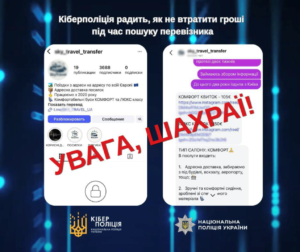
Scammers in Ukraine use ads for passenger and freight transportation to obtain advance payments by creating fake pages for private carriers and logistics companies.
To build trust, the scammers use photos of real buses and trucks, logos of well-known companies, reviews from other people, and other copied materials. Potential customers are usually lured in by lower travel or delivery costs compared to market rates.
Once a customer contacts them, the scammers try to get the money as quickly as possible. In particular, they may claim that there are almost no seats left or that an advance payment must be made immediately to confirm the reservation.
When arranging freight transportation, scammers may demand full payment in advance via a credit card or to an individual’s bank account. After receiving the money, the fake carrier stops responding, and the ad or page is deleted. In some cases, after the first transfer, the customer is asked to make additional payments supposedly for insurance, documents, customs clearance, or other services.
Experts cite the following as signs of potential fraud: a significantly low price, a demand for an urgent prepayment, communication exclusively via messaging apps, recently created carrier pages, and a lack of operational history. The risk also increases if the carrier refuses to provide detailed information about the route, vehicle, and terms of transport, or demands new payments after an agreement has been reached.
Links for booking and payment pose a particular danger. They may lead to phishing sites that mimic the appearance of banking and payment services. Their purpose is to obtain bank card details and other payment information.
Users are advised to verify the company name and phone number through several independent sources before making a payment, review the carrier’s reviews and track record, and avoid sharing CVV codes, passwords, or one-time transaction confirmation codes.
If money has already been transferred to scammers, it is recommended to save the correspondence, screenshots of the ad, and payment confirmation. If you have disclosed your banking information, you should contact your bank as soon as possible. You can also report cases of fraud to the Cyber Police or by calling 102 or 112.
You can learn more about current fraud schemes and ways to protect yourself on the StopFraud platform.

Nataliia Haidt has been appointed Executive Director of the Association “Union of Dairy Enterprises of Ukraine” (UDEU) effective October 2, 2026, the association’s press service reported.
Haidt has two higher education degrees — in economics and law — as well as experience in managerial positions at state-owned enterprises and commercial organizations. Since 2021, she has cooperated with UDEU as an expert and project manager.
Among her main tasks in the new position, Haidt named representing the interests of the dairy business before the government, the Verkhovna Rada and international partners, as well as adapting the industry to the requirements of the European Union.
“Ukraine’s dairy industry operates amid war, energy instability, a shortage of personnel, a logistics crisis and other challenges. At the same time, we face the task of harmonization with the requirements of the European Union. Each of these crises is a challenge for the entire chain: from farm to shelf,” Haidt noted.
According to her, UDEU will continue to promptly communicate the position of industry enterprises to the authorities and international partners and propose practical solutions to the problems of the dairy sector.
“The strength of the dairy business in this difficult time lies in unity and cohesion,” the new Executive Director emphasized.
The previous Executive Director of UDEU, Arsen Didur, completed his work in the position on September 30, 2026.
The Association “Union of Dairy Enterprises of Ukraine” represents the interests of dairy industry enterprises and participates in interaction between business and state authorities on the regulation and development of the dairy sector.



