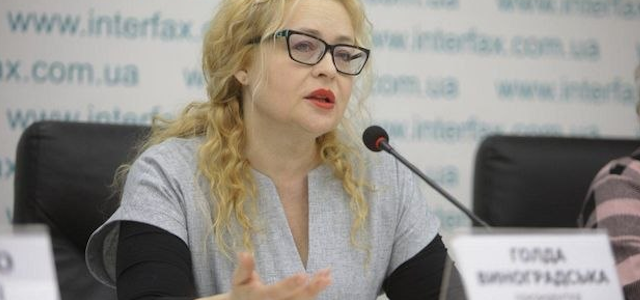
Ukraine should consider education as a separate export sector capable of bringing in foreign currency revenues, forming international ties and strengthening the country’s influence on the global market, believes Golda Vynogradska, president of the Public Union “International Movement ‘PRORYV’”, Doctor of Philosophy in the field of education.
In a blog on the website of the Interfax-Ukraine agency, she noted that in public discussion about new drivers of the economy, the agricultural sector, metallurgy, IT, the defense industry, energy and logistics are most often mentioned, while educational exports remain almost outside attention.
According to Vynogradska, in many countries education has long become not only a social sphere, but also a full-fledged export of services, an instrument of soft power and part of economic policy. This approach is used by the United Kingdom, Canada, Australia, France, Türkiye and China, forming through international education networks of future partners, managers, entrepreneurs, doctors, engineers and opinion leaders.
Ukraine also has a basis for developing this area: hundreds of higher education institutions, strong scientific schools, experience in training foreign students, teaching potential and the international reputation of Ukrainian specialists.
Before the full-scale war, Ukraine was a notable player in the international education market. In 2019-2021, about 76-80 thousand foreign students from more than 150 countries studied at Ukrainian higher education institutions. The largest centers were Kharkiv, Kyiv, Odesa, Dnipro and Zaporizhzhia, while among the key countries of origin of students were India, Morocco, Nigeria, Türkiye, Azerbaijan, Egypt, Turkmenistan and China.
After 2022, the number of foreign students decreased significantly due to the war, security risks, the closure of air traffic and the complication of entry procedures. In 2023, about 51.7 thousand foreign students remained in Ukraine, which is almost 30 thousand fewer than before the full-scale invasion. As of the beginning of 2026, more than 21 thousand foreign students from 127 countries were studying at Ukrainian universities, and in 2025 about 5.5 thousand new students were enrolled, which slightly exceeded the 2024 figure.
Vynogradska notes that these data indicate not only losses, but also the preservation of potential. In her opinion, demand for Ukrainian education has not disappeared completely even under conditions of war, but the model of attracting foreign students has largely remained pre-war.
The expert considers the outdated architecture of access to Ukrainian education to be the key limitation. Traditionally, the system was built around the physical arrival of a student in Ukraine even before the start of full-fledged studies. In peacetime, such a model worked, but under current conditions it has become one of the main barriers.
“The full-scale war did not destroy the international education market for Ukraine, but revealed the weak point of the old model: ‘first come to Ukraine, and then enroll,’” Vynogradska noted.
In her opinion, a student of the 21st century expects digital admission, remote communication with the university, transparent verification of documents, flexible formats of study, clear procedures and service that meets international standards.
Among possible steps for the development of educational exports, Vynogradska names the digitalization of foreign students’ admission, transferring primary procedures online, remote verification of documents, the development of the “study online first, arrive later” model, the definition of priority markets and the development of English-language programs.
Promising areas for Ukraine may include medicine, engineering, IT, agricultural technologies, infrastructure recovery, energy, cybersecurity, defense technologies, crisis management, public administration and post-war reconstruction.
According to the author’s assessment, educational exports have not yet become the same state priority as attracting investment, supporting the export of goods or promoting Ukrainian technology companies abroad. At the same time, a separate university cannot independently form the national brand of Ukrainian education, therefore the development of this area requires coordination between the state, universities, business and international partners.
Vynogradska believes that every foreign student is not only tuition fees, but also a future specialist, a potential partner of Ukrainian business, a doctor, an engineer, an official, a scientist or an entrepreneur who can maintain a connection with Ukraine for decades.
“Ukraine competes for investment, export contracts, international assistance, technologies and markets. It is time to begin competing just as seriously for students as well,” she emphasized.
Golda Vynogradska is president of the Public Union “International Movement ‘PRORYV’”, Doctor of Philosophy in the field of education, expert in public-private partnership, innovation and human capital development, adviser to the Minister of Education and Science of Ukraine in 2016-2021.