
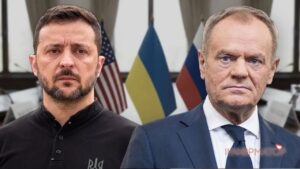
Ukrainian President Volodymyr Zelenskyy held a conversation with Polish Prime Minister Donald Tusk.
“I informed the prime minister about preparations for possible trilateral meetings at the technical level between Ukraine, the United States, and Russia. There are no obstacles on our part, but it is important that the American side prepare on its end and ensure the Russian side’s readiness,” Zelenskyy wrote on his Telegram channel.
The parties also discussed preparations for the Ukrainian power grid ahead of winter and other sensitive issues.
“Not everything can be discussed in detail over the phone—we agreed to meet in person in the near future. I am grateful to Donald and Poland for their support. Only by joining forces across Europe can we stop Russia and prevent this insane war from continuing,” the president concluded.

According to Experts.news, the European Commission has proposed new rules for the recognition of professional qualifications, which are expected to significantly simplify the process of finding employment in the EU for professionals with degrees obtained outside the European Union, particularly in Ukraine.
The changes are part of the Fair Labor Mobility Package, presented on September 15, 2026, which aims to increase worker mobility and reduce the shortage of skilled workers in EU countries.
One of the key innovations is the introduction of uniform rules for third-country nationals and EU citizens who have obtained professional qualifications outside the European Union. Currently, such professionals must go through procedures in accordance with the national rules of a specific EU country.
The European Commission proposes setting clear deadlines for processing documents, digitizing procedures, and creating a single European access point available in all EU languages. New and recently obtained qualifications are planned to be issued in a standardized digital format with the option to store them in the European Digital Identity Wallet.
A separate, free Europass tool will allow employers to compare qualifications obtained in different countries.
The proposed directive on the recognition of third-country nationals’ qualifications may be of particular importance to Ukrainians. It is intended to make procedures for such professionals faster and more transparent, regardless of where the qualification was obtained.
For seven regulated professions for which common minimum training standards already exist in the EU, the proposal provides for the automatic recognition of diplomas issued by educational institutions outside the EU, provided these institutions are accredited by European quality assurance bodies.
These professions include doctors, nurses, dentists, midwives, pharmacists, veterinarians, and architects.
However, automatic recognition will not apply to just any foreign diploma: the curriculum and the institution must meet established European requirements.
The European Commission also plans to shorten the timeframes for professional recognition. Under the new system, the procedure should take no more than 11 weeks, and for the automatic recognition of regulated professions, up to five weeks.
At the same time, simplified diploma recognition will not, in and of itself, grant the right to enter or reside in the EU. Member states will retain control over immigration rules and requirements for admitting foreigners to professional practice.
The package also provides for the creation of a European Social Security Pass, the strengthening of the European Labor Authority, and the wider use of digital documents when workers move between EU countries.
According to the European Commission’s estimates, once fully implemented, the reform could generate an economic impact of approximately €5 billion by 2040 by streamlining procedures, reducing administrative costs, and combating fraud.
The proposals still need to go through the EU legislative process. Simplified recognition of qualifications obtained outside the European Union is planned to be introduced within two years after the adoption of the relevant legislation, while digital qualifications and simplified procedures for regulated professions are to be implemented within three years.
For Ukraine, these changes are potentially of particular significance due to the large number of Ukrainian citizens currently living and working in EU countries. The difficulty of verifying education and professional qualifications remains one of the barriers to migrants finding employment in their field of expertise.

Georgia’s residential real estate market ended the summer of 2026 with rising sales and prices in Tbilisi and continued exceptionally high activity among foreign investors in Batumi, where foreigners accounted for more than half of all residential property transactions in August.
According to data from the Recov analytics platform, developed by Colliers Georgia, 3,388 apartment transactions were registered in Tbilisi in August 2026, an increase of 18.9% compared to the same month last year.
The market’s total transaction value grew even faster—by 35.2%, to $297 million.
New projects were the main driver of growth. The number of apartment transactions in new developments increased by 23.7%, including a 22.9% rise in the primary market and a 24.5% rise in the secondary market for new properties. Sales of apartments in the existing housing stock rose by 3.8%.
Colliers attributes a significant portion of the growth in new-construction sales to an expansion of supply, primarily in the Samgori and Didi Digomi districts.
At the same time, prices continued to rise. In August, the weighted average price of apartments in new buildings in Tbilisi rose year-over-year by 16.7% in the city center, 16% in the extended city center, and 10.4% in the suburbs.
Citywide, prices in the primary market rose by 11.9%, and in the secondary market for new projects, by 11%.
That said, Tbilisi remains a market dominated by local buyers. Georgian citizens account for the majority of transactions involving both new and existing apartments.
However, the share of foreign buyers continues to grow. In August, it reached 14%, up from 12% in July.
A completely different demand structure has emerged in Batumi. In August, foreign citizens accounted for 52% of apartment transactions, exceeding the share of Georgian buyers for the first time during the period under review. Back in July, the share of foreign buyers stood at 48%.
In total, 1,235 transactions were concluded in Batumi in August, which is 4.3% less than a year earlier. However, the market’s total value increased by 2.9% to $81 million.
The weighted average price of apartments in new buildings in Batumi rose by 1.2% year-over-year—to $1,386 per square meter.
Thus, Georgia’s two largest real estate markets are currently developing along different trajectories. In Tbilisi, domestic buyers drive the main demand, while Batumi has effectively become an international real estate investment market.
Among the most active foreign buyers of real estate in Georgia—particularly in Batumi—are citizens of Israel, Russia, Ukraine, EU countries, Turkey, and other post-Soviet states.
Recent detailed studies of the buyer demographic confirm a significant presence of Ukrainians.
According to data from Galt & Taggart for the first quarter of 2026, foreigners accounted for about 63% of apartment sales in the surveyed projects in Batumi, while Georgian citizens accounted for 37%.
The largest group consisted of buyers from European countries—about 18% of all sales. Israeli citizens accounted for a significant share. Buyers from Ukraine, Russia, and Belarus also formed one of the largest groups of foreign investors.
However, the published statistics combine citizens of Ukraine, Russia, and Belarus into a single category, so it is impossible to determine the exact number or share of purchases made directly by Ukrainians based on this data.
Earlier data from Colliers also lists Russians, Ukrainians, and Israelis among the main foreign buyers of residential property in Batumi.

The period for free storage of documents, packages, cargo, and tires/wheels at “Nova Poshta” branches will be reduced to five days instead of seven starting October 1, the company announced on its website.
“Today, the speed of receiving shipments is a guarantee of safety. Given the constant hostile attacks on civilian infrastructure, the less time a shipment spends at a branch, the lower the risk of it being lost or damaged,” Nova Poshta explained regarding these changes.
As noted, currently 97% of shipments are picked up by customers within the first five days.
“Nova Poshta” also clarified that the free storage period for pallets remains unchanged at three days.
As for parcel lockers, according to information on the company’s website, orders can be picked up from them within five days, after which the package will be transferred to the branch closest to the locker.
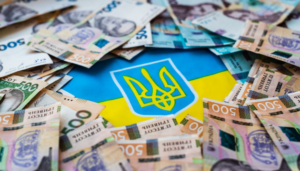
In September 2026, the State Customs Service of Ukraine transferred 75.2 billion hryvnia in customs duties to the state budget, which is 18.1 billion hryvnia more than in the same month last year.
According to Open4Business, citing data from the State Customs Service, revenues increased by 31.7% compared to September 2025, when 57.1 billion hryvnias were transferred to the budget.
The agency noted that actual revenue in September exceeded the indicative target set by the Ministry of Finance by 4.6 billion hryvnia.
One of the main factors driving the growth in revenue was the increase in the volume of taxable imports. In September 2026, this volume amounted to $7.3 billion, which is 23.7% more than a year earlier.
In particular, revenue from customs clearance of natural gas rose significantly—by 2.8 billion hryvnias—as did revenue from passenger cars (2.2 billion hryvnias), petroleum products (1.8 billion hryvnias), and coal (1.3 billion hryvnias).
Additional revenue was also generated by imports of telephones—by 0.9 billion UAH, power generators—by 0.7 billion UAH, and trucks—by 0.6 billion UAH.
At the same time, customs duty exemptions granted during customs clearance of goods in September totaled 25.3 billion UAH, which is 5.9 billion UAH, or 30.4%, more than in September of last year.
The largest amounts of exemptions were for defense-related goods—13.1 billion UAH, goods imported under free trade agreements—5.7 billion UAH, and energy equipment—2.4 billion UAH.
Thus, despite the increase in the volume of exemptions granted, the growth in imports and payments for certain major commodity groups allowed the State Customs Service to significantly increase revenues to the state budget.
The State Customs Service administers customs payments when goods cross Ukraine’s customs border. Customs revenues—primarily import VAT, excise taxes, and duties—are one of the largest sources of revenue for the state budget.

Autostrada founder Maksym Shkil reported that the company continues to carry out all work at its sites in accordance with the approved schedules, he wrote on Facebook.
“… Autostrada is helping to restore damaged infrastructure and protect facilities amid intensifying Russian attacks. We are doing everything in our power to protect people and critical infrastructure. We understand the difficult situation with public finances. Autostrada continues to carry out work at all sites in accordance with the approved schedules. We assume that the government will fulfill its obligations to the industry for work already completed once international financial aid is received,” reads the post by the company’s founder on Facebook.
Earlier, the Autostrada Group of Companies announced that it was suspending work at all sites in Ukraine due to the government’s suspension of capital expenditures.



