
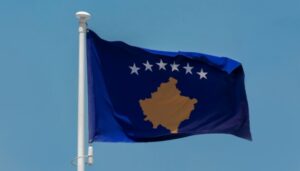
According to The Serbian Economist, Kosovo is heading toward a new political crisis: if the parliament fails to elect a president by October 6, the Assembly will be dissolved, and the region will once again hold early parliamentary elections—the fourth in less than two years.
This time, the presidential crisis is directly linked to the trial of former leaders of the Kosovo Liberation Army (KLA) in The Hague. According to a ruling by the Constitutional Court, the deadline for electing a new president expires on October 6. If the vote fails, parliament will be dissolved, and new elections must be held within 45 days—that is, no later than November 15.
Over the past 18 months, voters in Kosovo have already cast ballots three times in parliamentary elections—on February 9, 2025, December 28, 2025, and June 7, 2026.
The situation seems almost paradoxical: it was only on September 13 that Parliament finally approved Albin Kurti’s new government following the June elections. Sixty-two out of 120 lawmakers voted in favor of the government. But they have not yet managed to resolve another key issue—the election of a president.
In September, the Kosovo Special Chambers in The Hague handed down first-instance verdicts against four former leaders of the Kosovo Election Commission—Hashim Thaçi, Kadri Veseli, Redžep Selimi, and Jakup Krasniqi.
Following this, the Democratic Party of Kosovo (PDK), of which Thaçi is a co-founder, demanded changes to the law governing the Special Chambers.
In particular, the PDK is seeking to limit the court’s jurisdiction to investigating the crimes listed in Dick Marty’s report, as well as to introduce international oversight of its activities. It was precisely after the Hague verdict that the party sharply stepped up this initiative.
For Kurti, this is an extremely difficult situation: there is practically no time left before October 6.
The Serbian publication “Blic” calls what is happening a “dangerous game.” Analysts interviewed by the publication believe that the DPK is attempting both to change the rules governing the Hague Tribunal and to shift political responsibility for any potential new elections onto Kurti’s “Self-Determination” movement.
Belgrade does not recognize Kosovo’s independence, declared in 2008, and considers the territory to be part of Serbia.
Moreover, non-recognition of Kosovo is by no means solely a Serbian position. Kosovo’s independence remains unrecognized by Russia and China—two permanent members of the UN Security Council—which is one of the obstacles to Kosovo’s admission to the UN.
Kosovo is also not recognized by Spain, Ukraine, India, and other countries.

According to the Serbian business media outlet Parametar, housing prices in the European Union rose by 4.7% in the second quarter of 2026 compared to the same period last year, and by 4.0% in the eurozone, according to Eurostat data published on October 1.
Compared to the first quarter of this year, housing prices in the EU rose by another 1.2%, and in the eurozone by 1.1%.
Year-over-year price increases were recorded in 23 EU countries for which data is available. Prices fell in only three countries: Finland (by 2.7%), Luxembourg (by 2.2%), and France (by 0.8%).
Portugal led the EU in housing price growth, with prices rising 16.5% over the year. Bulgaria ranked second with a 15.5% increase, and Lithuania third with 14.3%.
High growth rates also persisted in Slovakia, where housing prices rose by 13.6%, Croatia—by 12.7%, and Spain and Romania—by 12.1% each.
In Latvia, the increase was 11.4%; in Hungary, 10.2%; in Denmark, 9.4%; in Slovenia, 9.1%; in the Czech Republic, 8.6%; and in Cyprus, 7.9%.
More moderate price growth was observed in Malta—6.9%, in Poland—6.3%, Ireland—6%, Estonia—5.8%, Austria—5.1%, Sweden—4.8%, the Netherlands—4.3%, and Italy—4%.
Some of the lowest positive figures were recorded in Belgium—2.1%—and Germany—just 0.6%.
Compared to housing prices in the first quarter of 2026, prices rose the fastest in Lithuania—by 5%, Bulgaria—by 4.5%, and Romania—by 4.4%. Quarterly declines were observed only in Hungary—by 1.4%—and France—by 0.8%.
Eurostat calculates the House Price Index based on the cost of residential real estate purchased by households, including both new construction and existing homes.

Kyiv led all regions of Ukraine in net growth of sole proprietorships (FOPs) from January through September 2026—the number of businesses opened exceeded the number of businesses closed by 7,751, according to data from the Unified State Register analyzed by Opendatabot and the Experts Club analytical center.
Over the course of nine months, approximately 27,300 new sole proprietorships were registered in the capital, the highest figure in the country. At the same time, approximately 19,500 entrepreneurs in the capital ceased operations.
The Dnipropetrovsk region ranked second in terms of net growth, with an increase of 7,333 sole proprietorships. Next came the Lviv region with an increase of 6,963 entrepreneurs, the Kyiv region with 6,510, and the Odesa region with 5,143.
Overall, positive trends were recorded in 22 regions of Ukraine.
A decline in the number of entrepreneurs occurred in only three regions near the front lines. It was most significant in the Donetsk region, where the number of closures exceeded the number of new registrations by 1,120 sole proprietorships. In the Kherson region, the net decrease was 397 entrepreneurs, and in the Luhansk region, 203.
At the same time, Dnipropetrovsk Oblast ranks second not only in terms of net growth but also in the absolute number of new registrations—22,300 sole proprietorships were established there over the nine-month period.
In Lviv Oblast, 17,200 new entrepreneurs were registered; in Odesa Oblast, 16,700; and in Kyiv Oblast, 16,500.
In terms of the number of closures, the Dnipropetrovsk region follows Kyiv with 14,900 sole proprietorships. In the Odesa and Kharkiv regions, approximately 11,500 entrepreneurs each ceased operations, and in the Lviv region, 10,200 did so.
In total, 222,288 new sole proprietorships were established in Ukraine during the first nine months of 2026, while 155,645 were closed. The net increase in small businesses amounted to 66,643 sole proprietorships.
Source: Opendatabot — sole proprietorship statistics for January–September 2026.

People’s Artist of Ukraine Olga Sumska has been awarded the title of “Artist of the Year” by the 30th anniversary nationwide “Person of the Year 2025” program, according to a press release from the program.
Sumska is a Ukrainian theater and film actress, television host, winner of the Taras Shevchenko National Prize of Ukraine, and recipient of the Order of Princess Olga, Third Class. Her professional career in theater and film spans more than 40 years.
The actress was born on August 22, 1966, into the Sumskaya family of actors. In 1987, she graduated from the acting department of the Ivan Karpenko-Karyi Kyiv Institute of Theater Arts, and from 1988 to 2005, she worked at the Lesya Ukrainka Theater in Kyiv.

Sumska began her acting career at age 16 with the role of the young lady, the Centurion’s daughter, in the film *Evenings on a Farm Near Dikanka*. She went on to play leading roles in the films *The Voice of the Grass*, *The Trap*, *Tiger Hunters*, *Carpathian Gold*, *The Notes of the Snub-Nosed Mephistopheles*, and other projects.
In total, the actress’s filmography includes over 100 roles in Ukrainian cinema. One of Sumskaya’s most famous roles was the lead in the historical TV series “Roxolana,” which brought her widespread popularity.
From 2022 to 2025, Sumskaya continued her active theater career and toured cities across Ukraine. During this period, the performances in which she appeared often had a charitable component and were aimed, in particular, at supporting the Armed Forces of Ukraine.
In recent years, the actress has appeared in the plays “Bravo, Julia,” “Our Kaidashs,” “Chasing Two Hares,” “Basic Instinct,” “Sublimation of Love,” and “The Return of the Prodigal Father.” Her film and television work in recent years includes *The Landlord*, *The Landlord 2: On Our Own Land*, *The Saga*, *Crazy Neighbors*, *Homeowners’ Association Meeting*, and *When You Get Divorced*.

In addition to her work in theater and film, Sumskaya participates in charitable initiatives and fundraising efforts for the Ukrainian military, as well as in cultural projects aimed at supporting and promoting Ukrainian theater and cinema.
In 2025, the actress was chosen as the muse of the “Mykolaichuk OPEN” International Film Festival.
“Theater and film are spaces for a living dialogue with the audience, where empathy, hope, and faith in humanity are born,” reads Sumskaya’s creative credo in the program’s announcement.
The nationwide “Person of the Year” program was held for the 30th time in 2025. The program honors representatives from various spheres of Ukraine’s social, economic, and cultural life.
Open4Business is an information partner of the nationwide “Person of the Year” program.

The Spotlight International Light Art Festival will take place in Bucharest from October 9 to 11, 2026, bringing together artists and art studios from seven countries. The 10th anniversary festival will transform the central street of Calea Victoriei into a large-scale gallery of light and digital art.
Sixteen artists from Romania, Switzerland, France, Australia, Italy, Austria, and the United Kingdom will participate in Spotlight 2026. They will present 19 projects, including interactive light installations, new media art, immersive projects, and large-scale video mapping.
The theme of the tenth Spotlight will be “Playground.” According to the organizers’ vision, the city center will be transformed into a space for experimentation, where visitors interact with light, architecture, and new technologies, and familiar buildings and public spaces take on a completely different visual appearance.
Calea Victoriei will traditionally serve as the central venue. In 2026, the route has been expanded—it will run from the Radisson Blu Hotel to the intersection of Calea Victoriei and Splaiul Independenței. Individual events will also take place at ARCUB, Hanul Gabroveni, Mega Mall, and Promenada Mall. The total area of the festival space on Calea Victoriei will exceed 7,000 square meters.
One of the highlights of the program will be six large-scale video-mapping shows. Projections will appear on the facades of the Odeon Theater, the Telephone Palace, the Novotel Hotel, the National Military Club, the Corinthia Grand Hotel du Boulevard Bucharest, and the National Museum of Art of Romania.
Another 13 immersive installations will be placed along Calea Victoriei. Some of them will respond to visitors’ movements, blending the city’s physical space with digital images and lighting effects.
The scale of the festival can also be gauged by its technical specifications. Spotlight will require over 300 metric tons of equipment, 11 projection structures and towers, 20 laser video projectors, and over 200 light sources. Kilometers of cable and fiber-optic lines are also being used to set up the light installations.
Spotlight has been held in Bucharest since 2015 and was the first light art festival of this scale in Romania. According to the organizers, the event attracts over 300,000 visitors annually. The festival is organized by the Bucharest City Hall through the ARCUB Municipal Cultural Center.
In this anniversary year, Bucharest will also host the annual meeting of the International Light Festivals Organisation (ILO). On October 10, leaders and representatives of international light festivals, artists, and industry experts will gather at ARCUB—Hanul Gabroveni. Concurrently, on October 10–11, Spotlight Talks will take place under the theme “Light, Art & the City,” where, among other topics, the use of artificial intelligence in light installations will be discussed.
The festival will open on October 9 at 9:00 p.m. and run until 11:00 p.m. On October 10 and 11, the installations will be on view from 7:00 p.m. to 11:00 p.m. Admission to Spotlight 2026 is free.

On September 24, PJSC “Ukrnafta” (Kyiv) announced its intention to enter into a liability insurance agreement with Guardian Insurance Company covering holders of special permits for the use of oil and gas-bearing subsoil during the development of such resources in cases provided for by the Law “On Oil and Gas.”
According to the Prozorro electronic public procurement system, the company’s bid amounted to 527,000 UAH, compared to the expected cost of purchasing the services of 952,000 UAH.
Insurance Company “Ultra Alliance” also participated in the tender with a bid of 850,000 UAH.
As previously reported, Guardian Insurance Company was the winner of a similar tender a year ago.



