
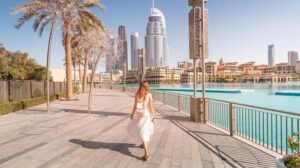
Dubai authorities issued 1,051,978 new residency permits in the first half of 2026, according to the emirate’s General Directorate of Residency and Foreigners Affairs (GDRFA).
During the same period, 910,552 existing residence permits were renewed, and more than 5.078 million entry permits were issued to foreigners in various categories. The number of long-term Golden Visas issued totaled approximately 66,000.
However, the figure of 1 million permits does not mean that Dubai’s population increased by the same number of people over the six-month period. Some of the recipients may have already been in the emirate on tourist, work, or other visas. The statistics also do not account for foreigners who left Dubai or did not renew their residency.
According to the authorities, all immigration services in Dubai have been digitized, and the average processing time for a single transaction is less than four minutes. Customer satisfaction is estimated at 95%.
“Golden Visas” are granted to investors, entrepreneurs, scientists, skilled professionals, cultural and sports figures, as well as certain categories of students and graduates. This visa allows holders to reside in the UAE for an extended period without a traditional employer sponsor and to apply for residency for family members.
Dubai’s population at the end of 2024 was approximately 4.25 million. Men accounted for 68.5% of the emirate’s residents, a figure attributed to the large number of foreign workers arriving without their families.
The UAE as a whole is home to people of more than 200 nationalities, with foreigners making up the overwhelming majority of the population. The largest group consists of people from India. Significant communities have been formed by citizens of Pakistan, Bangladesh, the Philippines, Iran, Egypt, Nepal, and Sri Lanka. UAE citizens make up a minority of the country’s population.
The rapid influx of residents is driving demand for housing, commercial real estate, schools, healthcare, and transportation. At the same time, population growth is increasing the strain on Dubai’s roads, utilities, and public transportation.

Indian citizens became the largest group of foreign real estate buyers in Dubai in 2026, according to data from the DXB Interact platform, as reported by Gulf Today and Khaleej Times.
According to DXB Interact, Indian buyers accounted for 20.59% of total real estate purchases in the emirate as of late February 2026. In a Khaleej Times article citing Harbor Real Estate and DXB Interact, this figure was rounded to 20.6% as of early 2026.
Buyers from the United Kingdom ranked second with a share of 13.26–13.3%, followed by Egyptian citizens in third place with 12.6%. Next came the United States—about 9%, Pakistan—6.9%, Saudi Arabia and Australia—5.7% each, Germany—about 4.2%, France—3.8%, and Canada—about 3%.
Just outside the top ten, according to DXB Interact, are the Netherlands with a 2.83% share, Russia at 2.5%, Morocco at 2.33%, Spain and Kuwait at 2.11% each, Turkey at 2.05%, and Nigeria at 1.89%.
Analysts attribute foreign buyers’ sustained interest in the Dubai market to political stability, the absence of income tax, the possibility of 100% foreign ownership of properties in freehold zones, and long-term residency programs, including the Golden Visa.
Compact apartments remain the most active segment of the market. According to the Khaleej Times, one-bedroom apartments accounted for 34.9% of sales, or 27,590 transactions; studios accounted for 23.4%, or 18,471 transactions; and two-bedroom apartments accounted for 20.7%, or 16,399 transactions. This demand reflects investors’ interest in liquid properties with a lower entry threshold and rental yield potential.
Among Dubai’s districts, Dubai Islands led in apartment sales with 8.4 billion dirhams, followed by Airport City with 7.2 billion dirhams and Business Bay with 6 billion dirhams. In the villas and buildings segment, Al Yalayis 1 took first place with 10.6 billion dirhams, while Me’aisem Second led the land plots segment with 10.1 billion dirhams.
Harbor Real Estate assesses the current situation as a transition of the Dubai market from a phase of rapid growth to a more sustainable cycle. According to the company, demand is increasingly being driven by end buyers and long-term investors, rather than short-term speculators.
An increase in supply could be an additional factor contributing to market stabilization. According to the Khaleej Times, citing a report by Harbor Real Estate, more than 160,000 residential units are scheduled for completion in 2026, although the actual number of units completed is expected to be significantly lower. For comparison: approximately 39,700 units were completed in 2025, and 30,500 in 2024
Regarding the Dubai real estate market, the ranking of foreign buyers shows that demand remains geographically diversified. India and the United Kingdom retain key positions, but buyers from the Middle East, North Africa, North America, Australia, and Europe also play a significant role. This reinforces Dubai’s status as one of the leading international centers for real estate investment.
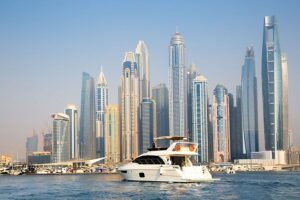
From 2021 through the first quarter of 2026, Dubai has issued over 167,000 long-term Golden Visas to family members of skilled professionals, according to data from the General Directorate of Residency and Foreigners Affairs in Dubai (GDRFA Dubai).
According to GDRFA Dubai, a total of 167,124 residence permits were issued to families of specialized talent during this period. Another 100,286 residency permits were issued to families of real estate investors, 70,247 to family members of scientists and specialized experts, 37,022 to relatives of major investors, and 3,259 to families of foreign retirees. In addition, thousands of additional visas were issued to relatives of entrepreneurs, outstanding students, and figures in the humanities.
Statistics show that family relocation is becoming one of the key areas of Dubai’s migration policy. The emirate is focusing not only on attracting individual specialists, investors, and entrepreneurs, but also on securing their families’ long-term presence in the country. According to local authorities, the increase in the number of family residence permits reflects foreigners’ confidence in Dubai’s social infrastructure, education, healthcare, and digital government services.
Based on the structure of issued permits, the most active groups of foreigners in this segment remain skilled professionals and their families, real estate investors, scientists and experts, as well as major investors. A separate large category is specifically linked to the real estate market: over 100,000 residence permits for families of real estate investors indicate that home purchases remain one of the key channels for long-term relocation to Dubai.
By nationality, the official statistics from the GDRFA Dubai do not disclose the distribution of family Golden Visas in the published data. However, the demographic structure of the UAE as a whole remains predominantly expat-driven: foreigners account for about 88.5% of the country’s population, and the largest communities are traditionally represented by people from India, Pakistan, Bangladesh, the Philippines, Iran, Egypt, and other countries in the region and Asia.
The UAE Golden Visa is a long-term residency visa that allows foreign talent, investors, entrepreneurs, scientists, professionals, students, and other categories to live, work, or study in the country.
For Dubai, the program has become a tool for competing for capital and human resources, as well as a way to retain wealthy and highly sought-after foreign nationals along with their families.
Dubai has abolished the minimum property value requirement for obtaining a two-year investor residency visa. Previously, buyers were required to own a property worth at least 750,000 dirhams, or approximately $204,000.
The new rules apply to the two-year renewable visa for property owners, which is processed through the Dubai Land Department and its Cube Centre. Now, an individual owner can apply for such a residence visa regardless of the property’s value, provided the property is registered in their name and all other documentation requirements are met.
For joint ownership, the minimum threshold remains, but in a different form: each co-owner must hold a share worth at least 400,000 dirhams. This means that the relaxation is primarily intended for buyers who register the property under a single owner.
Removing the threshold makes residency status more accessible to buyers of small apartments and studios, which previously might not have met the minimum value requirement. For Dubai’s real estate market, this could boost demand in more affordable segments, especially among foreigners who view a purchase not only as an investment but also as a way to obtain legal residency status in the UAE.
However, this change does not apply to the 10-year Golden Visa. For the “Golden Visa” obtained through real estate, a separate investment threshold remains in effect—typically starting at 2 million dirhams. Therefore, the new measure specifically broadens the entry point into the residency market but does not replace long-term programs for major investors.
For buyers, what remains important is not only the fact of owning real estate, but also the legal soundness of the property, registration of ownership rights, compliance with Dubai Land Department requirements, and the willingness to cover associated costs for visa processing, Emirates ID, and health insurance.
Dubai remains one of the most active real estate markets in the Middle East. Demand is supported by the influx of foreign residents, growth in business activity, the UAE’s tax appeal, and its developed infrastructure. The removal of the minimum threshold for a two-year residency permit may further expand the pool of buyers for whom purchasing real estate in the emirate becomes a way not only to invest but also to establish a foothold in the country.

The DFM Real Estate Index (DFMREI), which reflects the dynamics of real estate companies’ shares on the Dubai Financial Market, fell by 4.71% to 13,359.61 points on Monday, March 9, reaching a daily low of 13,353.18 points, according to exchange statistics.
Over the last five trading sessions, the index has fallen by about 17%, which is close to estimates on social media of “about 20%,” but according to aggregated market data, the decline is actually about 17%.
At the same time, the Dubai market’s broad index (DFMGI) continued to decline amid the US and Israel’s war with Iran and growing nervousness over risks to logistics and infrastructure.
Against the backdrop of the UAE’s deteriorating perception as a “safe haven,” some wealthy clients are already considering moving their assets from Dubai to other financial centers. A number of wealthy Asian clients have made inquiries or taken steps to transfer funds to Singapore and Hong Kong, fearing a protracted conflict and rising risk premiums.
At the same time, market participants surveyed by Reuters emphasize that DFMREI is an exchange indicator (shares of developers and related companies) and can react much faster than the physical housing market, where price changes are recorded with a delay based on transaction data.

Dubai’s real estate market, which ended 2025 with record figures, may face a temporary slowdown in demand in early 2026 amid military escalation between the US, Israel, and Iran, but experts do not expect prices to collapse yet.
In 2025, real estate sales in Dubai were estimated at $187 billion, with more than 215,000 transactions. Investors from India, the UK, and Russia were identified as key buyer groups, while in early 2026, some investors took a wait-and-see approach.
Among the factors putting pressure on the market, analysts highlight reports of incidents in landmark locations and the impact of transport restrictions: temporary disruptions and closures of air hubs reduce the influx of foreign buyers and complicate transactions, especially in a segment that depends on quick visits and viewings.
At the same time, prior to the current escalation, price dynamics remained positive: according to REIDIN, in January 2026, the Dubai residential sales price index rose by 0.75% compared to the previous month and by 11.79% year-on-year, indicating continued inertial growth at the onset of the crisis.
Market participants admit the possibility of a “pause without a fall” scenario if the hot phase ends quickly, but warn that a protracted conflict could severely affect liquidity and lead to a more noticeable correction, primarily in the most sensitive segments and locations.



