

In January–September 2026, Poland increased its diesel fuel shipments to Ukraine by 44% compared to the same period last year—to over 2 million metric tons, according to data from the A-95 Consulting Group and its analysis by the Experts Club think tank.
In September, 202,600 metric tons of diesel fuel were supplied from Poland, which is virtually the same as the September 2025 level of 202,000 metric tons.
Romania remained the second-largest supplier in September, with 156,700 metric tons, compared to 158,600 metric tons a year earlier. Supplies from Lithuania increased by 7% to 65.9 thousand metric tons.
At the same time, imports from Southern Europe fell significantly. Supplies from Greece dropped by 70% to 40.8 thousand metric tons, and from Turkey by 88% to 6.1 thousand metric tons.
Overall, the volume of imports from southern Europe in September fell by 38%—to 220,000 metric tons—and its share of total imports decreased from 52% to 41%.
“Due to the war in Iran, southern European supplies are significantly more expensive this year than northern ones, and this is the main reason for the decline in volumes,” notes “A-95”.
Over the first nine months, diesel fuel imports from Lithuania rose by 33%—to over 560,000 metric tons. At the same time, shipments from Hungary fell by 49%—to 266,000 metric tons.
According to Serhiy Kuyun, director of the “A-95” Consulting Group, this shift in the geography of supplies indicates the Ukrainian fuel market’s continued adaptation to changes in price conditions and logistical risks.
The “A-95” Consulting Group conducts research on the motor fuel market, monitors prices and logistics, and analyzes the supply of resources to the Ukrainian market.
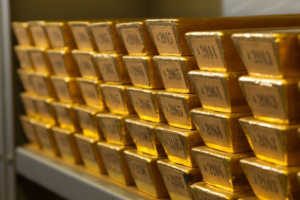
Poland became the largest gold buyer among the world’s central banks in January-August 2026, increasing its reserves by approximately 98 tonnes, according to an Experts Club analysis based on World Gold Council (WGC) data published on October 6.
In August, global central banks continued actively increasing their gold reserves, purchasing another 39 tonnes on a net basis compared with 23 tonnes a month earlier. However, the ranking of cumulative purchases since the beginning of the year differs noticeably from the results of August alone.
According to the WGC, the largest gold buyers in January-August 2026 included:
Poland – about 98 tonnes
China – about 80 tonnes
Uzbekistan – about 50 tonnes
Kazakhstan – about 36 tonnes
Czech Republic – about 14 tonnes
The National Bank of Poland retained first place thanks to the continuation of its large-scale precious metal accumulation programme. In August alone, the Polish central bank purchased another approximately 7.8 tonnes.
As a result, Poland’s gold holdings approached 648 tonnes, while the National Bank’s strategic target is 700 tonnes.
China ranks second. In August, the People’s Bank of China was the largest buyer in the world, increasing its reserves by as much as 20.2 tonnes.
In January-August, China purchased about 80 tonnes of gold, while its official gold reserves reached approximately 2,387 tonnes. Gold accounts for about 9% of the country’s international reserves.
At the same time, China has continued buying the precious metal for 22 consecutive months, making it one of the most consistent buyers among the world’s largest central banks.
Uzbekistan ranks third, having increased its gold reserves by approximately 50 tonnes since the beginning of the year. In August, the country purchased another approximately 7.8 tonnes. The total volume of gold in Uzbekistan’s reserves reached approximately 439 tonnes, with the precious metal accounting for about 90% of the country’s international reserves.
Kazakhstan ranks fourth, with purchases of approximately 36 tonnes over eight months. In August, the National Bank of Kazakhstan added about 7.4 tonnes, bringing its gold holdings to approximately 377 tonnes. Gold accounts for about 79% of the country’s international reserves.
The Czech Republic rounds out the top five largest buyers. The Czech National Bank purchased 14 tonnes since the beginning of the year, including approximately 1.7 tonnes in August. The country’s total gold reserves reached around 86 tonnes.
Notably, the Czech Republic has been increasing its gold holdings for 42 consecutive months, implementing one of the most consistent reserve expansion programmes among European central banks.
At the same time, Turkey and Russia became the largest gold sellers since the beginning of 2026. Turkey reduced its reserves by approximately 82 tonnes, although in August it returned to purchases and bought about 2.9 tonnes. Russia sold about 56 tonnes in January-August, including approximately 6.2 tonnes in August.
The World Gold Council notes that the continued presence of the same countries among active buyers indicates the long-term nature of gold accumulation policies. Monthly changes in purchase volumes largely reflect the implementation schedules of these programmes, market conditions and the liquidity needs of individual countries.
According to the WGC, in January-August 2026 central banks reported net purchases of approximately 170 tonnes of gold. At the same time, officially recorded changes in reserves do not necessarily reflect total public-sector demand, as some central bank transactions become known with a delay or are not disclosed.
The World Gold Council regularly tracks changes in central banks’ official gold reserves based on data from the International Monetary Fund, national regulators and other official sources. The WGC regards central bank demand as one of the key factors in the global gold market.
Central banks, CHINA, CZECH REPUBLIC, EXPERTS CLUB, GOLD, gold reserves, KAZAKHSTAN, POLAND, UZBEKISTAN, WORLD GOLD COUNCIL
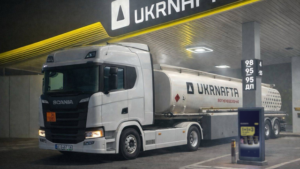
In September 2026, Ukrnafta became the largest importer of diesel fuel to Ukraine for the first time, supplying 105.3 thousand metric tons of the fuel, according to data from the A-95 Consulting Group and its analysis by the Experts Club.
The company’s import volume was 3.3 times higher than in September of last year.
OKKO took second place among the largest importers with 57,500 metric tons, while UPG came in third with 47,000 metric tons.
The top five also included AT Energo Trade with 44,000 metric tons and WOG with 42,500 metric tons.
Next came ZPEK with 29,400 metric tons, “Paid” with 28,900 metric tons, D.Trading with 26,500 metric tons, “Martin Trade” with 18,100 metric tons, and “Gaztrim” with 12,000 metric tons.
Among the largest players, the ZPEK Group showed the most significant growth compared to last year. Over the first nine months of 2026, its imports rose by 228% and approached 250,000 metric tons.
Total diesel fuel imports into Ukraine in September amounted to 537,000 metric tons, which is 21% less than a year earlier.
According to Serhiy Kuyun, director of the A-95 Consulting Group, changes among the largest importers are occurring against the backdrop of logistics transformation, high volatility in global prices, and the need for companies to establish more stable supply channels.
“The fuel market continues to face unprecedented challenges caused by Russian attacks. Importers are actively developing new logistics channels and expanding their vehicle fleets,” notes “A-95”.
The A-95 consulting group has been researching the Ukrainian motor fuel market for over two decades and monitors prices, supplies, and market infrastructure.

The IT sector remains the largest source of export revenue in Ukraine’s service sector: in January–August 2026, computer services accounted for 41% of the country’s total service exports, according to an analysis by Experts Club based on data from the National Bank of Ukraine.
Over the eight-month period, Ukraine exported $10.9 billion in services, which is approximately 6% more than during the same period in 2025.
IT service exports reached $4.46 billion, an increase of 4% year-over-year.
This means that more than $4 out of every $10 the country earns from service exports is generated by the IT sector.
At the same time, services as a whole accounted for about 30% of Ukraine’s total exports. Exports of goods for January–August totaled $24.9 billion, while exports of goods and services combined amounted to $35.8 billion.
This ratio underscores the exceptionally high importance of IT for Ukraine’s foreign trade: a single service sector alone accounts for about 12% of the country’s total export revenue.
To compare the dynamics of the IT sector itself, the figure for the first eight months of 2026 already roughly matches the result for the same period in 2023, though it remains 9% below the record level set in 2022.
Thus, in 2026, the IT sector is simultaneously strengthening its position after several years of decline and remains a key export sector of the Ukrainian economy.
Data source: National Bank of Ukraine.

The Polish oil refining group ORLEN S.A. supplied 1.3 million metric tons of diesel fuel to Ukraine from January through September 2026, which is 33% more than during the same period in 2025, according to data from the A-95 Consulting Group.
Compared to the first nine months of 2024, shipments increased by 68%.
ORLEN remains the largest corporate supplier of diesel fuel to the Ukrainian market.
In September, the company shipped a total of approximately 110,000 metric tons of diesel fuel from refineries in Poland and Lithuania. This is 30% less than in September of last year.
The decline in monthly shipments occurred against the backdrop of an overall reduction in Ukrainian diesel fuel imports. In September, the volume of imports amounted to 537,000 metric tons, which is 21% less than a year earlier.
At the same time, Poland retained its status as the largest supplier of diesel fuel to Ukraine. Over the first nine months, shipments from Poland rose by 44% and exceeded 2 million metric tons.
According to Serhiy Kuyun, director of the “A-95” Consulting Group, the role of the northern route in supplying the Ukrainian market has strengthened due to the higher cost of shipments from Southern Europe.
“A-95” notes that due to the significant rise in the price of Southern European supplies, Ukrainian companies are increasingly turning to supplies from Poland and Lithuania.
The “A-95” Consulting Group specializes in research and monitoring of the Ukrainian petroleum products market. The company’s director is Serhiy Kuyun.

In September 2026, Ukraine imported 537,000 metric tons of diesel fuel, which is 21% less than in the same month of 2025 and 9% lower than in August, according to data from the A-95 Consulting Group.
Since the beginning of the year, diesel fuel imports have reached 4.7 million metric tons, which is 3% higher than the January–September figure from last year.
The main feature of September was unusually weak demand. A-95 attributes this, in particular, to massive attacks on industrial enterprises, as well as to problems with the export of agricultural products from the new harvest, including disruptions in maritime logistics.
“We do not yet have precise data, but there are all signs that retail sales of diesel fuel have also declined due to record prices caused by unprecedented global market rates,” note analysts at “A-95”.
The decline in demand is also confirmed by supply trends in the third quarter. During this period, approximately 1.7 million metric tons of diesel fuel were imported into Ukraine, which is about 10% less than a year earlier.
According to Serhiy Kuyun, director of the A-95 Consulting Group, the Ukrainian fuel market continues to operate amid unprecedented logistical and pricing challenges related to the war.
“The fuel market continues to face unprecedented difficulties caused by Russian attacks. Importers are actively developing new logistics channels and expanding their fleets, particularly of gasoline tankers,” the company notes.
The “A-95” consulting group specializes in research on the Ukrainian petroleum products market, price monitoring, logistics, and resource supply for the fuel market. Its director is Serhiy Kuyun.



