
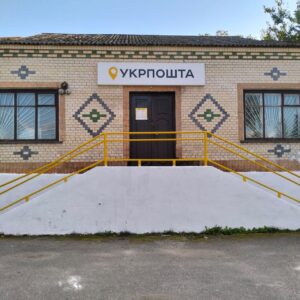
This fall, the national postal operator JSC “Ukrposhta” opened 11 new rural branches in the Volyn, Ternopil, Khmelnytskyi, and Rivne regions, while also planning to expand these services to other regions of the country beyond the current border and frontline regions.
“Why there? Well, because the population has grown (we’re talking about villages with 1,200 or more residents), demand for services has increased, we have the support of local communities, and we’ve found good staff,” said Ukrposhta CEO Ihor Smiliansky on the company’s Telegram channel on Thursday.
According to him, a 12th branch will soon open in the Rivne region as well.
Smiliansky explained that if volumes are insufficient, the relevant villages will continue to be served by mobile branches, which operate under any circumstances.
The Ministry of Recovery, Infrastructure, and Transport of Ukraine, in turn, clarified on its Telegram channel that five branches were opened in Volyn Oblast, four in Ternopil Oblast, and one each in Khmelnytskyi and Rivne Oblasts.
It is expected that customers at these branches will be able to send and receive packages, letters, and international mail, as well as make money transfers, pay utility and other bills, and receive pensions and social benefits.
As previously reported, Ukrposhta increased its revenue by 4.2% in the first half of this year—to 6.776 billion hryvnias—and posted a net profit of 92 million hryvnias, compared to a net loss of 312 million hryvnias in the first half of last year.
The national postal operator has 7,200 customer service locations, including 2,000 mobile postal branches serving 21,300 settlements. The average number of employees at the national postal operator for the second quarter of 2026 was 25,800, and the average salary was 20,300 UAH.
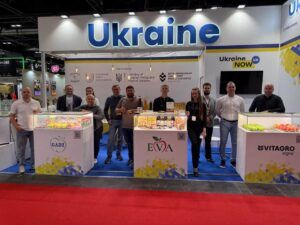
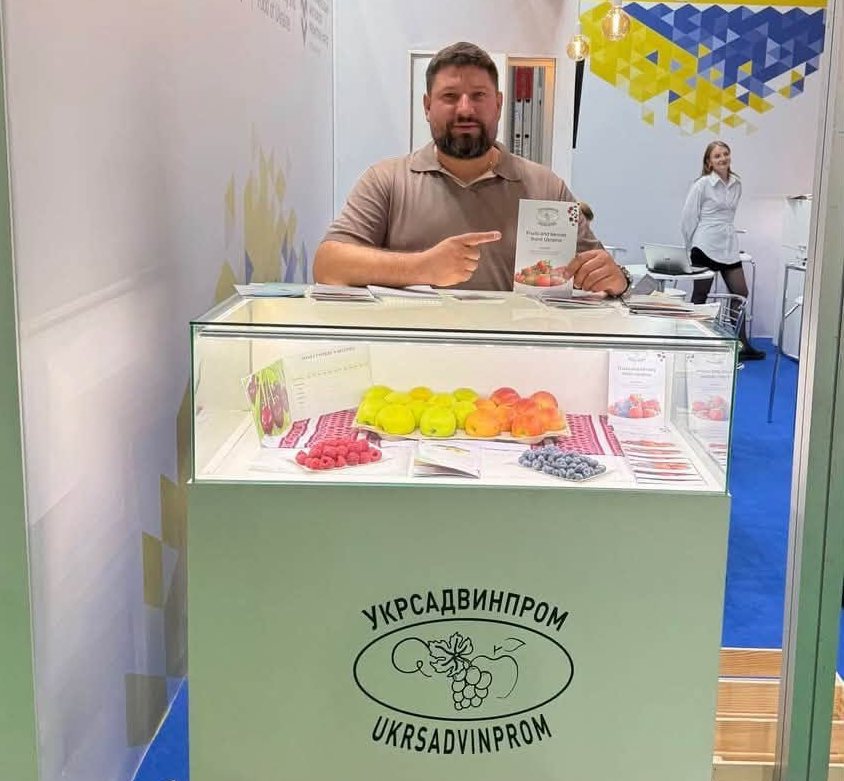
Ukrainian fruit and vegetable producers presented a unified national booth at the international Fruit Attraction 2026 exhibition, which is taking place October 6–8 in Madrid, according to Volodymyr Pechko, honorary chairman of the “UKRSADVINPROM” public association.
According to him, Ukraine’s participation in the exhibition has not only promotional but also practical export significance, as it gives producers the opportunity to work directly with international buyers, importers, retailers, and distributors.
“For Ukrainian producers, this is an opportunity to directly present their products to international buyers, find new partners, establish export contacts, and demonstrate that the Ukrainian horticulture and berry sector continues to operate, develop, and enter international markets even amid the war,” Pechko noted.
Fruit Attraction is one of the largest international trade shows in the fruit and vegetable sector. It is organized by IFEMA MADRID and FEPEX. In 2026, the exhibition will be held for the 18th time and has brought together approximately 2,500 companies from 78 countries. The exhibition covers 162,000 square meters, and organizers expect over 121,000 trade visitors from more than 150 countries.
The Ukrainian national pavilion features “Vitamin 2025,” the “Gadz” farm, “Agrarian Company 2004” LLC, “Gribnyi Biznes” LLC, “Alta Kraina,” the “Korsun” agricultural firm, the “Vladam” farming enterprise, the “Yu-Food” public association, and the “UKRSADVINPROM” public association.
The national pavilion is organized by the “UKRSADVINPROM” Public Association, headed by Volodymyr Pechko. The organization represents the interests of Ukrainian producers in the horticulture, berry, grape, winemaking, and nut sectors.
According to Pechko, participation in such international events allows not only individual companies to be represented but also helps shape a cohesive image of Ukraine as a reliable producer and exporter of high-quality agricultural products.
The national pavilion was organized with the support of the International Trade Centre as part of the EU4Business project, funded by the European Union, under the patronage of the relevant Ukrainian ministries and the Embassy of Ukraine in Spain.
Fruit Attraction is being held in Madrid from October 6 to 8. The exhibition covers the entire fruit and vegetable supply chain—from the production of fresh fruits and vegetables to processing, packaging, logistics, technology, and international trade.
agricultural sector, EXPORTS, Fruit Attraction, HORTICULTURE, UKRAINE, UKRSADVINPROM, ПЕЧКО
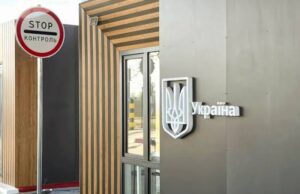
On Thursday, October 8, a new border crossing, “Bila Tserkva–Sighetu Marmatiei,” began operations on the border between Ukraine and Romania, according to Mykola Kalashnyk, Ukraine’s Minister of Recovery, Infrastructure, and Transport.
“This is the first new road crossing between our countries in Zakarpattia in nearly 20 years,” Kalashnik emphasized in a post on his Telegram channel.
He noted that this is the region’s third road border crossing with Romania. An additional route for people and businesses, an opportunity to redistribute traffic flows and reduce the burden on existing crossings.
“It is of particular importance for residents of the Solotvyno community, where Bila Tserkva is located. A large community of ethnic Romanians lives here, and many families have relatives on the other side of the border. The new crossing will make these trips—to parents, children, and loved ones—easier. It is precisely these daily needs of people that should determine how we develop our infrastructure,” the minister noted.
Currently, the border crossing can process up to 400 passenger cars per day. To launch it, an access road was built on the Ukrainian side, and modular infrastructure for border and customs control was installed. Romanian partners built the border crossing and a new bridge over the Tisa River.
“We’re opening traffic on the temporary infrastructure so that people can use the crossing right now. This is the first phase of the project. Next, we plan to build a full-scale complex for processing trucks and buses. Once the work is completed, it will be able to process up to 360 trucks and 50 buses per day,” Kalashnik concluded.
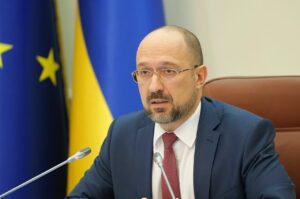
The Board of the Climate Investment Funds (CIF) has approved a $116.2 million investment plan for Ukraine as part of the Renewable Energy Integration (REI) program to develop cross-border interconnections, expand renewable energy capacity, and build energy storage systems, said Denys Shmyhal, Ukraine’s First Deputy Prime Minister for Energy.
“This will help accelerate the integration of the Ukrainian power system into the European energy grid and will also strengthen the transformation of the Ukrainian energy sector,” he wrote on his Telegram channel on Tuesday.
The plan was developed with support from partners at the World Bank and under the coordination of the International Finance Corporation and the European Bank for Reconstruction and Development.
The approved program will be implemented through two channels: public and private.
As part of the public-sector plan, an investment package worth approximately $200 million was put together in collaboration with the World Bank and NEC “Ukrenergo,” which, in particular, provides for the construction of a 400 kV cross-border interconnector between Chernivtsi -Suceava, which will provide additional transmission capacity of 880 MW toward Ukraine and 445 MW toward European power grids.
In addition, the package includes the modernization and enhanced protection of five high-voltage substations, engineering support for the implementation of the investments, as well as the modernization of Ukrenergo’s IT, telecommunications, and operational infrastructure.
At the same time, the private sector component is being developed by the IFC and the EBRD and involves supporting private investments in energy storage systems, specifically standalone BESS, which will provide 610 MW of battery storage capacity. The plan also includes renewable generation projects combined with storage, as well as other distributed energy solutions.
“The implementation of such projects will help increase the resilience of Ukraine’s power grid, which faces targeted attacks from the Russian Federation on a daily basis. I am grateful to the World Bank, the International Finance Corporation, the EBRD, and the CIF for their support and our close cooperation,” Shmyhal emphasized.
Board of Directors, CIF, Climate Investment Fund, Ukraine’s investment plan
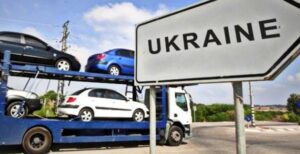
In September 2026, Ukrainians purchased 21,500 used passenger cars imported from abroad, which is 8% less than in the same month of 2025, according to a report by Ukravtoprom on its Telegram channel.
Compared to August of this year, demand for such cars rose by 4.4%.
Gasoline-powered cars accounted for the largest share of this segment of the auto market in September, increasing their share by 7 percentage points compared to September 2025—to 52%.
Next came electric vehicles, whose share fell to 18% from 29% last year, while the share of diesel cars decreased by 2 percentage points to 16%. They outpaced hybrids, which accounted for 11% (5%). The share of cars with LPG systems remained unchanged at 3%.
The average age of imported used cars was 8.7 years.
The Volkswagen Golf confidently tops the list of the ten most popular imported used models with 954 units. Next are the VW Tiguan with 807 units, the Audi Q5 with 658 units, the Skoda Octavia with 655 units, the Nissan Rogue—626 units, the Renault Megane—559 units, the Tesla Model Y—512 units, the Nissan Leaf—484 units, the Tesla Model 3—468 units, and the Volkswagen Passat—409 units.
As reported with reference to “Ukravtoprom,” in 2025, Ukrainians purchased 274,300 used passenger cars imported from abroad, which is 24% more than in 2024. Following the Volkswagen Golf, the top three most popular models included two Tesla electric vehicles—the Model Y and the Model 3.
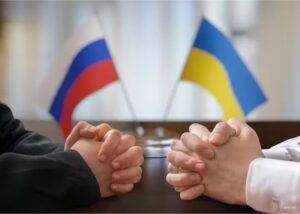
According to Interfax-Ukraine, most Ukrainians are open to territorial concessions to achieve long-term peace, provided there are security guarantees from the U.S. and European partners, and 57% support a ceasefire and seeking a compromise through negotiations, according to the results of a poll by the Rating Group conducted October 3–5.
“Most Ukrainians are ready for a ceasefire and support negotiations as a way to achieve peace. However, this does not mean peace under any conditions. The overwhelming majority believes that neither Ukraine nor Russia is winning the war at this time (62%). A quarter indicate that Ukraine has the upper hand (26%), while 6% say Russia does,” the report states.
Half of the respondents (50%) believe that peace is more important than any victory, while 41% hold the opposite view. Another 9% were undecided. The survey notes that, against the backdrop of intensified shelling in recent months, the proportion of those who consider victory more important has increased.
At the same time, 57% of those surveyed support a ceasefire and seeking a compromise through negotiations. Thirteen percent advocate continuing hostilities until a return to the line of control as of February 23, 2022, while another 21% believe it is necessary to continue hostilities until the territories of Donbas and Crimea are recovered.
The majority of respondents support negotiations as a path to ending the war: 57% view reaching a compromise with the involvement of other countries as the way forward, while another 26% favor direct negotiations.
“Territorial concessions are acceptable, but only with security guarantees, and the decision must be made in a nationwide referendum.” One-third of those surveyed support territorial concessions as a step toward long-term peace. At the same time, 56% believe that territorial concessions can be made for the sake of long-term peace, but only on the condition of security guarantees from the U.S. and European partners, which would include funding for the Armed Forces and military equipment. Only 3% support concessions without preconditions, while 6% answered “difficult to say,” according to the survey results.
If territorial concessions are considered a condition for peace, 68% of respondents believe that the final decision on this issue should be made by the people in a nationwide referendum. Meanwhile, 17% believe the decision should be made by the President of Ukraine, and 9% by the Verkhovna Rada. According to the study, this position has remained virtually unchanged over the past year.
As noted, the “Rating” Sociological Group conducted the survey October 3–5, 2026, using the CATI method among 1,000 respondents aged 18 and older in all regions of Ukraine, except for the ATO zone, as well as in areas where Ukrainian mobile service was unavailable at the time of the survey. The sample was formed by randomly selecting mobile phone numbers, and the results were weighted according to current data from the State Statistics Service. The sample is representative in terms of age, gender, and type of settlement; the statistical margin of error does not exceed 3.1 percentage points with a confidence level of 0.95.



