

In any grocery store, whether it is a chain hypermarket or a small shop near the house, we can see in the window the so-called “processed foods,” that is, those that are cooked, preserved, frozen, packaged or altered by adding additional substances.
The accessibility, convenience and clever marketing of ultra-processed foods make them very attractive to the consumer, who does not think that we pay for the consumption of such food with our own health.
A recent study by Brazilian scientists at the University of São Paulo found an “alarming” link between the increasing consumption of highly processed foods, such as white bread and sugary carbonated beverages, and premature death.
Researchers looked at 2019 mortality data in Brazil and concluded that consumption of ultra-processed foods caused 10 percent of premature deaths.
“Previous studies have assessed the health and economic burdens of food-critical ingredients such as sugar, salt and trans fats, as well as individual products such as sugary carbonated beverages,” study author Eduardo Nielson said in a statement.
“To our knowledge, no study to date has evaluated the potential effect of ultra-processed foods on the occurrence of premature death. Knowing the risks associated with eating such foods and modeling changes in the human diet can contribute to better food policies and prevent the onset and development of chronic disease,” Nielson added.
Ultra-processed foods such as packaged and ready-to-eat snacks, frozen pizza, sugary drinks and breakfast cereals form a significant part of the modern human diet. But a growing body of research links such eating behavior to high risks of obesity, dementia and cancer. Scientists also note that such foods are very low in protein and fiber and high in sugar, fat and salt.
Scientists believe that in high-income countries such as the U.S., U.K. and Canada, where ultra-processed foods account for about half of total calorie intake, the health effects of such diets would be higher.
Researchers say reducing the consumption of processed foods by 10 percent could potentially prevent between 5,900 and 29,300 premature deaths per year in Brazil.
The Club of Experts information and analysis project analyzed the effects of food additives on humans, see the video at this link for more details

Over 15 million tons of agricultural products were exported from Ukraine during the “grain deal”, Minister of Transport and Infrastructure of Turkey Adil Karaismailoglu said.
“According to the minister, from the first of August to December 25, 585 dry cargo ships departed from Ukrainian ports. A total of 15 million 80 thousand tons of 13 varieties of agricultural products were transported through the “grain corridor,” he said,” reports Anadolu.
He noted that 44% of the products coming from Ukraine were sent to European countries, 29% – to Asian countries, 15% – to Turkey and 12% – to African countries.
On July 22 in Istanbul with the participation of the UN, Russia, Turkey and Ukraine signed documents to create a corridor for the export of grain from three ports in the Ukrainian territory – Chornomorsk, Odessa and Yuzhny.

Curfew in Ukraine will not be canceled on New Year’s Eve, violators will be detained, the press secretary of the head of the National Police, Maryana Reva, said.
“People should understand that no matter what day we have – holiday or non-holiday – there are certain curfew requirements. Police officers will check individuals, check their documents, take them to police departments to identify or verify that person,” she said on the telethon.
Reva stressed that those who go out on New Year’s Eve could be prosecuted for violating the curfew.
She also noted that pyrotechnics and their sale, their use in almost all the territory of Ukraine is expressly prohibited and the police will respond to such cases.

Agricultural holding MHP, the largest producer of chicken in Ukraine, in November 2022 increased production of chicken by 9% to 64.89 thousand tons compared to the previous month, while its sales decreased by 2% to 60.69 thousand tons, according to the report of the agricultural group on the London Stock Exchange on Friday.
It is noted that the volume of chicken production in November 2022 is only 1% behind the same month of pre-war 2021, while its sales exceeded last November’s figures by 1%.
It is specified that the share of chicken exports in November this year increased by 2 percentage points (p.p.) over October 2022, and by 5 p.p. over November 2021, to 60% and 63%, respectively.
A total of 38,39 thousand tons of poultry were exported this November, up 2% from October 2022 and 5% from November 2021.
The domestic market sold 22,31 thousand tons of poultry in November 2022, 10% less than the previous month and 12% more than last November.
The average price of poultry sold in November 2022 decreased 4% to $1.85/kg compared to $1.75/kg (6% less) in November last year.
During the reporting period, MHP reduced sales of processed meat products and semi-finished products by 15% compared to October – to 2.97 thousand tons, and this figure is still 43% lower than in November 2021.
According to the agricultural holding, in November 2022 sales of sunflower oil jumped second to October this year, and by 91% to November 2021, to 51,19 thousand tons, while sales of soybean oil decreased by 89% to October this year and by 64% to November last year, to 0.84 thousand tons.
MHP also noted that this season the holding is harvesting 335 thsd. ha, with sunflower and soybean crops fully completed and corn harvested on 90% of acreage.
MHP is the largest producer of poultry in Ukraine. It is also engaged in the production of grain, sunflower oil, meat processing products. To the European market, MHP supplies chilled half-carcass chickens, which are processed, including at its facilities in the Netherlands and Slovakia. In February 2019, the agroholding completed the acquisition of Slovenian company Perutnina Ptuj.
MHP posted a net profit of $393 million in 2021 versus a net loss of $133 million in 2020, while its revenue rose 25 percent to $2.37 billion.
Ukrainian businessman Yuriy Kosyuk is the founder, majority shareholder and board chairman of MHP.
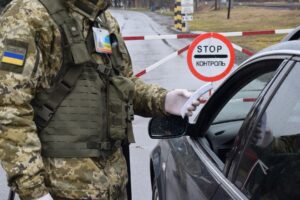
Passenger traffic across the western border from 17 to 23 December increased by more than a quarter: on departure from Ukraine – from 243 thousand to 301 thousand people, while on entry – from 231 thousand to 302 thousand, the State Border Service reported on Facebook.
Thus, according to the department, this week the outflow of people from the country, which has lasted five weeks in a row, gave way to a small influx of one thousand people.
Polish Border Guard Service also recorded a net inflow to Ukraine for the last seven days – 15 thousand people, whereas during the previous five weeks of outflow it amounted to 36 thousand people in total.
According to the Polish Ministry, the weekly flow from Ukraine to Poland increased from 153 thousand people to 184 thousand, while the return flow from Poland to Ukraine – from 149 thousand to 199 thousand people.
As a whole from the beginning of the war 8,638 million people arrived in Poland from the Ukraine, whereas in the opposite direction there were 6,814 million people.
According to the State Border Service of Ukraine, the number of cars crossed the western border of Ukraine increased from 127 thousand to 139 thousand, whereas the number of vehicles with humanitarian cargoes reduced from 643 to 593.
The agency warned that queues had increased in recent days, especially at the Polish border, due to the growth of passenger traffic and bad weather conditions.
As reported, since May 10, the flow to enter Ukraine through its western border every day almost a month exceeded the flow to leave. The net inflow during this time amounted to 188 thousand people. In subsequent weeks there was no such unambiguous trend, except for the week of the new academic year, when net inflow was a record 47 thousand people.
In general, statistics showed a gradual return of Ukrainians to their homes: the net influx for the period from May 10 to September 23 was 409 thousand people.
For the first time since May 10, the number of those who left Ukraine in a week exceeded the number of those who entered at the end of September. At that time, the net outflow was 28 thousand people at once, and one of the possible reasons was a reaction to mobilization in Russia and “pseudo-referendums” in the occupied territories, and then the probable reason for the outflow was massive shelling of the energy infrastructure. In total, since that time, the net outflow has been 117,000 people.
According to the UNHCR data as of December 20, a total of 16.595 million people left Ukraine since the beginning of the war (not including the flow of people into the country), of which 8.350 million left for Poland, 2.852 million for Russia (data has not been updated since October 3), Hungary – 1.930 million, Romania – 1.696 million, Slovakia – 1.024 million, Moldova – 726.7 thousand people, Belarus – 16.7 thousand.
At the same time, according to the UN data, 8.711 million people arrived in Ukraine from February 28 to December 20 (excluding Hungary, Russia and Belarus).
Passenger traffic through the western border of Ukraine, ths.
Date from Ukraine incl. Poland to Ukraine incl. Ukrainians number of cars humanitarian trucks, pcs.
23.dec 57 36 50 47 21 87
22.dec 43 25 44 41 20 90
21.Dec 46 27 42 38 20 108
20.Dec 38 22 35 31 19 58
19.Dec 35 21 39 36 18 76
18.Dec 39 23 48 44 20 84
17.Dec 43 25 44 39 21 90
16.Dec 39 24 34 30 19 118
15.Dec 37 23 34 31 19 99
14.Dec 35 20 30 27 18 55
13.Dec 31 18 30 26 18 78
12.Dec 30 19 33 31 17 69
11.Dec 32 19 34 31 16 59
10.Dec 39 24 36 32 20 165
Data: State Border Service
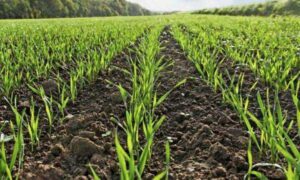
As of December 2022, up to 65% of winter crops are in good to excellent condition, while the condition of the remaining 30-35% will depend on weather conditions during the winter.
According to the website of the Ministry of Agrarian Policy on Friday, citing data from the Ukrhydrometcenter, the weather factor has not affected the condition of the crops this season.
“According to a visual assessment, on 65% (in 2021 – 56%) of the examined fields the plants entered the winter in good and excellent condition, on 28% (35%) of the areas the condition of plants was assessed as satisfactory. In 7% (9%) of the areas the plants were underdeveloped (did not reach the phase of development safe for overwintering). The majority of such crops (from 7% to 28%) are in Kharkiv, Vinnytsia, Odesa and Lviv regions”, – Ministry reports.
According to the Ministry of Agrarian Policy, the Ukrhydrometeocenter conducted a study of productive moisture reserves of arable soil layer under winter crops on October 28-30. At the majority of sown areas reserves of moisture were optimal (21-40 mm), in some areas of eastern, western and northern regions, the soil layer was overwatered (more than 40 mm of productive moisture). At the same time in southern and in some areas of central regions moistening of arable layer of soil was insufficient for the end of autumn (in some places less than 10 mm of productive moisture), the most such areas were in Odessa region.
Also according to agrometeorological surveys of winter crops, in the second half of November, 30-40% of areas plants reached mass tillering, which is favorable for overwintering. On the remaining areas formation of the 3rd leaf and foliage was noted. Plant height varied from 10 to 24 cm with an average of 250-510 plants per m2 and 600-670 plants on the best plots. Bushiness was formed in the range of 1.6-2.8 stems per plant.
As reported, Ukrainian Prime Minister Denis Shmygal in an interview with Interfax-Ukraine said that Ukraine will try to compensate for the smaller areas under winter crops this season by increasing the area under spring crops next year.
“This year winter grain crops were sown on 4.8 million hectares in the controlled territories. This is about 40% less than last year. We expect to sow more spring spring crops to compensate. But it is clear that the large mine contamination of fields, the factor of uncertainty and constant attacks of the enemy will have an impact on the quantitative indicators of our harvest next year. This is a problem that will have to be solved,” the prime minister said.
He stressed that the country’s government is working to attract international support, which should have a positive impact on next year’s gross harvest. Thus, the UN agricultural organization (FAO) has already agreed to provide the country with seed, which will increase the total area of spring crops sown in 2023 by 30%. For comparison, Ukraine during the sowing season 2022 planted 14.16 million hectares of main crops, or 83.7% of the 2021 indicators of 16.92 million hectares.



