
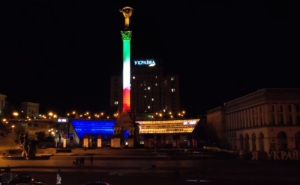
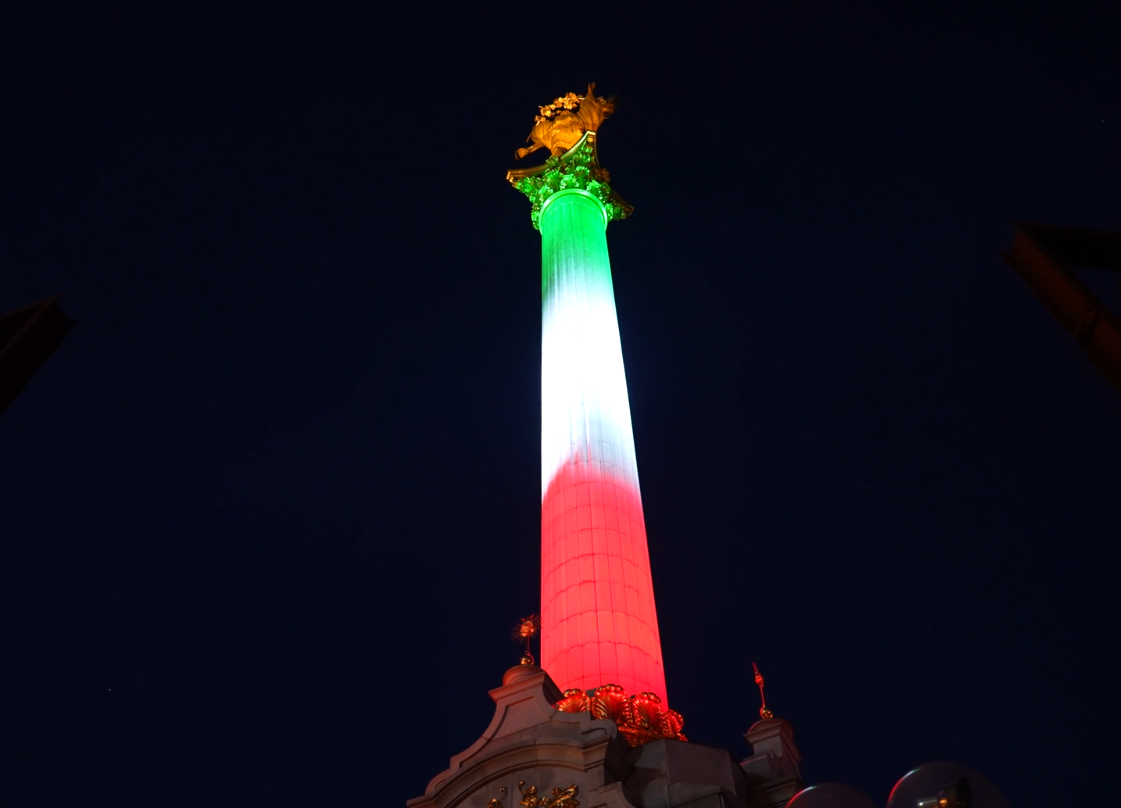
Kyiv hosted celebrations marking the 80th anniversary of the proclamation of the Italian Republic. On this occasion, the Independence Monument on Maidan was illuminated for the first time in history in honor of a foreign country—in the colors of the Italian tricolor, according to the Italian Embassy in Ukraine.
The events in Kyiv were hosted by Italian Ambassador to Ukraine Carlo Formosa. In his speech, he emphasized the connection between Italy’s historical experience after World War II and Ukraine’s current struggle for freedom and independence.
“Looking at today’s Ukraine and its resilience, memories come to mind of the sacrifices Italians made after the tragedy of fascism and the war to build a democratic state together. Just like our country eighty years ago, the courageous and unbreakable people of Ukraine are experiencing a moment when freedom ceases to be an abstract concept and becomes a daily, concrete, and precious choice,” the ambassador stated.
Formosa noted that Ukraine is defending not only itself but also principles vital to all of Europe: sovereignty, the right of a people to choose their own future, and the inadmissibility of using force as an argument in international relations.
“It is precisely thanks to its deep commitment to these values that Italy has stood unwaveringly by Ukraine’s side from the very first day of the Russian invasion. We continue to work together for a just and lasting peace,” the ambassador added.
The celebrations were attended by representatives of Ukraine’s state bodies, the Office of the President, the government, central and local authorities, as well as representatives of business, culture, science, the media, civil society, and the Italian community in Ukraine.
A separate part of the program was the exhibition “Renato Balestra. Codes of Haute Couture,” opened in Kyiv to mark the anniversary of the Italian Republic. The exhibition features eleven evening gowns from the fashion house, founded in Rome in 1959. The exhibition traces the over 60-year history of the Made in Italy brand, the legacy of its founder, and the fashion house’s contemporary development.
The Italian Embassy also provided photo and video materials showing the Independence Monument illuminated in the colors of the Italian flag. The materials are available for free use.
The Italian Republic was proclaimed following a referendum on June 2, 1946, as a result of which Italy abandoned the monarchy and became a republic. Republic Day is Italy’s main national holiday.

On May 27, 2026, the shareholders’ meeting of MetLife PJSC (Kyiv) approved a dividend payment of UAH 270.074 million (UAH 32.8 per share), the insurer reported via the NSSMC’s information disclosure system.
According to the published data, the payment will be made in U.S. dollars, subject to the restrictions established by the National Bank of Ukraine (NBU) on the transfer of foreign currency abroad by residents to a foreign investor/non-resident for the payment of dividends, effective from July 1, 2026, through November 27, 2026.
As reported, MetLife PJSC is part of the leading global corporation MetLife. It has been operating in Ukraine since 2002 and is the leader in the Ukrainian life insurance market.
Its main business areas include endowment life insurance, accident and critical illness insurance, corporate insurance, and bancassurance.
MetLife’s investment income in 2025 reached a record 1.19 billion UAH, which is 39.3% more than the previous year.
In 2025, the company collected 3.08 billion UAH in insurance premiums, which is 10.7% higher than the 2024 figure. The core of the portfolio is savings life insurance—over UAH 2.08 billion in premiums (+11%). The personal risk insurance segment (life + non-life) generated over UAH 1 billion for the company. During the reporting period, MetLife paid out UAH 623.6 million, a 23% increase compared to the previous year.
In early May 2026, the PZU SA Group announced that it had entered into a conditional agreement to acquire 100% of the shares in MetLife Ukraine.
The State Tax Service of Ukraine (STS) has uncovered evidence of a coordinated network of over 2,300 companies that effectively ceased to exist after conducting foreign economic transactions totaling over 198 billion UAH, reported Lesya Karnaukh, Acting Head of the STS.
“It took quite some time to uncover this scheme. Its participants are becoming increasingly inventive in their methods of concealing violations. To determine the riskiness of the transactions being conducted, we analyzed data sets using risk-based approaches… Such a concentration of management functions is atypical for real business and indicates signs of the organized use of such individuals as nominal managers,” she wrote on her Facebook page.
According to the agency head, the relevant data was obtained based on an analysis of information from the National Bank of Ukraine (NBU) regarding violations of payment deadlines for the period from 2024 to the first quarter of 2026. The majority of transactions involved the export of goods: 1,243 companies carried out exports totaling over 176 billion UAH, while 555 companies conducted import transactions totaling over 18 billion UAH.
Lesya Karnaukh specified that 73% of the offending companies and 78% of the total volume of transactions are concentrated in seven regions: Odesa, Dnipropetrovsk, Lviv, Kharkiv, Kyiv, and Zaporizhzhia regions, as well as in Kyiv. Tax authorities recorded the mass re-registration of hundreds of companies under the same individuals, as well as the use of shared IP addresses and mass registration addresses in Kyiv and Lviv. In particular, seven individuals were identified, each of whom simultaneously serves as the director or founder of over 500 companies.
Based on data from the National Bank of Ukraine, tax authorities have already conducted audits and assessed over UAH 70 billion in penalties for violations of foreign exchange legislation in the field of foreign economic activity. The State Tax Service has forwarded all collected materials to the Office of the Prosecutor General for a legal assessment. Regarding 557 business entities, the agency has already prepared analytical conclusions indicating violations of the law and signs of money laundering.
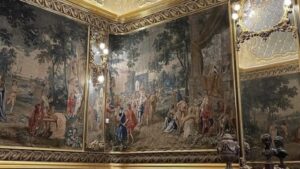
According to the Interfax-Ukraine Culture project, dozens of Kyiv museums will traditionally open their doors for free admission in June. Journalists from the culture department of the Interfax-Ukraine news agency have compiled a list of museums where you can explore the capital’s history, art, and cultural heritage without purchasing a ticket.
Museum June will begin on June 2 with an open house at the National Museum of Ukrainian Folk Decorative Art on the grounds of the Kyiv-Pechersk Lavra.
The very next day, June 3, free admission until 2:00 p.m. will be available at three popular art venues in the capital—the National Museum “Kyiv Art Gallery,” the Khanenko Museum, and the “Chocolate House” Art Center.
On June 19, you can visit the Museum of Outstanding Figures of Ukrainian Culture for free.
The largest number of museums offering free admission will open on June 24. On this day, the National Museum of Ukrainian History, the Museum of Ukrainian Literature, the Museum of the History of Kyiv, the Museum of the 1960s Movement, the Museum of the Ukrainian Diaspora, the Sholom Aleichem Museum, the Museum of the Occupation of Kyiv, the Museum of the Avant-Garde, the Kudriavka Estate, and the Museum of Books and Printing of Ukraine will welcome guests.
On June 25, the Taras Shevchenko National Museum, the Taras Shevchenko House-Museum “Hata na Priortsi,” the Mykhailo Hrushevsky Historical and Memorial Museum, and the Mykhailo Bulgakov Literary and Memorial Museum will hold open house events.
The following day, June 26, free admission will be available to the Hetmanate Museum, the Ivan Honchar Museum National Center for Folk Culture, and the Kyiv Fortress National Historical and Architectural Museum.
At the end of the month, the Maria Zankovetska House-Museum, the Kyiv Literary and Memorial Museum of Maksym Rylsky, and the Pavlo Tychyna Literary and Memorial Apartment Museum will join the campaign, and visitors will be able to visit them for free on June 28.
On June 29, the Viktor Kosenko Apartment Museum and the Museum of Theater, Music, and Cinema Arts of Ukraine will open their doors to visitors.
The National Museum of the History of Ukraine in World War II will conclude the June program of free visits on June 30.
In addition to these special days, the Boris Paton State Polytechnic Museum, the Museum of Modern Art of Ukraine, and the Apple Museum on Khreshchatyk offer free admission on a regular basis.
Meanwhile, the Forest Museum can be visited for free every Wednesday, and the Money Museum of the National Bank of Ukraine offers free tours upon prior online registration.
https://interfax.com.ua/news/culture/1173008.html
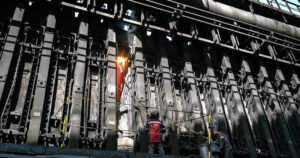
PJSC Zaporizhkox, one of Ukraine’s largest producers of coke and coke-chemical products and a member of the Metinvest Group, increased its blast furnace coke production by 0.4% in January–May of this year compared to the same period last year, reaching 359,400 tons.
According to the company, 77,700 tons of coke were produced in May, compared to 75,000 tons in the previous month.
“In times of greatest trials, it is not only resources or technology that matter, but the unity of people. We have learned to work in conditions of uncertainty, respond quickly to challenges, support one another, and stay the course together. It is this solidarity that helps us endure, maintain production, and move forward even during the most difficult times,” said Zaporizhkox CEO Oleksandr Bekhter.
As reported, Zaporizhkox increased its output by 2.7% in 2025 compared to 2024—to 898,300 tons, while in 2024, it increased by 2.1% to 874,700 tons from 856,800 tons in 2023.
Zaporizhkox possesses a full technological cycle for the processing of coke-chemical products.
Metinvest is a vertically integrated mining and metallurgical group of companies. Its main shareholders are the SCM Group (71.24%) and Smart Holding (23.76%). Metinvest Holding LLC is the management company of the Metinvest Group.

According to the Interfax-Ukraine Culture project, the opening of the 14th International Book Arsenal Festival. The National Cultural, Art, and Museum Complex “Mystetskyi Arsenal.” May 28, 2026 | Photo: Interfax-Ukraine / Oleksandr Zubko
The 15th International Book Arsenal Festival will take place May 27–30, 2027, in Kyiv, according to the PR & Communication Department of the Art Arsenal.
This year, the 14th Book Arsenal, which concluded on Sunday, took place for the fourth time amid Russia’s full-scale invasion of Ukraine. The festival program featured a record number of events since 2022, taking place simultaneously across several stages and venues: the Main Stage, Literary Stage, Street Stage, Authors’ Stage, Discussion Stage, Publishing Stage, the Literary Garden, the Lecture Hall, BookLab, and the Teen Space. In total, there were over 240 events—public discussions, lectures, presentations, author and poetry readings, talks, workshops, musical events, performances, and book signings. Due to air raid alerts and safety concerns, several events on the program were canceled or shortened, while others took place in shelters in an informal setting.
Despite the air raid alerts that interrupted the festival’s proceedings and numerous warnings of potential large-scale Russian shelling during those days, the 14th Book Arsenal attracted 27,000 visitors. A total of 111 major and 25 small publishing houses, the book.ua bookstore, as well as military and volunteer initiatives, presented their booths. 12 graphic artists presented their works at the Illustrators’ Fair. The venue also hosted 15 exhibition projects.
“We are delighted that we managed to carry out practically everything we had planned. Air raid alerts, of course, caused us some trouble and disrupted a number of important events. But we are aware that this is part of organizing a festival during wartime, and we are grateful to all our participants and visitors who quickly and calmly took shelter and, after the all-clear, returned and continued the festival again and again. This ability to live and work despite everything is inspiring,” noted Olesia Ostrovska-Lyuta, General Director of the Art Arsenal.
According to Yulia Kozlovets, Director of the International Festival, the “Book Arsenal” theme became the common language of the forum’s participants and guests.
“The best confirmation of a theme’s relevance is when it ceases to be a festival slogan and becomes the language in which visitors speak to one another.
This year, the metaphor ‘Carry Your Freedom’ resonated exactly like that. What is particularly valuable is that numerous military and veteran initiatives, charity events, and volunteer projects are now naturally integrated into the festival—not as a separate program, but as part of our shared reality. “The Book Arsenal doesn’t provide simple answers, but it creates a space for meetings and conversations that deepen our understanding of our own experiences, strengthen connections between people, and give us a little more strength to keep living and doing our work,” Kozlovets emphasized.
Over 230 guests took part in Book Arsenal events. The festival featured voices of Ukrainian and international guests from Poland, France, the U.S., Canada, Germany, Moldova, Belgium, Hungary, Romania, Slovakia, and the U.K.
This year marked the third edition of the Book Arsenal Fellowship Program—a professional initiative that brought eight foreign publishers, agents, and rights managers from the Czech Republic, Sweden, Germany, Italy, Lithuania, Egypt, Georgia, and Peru to the festival. As part of this program, 115 B2B (Business to Business – IF-U) meetings took place, involving 31 publishing houses and 5 literary and graphic agencies.
Over 150 volunteers joined the Book Arsenal team.
https://interfax.com.ua/news/culture/1172954.html



