
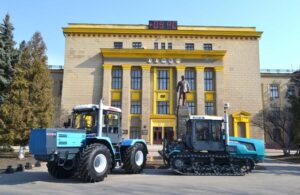
According to Fixygen, PJSC Kharkiv Tractor Plant will hold a remote general meeting of shareholders on March 27, 2026, through the Ukrainian depository system.
The agenda includes the approval of annual results and reports, review of management reports, decisions on the distribution of profits or coverage of losses, as well as organizational issues.
Kharkiv Tractor Plant PJSC is one of the largest machine-building enterprises in Ukraine, founded in 1930 in Kharkiv. The plant specializes in the production of tractors and equipment for the agricultural sector.

According to Fixygen, Altera Asset Management will hold a remote general meeting of shareholders on March 13, 2026, through the Ukrainian depository system.
The agenda includes typical annual meeting items, such as approval of annual reports, review of management reports, distribution of profits or coverage of losses, approval of the auditor, and other items within the competence of the general meeting.
Altera Asset Management PJSC is an asset management company operating in the collective investment market.
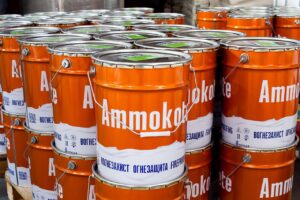
Ukraine needs a modern national fire testing center of European standard, with an expanded material and technical base and the possibility of full integration into the European conformity assessment system, said Konstantin Kalafat, director of Kovlar Group LLC, in an exclusive interview with Interfax-Ukraine.
“European integration processes in our country have launched a mechanism for adapting national standards to EU norms and introducing technical regulations. Technical requirements for building materials are now regulated by more than 500 harmonized national standards and about 300 so-called European documents on determining acceptability. Each of them contains dozens of product indicators that the manufacturer must confirm through testing in appropriate laboratories. Unfortunately, Ukraine currently does not have a testing laboratory that could conduct a full range of tests on building materials according to these indicators,” Kalafat said.
As for individual tests of fire-resistant materials and the availability of laboratories, there are accredited testing centers in Ukraine that allow such types of certification tests to be carried out. Kovlar Group has been cooperating with one of these centers since its inception. As Kalafat emphasized, professional fire tests of fire protection are a very important component of market stability and transparency.
“That is why Ukraine today needs a modern national fire testing center of European level – with an expanded material and technical base and the possibility of full integration into the European conformity assessment system. As industry experts, we are ready to join in initiating and implementing such a project. The development of a testing base is not a matter of competition between manufacturers, but a matter of the competitiveness of the entire country and trust in Ukrainian products at the international level,” he concluded.
Kovlar Group LLC was founded in 2015 in Kyiv and is the largest manufacturer of passive fire protection products in Ukraine. According to OpenDataBot, the company’s authorized capital is UAH 1.2 million, and its ultimate beneficiaries are Kostyantyn Kalafat (40%), Andriy Ozeychuk (35%), and Lyubov Vakhitova (25%). The company’s revenue for 2024 amounted to UAH 91.3705 million, which is twice as much as in 2023, and its net profit was UAH 13.4 million, which is 1.7 times more than in 2023. In the first quarter of 2025, the company’s revenue amounted to UAH 13.5 million, and net income amounted to UAH 1 million 983 thousand.
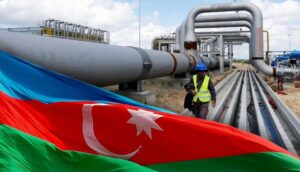
According to Serbian Economist, Azerbaijan has expressed its readiness to assist Montenegro in connecting to the Trans Adriatic Pipeline (TAP), said Dino Tutundzic, State Secretary of the Ministry of Energy and Mining of Montenegro, in an interview with Report.az. According to him, Podgorica considers the Ionian-Adriatic Pipeline (IAP) to be a strategic regional project that should connect Montenegro to TAP and, through it, to the Southern Gas Corridor and Caspian supplies.
Tutundzic said that Montenegro plans to intensify negotiations with neighboring countries – Croatia and Albania – and focus on preparing the infrastructure base, after which it will be possible to talk about gas delivery to end consumers. He also noted Azerbaijan’s interest in participating in Montenegro’s energy projects, including in the renewable energy segment.
The issue of connecting Montenegro to TAP has its own specific features: the country still makes virtually no use of natural gas, as it has no gas market or gas distribution network. This is evident from the report of the Energy Community Secretariat, which explicitly states that “there is no gas market in Montenegro” and “there is no gas network.”
TAP is part of the Southern Gas Corridor, connecting supplies from the Caspian region to European markets via Greece, Albania, and the Adriatic Sea, with access to Italy.
https://t.me/relocationrs/2379
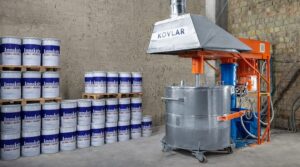
Kovlar Group, a manufacturer of passive fire protection products in Ukraine, is studying the European market but focusing on creating products for the domestic market, said Konstantin Kalafat, director of Kovlar Group LLC, in an exclusive interview with Interfax-Ukraine.
“We are actively studying the European market and working on harmonizing technical documentation and conformity assessment procedures. As for exports, this is a challenge, because the European market for niche products such as ours is already established, and consumers prefer more stable solutions when it comes to safety, so it is difficult to find customers,” he said.
According to him, the main obstacle to rapid entry into EU markets is currently the complexity of certification procedures in the context of the war—foreign auditors and technical experts are not always able to come to Ukraine to conduct the necessary audits and technical inspections. However, entry into European markets remains part of the company’s strategic plans.
At the same time, Kovlar Group’s products are competitive in terms of quality and cost. “Fire protection is a high-tech and knowledge-intensive industry where proven characteristics are crucial. Over the past 10 years, the requirements for thin-layer fire protection coatings have doubled due to the need to ensure the stability of metal structures during a fire – from 90 to 180 minutes, and we are trying to keep up with this trend. In terms of certain parameters – system efficiency, optimal layer thickness, and stability of results – some of our solutions are on par with, and sometimes even surpass, their European counterparts,” Kalafat emphasized.
Currently, the company’s priority is the domestic market, especially given the growing demand for Ukrainian materials in connection with large-scale restoration and reconstruction programs.
“In this context, our advantage over imports is obvious: short logistics, prompt delivery, the ability to quickly respond to changes in project decisions, instantly provide technical advice, and visit sites. During wartime and the post-war period, the speed of engineering decisions and stability of supply are often critical.
We hope that with the end of military risks, the quality of the implemented projects will become an additional argument for the effective realization of the export potential of Ukrainian passive fire protection systems,” he says. Kovlar Group LLC was founded in 2015 in Kyiv and is the largest manufacturer of passive fire protection equipment in Ukraine.
According to OpenDataBot, the company’s authorized capital is UAH 1.2 million, and its ultimate beneficiaries are Kostyantyn Kalafat (40%), Andriy Ozeychuk (35%), and Lyubov Vakhitova (25%). The company’s revenue for 2024 was UAH 91.3705 million, which is twice as much as in 2023, and its net profit was UAH 13.4 million, which is 1.7 times more than in 2023. In the first quarter of 2025, the company’s revenue was UAH 13.5 million, with a net income of UAH 1,983,000.
According to the results of 2025, Ukraine provided domestic exporters of animal and plant products with access to 22 new foreign markets, said Serhiy Tkachuk, head of the State Service for Food Safety and Consumer Protection, during a public report on Thursday.
According to him, this figure is a record for the period of full-scale war.
“Last year, we opened 22 new export markets. Currently, work is underway to open about 300 more. It does not stop there, because it is our priority to ensure that small, medium, and large Ukrainian businesses have the opportunity to export their products worldwide,” emphasized the head of the State Service.
According to the data presented, in 2025, the Chinese market opened up to Ukrainian peas, wild-caught seafood, and aquatic products. India and Canada allowed the import of Ukrainian apples. Canada also opened its market to table eggs.
“Each new certificate is the result of lengthy technical negotiations and audits. For example, opening up markets in countries such as Canada or China requires strict adherence to high safety standards,” added Tkachuk.
In addition, the Albanian market became accessible for table eggs, Argentina for sunflower seeds, and Kuwait for processed food products. Malaysia has opened access for milk, dairy, and egg products. Vietnam and Moldova have allowed the import of dairy products not intended for human consumption. The Chilean market has opened up for meat and bone meal and feather meal, and Turkey for canned animal feed.
Tkachuk noted that since 2022, Ukraine has managed to open a total of 75 new markets, despite logistical and political challenges.
“Even in the conditions of war, we continue to expand our geography. Currently, Ukraine has the right to export agricultural products to 386 trade destinations,” he specified.
The State Service of Ukraine for Food Safety and Consumer Protection is currently exploring opportunities to access markets in Asia, the EU, America, and the Middle East. In particular, work is underway to open the Canadian market for Ukrainian wheat, corn, soybeans, and rapeseed, as well as to expand the presence of plant products in China.



