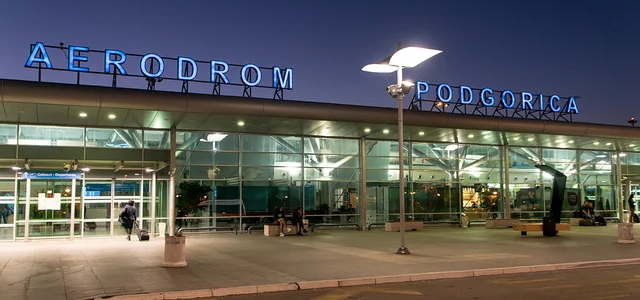
According to “Serbian Economist”, a South Korean consortium led by Incheon International Airport Corporation has withdrawn from the process of awarding a 30-year concession to operate the international airports in Podgorica and Tivat.
On July 18, the Montenegrin government announced that it had received an official letter stating the consortium’s withdrawal from further participation in the process. The reasons for the South Korean side’s decision have not yet been disclosed. The government stated that it does not intend to completely abandon the idea of bringing in a private operator, but will not agree to terms that could conflict with the public interest.
Incheon had been considered the winner of the tender. In April 2026, the Montenegrin government decided to proceed with signing a concession agreement with the South Korean consortium. The proposal called for a one-time payment to the state of 100 million euros, an annual transfer of 35% of the airports’ gross revenue, and approximately 300 million euros in mandatory investments over 30 years. The total financial benefit for the state was estimated at over 1 billion euros.
The investment program was to include terminal expansions, modernization of runway and apron infrastructure, implementation of new passenger service systems, and increases in airport capacity. However, the draft agreement was criticized for lacking a detailed breakdown of the €300 million in investments by individual phases and for making part of the work contingent on the state resolving property issues.
Incheon’s withdrawal poses several risks for Montenegro. The main one is a further delay in the modernization of airports that are strategically important for tourism. An increase in passenger traffic without the expansion of terminals and aprons could exacerbate queues, infrastructure overload, and seasonal disruptions, especially in Tivat.
The country also risks losing out on the planned one-time payment of 100 million euros and delaying the attraction of 300 million euros in private investment. A repeat tender or negotiations with another bidder could take a long time, and new financial terms may prove less favorable.
Reputational uncertainty is another negative factor. If the selected investor withdraws after the government has already made its decision, this could raise questions among other international operators regarding the terms of the tender, legal certainty, and the speed of approval for major infrastructure projects in Montenegro.
In June 2025, Serbian Finance Minister Sinisa Mali stated that Belgrade was interested in managing the airports in Podgorica and Tivat and was prepared to offer significant investments. However, Montenegrin authorities reported at the time that no official bid had been received from Serbia as part of the ongoing tender process.
AIRPORT, CONCESSION, Incheon, INVESTMENT, MONTENEGRO

Related: