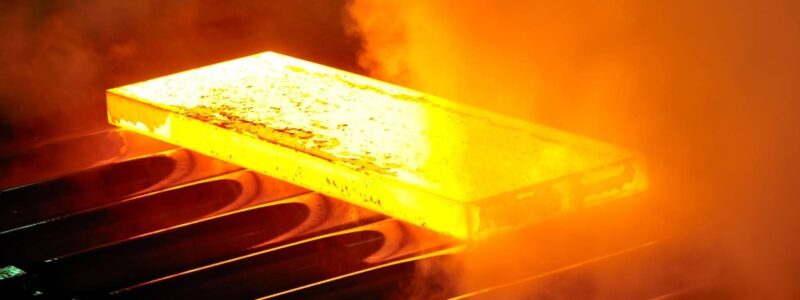
Ukrainian metallurgical companies may increase steel production by 17% in 2026, to 8.9 million tons from 7.6 million tons in 2025, said Serhiy Povazhnyuk, deputy director of the state-owned enterprise Ukrpromzovnishchexpertiza, in an interview with telegraf.com.ua.
According to him, the main factors limiting production were security-related military risks, staff shortages, unstable electricity supplies due to missile and drone strikes on energy infrastructure, and the continuing shortage of scrap metal on the domestic market.
“As for the forecast for 2026, metallurgical plants have already announced plans to significantly increase liquid steel production, to approximately 8.9 million tons,” the expert said.
At the same time, he noted that the Ukrainian metallurgical industry is experiencing an acute shortage of ferrous metal scrap, in particular due to the growth in exports of this raw material abroad.
“If metallurgical plants manage to implement the planned increase in production, there may simply not be enough scrap metal collected. Domestic consumers should be given priority in terms of raw material supplies, especially now, during wartime,” said Povazhnyuk.
He cited calculations according to which 1 ton of scrap metal, which is processed into metal products at Interpipe’s facilities, for which scrap is the main raw material, brings the state UAH 7,500 in taxes. In addition, 1 ton of scrap used at Metinvest Group’s plants generates about UAH 9,300 in tax revenues to budgets at all levels.
As Povazhnyuk emphasized, this is a direct benefit that the state receives by keeping all scrap metal in the country and processing it into steel. In addition, such processing has a multiplier effect on the entire economy, as it stimulates growth in related industries, such as the production of iron ore, coke, and ferroalloys.
“All this needs to be transported within the country, which means that the transport industry receives additional cargo. According to calculations, these sectors will pay an additional 5.5-5.8 thousand UAH in taxes to the budget per ton of scrap metal consumed. Therefore, the total effect for the budget from processing 1 ton of scrap metal in Ukraine will be 13-14 thousand hryvnia/ton. In addition to cash inflows to the budget, metallurgical plants provide tens of thousands of official jobs for themselves and related enterprises,” the deputy director argued.
In addition, Povazhnyuk stated that exporters pay taxes and payroll charges (personal income tax, social security contributions, military tax), land tax, and income tax.
“According to our data, in 2024, the largest exporting companies, which accounted for almost 90% of Ukrainian scrap metal exports, exported a total of 247,000 tons of raw materials abroad, paying a total of only UAH 12.3 million in taxes. Thus, the state received an average of UAH 50 in taxes for each ton of scrap metal exported. The official number of employees in these companies was only a few dozen people,” said the expert, specifying that the calculations were made based on open data on the financial performance of companies available through the OpenDataBot service and other public sources.
At the same time, Poland has begun discussing the abolition of trade preferences for the Ukrainian metallurgical industry due to Ukraine’s intentions to introduce a de facto ban on the export of ferrous metal scrap. This was written on his social media page by Michal Poluboczek, a member of the Polish Sejm from the Confederation party.
According to the draft resolution of the Cabinet of Ministers “On the approval of lists of goods subject to licensing for export and import, and quotas for 2026,” it is proposed to set the quota for ferrous metal scrap for the next year at zero, which means a de facto ban on the export of ferrous metal scrap.
As reported, in January-November 2025, Ukrainian scrap collection companies increased exports of ferrous metal scrap by 45.3% compared to the same period in 2024, from 261,578 thousand tons to 380,165 thousand tons. In monetary terms, scrap exports increased by 37.4% to $112.782 million from $82.056 million. During the period in question, scrap exports were formally carried out mainly to Poland (79.80% of shipments in monetary terms), Greece (7.61%), and Italy (5.70%).
In addition, it was reported that due to the sharp increase in exports of strategic raw materials from Ukraine, the Ministry of Economy initiated the introduction of a licensing and quota regime for scrap exports with a zero quota. A public discussion of the draft resolution is currently underway. Its implementation is expected to contribute to the smooth operation of Ukraine’s metallurgical and foundry industries, as well as to stabilize the situation with regard to meeting the demand for scrap on the domestic market.
In 2024, Ukraine’s scrap collection companies increased their exports of ferrous metal scrap by 60.7% compared to 2023, from 182,465 thousand tons to 293,190 thousand tons. In monetary terms, scrap exports for the year increased by 73.2% to $91.311 million from $52.723 million.
Earlier, Valentin Makarenko, chairman of the board of Interpipe Vtormet, said in an interview with Interfax-Ukraine that ferrous metal scrap exports have always been and remain a threat to the Ukrainian metallurgical industry, as they exacerbate the shortage of this raw material on the domestic market. In addition, this problem is compounded by the fact that during the war, the area suitable for scrap collection is shrinking.
Previously, large metallurgical plants most often compensated for the shortage of scrap mainly by increasing the consumption of pig iron during steel smelting. However, due to the shutdown of the Pokrovsk coal mining group and the increase in coking coal imports, replacing scrap with pig iron has become economically unfeasible in converter steel production.
According to Makarenko, at the same time, the importance of scrap as a raw material for decarbonization of industry is growing. The electrometallurgical method of steel smelting is becoming the most efficient and popular for the manufacture of metal products and their subsequent sale on European markets in order to minimize the impact of the “carbon” tax. Recognizing this trend, the European Union is resorting to various regulatory measures that allow ferrous metal scrap to remain within the bloc, and local steel mills have the raw materials to produce steel in the most economical and environmentally friendly way.
“Today, I don’t see any other effective mechanisms for stabilizing the market and reducing scrap exports, except for an administrative ban on the export of this strategic raw material outside Ukraine at the state level,” the chairman of the board summed up.
For more information on the largest steel producers and global industry trends, see the Experts Club video analysis review available on YouTube: Experts Club — Leaders of the global steel industry 1990–2024