The focus of summer vacations in Ukraine in 2026 has shifted toward mountain resorts and city tours, with budgets increasing by 25–40% compared to the previous vacation season, according to the analytics department of Ribas Hotels Group.
“Today, Ukrainians need rest and a safe place to recharge more than ever. And although access to international travel is currently limited, there are many places in Ukraine where you can relax on a variety of budgets,” noted Yelyzaveta Voloshyna, the company’s head of B2C sales and marketing.
At this stage, opportunities for seaside vacations are concentrated in the Odesa region.
The advantages of seaside resorts near Odesa include: a more peaceful vacation compared to the city, a family-friendly atmosphere in coastal villages, and lower costs compared to other leisure options. “But, unfortunately, choosing a seaside destination has its downsides, including security concerns and closed beaches, as well as underdeveloped infrastructure and a limited number of hotels where the price matches the quality,” Voloshina noted.
In recent years, demand for short getaways in cities and suburbs has been growing. Among the advantages is a developed infrastructure, which allows you to change your leisure plans on any given day if you wish. For example, in Odesa, with its officially open beaches, you can choose a day at the beach, a food tour, or exploring historical sites. There is also a wide range of vacation options to choose from, ranging from budget to premium. Most importantly, cities offer more accommodation options. The only downside to such a vacation in Odesa is the large number of people during the season.
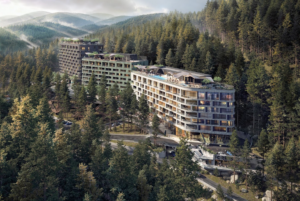
At the same time, according to a study conducted by the company, mountain resorts lead the way in vacation plans. The pros of this type of vacation include: a greater share of modern amenities, safety, health benefits, a variety of activities, and many excursions. The cons include unstable weather, overcrowding, and high costs for lodging and attractions during peak season.
Regardless of the destination chosen, the “base” of the vacation budget will include four types of expenses. The largest share of the cost—40 to 50% of the vacation budget—will go toward accommodation. In high-end hotels, this share may be even higher, as the cost includes not just a bed, but also amenities: a spa, pools, and service.
According to Ribas Hotels Group estimates, this year the budget for accommodation in country estates or simple apartments is 800–1,500 UAH/night. For mid-range aparthotels and 3-star hotels, the cost is 1,800–3,500 UAH/night. Accommodation in hotels with a spa, pool, and excellent service will cost even more: 3,500–6,000 UAH per night. And a stay at a premium hotel will cost around 6,000–12,000+ UAH per night. For comparison: in 2025, guesthouses and basic apartments could be found for 600–1,200 UAH/night, 3-star hotels for 1,200 to 2,600 UAH/night, and hotels with a spa and pool in the range of 3,000–5,000 UAH/night.
In other words, in 2026, each segment became more expensive by an average of several hundred hryvnias per night (by 25–40%). The reason is the consistently high demand for domestic travel amid limited opportunities to travel abroad, as well as rising hotel operating costs: the cost of electricity for businesses in 2026 is 11.50–12.50 UAH per kWh, compared to 10.4 UAH in 2025; fuel prices have risen by 13.2% annually, according to the State Statistics Service.
Food and beverage costs rank second in terms of expenses, accounting for 20–30% of the total. This includes both main meals and “ambience” costs: coffee with a view, an evening cocktail, and regional cuisine. The food budget is typically calculated as 200–400 UAH per person for breakfast, 300–600 UAH for lunch, and 400–800 UAH for dinner.
“Thus, the average daily cost per person ranges from a minimum of 500–700 UAH to a comfortable 1,500–2,000 UAH,” said Voloshyna.