

The Antimonopoly Committee of Ukraine (AMCU) approved PrJSC “Kyivstar”’s acquisition of control over LLC “GigaCloud”—the cloud provider GigaCloud.
The AMCU adopted the relevant decision on July 9, 2026.
GigaCloud is a cloud service provider founded in 2016 that specializes in providing relevant services to businesses. The company’s clients include the agricultural holding Kernel, Naftogaz, and others.
In late May, during the “Business Breakfast with Volodymyr Fedorin,” Kyivstar President and CEO Oleksandr Komarov declined to comment on a possible acquisition of GigaCloud but also noted the group’s interest in strengthening its position in the cloud business.
“This is one of our strategic priorities. It could happen organically, since we are a major Microsoft partner—we are currently building our own cloud. It could also happen inorganically if we identify attractive targets,” Komarov emphasized.
In June 2025, the mobile operator launched its own cloud service for Ukrainian users, Kyivstar Cloud, which is available to small, medium, and large businesses, as well as public sector organizations.
In the first quarter of 2026, Kyivstar increased its EBITDA by 28.5% to 7.5 billion UAH, while revenue grew by 31.3% to 13.9 billion UAH.
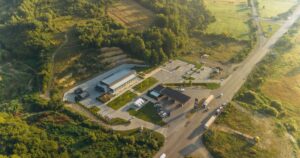
The agro-industrial holding Astarta is considering the sale of its agricultural enterprise, Chernihiv Eco Plus LLC, which cultivates approximately 4,000 hectares of land and has associated production infrastructure; the buyer is Ridne Group of Companies LLC, a company affiliated with the Ridne consortium “Ridne Group of Companies” LLC.
According to Astarta’s announcement on the Warsaw Stock Exchange, the decision to sell is in line with the company’s strategy to review its agricultural portfolio and is aimed at optimizing its land bank by focusing on regions with higher agronomic efficiency and yield potential.
On July 2, the potential buyer already received approval from the Antimonopoly Committee of Ukraine to acquire control over the asset.
At the same time, Astarta noted that obtaining such approval was a procedural step that allows the parties to continue assessing the feasibility of the deal. As of the end of last week, a final agreement on the sale of the asset had not been concluded.
“Astarta” is a vertically integrated agro-industrial holding company operating in seven regions of Ukraine and is the country’s largest sugar producer. The company’s portfolio includes five sugar refineries, agricultural enterprises with a land bank of 214,000 hectares (including 129,000 hectares in Poltava Oblast, 42,000 hectares in Khmelnytskyi Oblast, and 16,000 hectares in Vinnytsia Oblast), and dairy farms with 30,000 head of cattle. The holding company also operates a soybean processing plant and a bioenergy complex in the Poltava region, as well as a network of six grain elevators. Astarta’s shares are listed on the Warsaw Stock Exchange.
Astarta’s net profit for 2025 fell 4.2-fold to $19.94 million, while consolidated revenue decreased by 23% to $472 million.
The co-owners of “Ridne Group of Companies,” on an equal footing, are Oleksiy Khvorostiany and Serhiy Kovalchuk, the CEO and COO of the “Ridne” consortium, respectively.
According to information on its website, the “Ridne” consortium was established in 2022 following the start of the Russian invasion; it brings together 80 farms and 11 Ukrainian food producers: cereals, flour, canned meat, vegetables, and fish, pasta, sunflower oil, and dairy products, and also operates its own packaging center.
The consortium members listed include Ridne Food Factories LLC (Ivanki, Cherkasy Oblast), Grocery Products Factory LLC (TM “Zhmenka,” Skvyra, Kyiv Oblast), Central Fish LLC (Cherkasy), KLM Group LLC (Kyiv), Agroproduct LLC (Znam’yanka, Kirovohrad Oblast), “Conservatory” Canning Plant LLC (Kolomyia, Ivano-Frankivsk Oblast), the Bila Tserkva Agro-Industrial Group (Bila Tserkva, Poltava Oblast), “Fabrika Zdorovo” LLC (Chernihiv), “Azot Agro” JSC (Cherkasy), and “Nadiya” LLC (Zlatopil, Kharkiv Oblast).
AGRICULTURAL HOLDING, AMCU, asset, ASTARTA, Chernihiv Eco Plus, LAND BANK, Ridne
The Antimonopoly Committee of Ukraine (AMCU) may grant permission on Thursday to the Saudi company FAS Energy to acquire four solar power plants from the Ukrainian group of companies SPP Development Ukraine.
According to the committee’s materials, four applications from the commercial company “FAS Energy” regarding the acquisition of more than 50% of the shares in Borodianka Solar Power Plant LLC, “Myhalivska Solar Power Plant,” “Solar Power Plant No. 8,” and “Solar Power Plant No. 11,” which are owned by the Ukrainian group of companies SPP Development Ukraine.
“On granting permission to the commercial company ‘FAS Energy’ to acquire control over Borodianka Solar Power Plant LLC through the direct purchase of shares in the authorized capital, which ensures a majority of more than 50% of the votes in the company’s highest governing body,” – reads one of the four AMCU issues regarding FAS Energy brought up for consideration at Thursday’s meeting.
SPP Development Ukraine is a Ukrainian group of companies specializing in renewable energy and energy infrastructure. The company integrates services in development, engineering, construction, project management (EPC), and operations and maintenance (O&M).
The ultimate beneficial owners (founders) of SPP Development Ukraine LLC are Ukrainian entrepreneurs Roman and Nadiya Petruchenko.
AMCU, FAS Energy, RENEWABLE ENERGY, SOLAR POWER PLANTS', SPP Development Ukraine
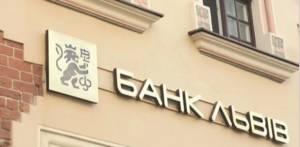
The Antimonopoly Committee of Ukraine (AMCU) has authorized Credit Agricole Bank to acquire control over Bank “Lviv.”
The committee adopted the decision at a meeting on Thursday following its review of the bank’s application dated May 13, 2026.
The AMCU also authorized Credit Agricole Bank and six shareholders of Bank Lviv—who collectively own 99.972126% of its shares—to fulfill the non-solicitation, non-hiring, and non-competition provisions set forth in the purchase and sale agreement.
As previously reported, in March 2026, Credit Agricole Bank signed an agreement to acquire up to 100% of the share capital of Bank Lviv. The transaction amount was not disclosed. Its completion also depends on obtaining approval from the National Bank of Ukraine.
Credit Agricole Bank plans to leverage Bank Lviv’s regional expertise to develop the small and medium-sized business segment, with a focus on the agricultural sector throughout Ukraine.
Combining their assets would enable Credit Agricole to enter the top ten banks in Ukraine, displacing OTP Bank from that ranking.
Credit Agricole Bank was founded in 1993. Its sole shareholder is Credit Agricole S.A. (France).
According to the National Bank, as of May 1, 2026, the bank ranked 11th (UAH 135.98 billion) in terms of total assets among Ukraine’s 58 solvent banks.
As of January 1 of this year, according to information on the National Bank’s website, the largest shareholder of Bank Lviv was responsAbility Participations—41.151580%—in which, notably, KfW Bankengruppe (Germany) holds 19.23%, Raiffeisen Schweiz Genossenschaft—14.4%, PKE-CPE Vorsorgestiftung Energie – 14.81%, Pensionskasse der F. Hoffmann-La Roche AG – 10.31%, Previs Vorsorge – 7.20%, and Providentia AG – 5.76% (all five based in Switzerland).
In addition, through a series of entities, Icelandic citizen Margheir Petursson was a major shareholder—holding 27.937421%—as was the Dutch state investment fund DGGF, which invested EUR 4.5 million in the bank’s capital in the summer of 2024—holding 20.492129%, and another 10.390996% was held by NEFCO (Nordic Environment Finance Corporation).
As of May 1, 2026, Bank Lviv ranked 24th in terms of total assets—18.89 billion UAH.
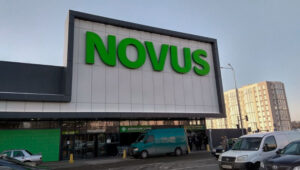
The Novus supermarket chain has received permission from the Antimonopoly Committee of Ukraine (AMCU) to lease assets from the Eurotek Group, which recently announced the closure of its supermarket chains, and plans to open its first stores in Lviv and Ivano-Frankivsk in their place, the grocery retailer’s press service told the “Interfax-Ukraine” news agency.
It is specified that at a meeting on Thursday, the AMCU granted Novus Ukraine LLC permission to lease three assets from JSC “ZNVKIF Eurotek Invest,” which has closed its grocery chains.
For Novus, this marks its first entry into the Lviv and Ivano-Frankivsk markets, as well as a new stage in the chain’s expansion across Ukraine’s western regions. In Lviv, Novus plans to open stores in August (147 Zelena St. and 60 Chervonoyi Kaliny Ave.), and in Ivano-Frankivsk in September (2 Mykolaychuk St.).
“The western region, particularly Lviv and Ivano-Frankivsk, is a strategically important area for us. Today, Lviv is one of the country’s key consumer hubs and most competitive markets, while Ivano-Frankivsk is experiencing rapid growth and high demand for quality retail. We want residents of both cities to get to know Novus not just as a new supermarket, but as a place for a comfortable shopping experience that combines European-style service, a wide product range, and a modern customer experience,” the company notes.
To maximize convenience and speed of service, the checkout areas in the new stores have been optimized to match the scale of the facilities. For example, the supermarket at 147 Zelena St. (total area: over 3,000 sq. m; retail area: 1,761 sq. m) will feature six linear checkout lanes, eight self-checkout stations (SCS), and one information desk with two workstations. At the store at 60 Chervonoyi Kaliny Ave. (total area: 2,376 square meters; sales area: 1,500 square meters), five regular checkout lanes, eight self-checkout stations, and one information counter—which also combines two checkout stations—will ensure quick checkout.
In Ivano-Frankivsk, at 2 Mykolaychuk St. (total area: 3,106 sq. m, retail area – 1,971 sq. m), service speed will be ensured by eight linear checkout lanes, one information counter (with two workstations), and eight self-service checkout stations, which have been divided by payment type for convenience: two for cash payments and six for non-cash payments.
As previously reported, the Eurotek Group of Companies closed its grocery chains “Fresh,” “Arsen,” “Soyuz,” and “Kvartal.” Specifically, the “Arsen” chain operated in Lviv, Ivano-Frankivsk, and Rivne regions, with a total of eight supermarkets. In May, the Antimonopoly Committee of Ukraine (AMCU) authorized Silpo-Food LLC—which operates the Silpo chain and is part of the Fozzy Group—to acquire five of these stores; opening dates have not yet been announced.
Novus is a supermarket chain with 100% Lithuanian capital that has been operating since 2008 and is developed by BT Invest (Lithuania). As of the end of June 2026, the company has 173 locations and is represented in Kyiv, the Kyiv region, and a number of other regions of Ukraine. The founder and beneficial owner of the group is Lithuanian entrepreneur Raimondas Tumenas. The company operates a supermarket chain as well as “neighborhood” stores under the Mi Market brand.
As of the end of 2025, the chain ranks among Ukraine’s largest food retailers. Its annual revenue totaled 34.69 billion UAH, an increase of 19.55% compared to 2024.
The Antimonopoly Committee of Ukraine (AMCU) has granted approval to Olimp LLC to acquire control over the assets of ADM Ukraine LLC in the form of a single property complex (grain elevator), the agency announced on Facebook.
According to the regulator, the facility in question provides grain storage services.
According to market participants, the subject of the deal is the “Kam’yansky” grain elevator in the Cherkasy region. The facility has a storage capacity of 64,000 tons in metal silos and floor storage facilities.
Once the deal is finalized, ADM Ukraine will effectively have no remaining grain storage assets in Ukraine. The company previously lost control of the “Tavriysky” elevator due to Russia’s military aggression.
Archer Daniels Midland (ADM) is an American agribusiness corporation headquartered in Chicago, operating in 200 countries. The company specializes in the production of food ingredients, animal feed, and biofuels, as well as in the processing, storage, and logistics of agricultural products. Its product portfolio includes grains, oilseeds, flour, starches, vegetable fats, and logistics services through its ADM Logistics division. In Ukraine, the corporation is represented by ADM Ukraine LLC.
OLIMP LLC is a Ukrainian agribusiness company with a land bank of 36,000 hectares in the Zhytomyr, Kirovohrad, and Cherkasy regions. It specializes in crop production (corn, wheat, soybeans, sunflowers), livestock farming, processing, and trading. Its asset portfolio includes six processing facilities (mills, bakeries, canning plants), the “Olimp” and “Olimp-Agro” grain elevators, as well as the Kamyansky Machine-Building Plant. According to data from the YouControl analytical system, the company’s beneficial owners are Volodymyr Hetsko and Yuriy Moskalyk.



