
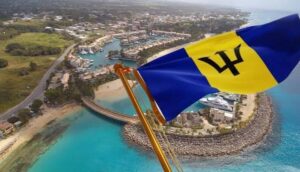
Barbados is preparing to launch a new program to attract foreign investors, which will grant permanent residency for investments of 5 million Barbadian dollars (approximately $2.5 million USD) in government-approved projects. In the future, investors will be able to apply for citizenship through a simplified procedure that requires actual residence in the country for at least 360 days over a specified period.
The new system is intended to serve as an alternative to traditional Caribbean citizenship-by-investment programs, which are under pressure from the European Union due to security risks associated with the visa-free regime.
The bill provides for two main mechanisms for obtaining permanent resident status.
The first will allow a foreign national to apply for permanent residency after investing at least 5 million Barbadian dollars in a national development project officially approved by the government.
At a fixed exchange rate of 2 Barbadian dollars to 1 U.S. dollar, the minimum amount is approximately $2.5 million.
During a parliamentary debate on October 27, Barbados’ Minister of Home Affairs, Gregory Nicolls, cited water supply and wastewater treatment, healthcare, education, housing, renewable energy, infrastructure, technology, agriculture, and tourism as priority areas.
At the same time, investments must be directed toward projects that are of public interest and meet the criteria set by the government.
The second mechanism involves the use of a points-based system.
This will allow for the consideration of smaller investments—specifically, those starting at 1 million Barbadian dollars, or approximately $500,000—in designated development projects.
Points will be awarded based on the investment amount, the applicant’s age, family ties to Barbados, and other criteria.
Each point will correspond to six months of the required residency period, thereby shortening the standard five-year period needed to obtain permanent residency.
At the same time, investors will be required to meet physical presence requirements. To qualify for the points-based system, applicants must have resided in the country for at least 180 days over the preceding three years.
A separate citizenship bill proposes reducing the requirements for the duration of physical presence in the country.
Foreign nationals who are not citizens of the Caribbean Community (CARICOM) and have obtained permanent residency will be able to apply for citizenship after a cumulative stay in Barbados of 360 days within a statutory period of at least 1,460 days.
More lenient conditions apply to citizens of CARICOM member states: 270 days of residence within a period of at least 1,095 days.
The provisions also allow for the inclusion of the applicant’s spouse and dependents.
However, meeting the investment and residency requirements does not guarantee automatic granting of citizenship.
The Ministry of the Interior may deny an application on grounds of national security, public policy, the existence of criminal offenses specified by law, or insufficient means of support.
Minister of the Interior Gregory Nicolls emphasized that the government is not introducing a traditional Citizenship by Investment program.
The key difference is that investments will grant the right to apply for permanent residency, while obtaining citizenship will require a separate procedure and fulfillment of residency requirements.
Barbados has never had a classic program for the direct sale of citizenship, similar to the schemes in place in several other Caribbean countries.
The new rules could make the country more attractive to wealthy foreigners considering a move to the Caribbean region and investing in real estate, infrastructure, and tourism projects.
One notable change will be the ability to count time spent in the country under the Welcome Stamp program—designed for foreign remote workers—toward the legal residency period required to apply for permanent residency.
Barbados’s reform comes amid stricter European Union requirements for countries that grant citizenship in exchange for investment.
Antigua and Barbuda, Dominica, Grenada, St. Kitts and Nevis, and St. Lucia have come under pressure from Brussels.
The European Commission is demanding that these countries phase out their investment citizenship programs by June 1, 2028, warning that the visa-free regime with the EU could be suspended.
The main concern of European authorities is that third-country nationals can obtain Caribbean passports without actually residing in those countries and enjoy visa-free access to the Schengen Area.
According to the European Commission, this creates risks of inadequate vetting of applicants, money laundering, and circumvention of immigration restrictions.
According to a Reuters report dated October 29, 2026, the government of Antigua and Barbuda is considering a phased closure of its program. At the same time, the country is seeking additional time and financial support from the EU to compensate for budget losses.
For some Caribbean nations, revenue from investment citizenship programs accounts for a significant portion of government revenue and funding for construction projects.
Against this backdrop, Barbados is proposing a model in which foreign capital is attracted through investments in economic development, while citizenship remains the result of a separate naturalization process.
In addition to investment needs, the Barbadian government seeks to address demographic challenges related to an aging population and a declining birth rate.
According to data previously cited by the country’s Prime Minister Mia Mottley, 3,642 children were born in Barbados in 2000, while the number of deaths stood at 2,444.
By 2024, the situation had changed: the number of births had fallen to 1,995, while deaths had risen to 3,088.
The government views attracting foreign investors and specialists as one of the tools for supporting economic development, the labor market, and population growth.
For investors, a Barbadian passport remains an additional factor of attractiveness, as it provides visa-free access or the ability to obtain a visa upon arrival to approximately 162 countries and territories, including the Schengen Area.
At the same time, investment residency alone will not provide such opportunities. They will only become available after obtaining citizenship.
As of November 3, 2026, both bills are under consideration by the Barbados Senate.
Once the parliamentary process is complete, the bills will require final approval and official enactment.
In addition, the government will need to define the list of eligible investment projects, administrative fees, the application review process, investment retention periods, and other practical requirements.
Minister of Home Affairs Gregory Nichols previously expressed hope that the new legislation would be finalized by November 30, 2026, when Barbados will celebrate the 60th anniversary of its independence.
Barbados is an island nation in the Caribbean with a population of approximately 280,000. The main sectors of the economy are tourism, international financial services, trade, and construction. The country gained independence from the United Kingdom in 1966 and became a parliamentary republic in 2021.
CITIZENSHIP, INVESTMENT, MIGRATION, REAL ESTATE, RESIDENCY, Барбадос



