
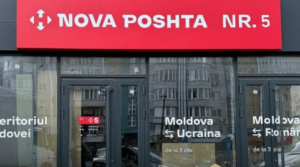
In 2025, Nova Post Europe doubled the number of branches in 16 European countries to 800, Nova Post Europe CEO Oleksandr Lysovets said in an interview with Forbes Ukraine.
“At some point, we realized that instead of chasing the number of countries, it was better to focus on deepening our presence in existing markets… We started by copying the Ukrainian model, but quickly realized that each market requires its own logic for entry and scaling,” he explained the change in growth strategy.
According to Lysovets, in 2025, the largest number of branches were opened in Poland (32), Moldova (25), Germany and Spain (24 each), and the total number of employees reached 1,670.
The CEO specified that most of the 800 service points are partner branches and PUDO (pick-up/drop-off) based on partner businesses.
“The company is actively shifting its focus towards partnerships: last year, 90% of new service points were partner ones. But in each country, we look at the existing infrastructure,” Lysovets noted, citing the example of Poland, where InPost operates with over 25,000 parcel terminals, so there is no point in building its own network there.
He also said that Moldova is the only country in Europe where the strategy involves building a full-fledged infrastructure of its own, replicating the model of Nova Poshta in Ukraine. In particular, in 2025, a full-fledged franchise was launched there, with 21 partner branches.
The CEO of Nova Post Europe emphasized that in 2025, the company tripled in size in Moldova. Currently, EUR 2 million is being invested in a new sorting hub, which will be five times larger than the previous one. In particular, this amount is planned to be used to expand the physical presence, which will include, among other things, the installation of 150 parcel terminals, the opening of 150 PUDOs, six own branches, and 60 partner branches.
“The goal is to provide maximum coverage and convenience for customers,” Lysovets emphasized in an interview.
According to him, at the end of the fourth quarter of 2025, Nova Post Europe became profitable in Poland, Moldova, the Czech Republic, and Latvia.
The company, which processed 13 million international shipments last year, plans to increase this volume by more than 30% in 2026 and maintain this pace until 2030. As the CEO noted, these plans will be supported by a new phase of European expansion with investments of over $5 million. In particular, there are plans to launch an automated line in the Czech Republic and a proprietary CSS in Germany.
“In Poland, we are investing $1.8 million in opening 300 partner mini-branches, which will allow us to quickly expand the network using our partners’ existing infrastructure for effective scaling,” Lisovets added.
According to him, the amount of investment in Spain will be about $0.64 million, which will be used to open 50 PUDOs and 86 partner mini-branches.
The CEO also noted that, on average, Ukrainians account for about 60% of Nova Post’s customers abroad, but in Moldova, they account for less than 1%.
In October 2025, company co-founder Volodymyr Poperechnyuk announced that the Nova group of companies, which includes the express delivery leader Nova Poshta and the financial service NovaPay (TM NovaPay), plans to grow fourfold in five years.
The CEO of Nova Post Europe, in turn, noted that fourfold growth is impossible only within the framework of traditional delivery, the existing customer base, or without updating the service package.
“It’s not just about growing existing volumes, but about expanding the market itself for the company through new products, services, and usage scenarios. We see huge room for scaling where we haven’t even begun to truly unleash our potential,” Lysovets emphasized.

Nova Poshta, the leader in express delivery in Ukraine and part of the NOVA group, opened 23 new branches, transported 7, and installed 521 parcel terminals in January 2026, the company’s CEO Yevhen Tafiychuk announced on Facebook on Wednesday.
According to him, 10.3 million customers used the company’s services in January, with 50% more exports and 81% more imports delivered internationally compared to January 2025.
“We launched an exporter school because it is important for us to share our experience,” added the CEO of Nova Poshta.
Tafiychuk also reported that Nova Poshta transported 201,000 parcels in January as part of a humanitarian aid program.
At the end of January, in an interview with LIGA.net, the CEO of Nova Poshta announced that in 2026, the company plans to open about 10,000 new service points, including nearly 6,000 parcel terminals and approximately 300 branches of its own network.
As of early January 2026, the company’s network had more than 50,000 service points, including 15,900 branches and 34,200 parcel terminals.
In 2025, Nova Poshta increased its revenue by 21% compared to 2024, to more than UAH 54 billion, and its profit amounted to UAH 2.6 billion compared to UAH 2.5 billion a year earlier. The number of parcels and cargo delivered in 2025 increased by 7.4% – from 486 million to 522 million, including international deliveries – by 52.6%, from 19 million to 29 million.
The main activity of Nova Poshta is the express delivery of documents, parcels, and palletized large-sized cargo. Its ultimate beneficial owners are Volodymyr Poperechnyuk and Vyacheslav Klimov.
Nova Poshta, Ukraine’s leading express delivery service from the Nova Group, is operating 147 branches in Odesa on generators, while the state postal operator Ukrposhta is providing a full range of services in 72 branches despite power supply problems after shelling in the region.
“In isolated cases (several branches), where it was not possible to connect generators immediately due to technical issues, operators accepted and delivered parcels manually so as not to interrupt customer service until the situation was resolved as quickly as possible,” Ukrposhta said in a comment to Interfax-Ukraine.
The Nova Poshta Telegram channel notes that the company’s branches offer the opportunity to recharge phones, use the internet, and warm up. Ukrposhta provides the same services in its branches.
Separately, Ukrposhta added in a comment to the agency that the branches’ working hours have not changed.
As reported, as a result of a massive missile and drone attack by the Russian Federation on the night of December 12-13, four 330 kV substations of the National Energy Company Ukrenergo were damaged and approximately 60% of consumers in Odesa and the region were cut off from the power supply. A significant portion of consumers were left without electricity and heating for three days or more.
In addition, on December 18, the enemy launched another attack on the infrastructure, which again led to power outages.

The network of bank branches in Ukraine shrank by 21 locations in the third quarter and stood at 4,913 branches at the beginning of October, according to information on the website of the National Bank of Ukraine.
According to its statistics, the reduction amounted to 98 branches over the first nine months of the year.
PrivatBank reduced the most branches in the third quarter—six—which reduced its network to 1,096, but the bank retained second place in terms of their number.
Oschadbank, despite closing five branches, remains the leader in Ukraine with 1,142 locations.
Pivdenny Bank and Radabank reduced their networks by three and two branches, respectively, in July-September, to 37 and 30 locations.
In the third quarter, Ukrgasbank (210 branches), MTB Bank (43), BIZbank (29), Industrialbank (24), MetaBank (21), RVS Bank (13), First Investment Bank (10), and Motor Bank (7) closed one branch each.
Among the banks that expanded their networks in the third quarter, PUMB, Akordbank, TAScombank, Bank Lviv, and Bank Ukrainian Capital opened one branch each—their networks grew to 220, 163, 92, 21, and 12 branches, respectively.
According to the National Bank, as of early October this year, the largest branch networks in Ukraine are traditionally held by the largest state-owned banks—Oschadbank with 1,142 branches and PrivatBank with 1,096. Raiffeisen Bank (321), PUMB (220), and Ukrsibbank (218) followed them at a considerable distance.
The second five in terms of network size were formed by the state-owned Ukrgasbank (210), A-Bank (198), Akordbank (163), the state-owned Sens Bank (137), and Credit Agricole Bank (125).
As of early October, seven banks with state ownership held a network of 2,639 branches, accounting for 53.7% of the total number of branches at the end of the third quarter.

In the first half of 2025, the Dila medical laboratory opened 22 new branches, increasing its number of locations to 260 throughout Ukraine.
According to Ivan Telichkun, the company’s director of strategic development, who spoke to Interfax-Ukraine, Dila has closed one branch since the start of the full-scale invasion, while the remaining 17 branches that were damaged have already been restored and are continuing to operate.
“Since the beginning of the invasion, 17 branches have been damaged and one has been closed in Nikopol. The other damaged branches have been completely restored and are once again serving customers,” he said.
Telichkun specified that Dila branches are currently operating in frontline areas, including Chernihiv, Shostka, Kharkiv, Pavlohrad, Mykolaiv, and Kryvyi Rih. In Shostka, Kharkiv, and Mykolaiv, they were opened during the full-scale invasion.
“Dila operates in cities and regions that are under frequent threat of missile or drone attacks. These are Odesa (Odesa, Izmail), Dnipro, Kryvyi Rih, Poltava, Kirovohrad, Sumy (Shostka), Kyiv, Kharkiv, and Mykolaiv,” he said.
Telichkun noted that Dila continues to expand its network of branches across Ukraine, focusing primarily on the needs of its clients.
“Among the new locations of Dila branches are not only central areas of cities, but also modern residential complexes, which today form separate communities with developed infrastructure. We plan to expand the network further,” he said.
Commenting on the dynamics of prices for laboratory tests, Telichkun noted that since the beginning of the year, prices for laboratory tests have been gradually increasing.
“The main reasons are the rising cost of reagents and consumables purchased in foreign currency, as well as changes in salaries to ensure market-level wages. Responding to external economic factors, including price adjustments, allows us to maintain our core principles of quality and accuracy in our research, which are the foundation of our customers’ trust. We plan to keep prices stable, provided the market situation remains stable,” he said.
As reported, in 2024, the Dila medical laboratory opened 14 partner branches and expanded its network to 238 branches. In addition, Dila performed 9.3 million tests for 1.3 million patients in 2024.

Ukrainian Helicopters (Kyiv) will establish a branch in Nairobi (Kenya) to carry out aviation activities, including transportation of passengers, baggage, cargo, mail, aviation operations, aircraft maintenance, and aviation personnel training.
According to the minutes of the extraordinary shareholders’ meeting held on February 3 on the airline’s website, the relevant decision was adopted by 100% of the votes.
The shareholders of Ukrainian Helicopters are CEO Volodymyr Tkachenko (91% of shares, 910 votes) and Anton Tkachenko (9%, 90 votes).
The shareholders authorized the airline’s Board of Directors to develop the Regulations on the branch in Kenya, as well as to hire and dismiss its head.
Ukrainian Helicopters, according to its website, is the largest helicopter operator in Ukraine, which has been working in humanitarian, stabilization and peacekeeping programs around the world for more than 20 years. The fleet includes 23 modernized Mi-8MTV-1 universal helicopters.
According to the Clarity Project, in 2023, the airline increased its net revenue by 48% year-on-year to UAH 4 billion 016 million, while net profit fell by 41.5% to UAH 55.13 million.
In January-September 2024, the airline incurred UAH 73.5 million in losses against a net profit of UAH 40.7 million a year earlier, with net income growing by 21.7% to UAH 3.5 billion.
As reported, during Russia’s full-scale invasion of Ukraine, the airline donated more than UAH 228 million in aid, including UAH 167 million to the military.



