

On October 17, 2026, large-scale nationwide protests took place in France against the rising cost of living, increasing fuel prices, and cuts in funding for public services. According to the country’s Ministry of the Interior, approximately 550,000 people took part in the demonstrations, while organizers estimate the number of participants at 800,000, Reuters and the French newspaper Le Monde report.
A total of 110 demonstrations took place across the country. In Paris alone, according to Interior Minister Laurent Nuñez, approximately 110,000 people took to the streets. The protests also spread to Marseille, Lyon, Lille, Bordeaux, Toulouse, and other major cities.
The participants’ main demands included higher wages and pensions, measures to curb food and energy prices, increased funding for education and healthcare, and the preservation of social guarantees.
Trade unions, student organizations, representatives of farmers’ associations, transport sector workers, and activists from the “yellow vests” movement, which emerged in France in 2018 due to rising fuel prices, joined the demonstrations.
The current wave of protests began in September with student demonstrations against teacher shortages, the poor condition of educational institutions, and insufficient government funding for education. Subsequently, the demands expanded to include issues of purchasing power, social inequality, and the government’s economic policy.
Despite the predominantly peaceful nature of the demonstrations, clashes with police, vehicle arson, vandalism and looting of shops, and attacks on administrative buildings occurred in several cities.
In Paris, the most tense situation was observed near Place de la République, where some groups of rioters threw stones and pyrotechnic devices at police officers. Law enforcement officers used tear gas and water cannons. There were also reports of shops being looted and bank branches being damaged.
In Marseille, a group of protesters entered the city council building; in Lyon, a tourist office was set on fire; and in Limoges, a fire damaged the town hall building. Incidents involving damage to administrative buildings were also recorded in other cities.
According to preliminary data from the French Ministry of the Interior, police detained approximately 400 people. Authorities reported injuries among law enforcement officers and civilians. A separate investigation was launched following the serious injury of a minor participating in a protest in Saint-Étienne.
French President Emmanuel Macron condemned the violence and stated the need to hold those responsible accountable. Prime Minister Sébastien Lecornu emphasized that the government would not allow the unrest to be used to exert pressure on state institutions.
At the same time, protest organizers emphasize that the overwhelming majority of participants demonstrated peacefully and demanded a revision of the state’s socioeconomic policy.
The mass demonstrations are taking place against the backdrop of a difficult situation in France’s public finances. According to the draft state budget for 2027 presented on October 1, the government plans to reduce the deficit from a projected 5.4% of GDP in 2026 to 5% of GDP in 2027.
To achieve this goal, overall fiscal consolidation measures totaling €54 billion are envisaged, including €43 billion within the framework of the draft laws on the state budget and the financing of the social security system.
At the same time, the government forecasts a slowdown in France’s economic growth to 0.5% in 2026, with a possible acceleration to 1% in 2027. Public debt servicing costs could rise from €79.2 billion in 2026 to €91.2 billion the following year.
Trade unions fear that measures to limit public spending will increase the burden on households, primarily those with low and middle incomes.
The protests have already caused disruptions to urban public transport, the temporary closure of certain Paris Metro stations, and damage to commercial properties. A final assessment of the economic damage caused by the unrest has not yet been released.
The new wave of social discontent is increasing political tensions in France ahead of the 2027 presidential election and complicating discussions on fiscal policy. Further developments will depend, among other things, on negotiations between the government, trade unions, and representatives of the student movement.
France is the second-largest economy in the eurozone after Germany and one of Ukraine’s largest trade and economic partners in the European Union.

According to Fixygen, Greece plans to introduce a 10% tax on capital gains from cryptocurrency transactions, Reuters reports.
The corresponding bill was submitted for public comment on October 8. The bill is expected to be submitted to parliament for consideration in November.
Earlier, in June, the possibility of setting the tax rate at 15% was discussed. The new version of the bill provides for a tax exemption on income from cryptocurrency transactions amounting to less than 500 euros per year.
Currently, Greece lacks a comprehensive legal framework for taxing cryptocurrency transactions. At the same time, there is no unified system for taxing income from crypto assets within the European Union.
According to Reuters, capital gains tax rates on cryptocurrency transactions in European countries range from approximately 8% to 30%.
Greek authorities have previously noted that they cannot accurately assess the size of the domestic cryptocurrency market, as a significant portion of investors use foreign platforms.
Consequently, the government does not yet have precise estimates of potential additional budget revenues following the introduction of the new tax.
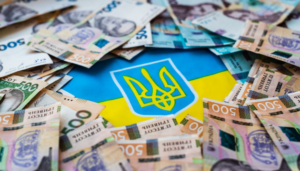
In September 2026, the State Customs Service of Ukraine transferred 75.2 billion hryvnia in customs duties to the state budget, which is 18.1 billion hryvnia more than in the same month last year.
According to Open4Business, citing data from the State Customs Service, revenues increased by 31.7% compared to September 2025, when 57.1 billion hryvnias were transferred to the budget.
The agency noted that actual revenue in September exceeded the indicative target set by the Ministry of Finance by 4.6 billion hryvnia.
One of the main factors driving the growth in revenue was the increase in the volume of taxable imports. In September 2026, this volume amounted to $7.3 billion, which is 23.7% more than a year earlier.
In particular, revenue from customs clearance of natural gas rose significantly—by 2.8 billion hryvnias—as did revenue from passenger cars (2.2 billion hryvnias), petroleum products (1.8 billion hryvnias), and coal (1.3 billion hryvnias).
Additional revenue was also generated by imports of telephones—by 0.9 billion UAH, power generators—by 0.7 billion UAH, and trucks—by 0.6 billion UAH.
At the same time, customs duty exemptions granted during customs clearance of goods in September totaled 25.3 billion UAH, which is 5.9 billion UAH, or 30.4%, more than in September of last year.
The largest amounts of exemptions were for defense-related goods—13.1 billion UAH, goods imported under free trade agreements—5.7 billion UAH, and energy equipment—2.4 billion UAH.
Thus, despite the increase in the volume of exemptions granted, the growth in imports and payments for certain major commodity groups allowed the State Customs Service to significantly increase revenues to the state budget.
The State Customs Service administers customs payments when goods cross Ukraine’s customs border. Customs revenues—primarily import VAT, excise taxes, and duties—are one of the largest sources of revenue for the state budget.

Despite delays in receiving external financing, the Ministry of Finance of Ukraine will currently refrain from significantly increasing the volume of borrowing on the domestic debt market in order to avoid raising the cost of servicing that debt, said First Deputy Minister of Finance Roman Yermolychev.
“We will monitor the status of the Single Treasury Account. We must understand that these are debt obligations that we must fulfill in any case,” the First Deputy Minister noted during a budget discussion organized by the Center for Economic Strategy last week.
“Raising more funds would require raising interest rates, which we would prefer to avoid,” Yermolichev emphasized.
He recalled that at the most recent primary auctions of domestic government bonds, the Ministry of Finance managed to increase the amount of funds raised by 5 billion hryvnia compared to the standard trend.
“Future fundraising rounds may also be larger, depending on how much funding we’ll need for social payments and those critical expenditures that arise on a daily basis,” said the first deputy minister.
According to him, while awaiting external financing—which is contingent on the Verkhovna Rada’s adoption of a number of laws—the Ministry of Finance has deferred approximately 39 billion hryvnias in unsecured capital expenditures to December.
As reported by the Interfax-Ukraine news agency, during the first primary auctions for the placement of domestic government bonds following the National Bank’s increase of the discount rate from 15.5% to 16% per annum on September 22, the Ministry of Finance was able not only to maintain yields on standard bonds at the previous level, but also to lower rates on benchmark bonds, which banks can use to partially form their required reserves. The cut-off rates for 12-month and 29-month OVDPs remained at 15.18% and 16.10%, respectively, while the rate for benchmark bonds fell to 12.18%.
In total, the Ministry of Finance raised 7.36 billion UAH across three auctions, compared to 2.01 billion UAH a week earlier, when there were two auctions and the offering at each was 1 billion UAH.
For the upcoming auctions on Tuesday, September 29, the Ministry of Finance reduced the supply of standard OVDPs to 1 billion UAH from 3 billion UAH last Tuesday, while retaining the more popular one-year bonds. At the same time, it will again offer 5 billion UAH in benchmark bonds, whereas previously these instruments were auctioned off approximately once a month.

The government’s draft law “On the State Budget of Ukraine” for 2027 was registered with the Verkhovna Rada on Tuesday evening under No. 16000.
The relevant information has been published on the parliament’s website.
At this time, the text of the budget bill and accompanying materials are not yet available, nor is there a statement from the Cabinet of Ministers regarding its adoption at the meeting held on Tuesday evening.
According to the Budget Code, the government must submit the draft state budget for the following year to parliament by September 15 inclusive.
BUDGET, CABINET OF MINISTERS, DRAFT LAW, UKRAINE, VERKHOVNA RADA

JSC ‘Ukrnafta’ transferred 656.2 million UAH to the state budget based on the 2025 performance of PJSC “Ukrnaftoburinnya,” the company reported.
The funds were received under an asset management agreement signed between “Ukrnafta” and the Agency for the Search and Management of Assets (ARMA).
“In total, since 2023, thanks to the company’s work, over 2.5 billion hryvnias have been transferred to the state budget (…) I thank the team for their responsibility and daily work, and ARMA for its effective cooperation,” said Bohdan Kukura, chairman of the board of Ukrnafta.
For its part, ARMA states that the management of “Ukrnaftoburinnya” is one of the prime examples of the agency’s effective collaboration with the operator.
“Ukrnafta is duly fulfilling the terms of the agreement, and the result of this work is tangible—over 2.5 billion hryvnia directed to the state budget starting in 2023,” noted Yaroslava Maksymenko, acting chair of ARMA.
In July 2023, the Cabinet of Ministers of Ukraine transferred the corporate rights of PJSC “VK “Ukrnaftoburinnya” to the management of PJSC “Ukrnafta.” In December 2023, a court suspended gas production at the Sakhalin field, located in the Bohodukhiv District of Kharkiv Oblast; however, the company resumed operations in August 2024.
“Ukrnaftoburinnya” is one of the largest private gas production companies in Ukraine. Since 2010, it has been developing the Sakhalin oil, gas, and condensate field, which has reserves of 15 billion cubic meters of gas.



